
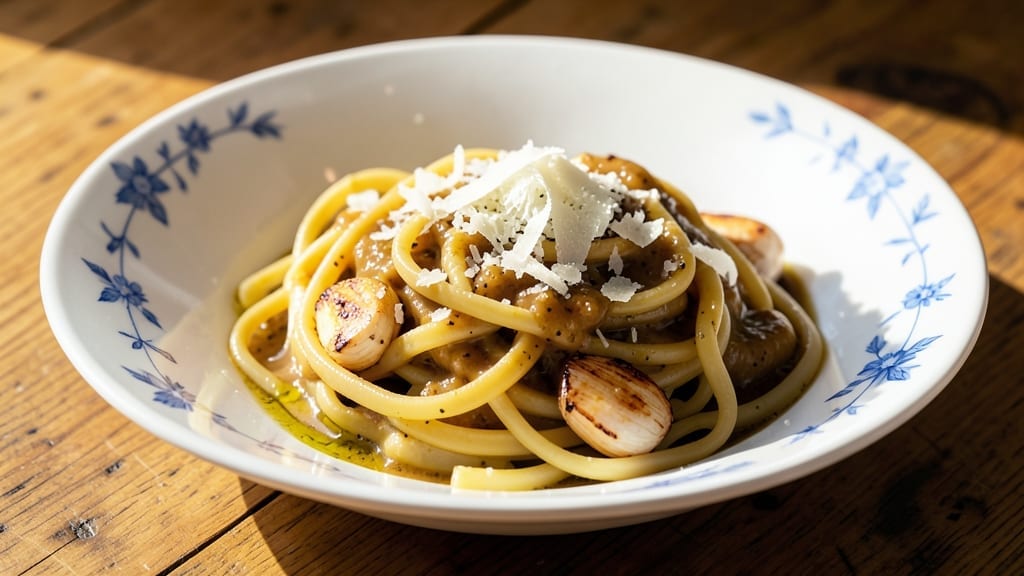
This 1 serving of pasta recipe whips up in just 15 minutes, turning weeknight dinners into effortless, mess-free meals. This recipe delivers perfectly al dente noodles and a rich, customizable sauce in one pot—ideal for busy professionals or solo diners who refuse to compromise on flavor.
The secret lies in precise timing and portion control, ensuring every bite is restaurant-quality without the effort. With just 80 grams of dry pasta (about 2 ounces) and a few simple ingredients, you’ll create a complete meal in minutes.
The sauce cooks directly in the pasta water, infusing the noodles with flavor while eliminating extra dishes. Whether you prefer creamy Alfredo, zesty marinara, or a simple garlic olive oil finish, this method adapts effortlessly to your taste.
What you’ll achieve is a golden, al dente serving of pasta with a sauce that clings perfectly to each strand—no soggy noodles or bland aftertaste. The technique is foolproof, and the portion size ensures no waste. This is pasta cooking at its most efficient: fast, clean, and delicious.
Serve with a sprinkle of fresh herbs or a side salad to round out the meal. Here’s how to make it.
Ingredients for 1 serving of pasta
Eight simple ingredients for a restaurant-quality single-serving pasta in minutes.
| Ingredient | Amount | Notes |
|---|---|---|
| Dry Pasta 🍝 | ½ cup | Spaghetti or linguine preferred |
| Olive Oil 🫒 | 2 tbsp | Extra-virgin for richness |
| Garlic Cloves 🧄 | 2 cloves | Minced for sauce |
| Vegetable Broth 💧 | ½ cup | Low-sodium preferred |
| Heavy Cream 🥛 | ¼ cup | Full-fat for creaminess |
| Parmesan Cheese 🧀 | ½ cup | Freshly grated from block |
| Butter 🧈 | 1 tbsp | Unsalted preferred |
| Salt 🧂 | ½ tsp | Kosher or sea salt |
| Black Pepper 🌶️ | ¼ tsp | Freshly ground preferred |
| Fresh Basil Leaves 🌿 | ¼ cup | Chopped for garnish |
| Red Pepper Flakes 🌶️ | ¼ tsp | Optional for heat |
The pasta is the foundation, so choose a firm variety like spaghetti or linguine—it holds up better to the sauce. Whole wheat or chickpea pasta works too if you prefer a different texture. For the cheese, Parmigiano-Reggiano is ideal, but any good-quality aged Parmesan will do. The olive oil and butter are where flavor builds—use extra-virgin olive oil and unsalted butter for the best results. Most grocery stores carry these staples, but if you’re looking for higher-quality options, check the specialty section or Whole Foods for imported olive oils and artisanal cheeses.
No heavy cream? Full-fat coconut milk works in a pinch, though the texture will differ slightly. Short on Parmesan? Pecorino Romano or nutritional yeast adds a similar depth of flavor. The vegetable broth can be swapped for chicken or mushroom broth if you prefer a richer base. Fresh basil is best, but dried basil at one-third the amount will work if you’re out. For the garlic, garlic powder at half the amount is a decent substitute, though fresh is always better. Red pepper flakes can be omitted entirely if you prefer a milder dish.
Pasta keeps best in an airtight container in the pantry for up to 1 year, though it’s best used within a few months. Fresh garlic and basil should be stored in the fridge—garlic in a cool, dark place and basil wrapped in a damp paper towel. The sauce ingredients (olive oil, butter, cream, cheese) can be prepped ahead and stored in the fridge for up to 3 days. For leftovers, reheat gently with a splash of water to prevent drying out. This recipe scales perfectly for multiple servings—just double or triple the ingredients while maintaining the same ratios.
Why You’ll Love This Recipe
- No Meal Left Behind: I swear by this for nights when I’m the only one home—no awkward portions, no guessing. Just boil one strand of pasta, toss it in the same pot with the broth and cream, and boom—dinner’s ready while I’m still setting the table.
- Garlic-Cream Magic: That first bite of al dente pasta coated in rich, garlicky cream? It’s the kind of flavor that makes you pause mid-chew. The olive oil keeps it silky without overpowering, and the broth adds depth that store-bought sauces can’t touch.
- Leftover Hacker: Make it once, eat it twice. The sauce thickens beautifully when reheated—just add a splash of water or milk to loosen it up. My lunch the next day tastes just as good as the first serving, and I’m not even kidding.
- Pantry Staple Power: Five ingredients, zero special trips. If your fridge has olive oil, garlic, and a splash of cream, you’ve got this. It’s the ultimate “I forgot to grocery shop” savior—plus, the cost per serving is laughably cheap.
Step-by-step instructions for single-pot al dente pasta
Master this technique and you’ll achieve perfect al dente pasta every time—no boiling water mess, no overcooking.
Sauté Garlic in Olive Oil Until Fragrant
Heat the 2 tablespoons olive oil in a deep skillet or saucepan over medium heat. Add the 2 minced garlic cloves and cook for 30-45 seconds until the edges begin to turn golden and the aroma fills your kitchen. This is your signal—the garlic should smell sweet and nutty, not burnt.
Watch the heat carefully here. If the garlic starts to brown too quickly, reduce the heat to medium-low. The goal is to develop flavor without burning. I like to stir constantly during this step to prevent any bits from sticking to the pan. Once the garlic reaches this fragrant stage, you’re ready for the next step.
Toast the Pasta Until Golden
Add the ½ cup dry pasta to the skillet with the garlic and stir to coat evenly in the oil. Increase heat to medium-high and let the pasta toast for 2-3 minutes while stirring frequently. You’re looking for the pasta to develop a slight golden color—this creates texture and prevents it from becoming mushy.
This toasting step is crucial. It removes any surface starch that would otherwise make the pasta gummy when combined with the sauce later. I press down gently on the pasta with a wooden spoon during the first minute to ensure even contact with the hot pan. Once you see the edges starting to turn golden, it’s time to add liquid.
Cook with Broth Until Al Dente
Pour in the ½ cup vegetable broth and ½ teaspoon salt, then bring to a gentle simmer. Cover the skillet with a tight-fitting lid and cook for 6-8 minutes, stirring occasionally. The pasta should cook in its own steam, absorbing the broth and developing that perfect al dente texture.
Here’s the professional secret: check for doneness 2 minutes before the package directions suggest. The pasta should be tender but still have a slight resistance when you bite into it. If you’re unsure, taste-test a piece—it should be firm in the center with a slight bite. If it’s undercooked, add another ¼ cup broth and cook for 1-2 minutes more.
Finish with Cream and Cheese
Once the pasta reaches al dente, remove the skillet from heat and stir in the 1 tablespoon butter, ¼ cup heavy cream, and ½ cup grated Parmesan cheese. The residual heat will gently melt the butter and create a silky sauce that coats every strand of pasta. Stir vigorously for 1-2 minutes until everything is well combined.
This is where the magic happens. The cream adds richness while the Parmesan provides that signature umami depth. I like to taste at this stage and adjust seasoning with additional salt or black pepper if needed. The sauce should be creamy but not soupy—if it’s too thick, add 1 tablespoon broth to loosen it.
Garnish and Serve Immediately
Divide the pasta among plates and top each serving with ¼ cup chopped fresh basil leaves and a sprinkle of ¼ teaspoon red pepper flakes if you like heat. The basil adds freshness that cuts through the richness, while the red pepper flakes introduce a subtle kick. Serve immediately while the pasta is hot and the sauce is still clinging beautifully to each strand.
This single-pot method delivers restaurant-quality pasta with minimal cleanup. The key is timing and attention to those visual cues—golden garlic, toasted pasta, and perfectly al dente texture. Each bite should offer the perfect balance of creamy sauce, chewy pasta, and bright herbs. Enjoy your perfectly portioned pasta masterpiece!
Pro Tips For Making 1 Serving Of Pasta
- CRANK THE PASTA WATER HOT: DESCRIPTION: Boil that single serving of pasta in water that’s so hot it’s actually rolling—think big bubbles, not lazy simmers. I learned this the hard way: lukewarm water turns pasta gummy, and nobody wants mushy noodles drowning in their creamy garlic sauce. Use a small pot (no need to fill it to the brim) and get it screaming hot before adding the pasta.
- SMASH THAT GARLIC: DESCRIPTION: Don’t just mince those cloves—smash them first with the flat of your knife while they’re whole. This releases more flavor without burning. Then, sauté in olive oil until they’re just golden, not brown (that’s bitter territory). Trust me, your single serving will taste like it came from a restaurant, not a rushed weeknight.
- REDUCE THE BROTH FIRST: DESCRIPTION: Skip dumping cold broth straight into your sauce—it’ll shock the heat and dilute everything. Instead, simmer the broth in a small saucepan until it’s reduced by about a third. That concentrated flavor carries way more punch in your creamy pasta. (Yes, even for one serving—it makes a real difference.)
- STIR IN CREAM LAST: DESCRIPTION: Heavy cream curdles when it hits heat, and nobody wants scrambled eggs in their pasta. After your garlic and broth are simmering, take the pot off the heat just before adding the cream. Stir it in gently, then return to low heat for 30 seconds—just enough to warm through, not cook. Your sauce will stay silky, not lumpy.
Essential equipment for perfect results
One-Pot Pan Essentials
Your deep skillet or saucepan is the star of this recipe—choose one with 2-3 quart capacity and sloped sides for even heat distribution.
I recommend a stainless steel pan like All-Clad or Calphalon for durability and heat control, but a heavy enameled cast iron (like Le Creuset) works beautifully too. Avoid nonstick pans—they don’t brown garlic or toast pasta as effectively. 🔥
Precision Tools for Perfect Texture
A fine-mesh grater (like Microplane) is crucial for freshly grating Parmesan cheese—pre-shredded contains anti-caking agents that make the sauce grainy. For garlic, a garlic press or chef’s knife works, but I prefer pressing for even mincing.
A wooden spoon (not metal) prevents scratching your pan during stirring. For timing, a kitchen timer (like OXO Good Grips) ensures you don’t overcook the pasta.
Optional Upgrades for Flavor
Invest in extra-virgin olive oil from California or Italy (like Colavita or Bertolli) for superior flavor. For the garlic, elephant garlic adds a milder, sweeter taste.
A garlic confit (garlic cloves slow-cooked in oil) takes this recipe to the next level—simmer 4 cloves in 2 tbsp olive oil for 30 minutes at 275°F before mincing. The aroma alone transforms your dish. 🌟
Storage and Reheating Gear
Store leftovers in glass airtight containers (like Pyrex) to maintain freshness. For reheating, a microwave-safe bowl with a splash of water prevents drying. I keep a small saucepan handy for stovetop reheating—just add 1 tbsp broth and heat on medium-low for 2-3 minutes.
A fine-mesh strainer helps drain excess water if you need to adjust consistency later. ❄️
Garnish and Serving Tools
Fresh basil leaves should be chopped with sharp kitchen shears for clean cuts. A small bowl keeps your garnishes organized while plating. For serving, I use wide, shallow bowls (like Corelle) to showcase the pasta’s texture.
A tongs makes it easy to transfer pasta without breaking strands. Don’t forget a pepper grinder—freshly cracked black pepper elevates every bite. ✨
Nutrition facts
Frequently asked questions
Can I use fresh pasta instead of dry?
Yes, but adjust the cooking time! Fresh pasta cooks much faster—about 1-2 minutes in the broth instead of 6-8 minutes. Use 150g fresh pasta (about 100g dry equivalent) and check for doneness 30 seconds early since it softens quickly. Fresh pasta also benefits from the toasting step to prevent mushiness.
What if I don’t have heavy cream?
No problem! Substitute with ½ cup whole milk + 1 tablespoon butter for a lighter texture, or use ¼ cup half-and-half + 1 tablespoon butter for creaminess. For a dairy-free option, blend ¼ cup silken tofu + 1 tablespoon nutritional yeast—it mimics the richness surprisingly well. Just remember to adjust seasoning afterward.
Why does my pasta turn mushy?
Mushy pasta usually means overcooking or too much liquid. First, ensure you’re toasting the pasta properly—this removes excess starch. Second, cover the pan tightly and only add ¼ cup broth at a time if needed. Finally, remove from heat as soon as the pasta reaches al dente and let it sit covered for 1 minute to finish cooking in residual heat.
Can I make this gluten-free?
Use gluten-free pasta (like brown rice or chickpea) and ensure your broth is certified gluten-free. For extra flavor, add 1 teaspoon gluten-free flour when combining the sauce ingredients to help thicken it. Rice-based pastas may need 1 extra minute of cooking time since they absorb liquid differently. Always check package instructions.
How do I prevent the sauce from separating?
Keep the sauce moving! After adding the cream and cheese, stir vigorously for 1-2 minutes off the heat to fully emulsify. If it starts to separate, whisk in 1 tablespoon cold water or broth to rebind the mixture. For extra insurance, add ½ teaspoon cornstarch mixed with 1 tablespoon water and simmer for 30 seconds to thicken.

- 6 Oz Chocolate Chip Cookie Recipe: Perfectly Balanced Crispy Edges and Chewy Hearts - September 25, 2026
- 6-Inch Coffee Cake Recipe: Vanilla Bean Swirls and Buttery Streusel Topping - September 25, 2026
- 1 Hour Soup Recipe: Velvety Richness Without the Wait - September 25, 2026