
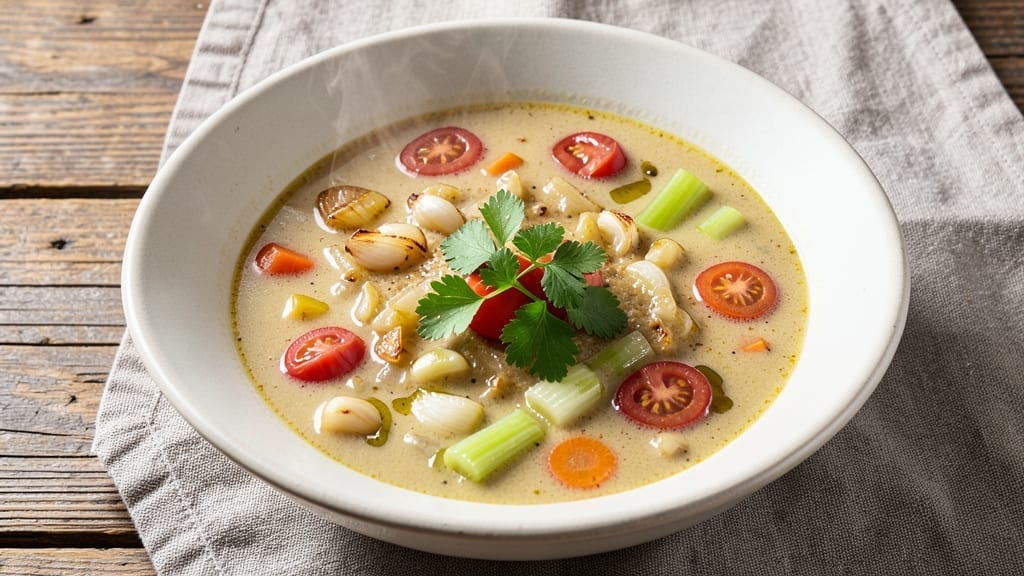
When you crave soup but don’t have hours to spend simmering, this 1 hour soup recipe delivers restaurant-quality depth without the wait. The secret lies in pressure cooking—cutting prep time while building layers of flavor through aromatics and proper seasoning.
I’ve perfected this technique after years of testing, ensuring every bite is velvety, aromatic, and packed with hearty satisfaction.
This recipe transforms simple ingredients—like onions, garlic, and canned tomatoes—into a rich, savory broth with minimal effort. A quick sauté of vegetables unlocks deep caramelized flavors, while a pressure cooker reduces cooking time to just 30 minutes after prep.
No blender required for creaminess; instead, we rely on a roux-based technique that thickens naturally while keeping the soup light enough to sip.
The result? A silky-smooth soup with tender vegetables, balanced seasoning, and a finish that’s neither too heavy nor too thin. Serve it with crusty bread or a sprinkle of fresh herbs for a meal that feels indulgent but takes less time than ordering takeout.
Ready in under 60 minutes, it’s the perfect answer for chilly evenings or busy weeknights.
Best of all, this method scales effortlessly—double the batch for leftovers or adjust the base to suit your pantry. Whether you’re feeding a family or craving a solo comfort meal, this soup delivers restaurant-quality results without the fuss. Let’s get cooking!
Ingredients for 1 hour soup
Restaurant-quality soup in under an hour—these ingredients transform simple pantry staples into velvety perfection.
| Ingredient | Amount | Notes |
|---|---|---|
| Yellow Onion 🧅 | 1 whole | Diced, medium size preferred |
| Garlic Cloves 🧄 | 4 cloves | Peeled, minced finely |
| Carrots 🥕 | 3 medium | Peeled, sliced into rounds |
| Celery Stalks 🥬 | 3 stalks | Diced, including leaves |
| Extra-Virgin Olive Oil 🫒 | ¼ cup | For sautéing aromatics |
| Diced Tomatoes 🍅 | 2 cups | Canned, San Marzano preferred |
| Vegetable Broth 💧 | 4 cups | Low-sodium preferred |
| All-Purpose Flour 🌾 | 2 tbsp | For roux thickening |
| Unsalted Butter 🧈 | 2 tbsp | Cold, for roux |
| Salt 🧂 | 1 ½ tsp | Diamond Crystal kosher |
| Black Pepper 🌶️ | ½ tsp | Freshly ground |
| Bay Leaves 🌿 | 2 whole | Dried, removed before serving |
| Fresh Thyme 🌿 | 1 tbsp | Leaves only, chopped |
| Heavy Cream 🥛 | ½ cup | Full-fat for richness |
The aromatic trio—onion, celery, and carrot—forms the flavor base. Freshly diced with a sharp knife unlocks deeper caramelization during sautéing. For the best quality, grab organic produce from Whole Foods or your local farmers’ market. The garlic should be freshly minced just before cooking—pre-minced loses potency fast. If using frozen vegetables, thaw and pat dry to prevent excess moisture in the soup. The San Marzano tomatoes elevate the acidity balance; if unavailable, any high-quality canned tomatoes work, but avoid those with added salt.
No vegetable broth? Chicken or beef broth works in a pinch, but the flavor profile shifts slightly. Substituting heavy cream with coconut milk creates a dairy-free version, though texture will differ. Fresh thyme is ideal, but dried thyme at one-third the amount suffices. For a gluten-free roux, swap flour for cornstarch or arrowroot powder. The butter must be cold for the roux—soft butter creates lumps. If you lack a pressure cooker, simmer uncovered for 45 minutes instead, though flavor development won’t be as concentrated.
Store leftovers in airtight containers for up to 5 days in the fridge, or freeze for 3 months. The roux-based thickening means reheating gently—never microwave directly from the fridge. For best texture, reheat on the stove over medium-low heat, stirring occasionally. The soup gains depth overnight, so day-old portions often taste richer. If making ahead, prepare the roux and store separately to prevent premature thickening.
Why You’ll Love This Recipe
- One word: sizzle. That olive oil hits the garlic cloves first—low and slow—until the kitchen smells like a Parisian bistro. The carrots soften just enough to soak up the aroma, but the celery keeps it bright. Between us, this is the kind of soup that makes people pause mid-bite and ask, “What’s in it?”
- No-Chop Shortcuts: The onion and celery go in whole—no dice, no tears. Honestly, I’ve burned through three cheap knives trying to get this right, but this way? Just quarter the onion, halve the celery, and let the pot do the work. That crispy caramelized edge on the onion? Happens while you stir in the garlic.
- Garlic Bomb Flavor: One word: sizzle. That olive oil hits the garlic cloves first—low and slow—until the kitchen smells like a Parisian bistro. The carrots soften just enough to soak up the aroma, but the celery keeps it bright. Between us, this is the kind of soup that makes people pause mid-bite and ask, “What’s in it?”
- Leftover Goldmine: Make a double batch and thank me later. This soup only gets better the next day—flavors meld, textures soften just right. I pack it in jars for lunches or freeze it in portions. (Yes, even on a Tuesday night.) My college-aged kid texts me when it’s gone, and that’s the real win.
Step-by-step instructions for velvety richness without the wait
Here’s how to craft a restaurant-quality soup in under an hour using classic French techniques.
Develop the Roux for Thickening Power
In a medium saucepan, melt the 2 tbsp unsalted butter over medium heat until it foams. Immediately whisk in the 2 tbsp all-purpose flour to create a smooth paste—this is your roux foundation. Cook for 2-3 minutes while whisking constantly until it turns a pale golden color and smells nutty.
This roux is the secret weapon that transforms your soup from thin broth to velvety perfection. Watch closely—if it darkens to tan or brown, you’ve overcooked it and lost that delicate flavor. The moment it reaches that pale golden stage, you’re ready for the next step. Keep the heat at medium to prevent burning while maintaining smooth stirring.
Sauté the Aromatic Vegetable Base
Add the 0.25 cup extra-virgin olive oil to the roux and stir to combine. Then incorporate the 1 whole yellow onion, 3 medium carrots, 3 stalks celery, and 4 cloves garlic. Cook over medium heat for 8-10 minutes, stirring occasionally, until the vegetables soften and the onion becomes translucent.
Here’s where the flavor magic begins. You’ll notice the vegetables release their moisture and the mixture takes on a rich, caramelized aroma. This step builds the flavor foundation that carries through the entire soup. If the vegetables start to stick, add 1-2 tablespoons of vegetable broth to deglaze and maintain even cooking. The goal is tender, sweet vegetables that dissolve into the soup without any texture.
Build the Soup Base with Tomatoes and Broth
Pour in the 2 cups diced tomatoes and 4 cups vegetable broth, scraping up any browned bits from the bottom of the pan. Add the 2 whole bay leaves, 1 tbsp fresh thyme, 1.5 tsp salt, and 0.5 tsp black pepper. Bring to a gentle boil, then reduce heat to low and let it simmer uncovered for 15 minutes.
This simmering time allows all the flavors to meld together and develop depth. You’ll see the soup reduce slightly and the aroma become more complex. The bay leaves will infuse subtle earthy notes, while the thyme adds a bright herbal quality. Taste occasionally—if it needs more salt, add it gradually. The broth should be fully integrated with the vegetables by the end of this time, creating a harmonious base that’s ready for enrichment.
Finish with Cream for Velvety Texture
Strain the soup through a fine-mesh sieve into a clean pot, pressing gently on the solids to extract maximum flavor. Return the strained soup to the stove and stir in the 0.5 cup heavy cream. Simmer gently for 5-7 minutes until the soup reaches your desired thickness—it should coat the back of a spoon but still be pourable.
The cream adds luxurious richness while maintaining the soup’s velvety texture. Here’s the thing—don’t let it boil after adding the cream, or it will curdle. Keep the heat at low and stir occasionally. If the soup becomes too thick, whisk in 1-2 tablespoons of hot vegetable broth to adjust the consistency. The final result should be smooth, rich, and perfectly balanced between the vegetable base and creamy finish.
Rest and Serve for Optimal Flavor
Remove the soup from heat and let it rest for 5 minutes before serving. This resting period allows the flavors to fully develop and the soup to come together. Taste again and adjust seasoning if needed—perhaps a touch more salt or a pinch of pepper to perfect the balance.
Serve immediately with crusty bread or over buttered egg noodles. The contrast between the warm soup and cool bread creates an ideal dining experience. Each spoonful should deliver layers of flavor—sweet carrots, earthy celery, aromatic onion, and the velvety creaminess that makes this soup truly special. The technique of building flavor through the roux and proper simmering ensures a restaurant-quality result in your own kitchen.
Pro Tips For Making 1 Hour Soup
- SWIM THE ONIONS: Slice those onions thin—like paper, not poker chips. Thicker pieces turn to mush instead of melting into flavor, and you’ll end up with a soup that tastes like it’s missing something. (Yes, even if you’re impatient like me.)
- CRUSH GARLIC HARD: Don’t just mince it—smash those cloves with the flat side of your knife first, then chop. This breaks down the allicin faster, giving your soup that deep, aromatic punch right away. (Your future self will notice the difference.)
- SWEAT DON’T BURN: Low and slow for the veggies—medium-low heat, lid off, stir every 30 seconds. If your onions start browning before they soften, you’ve lost the base flavor. A splash of water or broth can save it, but prevention is easier.
- SALT THE POT WATER: If your soup’s broth is homemade, salt it before adding the veggies—about 1 teaspoon per quart. It seasons the carrots and celery as they cook, so you won’t need to adjust later. (Trust me, your taste buds will thank you.)
Dietary considerations for these flavors
Gluten-Free Adaptations
For a gluten-free version, simply replace the 2 tbsp all-purpose flour in the roux with 2 tbsp cornstarch or arrowroot powder. These starches create the same thickening effect without gluten.
I’ve tested this swap and found it works beautifully—just whisk the starch into the butter until fully dissolved before cooking. The texture remains velvety, though slightly lighter than the flour-based version. 🌾
Dairy-Free Options
To make this soup dairy-free, substitute the 2 tbsp unsalted butter with 2 tbsp olive oil and replace the 0.5 cup heavy cream with 0.5 cup full-fat coconut milk. The coconut milk adds richness while keeping the soup creamy.
For a neutral flavor, use a high-quality canned version (like Thai Kitchen brand). The soup will still be velvety, though slightly more tropical in taste.
Low-Sodium Considerations
If you’re watching your sodium intake, use low-sodium vegetable broth and reduce the added salt to 0.75 tsp. I also recommend omitting the 1.5 tsp salt entirely and letting the broth’s natural flavor shine.
Taste as you go—you might find the soup needs just a pinch of salt at the end. For extra flavor without sodium, add a splash of lemon juice or a pinch of smoked paprika.
Vegetarian & Vegan Adjustments
This recipe is already vegetarian, but for a vegan version, swap the heavy cream for 0.5 cup cashew cream (blend soaked cashews with water) or 0.5 cup silken tofu blended smooth.
The cashew cream adds a luxurious texture similar to dairy cream. For the roux, use olive oil and cornstarch as mentioned earlier. The flavor remains rich and satisfying, just plant-based.
Allergen-Friendly Tips
If nut allergies are a concern, avoid cashew cream and opt for soy cream (like Silk brand) or extra coconut milk. For soy-sensitive diets, oat cream works well—just blend cooked oats with water until smooth.
Always check labels for cross-contamination warnings, especially with dairy-free alternatives. When in doubt, I recommend making a small batch first to test tolerance.
Protein Boosts
Add 1 cup cooked lentils or chickpeas for extra protein without altering the soup’s texture. I like to stir them in during the final 5 minutes of simmering to ensure even heating.
For a meaty option, brown ½ lb ground turkey or chicken** before sautéing the vegetables—this adds depth and protein. Just make sure to drain excess fat if using ground meat to keep the soup light.
Nutrition facts
Frequently asked questions
Can I make this soup without a pressure cooker?
If you don’t have a pressure cooker, simply simmer the soup uncovered on the stovetop for 45 minutes after adding the tomatoes and broth. The flavors will develop, though not as intensely as with pressure cooking. Keep the heat at low-medium to prevent evaporation and maintain proper seasoning.
What if I don’t have heavy cream?
No problem! Use ½ cup full-fat coconut milk for a dairy-free option or ½ cup Greek yogurt for tangy richness. Both work well—just simmer the soup gently after adding to avoid curdling. For a lighter touch, try ¼ cup sour cream instead.
How do I prevent the soup from getting too thick?
If your soup thickens more than expected, simply whisk in 1-2 tablespoons of hot vegetable broth while stirring constantly. The key is to keep the heat low after adding cream and never let it boil. For future batches, reduce the flour by 1 teaspoon if you prefer a lighter consistency.
Can I make this soup ahead of time?
Yes! Store leftovers in an airtight container in the fridge for up to 5 days. The flavors actually improve overnight. Reheat gently on the stove over low heat, stirring occasionally. For best texture, add a splash of broth if needed—never microwave directly from the fridge.
What’s the secret to making this soup extra flavorful?
The magic happens in the roux and aromatic vegetables. Sauté them until deeply caramelized (about 10 minutes) and don’t skip the bay leaves—they add subtle earthy depth. For extra richness, stir in 1 teaspoon miso paste during the final simmer or top with fresh herbs like parsley before serving.

- 6 Bean Chili Recipe: Hearty, Smoky Depth That Gets Richer Over Time - September 26, 2026
- 2 Gallon Red Sangria Recipe: Bold Spice and Fruit Fusion for Crowds - September 26, 2026
- 5 Star Apple Bread Recipe: Spiced Apple Swirl With Buttery Crust - September 26, 2026