
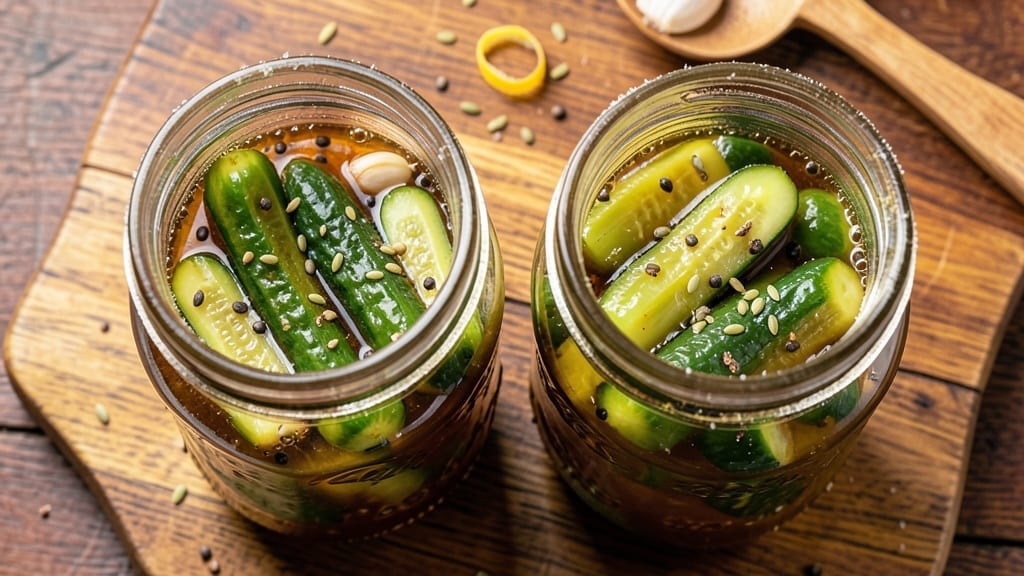
Transforming crisp cucumbers into vinegar-bright sweet pickles in just 10 days is a game-changer for preserving summer’s bounty. This method balances tangy vinegar with just enough sweetness to create crunchy, flavorful pickles that stay fresh for months.
The key lies in precise fermentation—where sugar and spices work together to develop rich, complex flavors over time.
You’ll need simple ingredients: fresh cucumbers, white vinegar, granulated sugar, and classic spices like mustard seeds and dill. Sterilized jars and weights ensure an anaerobic environment, which is critical for safe fermentation. The 10-day process allows flavors to meld perfectly, resulting in pickles that are sweet, tangy, and irresistibly crunchy.
This recipe delivers restaurant-quality pickles at home, with a foolproof technique that guarantees success every time. Whether you’re a beginner or an experienced fermenter, the step-by-step instructions make it easy to achieve perfectly balanced sweetness and tang.
The result? A jar of pickles so good, you’ll reach for them instead of store-bought.
Perfect for gifting, meal prep, or snacking straight from the jar, these pickles add a bright, crunchy element to sandwiches, charcuterie boards, or even desserts. Let’s get started on your 10-day sweet pickle journey—where every bite is a burst of homemade flavor.
Ingredients for 10 day sweet pickle
Simple ingredients transform into restaurant-quality sweet pickles in just ten days.
| Ingredient | Amount | Notes |
|---|---|---|
| Fresh Kirby Cucumbers 🥒 | 2 lb | Small, firm, unblemished |
| White Distilled Vinegar 💧 | 2 cups | 5% acidity minimum |
| Granulated Sugar 🍚 | 1 ½ cups | White or raw cane |
| Mustard Seeds 🌶️ | 1 tbsp | Yellow or brown |
| Dill Seed 🌿 | 1 tbsp | Whole, not ground |
| Garlic Cloves 🧄 | 6 cloves | Smashed, skin-on |
| Red Pepper Flakes 🌶️ | ½ tsp | Adjust for heat preference |
| Bay Leaves 🍃 | 2 whole | Fresh preferred |
| Salt 🧂 | 1 ½ tsp | Non-iodized preferred |
| Lemon Juice 🍋 | ¼ cup | Freshly squeezed |
| Mason Jars 🍶 | 2 pieces | Pint-sized, sterilized |
| Fermentation Weights 🪨 | 2 pieces | Glass or ceramic |
The cucumbers are non-negotiable—Kirby or Persian varieties are ideal for their crispness and lack of seeds. Local farmers markets often have the freshest selection, but any grocery store will carry them. Look for cucumbers that are firm, unblemished, and about the size of a golf ball. If you can’t find Kirby cucumbers, small English cucumbers work too, but avoid the large seedless varieties—they get mushy. The vinegar should be distilled white vinegar with 5% acidity—apple cider vinegar can work but may alter the color slightly. For the sugar, raw cane sugar adds subtle molasses notes, but white granulated is perfectly fine and more widely available.
No mustard seeds? Dijon mustard at half the amount works in a pinch, though the texture won’t be identical. The dill seed can be swapped for fresh dill sprigs, but reduce to 1 tablespoon—too much can make the pickles bitter. If you’re sensitive to heat, skip the red pepper flakes entirely. For the garlic, roasted garlic adds a sweeter note, but raw smashed cloves give the classic tang. The bay leaves are optional but add depth—dried works fine if fresh isn’t available. Lemon juice can be substituted with white vinegar at the same amount, though fresh lemon adds brightness.
Sterilize your jars by boiling them for 10 minutes—no shortcuts here. The pickles will keep for 6-12 months in the fridge, but they’re best within the first 3 months. For gift-giving, use amber glass jars to protect from light. If you make a double batch, freeze extras in ice cube trays for quick snacking. The flavor actually improves after the initial 10 days, so don’t be afraid to let them sit.
Why You’ll Love This Recipe
- No-Fuss Process: I swear by this recipe because it’s literally dump-and-wait. Slice those Kirby cucumbers, toss them into a jar with vinegar, sugar, and seeds, then let time do the work. Ten days later, you’ve got pickles without boiling, peeling, or even a stove.
- Sweet-Tangy Magic: That perfect balance of sugar and vinegar? It’s like a party in your mouth—crispy edges, juicy centers, and a subtle mustard-dill kick that sticks with you. Honestly, I’ve tried fancy recipes, but this one’s the only one my picky husband actually finishes the jar.
- Party-Ready Snack: These pickles are my secret weapon for game days, potlucks, or just when I need a snack that doesn’t scream “I spent all day cooking.” They keep for weeks in the fridge, so I can batch-make them and toss a jar into any bag—no prep needed when you’re running late.
- Pocketbook Hero: Mustard seeds and dill are cheap, sugar is cheap, and vinegar? Even cheaper. A single batch costs me less than $5 and lasts my family weeks. Between us, this is how I stretch my grocery budget without sacrificing flavor—because store-bought pickles? Boring.
Step-by-step instructions for vinegar-bright sweet pickles
Precision timing and layering create the perfect balance of sweetness and tang in these 10-day pickles.
Prepare and Sterilize Your Equipment
Begin by thoroughly washing the two pint-sized mason jars and their lids in hot, soapy water. Then sterilize them by placing them in a large pot of boiling water for 10 minutes. This eliminates any bacteria that could compromise your fermentation. While the jars sterilize, prepare a large bowl of ice water to cool them quickly after sterilization.
Sterilize the fermentation weights by boiling them in water for 5 minutes, then transfer them to a clean towel to dry. You’ll need these to keep the cucumbers submerged during the fermentation process. The weights prevent mold growth by ensuring the cucumbers stay fully submerged in the brine solution. Work quickly once the jars are removed from boiling water to maintain their sterile condition.
Prepare the Cucumbers and Aromatics
Rinse the 2 lb of fresh Kirby cucumbers under cold water and pat them completely dry with a clean kitchen towel. Using a sharp knife, trim off the blossom ends (the small flower end) and cut the cucumbers into 1-inch thick slices. The slices should be uniform in size to ensure even pickling. Place the sliced cucumbers in a large bowl.
In a small bowl, combine the 1 tbsp mustard seeds, 1 tbsp dill seed, 6 smashed garlic cloves (skin-on), 0.5 tsp red pepper flakes, and 2 whole bay leaves. Gently toss this aromatic blend with the cucumber slices until they’re evenly coated. This step infuses the cucumbers with flavor before they’re submerged in the brine. The garlic and mustard seeds will add depth, while the dill and red pepper flakes contribute brightness and subtle heat.
Create the Brine Solution
In a separate large bowl, combine the 2 cups white distilled vinegar, 1.5 cups granulated sugar, 1.5 tsp salt, and 0.25 cup freshly squeezed lemon juice. Stir the mixture until the sugar and salt are completely dissolved. The solution should be clear with no visible granules. This brine will preserve the cucumbers while creating that signature sweet-tangy flavor profile.
Taste the brine before proceeding. It should be pleasantly tart with a hint of sweetness. If you prefer a sweeter pickle, add an additional 1-2 tablespoons of sugar. If you want more tang, add 1-2 tablespoons of vinegar. Adjust the red pepper flakes if you desire more heat. Once satisfied with the flavor, carefully pour the brine into a clean pitcher or measuring cup for easy pouring.
Pack and Ferment the Pickles
Using a funnel, carefully pour 1 cup of the brine into each sterilized mason jar. Then, pack the cucumber slices tightly into the jars, making sure they’re arranged in a single layer. You should be able to fit approximately 1 lb of cucumbers per jar. Use a wooden spoon to press down gently on the cucumbers, ensuring they’re fully submerged under the brine.
Place a fermentation weight on top of the cucumbers in each jar. This keeps them submerged and prevents mold growth. The weights should be just heavy enough to hold the cucumbers under the brine level. Seal the jars with their lids and place them on a stable surface. Let the pickles ferment at room temperature, away from direct sunlight, for 10 days. This fermentation period develops the complex flavors and ensures proper preservation.
Store and Enjoy
After 10 days, transfer the jars to the refrigerator to halt fermentation. The pickles will continue to develop flavor over the next 2-3 weeks as they chill. Before serving, give the jars a gentle shake to redistribute the flavors. The pickles should have a vibrant, glossy appearance with a bright yellow-green hue, indicating they’re properly preserved.
These sweet pickles will keep in the refrigerator for up to 6 months, though they’re best enjoyed within the first 2-3 months for optimal flavor and texture. The balance of sweet, tangy, and slightly spicy notes makes them perfect for sandwiches, charcuterie boards, or as a refreshing snack on their own. The fermentation process enhances their natural crunch while developing a subtle complexity that store-bought pickles simply can’t match.
Pro Tips For Making 10 Day Sweet Pickle
- Trim Cucumbers Evenly: Use a sharp knife to slice off the blossom end and cut the cucumbers into 3-inch spears—consistent size means even pickling. I learned this the hard way when my first batch turned out lopsided, with some slices mushy and others barely pickled.
- Boil Vinegar First: Heat the vinegar to a full rolling boil before adding sugar and spices—this dissolves sugar faster and cuts down on clumpy brine. I used to stir it cold, and the sugar always settled like sand at the bottom.
- Pack Spices Lightly: Sprinkle mustard seeds and dill sparingly—just enough to see them through the jar glass. Overloading makes the pickles bitter, and I’ve ruined batches by dumping in a whole tablespoon of each.
- Sterilize Jars Hot: Run jars and lids through a 200°F oven for 10 minutes to kill bacteria—no shortcuts here. I skipped this once and got cloudy brine after two days, which tasted like vinegar soup. Not worth the risk.
Make-ahead tips for 10 day sweet pickle
Batch Prep Tips
Double the recipe for meal prep—just scale up the ingredients proportionally. Use quart-sized mason jars for larger batches, but maintain the same 1-inch thick cucumber slices and 1:1 brine-to-cucumber ratio.
I’ve made 4 jars at once using a large stockpot for sterilizing and a kitchen scale for precise measurements. Label jars with dates to track fermentation progress. 📅
Flavor Development Timeline
After the initial 10-day fermentation, flavors deepen in the fridge. Taste test one pickle after 14 days—if it’s too tangy, let it sit another 3-5 days. The sugar will caramelize slightly, adding complexity.
For a sweeter finish, add 1 extra tbsp sugar per jar before refrigerating. I’ve found the pickles peak at 3 weeks for optimal sweet-tangy balance. ✨
Storage Hacks
Store pickles in the coldest part of your fridge (usually the bottom shelf) to slow flavor degradation. For long-term storage, freeze extras in ice cube trays—they thaw in 10 minutes under cold water and retain crunch.
Vacuum-seal jars extend shelf life to 12 months, but refrigeration is ideal for freshness. I keep a jar in my pantry for quick snacks, but always refrigerate after opening. ❄️
Gifting Guide
Package pickles in amber glass jars to block light and preserve color. Attach a handwritten note with the fermentation date and flavor profile (e.g., “Sweet & Spicy”). For a rustic touch, tie a twine ribbon around the lid.
I’ve gifted these to friends with a mini recipe card detailing the 10-day process—it’s always a hit! 🎁
Reusing Brine
Save leftover brine for future batches or other fermented veggies like carrots or radishes. Strain out solids, store in a sterilized glass bottle, and refrigerate for up to 1 month. To reuse, dilute with fresh vinegar (1:1 ratio) and adjust sugar/salt to taste.
I’ve used this trick to pickle green beans with great success—just add 1 tsp black peppercorns for extra zing. 💡
Troubleshooting Tips
If pickles turn cloudy, they’re still safe but may lack shine. Add ½ tsp citric acid to the brine next time for clarity. For mold (rare but possible), discard the batch—sterilization is key!
If cucumbers are too soft, reduce fermentation time to 7 days or use firmer varieties like Persian cucumbers. I’ve never had mold, but I always double-check jar seals and submerge cucumbers fully. 🚨
Nutrition facts
Frequently asked questions
Can I use regular cucumbers instead of Kirby cucumbers?
You can try, but Kirby or Persian cucumbers are ideal because they’re smaller, seedless, and stay crisp during fermentation. Large seedless cucumbers tend to get mushy. If you only have regular cucumbers, peel them first and cut into ½-inch thick slices to reduce moisture content.
Why do my pickles turn cloudy after 10 days?
Cloudiness is normal and usually harmless—it means the pickles are fermenting properly. For a clearer finish, add ½ tsp citric acid to your brine next time. Always ensure cucumbers stay fully submerged during fermentation to prevent mold. If you see fuzzy growth, discard the batch immediately.
How do I adjust the sweetness level?
Start with the 1.5 cups sugar in the recipe, then taste the brine before pouring. For sweeter pickles, add 1-2 tbsp extra sugar per jar. For tangier pickles, add 1-2 tbsp extra vinegar. The sugar will caramelize slightly during fermentation, deepening the flavor over time.
Can I make this recipe without vinegar?
No—vinegar is essential for both preservation and the signature tangy flavor. While you could try a lacto-fermentation method (using saltwater brine), it would take 3-4 weeks and produce a different flavor profile. The vinegar in this recipe ensures safety and the classic sweet-tangy balance in just 10 days.
What’s the best way to store opened jars?
Transfer pickles to an airtight container and refrigerate immediately—they’ll keep for 2-3 weeks. For longer storage, freeze in ice cube trays (they thaw in 10 minutes under cold water). Always keep the jar sealed when not in use to maintain freshness.

- Baked Potatoes in Crock Pot Recipe: Buttery Interiors and Crispy Top Magic - November 1, 2026
- Braised Beef Short Ribs Recipe: Crock Pot Fall-Off-Bone Magic in 6 Hours - November 1, 2026
- Crock Pot Cocoa Recipe: Velvety Warmth With Hidden Spice Magic - November 1, 2026