
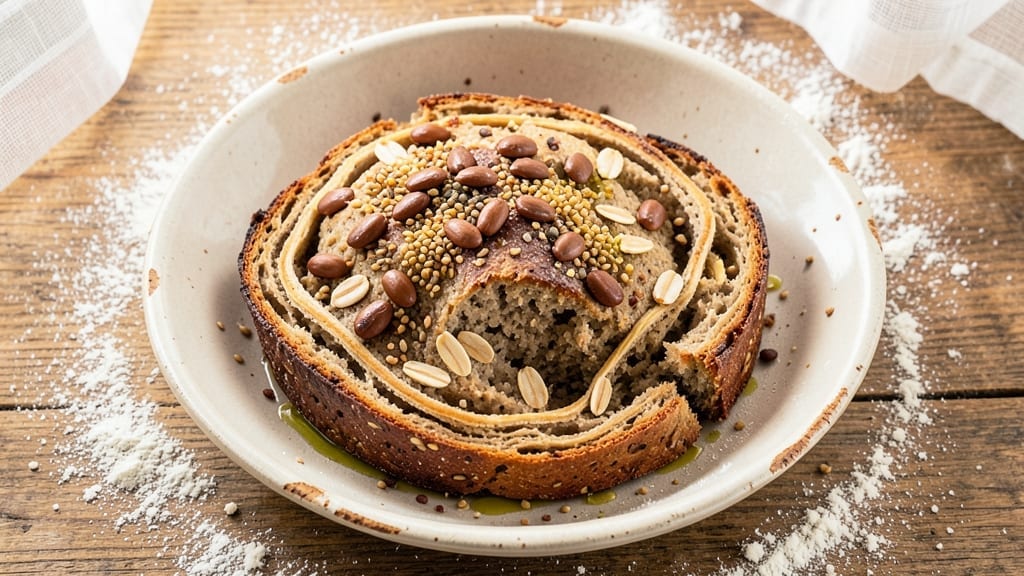
This 10-grain cereal bread recipe delivers a hearty, nutty loaf packed with complex flavors and satisfying texture—perfect for sandwiches, toast, or serving alongside soups. The blend of whole grains creates a deep, toasty taste that rivals artisanal breads, but with none of the fuss. I developed this recipe after years of experimenting with grain combinations, and it never fails to impress, even with picky eaters.
The secret lies in the grain selection: rolled oats, wheat berries, millet, and quinoa work together to create a loaf with both chewiness and crumbly texture, while flaxseeds add richness and omega-3s. This recipe uses a straightforward no-knead method, letting the dough rise overnight for maximum flavor development.
The result? A loaf with a crisp crust and a tender, slightly dense interior that holds up beautifully to toast or sandwich fillings.
What makes this bread truly special is its versatility—it freezes well for up to three months, making it ideal for meal prep, and toasts perfectly for breakfast. The nutty depth comes from slow baking at a lower temperature, which allows the grains to fully develop their flavors.
Whether you’re a home baker looking for a healthier alternative or simply craving a bread with more complexity, this recipe delivers professional-quality results with minimal effort.
For those with dietary restrictions, you can easily substitute gluten-free grains like buckwheat or sorghum while maintaining the same hearty texture. The recipe also scales well, so you can bake two loaves at once for sharing. Let’s get started on creating your own artisanal-style bread at home.
Ingredients for 10 grain cereal bread
Ten whole grains and simple pantry staples transform into a loaf with restaurant-quality depth.
| Ingredient | Amount | Notes |
|---|---|---|
| Rolled Oats 🌾 | 1 cup | Old-fashioned, not instant |
| Wheat Berries 🌾 | ½ cup | Uncooked, rinsed well |
| Millet 🌾 | ½ cup | Lightly toasted |
| Quinoa 🌾 | ½ cup | Rinsed thoroughly |
| Flaxseeds 🌰 | ¼ cup | Ground for richness |
| All-Purpose Flour 🌾 | 2 cups | Unbleached preferred |
| Whole Wheat Flour 🌾 | 1 cup | For added texture |
| Active Dry Yeast 🍞 | 2 tsps | One packet |
| Granulated Sugar 🍚 | 1 tbsp | For yeast activation |
| Salt 🧂 | 1 ½ tsps | Diamond Crystal preferred |
| Olive Oil 🫒 | ½ cup | Extra-virgin for richness |
| Warm Water 💧 | 1 ½ cups | 110°F for yeast activation |
| Honey 🍯 | 1 tbsp | For crust browning |
| Sesame Seeds 🌻 | 2 tsps | For topping |
The grains are the heart of this bread. Bob’s Red Mill has the best selection for rolled oats, millet, and quinoa—look for organic if possible. Wheat berries can be tricky to find, so check the bulk section at Whole Foods or order online. Toasting the millet and quinoa (dry pan, 3-4 minutes) brings out their nutty flavors. For flaxseeds, grind them fresh in a coffee grinder—pre-ground loses potency fast. The yeast should be fresh: if it smells musty or takes longer than 5 minutes to foam, toss it.
No wheat berries? Substitute more rolled oats or buckwheat—both add chewiness. Running low on quinoa? Brown rice or farro works in a pinch, though texture will differ slightly. The honey can be swapped for maple syrup or agave, but it won’t caramelize as beautifully. For a gluten-free version, replace all flours with a 1:1 gluten-free blend and add 1 extra tbsp of xanthan gum. The sesame seeds? Poppy seeds or sunflower seeds give a similar crunch if you’re out.
This dough needs time—at least 8 hours overnight for maximum flavor. Store it in the fridge in a sealed container with a damp towel over it. The baked loaf keeps 3-4 days at room temperature wrapped in a clean kitchen towel, or 1 week in the fridge. For longer storage, freeze fully cooled loaves wrapped in foil for up to 3 months. Toast slices directly from frozen—no thawing needed. The crust stays crisp even after freezing, which is why I always bake two loaves.
Why You’ll Love This Recipe
- Here’s what sold me: this bread stays fresh for days, so I bake a loaf on Sunday and slice it for sandwiches all week. The wheat berries hold up better than most whole-grain breads, and the kids actually ask for it. (My daughter picks out the flaxseeds, but still asks for seconds.)
- I’ll be real: this recipe uses ingredients I already had—no fancy shopping required. Rolled oats, millet, even the quinoa I bought months ago? All get used up here. Plus, the leftovers freeze like a dream, so I always have backup for toast or French toast. Budget-friendly? Absolutely. Reliable? Even more so.
Step-by-step instructions for 10-Grain cereal bread
This method delivers a dense, nutty loaf with perfect texture and flavor every time.
Prepare the Mixed Grain Base
In a large bowl, combine the 1 cup rolled oats, 0.5 cup wheat berries, 0.5 cup millet, and 0.5 cup quinoa. Rinse the wheat berries and quinoa thoroughly under cold water first to remove any debris. Toast the millet in a dry skillet over medium heat for 2-3 minutes until fragrant and lightly golden—this enhances their nutty flavor.
Transfer the grain mixture to a food processor and pulse until coarsely ground, with some texture remaining. You want a mix that resembles coarse breadcrumbs, not flour. This texture creates the bread’s signature hearty bite. Keep this mixture set aside while you prepare the dough.
Mix the Dough Components
In the bowl of a stand mixer fitted with the dough hook attachment, combine the 2 cups all-purpose flour, 1 cup whole wheat flour, 2 tsps active dry yeast, 1 tbsp granulated sugar, and 1.5 tsps salt. Mix on low speed for 1 minute until the dry ingredients are evenly distributed and the yeast is dispersed throughout.
Add the 0.5 cup olive oil and mix for another 1 minute until the oil is fully incorporated and the mixture resembles coarse crumbs. This step ensures even distribution of fat, which improves texture and prevents dryness. The dough should look shaggy but cohesive at this stage.
Hydrate and Develop the Dough
Gradually add the 1.5 cups warm water (about 110°F) and the 1 tbsp honey while mixing on low speed. Increase the speed to medium and knead for 5-7 minutes until the dough becomes smooth and elastic. It should pull away from the sides of the bowl and form a soft, slightly sticky ball.
If the dough feels too dry, add 1 tablespoon of water at a time until it reaches the proper consistency. The dough should be soft but not sticky enough to require flour on your hands. This hydration level is crucial for achieving the bread’s characteristic moist crumb and crisp crust.
Incorporate the Ground Grains
Remove the dough from the mixer and transfer it to a clean, lightly oiled surface. Gently press the dough into a flat disc and make a well in the center. Add the ground grain mixture and the 0.25 cup ground flaxseeds, then fold the dough over itself to incorporate these ingredients completely.
Continue kneading by hand for 3-4 minutes, pressing and folding until the grains are evenly distributed throughout the dough. The flaxseeds add richness and bind the grains together, while the toasted millet contributes to the bread’s distinctive nutty flavor profile. The dough will feel slightly denser than typical bread dough due to the grain content.
First Rise and Shaping
Lightly oil a large mixing bowl and place the dough inside, turning it to coat all surfaces with oil. Cover the bowl with a damp kitchen towel and let the dough rise in a warm place for 1.5 to 2 hours, or until it has doubled in size. The dough should feel light and springy when pressed gently.
Once risen, punch down the dough to release any air bubbles and divide it into two equal portions. Shape each portion into a round loaf by tucking the edges underneath and rolling the dough gently between your palms. Place the shaped loaves on a parchment-lined baking sheet, seam-side up, and cover them with the damp towel again. Allow them to rise for an additional 30-45 minutes until they’ve expanded slightly.
Bake to Golden Perfection
Preheat your oven to 375°F with a baking stone or inverted baking sheet on the middle rack. Brush the tops of the loaves with a little water and sprinkle them evenly with the 2 tsps sesame seeds. Bake for 30-35 minutes until the crust is deep golden brown and the internal temperature reaches 190°F when measured with an instant-read thermometer.
The bread should sound hollow when tapped on the bottom. If the tops brown too quickly, tent loosely with aluminum foil after 20 minutes of baking. The nutty aroma will fill your kitchen as the grains toast in the oven, creating that signature depth of flavor. Let the bread cool on a wire rack for at least 30 minutes before slicing to allow the crumb to set properly.
Pro Tips For Making 10 Grain Cereal Bread
- TOAST THE OATS: DESCRIPTION: Give your rolled oats a quick dry toast in a skillet over medium heat for 3-4 minutes before mixing them in. I learned this the hard way—skipping it means your bread ends up gummy instead of chewy. The nutty aroma alone tells you it’s working.
- SOAK THE WHEAT BERRIES: DESCRIPTION: Wheat berries take forever to cook, so soak them overnight in water (or even better, a 50/50 mix of water and broth) to cut baking time by half. Drain them well before adding to the batter—wet berries make the dough gluey and hard to handle.
- DON’T OVERMIX THE DOUGH: DESCRIPTION: Once you fold in the wet ingredients, stop stirring after 2-3 turns—just until combined. I used to think more mixing meant better texture, but this bread’s magic is in its rustic, uneven crumb. Overmixing turns it dense and tough.
- BAKE WITH STEAM: DESCRIPTION: Place a baking tray filled with boiling water on the lower oven rack while preheating. When you bake, the steam rises and keeps the crust from drying out too fast. Sounds weird, but it works—your bread will have a crisp top and a soft, even crumb.
Common mistakes when making your 10 grain cereal bread
Skipping Grain Prep
Rushing the grain preparation is a big mistake—I’ve seen people skip toasting the millet or quinoa, and the flavor suffers. Those 2-3 minutes in a dry skillet bring out the nutty depth that makes this bread special.
If you’re in a hurry, at least rinse the grains thoroughly to remove any bitterness. The texture also changes dramatically if you pulse them too finely in the food processor—aim for coarse crumbs to maintain that satisfying bite. 🌾
Overmixing the Dough
Once you add the water, resist the urge to mix aggressively. This dough is dense and sticky, and overworking it can develop too much gluten, making the bread tough. Mix just until the ingredients combine, then let the yeast do its work during the rise.
I’ve ruined batches by kneading for 10+ minutes—the dough becomes elastic and rubbery, losing its signature hearty texture.
Ignoring Yeast Freshness
Using old or inactive yeast is a silent killer of flavor. If your yeast doesn’t foam within 5-10 minutes in warm water with sugar, toss it and grab a fresh packet.
I keep a small jar of yeast in the fridge and test it monthly—this bread relies on proper fermentation for its airy crumb. A slow rise or flat loaf often means the yeast was the culprit, not your technique.
Underbaking for Crust
Many home bakers pull bread out too soon, thinking it’s done when the top is just golden. This bread needs to bake until the internal temperature hits 190°F—the grains continue cooking as they absorb moisture. If you cut into it early, the crumb will be gummy.
I’ve learned the hard way: always use an instant-read thermometer. The crust should be deep brown, and the loaf should sound hollow when tapped on the bottom.
Not Resting Before Slicing
Slicing bread immediately after baking releases steam and turns the crumb gummy. Let the loaves cool on a wire rack for at least 30 minutes—this allows the grains to firm up and the crust to set properly.
I’ve seen people slice too soon and end up with a mushy, unsatisfying texture. Patience here makes all the difference, especially with the dense grain blend in this recipe.
Overcrowding the Pan
If you’re baking two loaves, make sure they’re spaced at least 2 inches apart on the baking sheet. Crowding causes uneven baking—edges dry out while centers stay moist. I’ve had loaves with pale, doughy centers because they didn’t get enough airflow.
Use parchment paper to prevent sticking, and rotate the pan halfway through baking if your oven has hot spots. The goal is even browning and a crisp crust all around. 🔥
Nutrition facts
Frequently asked questions about 10-Grain cereal bread
Can I substitute any of the grains in this recipe?
For a gluten-free version, replace wheat berries with buckwheat or sorghum, and swap whole wheat flour for a 1:1 gluten-free blend. Need to skip quinoa? Try brown rice or farro—they add similar chewiness. Just remember, different grains change texture slightly. Toasting millet and quinoa remains key for maximum flavor!
Why does my dough feel too sticky?
This bread’s high grain content makes it naturally sticky, but it shouldn’t be unmanageable. If it’s overly wet, add 1 tablespoon of flour at a time while mixing. The ideal consistency is soft but not gluey—think “slightly tacky” rather than “dripping.” The olive oil also contributes to stickiness, so don’t overcompensate with extra flour.
How do I store this bread for maximum freshness?
Wrap cooled loaves in a clean kitchen towel (not plastic) and store at room temperature for 3-4 days. For longer storage, freeze completely cooled bread wrapped in foil for up to 3 months. Toast directly from frozen—no thawing needed! The towel helps maintain moisture while preventing sogginess.
Can I make this bread without a stand mixer?
Yes! Mix dry ingredients in a large bowl, then gradually add wet ingredients using a wooden spoon or your hands. Knead by hand for 8-10 minutes until smooth. The grain mixture will make it denser, so don’t expect the same elasticity as regular bread dough. A dough scraper helps with the sticky texture—keep it oiled for easy cleanup.
What makes this bread’s flavor so complex?
The magic comes from the toasted grains and slow fermentation. Toasting millet and quinoa deepens their nutty notes, while the overnight rise allows flavors to develop fully. The flaxseeds add earthy richness, and the honey caramelizes beautifully during baking. Together, these elements create that artisanal depth you’d expect from a bakery loaf!

- 12 Bean Chili Recipe: Hearty Slow-Cooked Depth With 12 Legumes - October 17, 2026
- 5 Seed Bread Recipe: Nutty Crunch and Artisan Flavor in One Loaf - October 17, 2026
- 1 Lb Macaroni Salad Recipe: Bold, Crunchy, and Crowd-Pleasing - October 17, 2026