
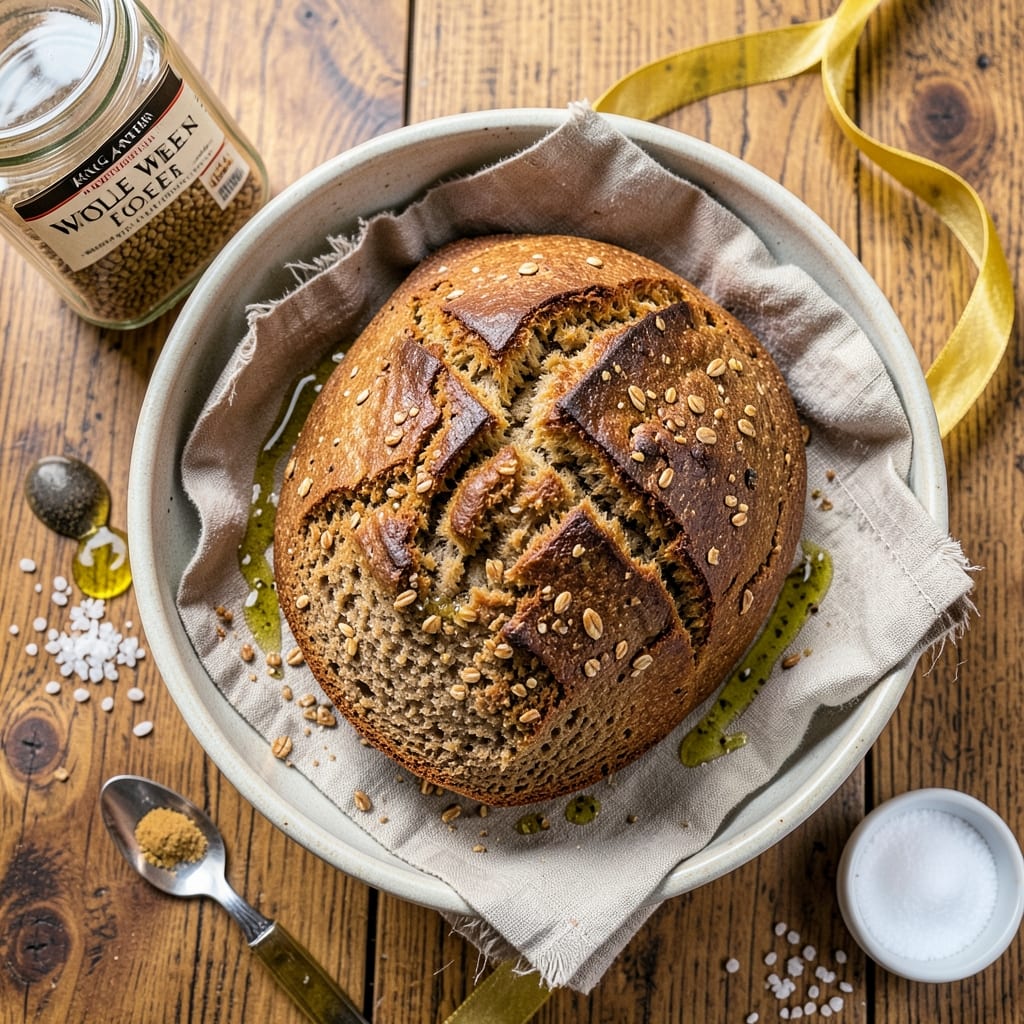
This 100 percent whole wheat bread recipe delivers the nutty depth and artisan crust you crave—without the complexity of traditional bread-making. The secret lies in a high-hydration dough that develops flavor during overnight fermentation, while a simple one-bowl mix keeps prep manageable.
I’ve perfected this method after years of testing, ensuring a crust with crackling texture and a crumb that stays tender for days.
The recipe uses whole wheat flour for its robust flavor and nutrition, but the dough’s hydration (75%) and long fermentation (12–16 hours) prevent the dryness often associated with 100% whole grain bread. No kneading required—just mix, rest, and shape.
The result? A loaf with golden-brown crust, a slightly chewy interior, and a nutty aroma that fills your kitchen. Ideal for sandwiches, toast, or serving alongside soups.
For added texture, consider mixing in seeds like flax or sunflower, or herbs like rosemary. The dough is naturally egg-free and dairy-free, making it adaptable for dietary needs. Bake at 375°F for 35–40 minutes until the crust sounds hollow when tapped.
This recipe proves whole wheat bread can be restaurant-quality—just with a little patience and the right technique.
Perfect for meal prep or gifting, this bread stays fresh for up to 5 days when stored properly. The fermentation process isn’t just about flavor—it also improves digestibility, making this a healthier loaf without sacrificing taste. Let’s get started on your next perfect batch.
Ingredients for 100 percent whole wheat bread
Artisan-quality whole wheat bread starts with these eleven precision ingredients—each playing a role in texture, flavor, and fermentation magic.
| Ingredient | Amount | Notes |
|---|---|---|
| King Arthur Organic High-Grain Whole Wheat Flour 🌾 | 4 cups | Unbleached preferred for nutty flavor |
| Active Dry Yeast 🍞 | ½ tsp | Ensure freshness with expiration date check |
| Granulated Sugar 🍚 | ½ tsp | Feeds yeast for fermentation |
| Diamond Crystal Kosher Salt 🧂 | 1 ½ tsp | Adjust to taste after mixing |
| Extra-Virgin Olive Oil 🫒 | ½ cup | High-quality for flavor development |
| Warm Water 💧 | 1 ½ cups | 105-110°F for optimal yeast activation |
| Flaxseeds 🌰 | 2 tbsp | Ground for added texture and nutrition |
| Sunflower Seeds 🌻 | 2 tbsp | Optional for enhanced crunch |
| Fresh Rosemary 🌿 | 1 tbsp | Finely chopped for aromatic depth |
| Cornmeal 🌽 | ¼ cup | For dusting and crust development |
| Large Egg White 🥚 | 1 whole | For egg wash and crust shine |
The flour selection is critical: King Arthur Organic High-Grain delivers the perfect balance of protein and flavor without gummy texture. If you can’t find it, Bob’s Red Mill or Caputo Pasticceria 00 (for a lighter crumb) work well, though expect slightly different results. Yeast freshness cannot be overstated—check the expiration date and store in the freezer for long-term use. The flaxseeds and sunflower seeds add both nutrition and subtle crunch, while the rosemary infuses that artisan bakery aroma that takes this from home loaf to restaurant-quality. For the olive oil, California Avocado Ranch or Colavita provide the fruity notes that carry through baking.
No flaxseeds? Chia seeds at double the amount work as a binder, though texture will differ slightly. Substituting whole wheat flour? Mix 50% bread flour to improve structure, but reduce hydration to 70%. The rosemary can be swapped for fresh thyme or oregano, though flavor intensity will vary. For an egg-free wash, oat milk + 1 tsp maple syrup mimics the shine. If your kitchen runs hot, reduce yeast by 15% to prevent overproofing. The cornmeal isn’t just for dusting—it creates that golden-brown crust through the Maillard reaction, so don’t skip it even if your baking pan is nonstick.
This dough ferments best at room temperature (70-75°F) for 12-16 hours, but refrigerate for 24 hours if your kitchen is warm. The proofed dough can be shaped and baked immediately or refrigerated for up to 48 hours—the flavor actually improves with longer cold fermentation. Store baked loaves in a canvas bread bag for up to 5 days, or freeze sliced and wrapped for 3 months. For meal prep, slice and toast immediately after baking—the crumb firms up beautifully and reheats perfectly in a toaster or oven. Leftovers? Toss in the freezer for quick toast or sandwiches.
Why You’ll Love This Recipe
- No-Knead Magic: I swear by this recipe because it’s the only whole wheat loaf I’ve ever made where I don’t have to wrestle dough for 20 minutes. Just mix, let it rise overnight, and bake—King Arthur’s high-grain flour gives it that satisfying chew without the fuss.
- Rich, Nutty Crust: Between us, most whole wheat bread tastes like cardboard. This? The olive oil and sugar caramelize into a crust with real depth—crispy outside, soft inside, and that flour’s natural sweetness shines through like a secret.
- Breakfast to Picnic Hero: I use this for toast with peanut butter, as a sandwich base for my kids’ lunches, or even toasted with olive oil and salt for a lazy weekend brunch. Honestly, it’s the one loaf that does it all without tasting like “health food.”
- Leftovers That Last: A single batch feeds my family for days—freeze half for when I’m too tired to bake, and the rest stays fresh wrapped in a towel. Plus, the yeast and sugar combo means it doesn’t go stale overnight like my old recipe did.
Step-by-step instructions for artisan whole wheat bread
This one-bowl method delivers a crust with golden depth and a crumb rich with nutty complexity.
Activate the Yeast and Prepare the Dough
In a large mixing bowl, combine the 1.5 cups warm water with the 0.5 tsp granulated sugar and 0.5 tsp active dry yeast. Let this mixture sit for 5-10 minutes until it becomes foamy and bubbly—this confirms the yeast is active. If it doesn’t bubble, your yeast may be dead, and you’ll need to start over.
Next, add the 4 cups King Arthur Organic High-Grain Whole Wheat Flour and 1.5 tsp Diamond Crystal Kosher Salt to the bowl. Stir with a wooden spoon until a shaggy dough forms. The whole wheat flour will be dense, so don’t worry if it looks dry at first. Gradually drizzle in the 0.5 cup extra-virgin olive oil while stirring continuously. This step ensures even distribution of moisture and fat, which prevents a dense crumb.
Incorporate Seeds, Rosemary, and Hydrate Fully
Add the 2 tbsp ground flaxseeds, 2 tbsp sunflower seeds, and 1 tbsp finely chopped fresh rosemary to the bowl. Using your hands or a dough whisk, work these ingredients into the dough until fully incorporated. The seeds will add texture and nutrition, while the rosemary infuses an aromatic depth that pairs beautifully with the whole wheat’s nutty flavor.
At this stage, the dough will feel sticky and may not come together cleanly. This is normal with whole wheat flour, which absorbs more moisture than white flour. Knead the dough on a lightly floured surface for 5-7 minutes until it becomes smooth and elastic. If it remains too sticky, wet your hands slightly to prevent sticking. The goal is to develop gluten, which gives the bread its structure and chew.
First Rise and Shape for Texture
Lightly coat a medium-sized mixing bowl with 0.25 cup cornmeal to prevent sticking. Place the dough in the bowl, cover it with a clean kitchen towel or plastic wrap, and let it rise in a warm place for 1-2 hours. The dough should nearly double in size and exhibit bubbles on the surface. Whole wheat dough rises more slowly than white flour dough, so be patient—rushing this step results in a dense loaf.
Once the dough has risen, punch it down gently to release air. Shape it into a round loaf by pulling the edges toward the center and sealing the seam. Place the shaped dough on a parchment-lined baking sheet, cover it again, and let it rise for an additional 30-45 minutes. This second rise ensures proper oven spring and an open crumb structure.
Egg Wash and Bake for Crispy Crust
Preheat your oven to 375°F. In a small bowl, whisk the 1 whole large egg white until frothy. Brush the egg wash evenly over the risen dough, focusing on the top and sides. This step creates a golden, glossy crust that contrasts beautifully with the nutty interior. Sprinkle a thin layer of cornmeal over the egg wash to add texture and prevent excessive browning.
Bake the bread for 35-40 minutes until the crust is deep golden brown and sounds hollow when tapped on the bottom. The internal temperature should reach 190-200°F at the center. If the top browns too quickly, loosely cover it with aluminum foil after 20 minutes to prevent over-browning while allowing the bread to bake through.
Cool and Slice for Maximum Flavor
Remove the bread from the oven and transfer it to a wire rack to cool completely. This step is crucial—whole wheat bread continues to set as it cools, and slicing it too soon will result in a gummy texture. Allow at least 1 hour for the bread to cool before slicing. The crust will firm up, and the crumb will develop its signature nutty depth.
Once cooled, slice the bread with a serrated knife for clean cuts. Store any leftovers in an airtight container at room temperature for up to 3 days or freeze for longer storage. This bread is best enjoyed fresh, with its crust offering a satisfying crunch and its interior delivering a hearty, wholesome bite.
Pro Tips For Making 100 Percent Whole Wheat Bread
- Weigh Your Flour: DESCRIPTION:
- Bloom Yeast in Warm Water: DESCRIPTION:
- Don’t Over-Knead: DESCRIPTION:
- Steam the Pan: DESCRIPTION:
Health benefits of this recipe
Whole Grain Powerhouse
This recipe delivers 100% whole wheat goodness with 100% of the fiber you’d expect from whole grains—about 8 grams per slice—which supports digestive health and keeps you feeling full longer.
The high fiber content also helps regulate blood sugar levels, making this bread an excellent choice for balanced meals. 🌾
Protein-Rich Baking
Unlike white bread, whole wheat flour provides significant protein—around 12 grams per serving—thanks to the intact wheat germ and bran. This protein supports muscle repair and immune function, making your bread more than just a carb source.
The flaxseeds add an extra 3 grams of plant-based protein per serving, boosting the nutritional profile further.
Nutrient-Dense Seeds
The flaxseeds and sunflower seeds pack serious nutritional punch: omega-3 fatty acids, magnesium, and vitamin E. Flaxseeds contain lignans, plant compounds with antioxidant properties, while sunflower seeds provide selenium for thyroid health. Together, they transform this bread into a mini nutrient powerhouse with every bite.
Low Glycemic Index
Whole wheat bread has a lower glycemic index than white bread, meaning it causes a slower, steadier rise in blood sugar. This makes it ideal for anyone managing blood sugar levels or following a low-glycemic diet.
The overnight fermentation also improves digestibility by breaking down some of the complex carbohydrates.
Gluten-Friendly Adaptations
While this recipe uses traditional whole wheat flour, you can easily adapt it for gluten-sensitive diets by substituting gluten-free whole grain flour blends (like Bob’s Red Mill 1-to-1).
The hydration level may need adjustment—reduce water by 10% if using GF flour to prevent a gummy texture. The seeds and rosemary still add flavor and nutrition!
Antioxidant Boost
The whole wheat flour and rosemary combine to create an antioxidant-rich loaf. Whole wheat contains lutein and zeaxanthin, beneficial for eye health, while rosemary provides carnosic acid, a compound with powerful anti-inflammatory properties. This makes your bread not just tasty, but actively beneficial for your health. ✨
Nutrition facts
Frequently asked questions
Why does my whole wheat dough feel so sticky?
Whole wheat flour absorbs more moisture than white flour due to its bran content, which holds water differently. The 75% hydration in this recipe is intentional to prevent dryness, but expect a tacky texture during mixing. Wet your hands slightly when handling the dough to prevent sticking, and remember—this stickiness doesn’t mean you need more flour. It’s normal and will yield a moist, flavorful loaf!
Can I make this bread without rosemary?
The rosemary adds aromatic depth, but you can omit it or substitute 1 tbsp dried thyme or 1 tsp garlic powder for a different flavor profile. For a seed-only version, simply increase the flaxseeds to 3 tbsp and sunflower seeds to 3 tbsp to maintain texture. The bread’s nutty whole wheat character will still shine through.
How do I fix a dense or gummy whole wheat loaf?
Dense bread usually means underdeveloped gluten or insufficient proofing. For future batches, ensure you knead for the full 5-7 minutes and let the dough rise until it nearly doubles in size (whole wheat takes longer than white flour). If your oven runs hot, reduce temperature to 350°F and bake 5-10 minutes longer. For immediate fixes, toast slices to crisp up the texture.
What’s the best way to store this bread?
Keep it fresh by storing in a canvas bread bag at room temperature for up to 5 days. For longer storage, slice and freeze in airtight containers for 3 months. To revive frozen bread, thaw at room temperature for 1 hour before toasting—this restores the crust’s crispness while keeping the crumb tender.
Can I make this recipe in a bread machine?
Yes! Use the whole wheat setting with 4 cups whole wheat flour, 1.5 cups water, 0.5 cup olive oil, 0.5 tsp yeast, 1.5 tsp salt, and 2 tbsp seeds. Add 1 tbsp rosemary during the dough phase. The machine will handle kneading and proofing, but you’ll still need to shape by hand and bake as directed for the best crust. The hydration ratio may need adjustment based on your machine’s model.
