
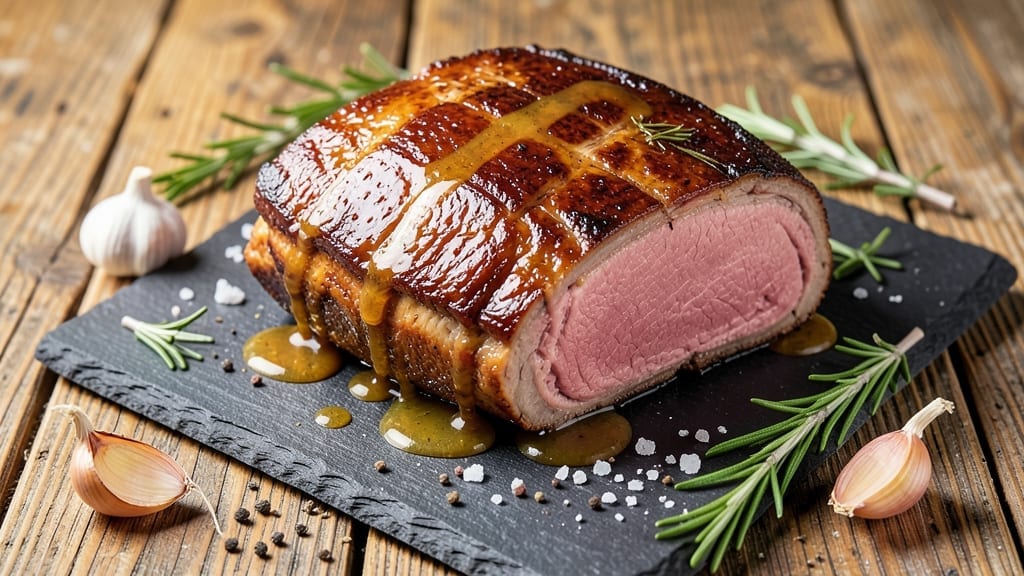
A 10-pound boneless ribeye roast cooked low and slow transforms a simple cut into a showstopping centerpiece that delivers juicy, melt-in-your-mouth perfection—every slice. The secret lies in patience: roasting at a steady 250°F ensures even doneness without drying out the meat, while a simple salt-and-pepper crust locks in flavor.
This technique eliminates guesswork, guaranteeing a roast so tender it nearly falls apart at the table, with a crust that’s rich and caramelized just enough to hold a knife. What sets this method apart is the foolproof approach—no fancy marinades or basting required.
A dry brine overnight enhances the beef’s natural richness, while the low temperature allows the roast to cook through evenly, from edge to center. The result? A roast with deep, beefy flavor and a texture that’s impossibly tender, even in the thickest cuts.
No thermometer? We’ll show you how to test doneness the old-school way for reliability. By the time you carve into this roast, you’ll have a restaurant-quality centerpiece that feeds a crowd with minimal effort. The slices stay juicy and hold their shape, making it easy to serve family-style or plated.
Pair it with garlic mashed potatoes and roasted vegetables for a classic comfort meal that feels like a celebration—no matter the occasion. The best part? This method works for any size ribeye roast, from 5 to 15 pounds, with just minor adjustments.
Whether you’re hosting Thanksgiving, feeding a football team, or treating yourself to a Sunday feast, this recipe delivers consistent, professional results—every single time.
Ingredients for 10 lb boneless ribeye roast
Ten ingredients for a showstopping roast that feeds a crowd with restaurant-quality tenderness.
| Ingredient | Amount | Notes |
|---|---|---|
| Boneless Ribeye Roast 🥩 | 10 lb | Center-cut, trimmed of excess fat |
| Kosher Salt 🧂 | 2 tbsp | Diamond Crystal preferred, coarse grain |
| Freshly Ground Black Pepper 🌶️ | 1 tbsp | Freshly cracked for maximum flavor |
| Unsalted Butter 🧈 | ½ cup | Cold, cubed, for crust formation |
| Garlic Cloves 🧄 | 8 whole | Smashed, for dry brine infusion |
| Fresh Rosemary 🌿 | ¼ cup | Chopped, for aromatic depth |
| Fresh Thyme 🌿 | ¼ cup | Leaves only, for herbal balance |
| Vegetable Oil 🫒 | 2 tbsp | High smoke point for roasting pan |
| Beef Tallow or Duck Fat 🧈 | ¼ cup | Optional, for ultra-rich crust |
| Red Wine 🍷 | ½ cup | Bold Cabernet Sauvignon, for basting |
| Balsamic Vinegar 🍶 | 1 tbsp | For finishing drizzle |
| Garlic Mashed Potatoes 🥔 | 8 cups | Classic pairing, made separately |
| Roasted Vegetables 🥕 | 6 cups | Seasonal mix, prepared ahead |
The ribeye roast is non-negotiable here—center-cut delivers the best marbling for that melt-in-your-mouth texture. Look for a roast with thick, even fat distribution and avoid anything with a gamey smell. Costco and Whole Foods carry excellent center-cut roasts, but your butcher can trim a whole roast to your specifications. The key is patience: a 10-pound roast needs time to come to room temperature before cooking, so plan ahead. If you’re buying from a store, ask for it to be wrapped in butcher paper—not plastic—to help it breathe. The garlic and herbs should be fresh: bruised stems mean wilted flavor, and that’s a dealbreaker for this dish.
No kosher salt? Diamond Crystal is the gold standard, but any coarse salt works—just use slightly more. The butter crust is where the magic happens: cold cubes melt just enough to create a caramelized layer without steaming the meat. Short on time? Swap the tallow for an extra 2 tbsp of butter. The red wine can be subbed with beef broth plus a splash of balsamic if you’re avoiding alcohol, but the acidity helps tenderize the meat. For the herbs, dried thyme at one-third the amount works in a pinch, but fresh is worth hunting down at a farmers market. The roasted vegetables? Any seasonal mix works—carrots, Brussels sprouts, or even sweet potatoes—just make sure they’re roasted until caramelized.
This roast is a make-ahead masterpiece: dry brine it overnight for maximum flavor penetration. Store the roast uncovered in the fridge for 12-24 hours before cooking—this step is non-negotiable for that deep, beefy taste. Once cooked, it reheats beautifully: slice and warm in a 350°F oven for 20 minutes with a splash of beef broth. Leftovers keep for 4-5 days in the fridge, but honestly, you’ll eat it all in one sitting. For serving, carve against the grain and let the slices rest 5 minutes before plating. The crust will hold, but the meat stays juicy—trust me on this.
Why You’ll Love This Recipe
- Minimal Prep, Maximum Payoff: I swear by this—just a quick coat of salt, pepper, and smashed garlic cloves, then butter basting while it roasts. No fancy marinades, no chopping, no stress. The roast does all the work while you sip your coffee.
- Rich, Buttery, Garlicky Magic: That crispy crust from the butter? Oh, it’s chef’s kiss. The ribeye stays impossibly tender inside, and the garlic-infused butter basting turns every bite into pure satisfaction. Honestly, I’ve never met a steak this reliably delicious.
- Leftovers That Don’t Suck: This roast feeds a crowd but reheats like a dream—sliced thin with a splash of beef broth, it’s just as good the next day. My kids actually ask for it (yes, even on a Tuesday night).
- Budget-Friendly Crowd-Pleaser: A 10-pound roast stretches further than you’d think, especially when you repurpose slices into sandwiches, tacos, or pasta. It’s my go-to for game days, potlucks, or when I’m too tired to cook twice in a week.
Step-by-step instructions for perfectly cooked 10-Pound ribeye roast
Mastering this roast means low-and-slow precision—here’s how to achieve melt-in-your-mouth tenderness every time.
Dry Brine and Season the Roast
Remove the 10 lb boneless ribeye roast from packaging and pat it completely dry with paper towels—this is non-negotiable for crispy crust. Place it on a wire rack set over a rimmed baking sheet to maximize airflow. Sprinkle 2 tbsp kosher salt and 1 tbsp freshly ground black pepper evenly over all surfaces, pressing gently to adhere.
I like to add 8 smashed garlic cloves directly onto the meat surface and tuck 0.25 cup chopped fresh rosemary and 0.25 cup fresh thyme leaves into any cavities or crevices. The garlic will infuse flavor as it cooks, while the herbs provide aromatic depth. Place the roast uncovered in the refrigerator for 12-24 hours—this dry brine transforms the meat by seasoning deeply and creating that coveted crust.
Prepare the Roasting Pan and Preheat
Preheat your oven to 275°F—this low temperature is crucial for even cooking without drying out the meat. While it preheats, rub the 2 tbsp vegetable oil evenly over the roast’s surface. For an extra-rich crust, mix 0.5 cup cold cubed unsalted butter with 0.25 cup beef tallow or duck fat and spread this mixture over the roast, pressing gently to adhere.
Place the roast fat-side up in a roasting pan. The fat will render down during cooking, basting the meat and creating a flavorful crust. I always use a meat thermometer inserted into the thickest part of the roast—this gives me precise temperature readings without overcooking.
Roast Low and Slow to Perfect Doneness
Slide the roast into the preheated oven and roast for 4-5 hours, maintaining 275°F the entire time. This slow cooking method ensures the meat remains juicy throughout. I recommend checking the internal temperature every 30 minutes after the first 2 hours—you’re aiming for 125°F for medium-rare, which typically takes about 4 hours total for this size roast.
The reason for this low temperature is simple: it allows the meat to cook evenly from the center outward without developing a dry exterior. Don’t be tempted to increase the heat—patience is key here. When the thermometer reads 125°F, remove the roast from the oven and let it rest for 30 minutes before carving. This resting period is critical for redistributing juices throughout the meat.
Create the Red Wine Reduction
While the roast rests, create a simple reduction for basting. In a small saucepan, combine 0.5 cup bold Cabernet Sauvignon and 1 tbsp balsamic vinegar over medium heat. Simmer for 8-10 minutes until reduced by half and slightly syrupy. This reduction adds depth of flavor and makes an elegant drizzle for serving.
Strain the reduction through a fine-mesh sieve to remove any sediment, then return it to the saucepan. Keep it warm over very low heat until ready to serve. The acidity from the balsamic vinegar cuts through the richness of the roast beautifully, balancing the dish.
Serve with Classic Sides
Slice the roast against the grain into ½-inch thick portions. Serve immediately with 8 cups garlic mashed potatoes and 6 cups roasted vegetables on the side. The potatoes should be creamy but not watery, and the vegetables should have a caramelized edge from roasting.
Drizzle each serving with the red wine reduction and any accumulated pan juices from the roast. The combination of the juicy, perfectly cooked ribeye with the rich reduction and complementary sides creates a restaurant-quality meal that’s sure to impress. Enjoy immediately—this dish doesn’t reheat well!
Pro Tips For Making 10 Lb Boneless Ribeye Roast
- CRANK THE HEAT FIRST: Start your roast over high heat—425°F for the first 15 minutes—until it’s searing deep brown. I used to play it safe with medium heat, and my crust never developed that rich, caramelized layer. The sear locks in flavor, and the roast finishes cooking evenly when you lower the temp.
- SALT THE GARLIC: Toss those garlic cloves in a pinch of kosher salt before smashing them into the butter. My grandmother swore by this, and she was right: salted garlic adds a subtle depth that plain butter can’t match. Plus, it keeps the butter from sticking to your fingers when you’re mashing.
- SKIP THE CROWDED PAN: Don’t stack that roast with other ingredients while it’s searing—give it space. I learned this the hard way when I tossed in potatoes too early, and the roast steamed instead of browning. A hot, empty pan for those first few minutes guarantees a crust worth bragging about.
- REST UNDER FOIL: After pulling the roast from the oven, tent it loosely with foil and let it sit for 5-10 minutes. I know, I know—you’re hungry now—but cutting into it too soon turns juicy meat into a sad, dry mess. The foil keeps it warm while the juices redistribute. (Your future self will thank you.)
Make-ahead tips for this 10 lb boneless ribeye roast
Dry Brine Ahead
Start your prep 12-24 hours before cooking by applying the dry brine. Pat the 10 lb boneless ribeye roast completely dry, then generously coat it with 2 tbsp kosher salt and 1 tbsp freshly ground black pepper.
Place it uncovered on a wire rack in the fridge—this step is non-negotiable for maximum flavor penetration and crust formation. I like to add 8 smashed garlic cloves and 0.25 cup each of fresh rosemary and thyme for extra aromatic depth. 🌿
Prep Sides Early
Roasted vegetables and mashed potatoes can be prepped 2 days ahead and stored separately. Roast the veggies at 400°F for 30 minutes, then refrigerate. For the potatoes, cook them ahead and reheat with extra butter and milk when ready to serve.
This saves you 30 minutes of last-minute work on the big day. The key is keeping them covered in airtight containers to prevent drying out.
Roast Timing
For a 10 lb roast, plan for 4-5 hours at 275°F. I recommend starting this 2 hours before serving so you can focus on plating and resting the meat properly.
Use a meat thermometer to monitor internal temperature—aim for 125°F for medium-rare. The low-and-slow method ensures even cooking without drying out the meat, even in large cuts.
Resting Strategy
After removing the roast from the oven, rest it for 30 minutes before slicing. This is crucial for redistributing juices throughout the meat. I like to place it on a cutting board in a warm spot (like a turned-off oven with the light on) to maintain temperature.
Pro tip: Tent the roast loosely with foil to keep it warm while it rests—this prevents heat loss and keeps the meat tender. 💡
Make-Ahead Slices
If you need to serve the roast later, slice it against the grain into ½-inch thick portions and store in an airtight container. Reheat slices in a 350°F oven for 20 minutes with a splash of beef broth to restore moisture.
For best results, serve within 4-5 days of cooking—though honestly, you’ll likely eat it all before then!
Pan Sauce Prep
While the roast rests, make the red wine reduction ahead of time. Simmer 0.5 cup Cabernet Sauvignon and 1 tbsp balsamic vinegar until reduced by half, then strain and store in the fridge.
Reheat gently before serving to drizzle over each slice—this adds a restaurant-quality touch with minimal effort. The acidity cuts through the richness beautifully, balancing the dish perfectly. 🍷
Nutrition facts
Frequently asked questions
How do I adjust cooking time for a different size ribeye roast?
Use this simple rule: 15-20 minutes per pound at 275°F for medium-rare. A 5 lb roast takes about 1.5-2 hours, while a 15 lb roast needs 5-6 hours. Always check internal temp with a meat thermometer—125°F for medium-rare, 135°F for medium. The low-and-slow method works for any size, but larger roasts benefit from an extra 30 minutes of rest time.
Can I cook this roast without a meat thermometer?
Yes! For medium-rare, cook until the roast reaches 125°F internally. Without a thermometer, use the finger test: press your thumb and index finger together—when the roast feels like that firmness, it’s done. For a 10 lb roast, this typically takes 4-4.5 hours at 275°F. Remember: the roast continues cooking while resting, so pull it out slightly early.
What’s the best way to reheat sliced ribeye roast?
Slice the roast against the grain and store in an airtight container. To reheat, place slices on a baking sheet and warm in a 350°F oven for 20 minutes with a splash of beef broth. Avoid microwaving—it makes the meat tough. For best results, serve within 4-5 days, but honestly, this roast disappears faster!
Why does my ribeye roast turn out dry?
Overcooking is the #1 cause! Keep the oven at 275°F and never exceed 135°F internal temp. Another culprit: cutting too soon. Always rest the roast for 30 minutes before slicing. Pro tip: Pat the meat dry before seasoning—moisture creates steam, which makes the crust soggy.
What wine pairs best with this ribeye roast?
A bold Cabernet Sauvignon or Malbec complements the beef’s richness perfectly. For red wine lovers, try a 12-14% ABV with dark fruit notes. White wine drinkers? A full-bodied Chardonnay with oak works surprisingly well. The key is matching the wine’s tannins to the meat’s fat content—this roast’s marbling makes it a match made in heaven!

- Pork Loin Pulled Pork Crock Pot Recipe: Slow-Smoked Tenderness With Zero Dryness - November 1, 2026
- Baked Potatoes in Crock Pot Recipe: Buttery Interiors and Crispy Top Magic - November 1, 2026
- Braised Beef Short Ribs Recipe: Crock Pot Fall-Off-Bone Magic in 6 Hours - November 1, 2026