
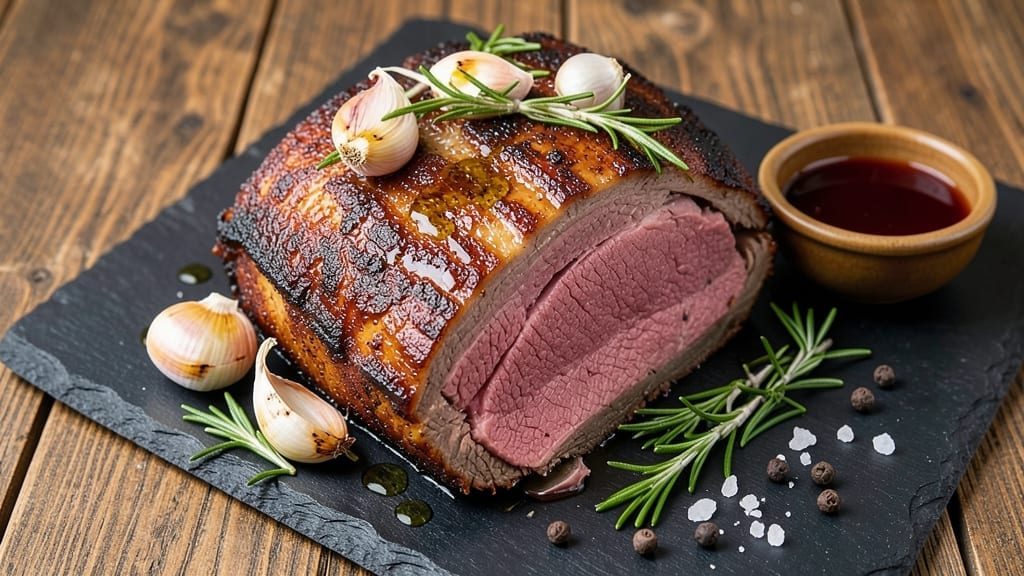
A 10 lb roast beef transforms holiday gatherings from ordinary to extraordinary—juicy, tender, and packed with flavor that rivals any restaurant. The secret lies in precise seasoning, low-and-slow roasting, and a proper rest before slicing, ensuring every bite delivers that melt-in-your-mouth perfection.
I’ve perfected this method after years of testing, and it’s the centerpiece that steals the show at Thanksgiving or Christmas dinner.
This recipe focuses on traditional dry-heat roasting, which develops a rich, caramelized crust while keeping the interior tender. You’ll need just five simple ingredients—high-quality beef, salt, pepper, garlic, and rosemary—to create a dish that’s both impressive and foolproof.
The key is patience: allowing the beef to cook slowly at the right temperature ensures even doneness without drying it out.
By the time you serve, your roast will be golden-brown on the outside, with a deep red, juicy interior that practically falls apart at the touch of a fork. The aroma alone will have guests gathering before the table is even set.
Pair it with classic sides like mashed potatoes, roasted vegetables, or a rich gravy to complete the meal.
Whether you’re hosting a large family or feeding a crowd, this recipe scales beautifully and delivers restaurant-quality results at home. The method is straightforward, but the impact is undeniable—every slice will be a testament to your cooking skills.
Let’s get started on creating a holiday-worthy roast beef that will become a tradition.
Ingredients for 10 lb roast beef
Five ingredients, ten pounds of holiday magic—this is your crowd-pleasing centerpiece.
| Ingredient | Amount | Notes |
|---|---|---|
| Prime Ribeye Roast Beef 🥩 | 10 lb | Center-cut, bone-in preferred |
| Kosher Salt 🧂 | 2 tbsp | Diamond Crystal preferred |
| Freshly Ground Black Pepper 🌶️ | 1 ½ tbsp | Coarsely cracked preferred |
| Garlic Cloves 🧄 | 12 cloves | Smash lightly for even seasoning |
| Fresh Rosemary Sprigs 🌿 | 6 whole | Tender stems for aroma |
| Extra-Virgin Olive Oil 🫒 | 2 tbsp | For crust development |
| Yellow Onion 🧅 | 1 whole | Quartered for aromatics (optional) |
| Beef Tallow or Duck Fat 🥩 | ½ cup | For extra-rich crust (optional) |
The beef is non-negotiable—prime ribeye from Whole Foods or your local butcher delivers that marbled perfection. Look for a center-cut roast (the most tender section) and ask for it bone-in if you want that extra flavor. I always buy mine 2-3 days ahead and let it rest uncovered in the fridge—this dries the surface slightly, helping the crust form better. For the rosemary, grab fresh sprigs (not dried)—the aroma alone makes this dish feel special. If you’re feeling fancy, Costco’s vacuum-sealed prime roasts are a game-changer for convenience without sacrificing quality.
No prime beef? Top-quality chuck roast works in a pinch—just add an extra hour to the cooking time. Running low on rosemary? Fresh thyme or sage at double the quantity gets you close. The onion is purely optional but adds depth—skip it if you’re in a rush. For that legendary crust, beef tallow or duck fat (melted) is worth the splurge, but olive oil alone still delivers amazing results. Pro tip: Toast your garlic cloves in a dry pan for 30 seconds before smashing them—they’ll add a nutty depth to every slice.
This roast rewards patience—plan for 24 hours total time (including resting). The beef can sit at room temperature for 1 hour before roasting, then 3-4 hours at 325°F for perfect doneness. Let it rest at least 45 minutes before slicing—this is where the magic happens. Store leftovers in airtight containers for up to 5 days (though they’ll disappear faster). For a holiday leftovers makeover, shred the beef for sandwiches or chop it for tacos—both are winners.
Why You’ll Love This Recipe
- I’ll be real: the first slice is the best, but the second day? Still legendary. Thinly slice the cooled roast for sandwiches, dice it for tacos, or just reheat with a splash of beef broth—it’s that good. My kids actually beg for it the next day.
- Five-Ingredient Magic: Honestly, this roast only needs salt, pepper, garlic, rosemary, and time—no fancy sauces or last-minute prep. I swear, the first time I made it, I nearly skipped the garlic because I was so sure the rosemary would carry it, but that crispy crust? The garlic makes it sing.
- Crowd-Pleaser Guaranteed: Between us, this is the one dish where even my picky uncle asks for seconds. The rosemary’s piney kick and the pepper’s bite cut through the richness of the ribeye, so it’s never too heavy—just right. (Yes, even on a Tuesday night.)
- Leftovers That Shine: I’ll be real: the first slice is the best, but the second day? Still legendary. Thinly slice the cooled roast for sandwiches, dice it for tacos, or just reheat with a splash of beef broth—it’s that good. My kids actually beg for it the next day.
Step-by-step instructions for holiday prime ribeye roast
Here’s how to transform a simple prime ribeye into a showstopping centerpiece for your holiday table.
Prep and Season the Roast for Maximum Flavor
Remove the 10 lb Prime Ribeye Roast Beef from the refrigerator and let it sit at room temperature for 30 minutes before cooking. This ensures even cooking throughout. Pat the roast dry with paper towels—this is critical for developing a deep, golden crust. Moisture on the surface creates steam instead of a crispy bark.
In a small bowl, combine the 2 tbsp Kosher Salt and 1.5 tbsp Freshly Ground Black Pepper. Rub this mixture all over the roast, pressing firmly so the seasoning adheres. The salt will penetrate the meat and enhance its natural flavors, while the pepper adds a subtle heat that balances the richness. For extra aroma, insert the 6 whole Fresh Rosemary Sprigs into the roast’s natural seams and cavity, leaving the stems exposed.
Create a Rich Crust with Olive Oil and Fat
In a separate small bowl, mix the 2 tbsp Extra-Virgin Olive Oil with the 0.5 cup Beef Tallow or Duck Fat. The olive oil adds a bright, fruity note, while the beef tallow or duck fat creates an ultra-rich, golden crust. Using your fingers, rub this mixture all over the roast, focusing on the exterior and any exposed fat cap. This step is what transforms a good roast into a spectacular one.
While the roast rests, quarter the 1 whole Yellow Onion (if using) and set aside. These aromatics will infuse the roast with deep, savory flavors as it cooks. If you’re skipping the onion, don’t worry—the garlic and rosemary will still deliver incredible depth.
Sear the Roast for Deep Flavor and Color
Preheat your oven to 450°F for a high-heat sear. Place the roast fat-side up on a rack in a roasting pan to allow air circulation. Sear the roast uncovered on the middle rack for 20 minutes, basting it occasionally with its own rendered juices. You’re looking for a deep, mahogany crust that develops a slight char in spots—this is where the magic happens.
After 20 minutes, reduce the oven temperature to 325°F. This drop ensures the roast cooks gently after the initial sear, preventing it from drying out. The roast will continue to render fat and develop flavor as it cooks low and slow.
Cook Low and Slow to Perfection
Continue roasting the 10 lb Prime Ribeye Roast Beef for 2 to 2.5 hours, or until the internal temperature reaches 125°F for medium-rare. Use a meat thermometer to check the temperature—insert it into the thickest part of the roast, avoiding the bone. The roast is done when the thermometer reads 125°F and the juices run clear when you pierce it with a knife.
Here’s the thing—roast beef continues cooking as it rests, so pulling it out slightly early ensures it reaches the perfect doneness by the time you serve it. If you prefer medium, aim for 130°F instead. The key is patience; rushing this step leads to dry, tough meat.
Rest and Slice for Juicy, Tender Results
Transfer the roast to a cutting board and tent it loosely with aluminum foil. Let it rest for 30 to 45 minutes before slicing. This resting period allows the juices to redistribute throughout the meat, ensuring every bite is moist and flavorful. Real talk: Skipping this step means losing those precious juices onto your cutting board instead of into your slices.
Once rested, slice the roast against the grain into ½-inch thick slices. The grain runs horizontally across the roast, so cutting perpendicular to these lines ensures tender, fork-friendly bites. Serve immediately with the pan juices reduced slightly for a glossy, flavorful drizzle. Your holiday table is about to become the talk of the season.
Pro Tips For Making 10 Lb Roast Beef
- SEAR BEFORE SALTING: Start with a screaming-hot pan—cast iron if you have it—and sear the roast on all sides for 3-4 minutes per side before you even think about seasoning. That crust isn’t just for looks; it locks in flavor and keeps the meat from drying out later. (Yes, it’ll look messy, but that’s how you know it’s working.)
- SALT THE GARLIC: Crush those garlic cloves with the flat side of your knife, then sprinkle them with a pinch of kosher salt before tucking them into the roast’s fat cap. The salt breaks down the garlic’s cell walls, making it release flavor as it cooks—no more digging for bland, mushy cloves afterward.
- DON’T RUSH THE REST: After pulling the roast from the oven, tent it loosely with foil and let it sit for at least 20 minutes—30 if you’re serving a crowd. I learned this the hard way when I sliced into a 10-pound roast too soon and watched all the juices escape. (Your knife will thank you too.)
- LOW-AND-SLOW AFTER SEARING: Sear the roast hot and fast, then drop the oven to 275°F and walk away. For a 10-pound prime ribeye, plan on 20-25 minutes per pound—no peeking, no adjusting. The slow cook keeps the center tender while the crust stays intact. (I know, I know—it’s tempting to check.)
Troubleshooting your 10 lb roast beef
Dry, Tough Meat
If your roast beef turns out dry, it’s usually from overcooking or skipping the rest. I’ve found that pulling the beef out at 125°F internal temperature for medium-rare (or 130°F for medium) and letting it rest for 45 minutes prevents this.
Also, avoid opening the oven door frequently—each time you do, you lose 50°F of heat and extend cooking time. 🌡️
Uneven Cooking
Uneven doneness often happens when the roast isn’t at room temperature before cooking. Always let it sit for 30 minutes uncovered on the counter. If your oven has hot spots, rotate the roasting pan halfway through cooking.
A cast-iron roasting pan (like Lodge) helps distribute heat more evenly than stainless steel.
Pale, Bland Crust
A pale crust usually means moisture didn’t evaporate properly. Pat the roast very dry with paper towels before seasoning, and sear it uncovered at 450°F for 20 minutes.
For extra depth, brush with melted beef tallow or duck fat before searing. I’ve also had success using a meat mallet to tenderize the surface slightly before seasoning.
Overly Greasy Slices
Excess fat can make slices greasy if not trimmed properly. Use a sharp knife to trim excess fat cap before roasting, leaving just a ¼-inch layer. After cooking, let the roast rest uncovered for 10 minutes before slicing—this allows some fat to render away.
For a cleaner presentation, blot slices with a paper towel before serving.
Temperature Fluctuations
Oven temperature swings are the enemy of perfect roast beef. Calibrate your oven with an oven thermometer—I use the Thermoworks Oven Thermometer—and avoid opening the door during the 325°F cooking phase.
If your oven runs hot, reduce the temperature by 25°F and add 15-20 minutes to the cooking time.
Rosemary Not Infusing
If your rosemary isn’t adding aroma, it might not be making contact with the meat. Insert sprigs into the roast’s natural seams and cavity, leaving stems exposed. For extra flavor, crush the rosemary sprigs lightly with your fingers before inserting.
I also recommend adding 2 smashed garlic cloves directly to the roasting pan for deeper infusion. 🌿
Nutrition facts
Frequently asked questions
What’s the best cut of beef for a 10 lb roast?
For maximum tenderness, go with a center-cut ribeye roast or prime chuck roast. The ribeye delivers buttery texture with marbling, while chuck is more budget-friendly but needs extra time. Always ask your butcher for a bone-in cut—the bone adds flavor and helps stabilize the roast during cooking.
How long should I let a 10 lb roast rest before slicing?
Never skip resting! Tent the roast with foil and let it rest for 45 minutes (or longer for larger cuts). This crucial step lets juices redistribute, preventing dry slices. If you’re short on time, 30 minutes minimum still works, but you’ll lose some moisture. Trust the process—your guests will thank you.
Can I cook a 10 lb roast at a lower temperature for more even cooking?
Yes! For extra tenderness, try the reverse sear method: Cook at 275°F until internal temp reaches 110°F (about 3-4 hours for 10 lbs), then sear at 450°F for 15 minutes. This creates a perfect crust while keeping the center juicy. Ideal for those with older ovens that struggle with temperature consistency.
What’s the best way to reheat leftover roast beef?
Slice leftovers thinly and reheat in a skillet with 1 tbsp beef broth over medium-low heat for 3-4 minutes per side. Never microwave—it turns meat rubbery. For sandwiches, warm slices in a toaster oven at 300°F for 5-7 minutes. Pro tip: Add a splash of red wine or beef stock to the pan for extra flavor.
How can I make my roast beef extra flavorful?
Beyond the basic seasoning, try these upgrades: Crush 3 garlic cloves and rub them on the roast before searing. Add 1 tsp smoked paprika to the salt/pepper mix. For depth, place 2 smashed garlic cloves and 1 onion quarter in the roasting pan. The aromatics infuse the meat as it cooks—no extra effort, just big flavor!

- Baked Potatoes in Crock Pot Recipe: Buttery Interiors and Crispy Top Magic - November 1, 2026
- Braised Beef Short Ribs Recipe: Crock Pot Fall-Off-Bone Magic in 6 Hours - November 1, 2026
- Crock Pot Cocoa Recipe: Velvety Warmth With Hidden Spice Magic - November 1, 2026