
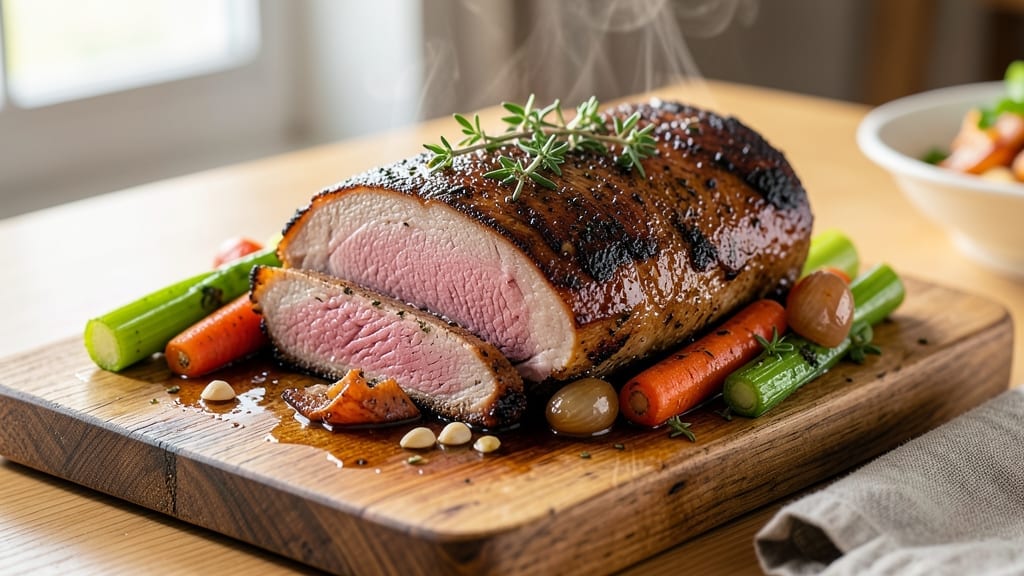
A 10 lb sirloin tip roast transforms a simple dinner into a showstopping centerpiece when braised to juicy perfection with a caramelized crust. This cut rewards patience with melt-in-your-mouth tenderness and rich, beefy flavor that disappears faster than you can carve it.
The key lies in slow cooking and precise temperature control—no guesswork, just consistent results every time.
This recipe delivers restaurant-quality beef without requiring a sous vide machine or specialty equipment. By searing the roast first, you lock in juices while building that coveted crust, then braising it low and slow ensures the center reaches medium-rare (130°F) with minimal effort.
The secret? A simple seasoning blend and a meat thermometer—no complicated techniques, just reliable execution.
What you’ll end up with is a roast so tender it practically falls apart, topped with a deep mahogany crust that adds texture and depth. The aroma alone will have everyone gathering at the table, and each slice delivers that perfect balance of pink, juicy meat and caramelized edges.
This is the kind of roast that makes Sunday dinners feel like a celebration.
Pair it with classic sides like garlic mashed potatoes, roasted root vegetables, or a bold red wine reduction to elevate the meal further. The leftovers reheat beautifully for sandwiches the next day, making this recipe both impressive and practical. Let’s get started on mastering this crowd-pleaser.
Ingredients for 10 lb sirloin tip roast
Ten pounds of beef, a few simple vegetables, and time to transform dinner into a centerpiece.
| Ingredient | Amount | Notes |
|---|---|---|
| Sirloin Tip Roast 🥩 | 10 lb | Bone-in, center-cut preferred |
| Yellow Onion 🧅 | 2 whole | Cut into 1-inch chunks |
| Carrots 🥕 | 4 lb | Whole, peeled, cut into 2-inch pieces |
| Celery Stalks 🌿 | 4 whole | Cut into 2-inch pieces |
| Garlic Cloves 🧄 | 8 cloves | Smashed, not minced |
| Fresh Thyme 🌿 | ¼ cup | Stems removed, whole sprigs |
| Fresh Rosemary 🌿 | ⅛ cup | Stems removed, whole sprigs |
| Kosher Salt 🧂 | 2 tbsp | Diamond Crystal preferred |
| Coarse Black Peppercorns 🌶️ | 1 tbsp | Freshly cracked |
| Extra-Virgin Olive Oil 🫒 | ½ cup | For searing |
| Dry Red Wine 🍷 | 2 cups | Cabernet Sauvignon preferred |
| Beef Broth 💧 | 6 cups | Low-sodium preferred |
| Tomato Paste 🍅 | ¼ cup | No sugar added |
| Balsamic Vinegar 🍶 | ¼ cup | For deglazing |
The roast is non-negotiable here. Costco or your butcher shop for the best cut—look for a piece with good marbling and a bright red color. Bone-in is ideal, but if you can’t find it, bone-out works too. The sirloin tip should weigh exactly 10 lbs for this recipe, so adjust your shopping list accordingly. Fresh thyme and rosemary from the grocery store’s produce section will give you the best flavor, but dried works in a pinch if you’re short on time. Prep the vegetables the night before to save time on cooking day.
No red wine? Substitute with beef broth and a splash of balsamic vinegar—it won’t be identical, but it’ll still taste amazing. The tomato paste can be swapped for a handful of crushed sun-dried tomatoes if you prefer. If you’re using dried herbs, cut the amount in half—dried thyme and rosemary are more concentrated. For the vegetables, you can use whatever’s on hand: parsnips or turnips work just as well as carrots. The key is to keep the vegetable-to-liquid ratio about even to ensure the roast stays moist during the long braising time.
This roast reheats beautifully—3-4 days in the fridge, or freeze portions for up to 6 months—so make extra if you can. Store leftovers in an airtight container with any braising liquid to keep them juicy. For serving, let the roast rest for 20-30 minutes before carving to ensure clean slices. The crust will firm up slightly during resting, making it easier to slice. If you’re planning ahead, this roast makes fantastic sandwiches the next day—just slice thinly and pile high with your favorite toppings.
Why You’ll Love This Recipe
- One-Pan Magic: I swear by this roast—just toss the onion, carrots, celery, and garlic around the meat, add a splash of broth, and let the oven do the work. No chopping boards, no extra pots, just hands-off perfection.
- Deep, Savory Crust: That crispy browned exterior? Pure reward. The sirloin tip’s natural richness pairs with caramelized veggies and garlic so well, I’ve caught myself closing my eyes mid-bite. (Yes, even on a Tuesday night.)
- Leftovers That Beg for More: This roast practically insists you make extra. Thinly slice the next day for sandwiches, toss chunks into pasta, or just reheat with gravy—my kids still ask for it days later, and I’m not complaining.
- Budget-Friendly Crowd-Pleaser: A 10-pound roast stretches for a dozen meals without breaking the bank. The veggies bulk it up, the flavor hides any cost, and honestly? It’s the kind of dish that makes you look like a hero at potlucks.
Step-by-step instructions for slow-braised sirloin tip roast
Transform that tough cut into melt-in-your-mouth perfection with this method that builds deep flavor and irresistible texture.
Sear the Roast and Vegetables for Maximum Flavor
Heat a Dutch oven over medium-high heat and add 0.25 cup extra-virgin olive oil. Once shimmering, place the 10 lb sirloin tip roast fat-side down and sear for 8-10 minutes until deeply browned on all sides. Flip carefully using tongs—this creates the caramelized crust we want.
Remove the roast and set aside. In the same pot, add 0.5 cup extra-virgin olive oil and sear the 2 whole yellow onions, 4 lb carrots, and 4 whole celery stalks for 10 minutes until softened and golden. Add the 8 smashed garlic cloves and cook for 30 seconds until fragrant. This step develops the foundation of our rich braising liquid.
Build the Braising Liquid with Wine and Broth
Pour in the 2 cups dry red wine and scrape up all those browned bits from the bottom of the pot—this is where all the flavor hides. Let it simmer for 3-4 minutes until reduced by half. Add the 6 cups beef broth, 0.25 cup tomato paste, and 0.25 cup balsamic vinegar, stirring to combine.
Return the roast to the pot along with the 0.25 cup fresh thyme sprigs and 0.125 cup fresh rosemary sprigs. Season generously with 2 tbsp kosher salt and 1 tbsp freshly cracked black peppercorns. The liquid should come about halfway up the roast—if not, add a splash more broth. This balance ensures tender meat without soggy vegetables.
Braise Until Fork-Tender Perfection
Cover the Dutch oven and transfer to a 325°F oven. Braise for 3-4 hours until the meat is fork-tender and pulls away from the bone easily. I check for doneness by inserting a meat thermometer—it should read 195-200°F in the thickest part. The vegetables should be tender but still holding their shape.
Here’s the thing—don’t peek or stir during cooking. Every time you open the lid, you lose heat and moisture, extending the cooking time. The slow, gentle braising breaks down collagen into gelatin, transforming tough meat into something luxurious. The aromatics infuse the liquid, creating a rich, savory sauce that clings to every bite.
Rest and Serve with Pan Sauce
Remove the roast from the pot and transfer to a cutting board. Tent loosely with foil and let it rest for 20-30 minutes. This resting period allows the juices to redistribute throughout the meat, ensuring each slice stays moist and flavorful when sliced.
While the roast rests, strain the braising liquid through a fine-mesh sieve into a saucepan. Skim off any excess fat if desired, then return the liquid to medium heat. Simmer for 5-7 minutes until slightly thickened. Slice the roast against the grain into ½-inch thick pieces and serve with the reduced pan sauce spooned over the top. The contrast of tender meat with the rich, caramelized vegetables makes every bite unforgettable.
Pro Tips For Making 10 Lb Sirloin Tip Roast
- Trim the Fat First: Sirloin tip roast has a thick fat cap—slice it off before seasoning. I learned this the hard way when I roasted a 10-pounder with the fat still attached, and the crust burned unevenly. A sharp knife and steady hand save you from flipping or fussing later.
- Sear in Batches: A 10-pound roast won’t fit in one pan without crowding. Work in two rounds—sear half, flip, then repeat. My first attempt left the second batch steaming instead of sizzling, and the flavor suffered. High heat. Seriously, crank it up.
- Don’t Skimp the Veg: Chop onions, carrots, and celery into even ½-inch chunks—no small dice, no large hunks. Uneven pieces mean some veggies overcook to mush while others stay raw. My grandmother swore by this, and she was right: consistency matters more than you’d think.
- Rest Under Foil: After roasting, tent the meat with foil and let it sit 5–10 minutes before slicing. I was skeptical until I tried it—cutting too soon turns a juicy roast into a sad, dry pile. (Yes, even if you’re impatient like me.)
Best sauces and condiments for these flavors
Classic Red Wine Reduction
This is my go-to sauce for the roast—simple yet packed with depth. After braising, strain the cooking liquid through a fine-mesh sieve into a saucepan. Add 1 tbsp butter and 1 tsp Dijon mustard, then reduce over medium heat for 8-10 minutes until syrupy.
The wine and beef broth combination creates a velvety sauce that clings beautifully to the roast. 🍷
Creamy Horseradish Sauce
For a tangy kick, mix ½ cup sour cream with 2 tbsp prepared horseradish, 1 tbsp fresh lemon juice, and 1 tsp Worcestershire sauce. Adjust the horseradish to taste—this sauce cuts through the richness of the beef while adding a refreshing zing.
Serve it on the side for dipping or spooned over slices.
Garlic-Herb Butter
This is a game-changer for serving. Melt ½ cup unsalted butter with 3 minced garlic cloves, 1 tbsp chopped fresh parsley, and ½ tsp kosher salt.
Spoon it generously over sliced roast just before serving. The butter adds richness, while the garlic and herbs brighten every bite. 🧄
Smoky Chipotle Glaze
For a smoky twist, blend ½ cup beef broth with 1 tbsp adobo sauce (from canned chipotles), 1 tbsp honey, and 1 tsp smoked paprika. Simmer until slightly thickened, then drizzle over sliced roast. This glaze adds a deep, smoky heat that pairs perfectly with the tender beef.
Classic Au Jus
Strain the braising liquid and reduce it until it coats the back of a spoon. Add 1 tbsp cornstarch mixed with 2 tbsp cold water to thicken slightly.
This classic au jus is perfect for pouring over the roast or using as a dipping sauce. It’s simple but elevates the dish to restaurant-quality.
Sweet and Tangy Balsamic Glaze
Reduce ½ cup balsamic vinegar with 1 tbsp honey and 1 tsp Dijon mustard until syrupy. Drizzle over the sliced roast for a sweet-tangy contrast. The acidity cuts through the richness, while the honey adds a subtle sweetness that balances the beef’s savory notes.
Nutrition facts
Frequently asked questions
How do I know when my 10 lb sirloin tip roast is perfectly cooked?
The best way to check doneness is with a meat thermometer. For medium-rare, aim for 130°F in the thickest part, while well-done will be 160°F. Since this is a braised cut, it will continue cooking slightly after removal from the oven. The meat should pull away from the bone easily and feel fork-tender. Pro tip: The internal temperature will rise about 5°F during resting, so pull it out when it hits 195-200°F for maximum tenderness.
Can I use a slow cooker instead of an oven for this recipe?
Transfer the seared roast and vegetables to a slow cooker with the braising liquid, then cook on low for 6-8 hours or high for 4-5 hours. The slow cooker method works especially well for busy days since you can set it and forget it. Just make sure to add a splash of broth if the liquid level drops below halfway up the roast during cooking. The texture will be even more tender since slow cooking breaks down more collagen.
What’s the best way to reheat leftovers without drying out the meat?
Reheat sliced roast portions in a skillet with a little beef broth or water over medium-low heat for 3-4 minutes per side, just until warmed through. For oven reheating, place slices on a baking sheet with a splash of broth, cover with foil, and warm at 300°F for 10-15 minutes. Never microwave without adding moisture—it turns the meat rubbery. The braising liquid makes an excellent reheating medium too!
Do I need to trim excess fat from the sirloin tip roast?
While you can trim visible fat for presentation, leaving some fat on the roast is actually beneficial. The fat renders during cooking, creating flavorful drippings that baste the meat. Simply pat the roast dry with paper towels before searing to ensure a good crust forms. If you’re concerned about excess fat, trim only the largest pieces—about ¼-inch from the edges will suffice. The marbling within the meat is what keeps it juicy!
What’s the best way to serve this roast for a large gathering?
For a buffet-style serving, arrange sliced roast on a large platter with the reduced pan sauce in a separate gravy boat. Set out small bowls of complementary sauces (like the red wine reduction or garlic-herb butter) so guests can customize their plates. Include warm dinner rolls and extra napkins—this dish gets messy and delicious! For a sit-down meal, serve family-style with the roast at the center of the table and sides passed around. The aroma alone will bring everyone to the table!

- 12 Bean Chili Recipe: Hearty Slow-Cooked Depth With 12 Legumes - October 17, 2026
- 5 Seed Bread Recipe: Nutty Crunch and Artisan Flavor in One Loaf - October 17, 2026
- 1 Lb Macaroni Salad Recipe: Bold, Crunchy, and Crowd-Pleasing - October 17, 2026