
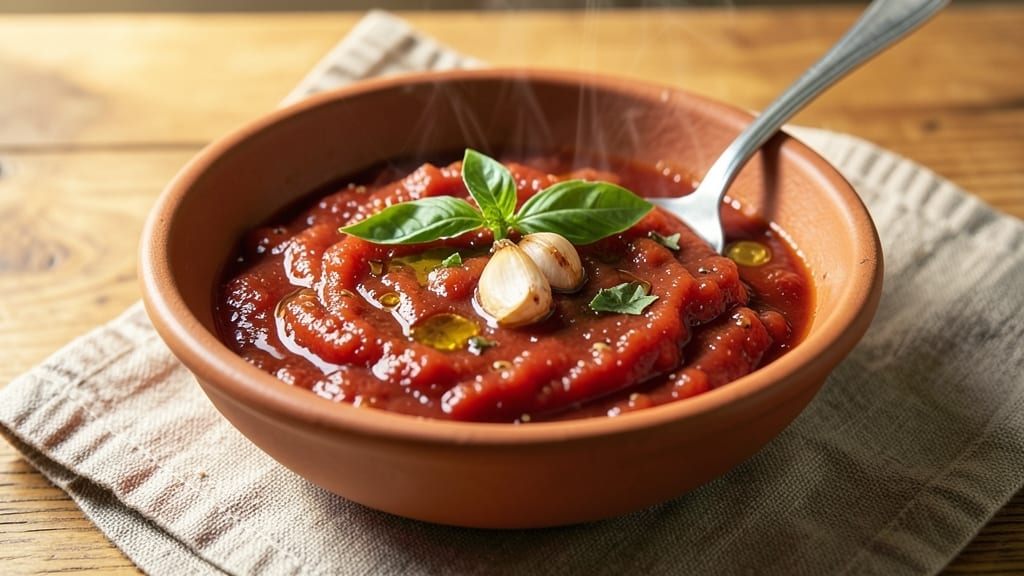
Creating a 10-minute tomato sauce that rivals hours of simmering is possible when you focus on fresh ingredients and proper technique. This sauce transforms simple canned tomatoes into a rich, flavorful base perfect for pasta, pizza, or dipping—all in just one pan.
The secret lies in balancing acidity, sweetness, and herbs while letting the sauce reduce naturally for depth.
What sets this recipe apart is its versatility and speed. You’ll use pantry staples like canned tomatoes, garlic, and olive oil to build a sauce that’s bright yet complex, with just the right amount of tang.
The 10-minute timeline doesn’t compromise on flavor—it’s all about efficient cooking and layering ingredients in the right order. No fancy equipment or long waits required.
By the end, you’ll have a smooth, velvety sauce with a balanced sweet-tangy profile, ready to elevate any dish. The aromatic herbs and garlic infuse deeply, while the tomatoes reduce into a rich, cohesive base. This isn’t just a quick sauce—it’s a restaurant-quality foundation that takes minutes to make.
The best part? This sauce keeps well in the fridge for up to a week, making it perfect for meal prep. Use it as a pasta sauce, pizza topping, or even a dip for garlic bread. Here’s how to make it effortlessly.
Ingredients for 10 minute tomato sauce
Pantry staples plus a few fresh touches—this sauce comes together faster than you’d think.
| Ingredient | Amount | Notes |
|---|---|---|
| Canned San Marzano Tomatoes 🍅 | 2 cups | Crushed by hand, seeds removed |
| Extra-Virgin Olive Oil 🫒 | ½ cup | High quality, fruity variety |
| Garlic Cloves 🧄 | 4 cloves | Minced for deep flavor infusion |
| Yellow Onion 🧅 | ½ cup | Finely diced, small pieces |
| Fresh Basil Leaves 🌿 | ¼ cup | Packed, torn by hand |
| Tomato Paste 🍅 | 2 tbsp | Squeeze tube preferred |
| Dried Oregano 🍃 | 1 tsp | Crumbled between fingers |
| Salt 🧂 | 1 tsp | Diamond Crystal preferred |
| Black Pepper 🌶️ | ½ tsp | Freshly cracked |
| Red Wine Vinegar 🍷 | 1 tbsp | For bright acidity |
The tomatoes make or break this sauce. San Marzano is ideal for its sweetness and low acidity, but any good-quality canned tomatoes work. I grab mine from Trader Joe’s—their 28-ounce cans give you more sauce for less money. The tomato paste? Squeeze tubes are a game-changer—they last months and you only use what you need. For the onion, don’t skip the diced size—small pieces melt into the sauce without leaving texture. And that olive oil? Don’t skimp—it’s the flavor foundation here. Look for bottles labeled ‘extra-virgin’ with a harvest date.
No San Marzano tomatoes? Any crushed tomatoes will work—just add an extra pinch of sugar to balance the acidity. Fresh basil is ideal, but dried oregano at half the amount works in a pinch. Running low on red wine vinegar? Balsamic vinegar or lemon juice both add brightness. The garlic can be pre-minced from a jar, but freshly minced has way more punch. For a deeper flavor, toast the dried oregano in the oil for 30 seconds before adding other ingredients. It’s worth the extra minute—trust me.
This sauce tastes even better the next day as flavors meld. Store in an airtight container in the fridge for up to 7 days. Freeze for 3 months if you’re prepping ahead—just thaw overnight in the fridge. I always double the batch because it disappears fast. The perfect amount for 1 pound pasta or as a pizza sauce. And if you make extra? Spoon it over grilled cheese—absolute perfection.
Why You’ll Love This Recipe
- No Chopping Needed: I swear by this—just peel a clove, crush it with the side of my knife, and toss it in. That’s it. The San Marzano tomatoes do all the heavy lifting while I sip my wine and pretend I’m a fancy chef.
- Garlic-Basil Magic: Between us, that first taste of simmered garlic and fresh basil in rich olive oil? It’s like summer in a jar. The onions caramelize just enough to add depth without overpowering, and the basil—oh, the basil finishes it perfectly.
- Pasta Party Ready: Serve it over spaghetti for a weeknight win, dollop it on grilled cheese for a grown-up lunch, or use it as a marinara base for meatballs. Honestly, I’ve made it for Sunday suppers and last-minute takeout cravings—it just works.
- Fridge-Friendly Treasure: Make a big batch and store it for up to five days. The flavors actually get better as it sits, and it turns a $1 can of tomatoes into something that feels like a splurge. My freezer’s always stocked with this—because why not?
Step-by-step instructions for 10 minute tomato sauce
This sauce comes together faster than you can say “simmer” – let’s make it shine.
Sauté Onion and Garlic in Olive Oil
Heat the 0.5 cup Extra-Virgin Olive Oil in a medium saucepan over medium heat. Add the 0.5 cup Yellow Onion (finely diced) and cook for 3-4 minutes until soft and translucent. The onions should look almost see-through when you press them with a wooden spoon.
Push the onions to one side of the pan and add the 4 cloves Garlic Cloves (minced). Cook for 30-60 seconds until fragrant – you’ll know it’s ready when the kitchen smells like fresh garlic. Be careful not to let it brown, or it’ll turn bitter. Stir occasionally to prevent sticking.
Build the Sauce Base
Add the 2 tbsp Tomato Paste to the pan and stir to combine with the onions and garlic. Cook for 1-2 minutes until the paste darkens slightly and the raw taste disappears. This step develops deep, rich flavors that form the foundation of your sauce.
Pour in the 2 cups Canned San Marzano Tomatoes (crushed by hand) and the 1 tbsp Red Wine Vinegar. Stir well to incorporate everything. The vinegar will brighten the flavors and cut through the richness of the olive oil. Bring the mixture to a gentle boil, then reduce heat to medium-low to maintain a steady simmer.
Season and Simmer
Add the 1 tsp Salt, 0.5 tsp Black Pepper, and 1 tsp Dried Oregano (crumbled between your fingers). Stir everything together and let the sauce simmer uncovered for 5-6 minutes. You’ll see the sauce thicken slightly as it reduces – this is when all the flavors meld together beautifully.
Taste the sauce and adjust seasoning if needed. I usually find it needs a little more salt at this point – remember, it’s easier to add more later than to fix oversalting. The sauce should be smooth, flavorful, and just thick enough to coat the back of a spoon.
Finish with Fresh Basil
Remove the pan from heat and stir in the 0.25 cup Fresh Basil Leaves (torn by hand). The basil will add a bright, fresh finish that cuts through the richness of the sauce. Let it steep for 1-2 minutes while you prepare your pasta or protein to serve with.
For the best results, serve immediately while the basil is still vibrant and aromatic. This sauce pairs perfectly with al dente pasta, grilled chicken, or crusty bread. The fresh basil will wilt slightly as it cools, so serving it right away ensures maximum flavor impact.
Pro Tips For Making 10 Minute Tomato Sauce
- CRANK THE HEAT FIRST: The first 30 seconds with your onion and garlic should be aggressive—high heat until the garlic sizzles and the onion turns translucent. I learned this the hard way: letting it simmer gently means you’ll end up with raw garlic flavor instead of sweet, caramelized depth. (Yes, even if you’re impatient like me.)
- SMASH THOSE GARLIC CLOVES: Peel and lightly crush the garlic cloves with the flat side of your knife before adding them to the pot. This releases more flavor faster—no need to wait for them to brown perfectly. I used to add whole cloves and wonder why my sauce tasted underwhelming. (Bonus: It also prevents them from burning before the onions soften.)
- SALT THE TOMATOES BEFORE CRUSHING: Sprinkle a pinch of salt directly into the canned tomatoes before you crush or chop them. This seasons the flesh evenly and cuts through the acidity better than adding salt later. I skipped this once and regretted it—my sauce tasted flat until I fixed it.
- STIR IN BASIL AT THE END: Tear the basil leaves and add them last, just before serving. If you cook them, they’ll turn bitter and sink to the bottom like a sad, leafy sediment. (I know, it’s tempting to toss them in early—don’t.) Fresh basil should brighten the sauce, not overpower it.
Regional styles of this 10 minute tomato sauce
Italian Classic
This sauce is inspired by the simplicity of Neapolitan cooking, where tomatoes, garlic, and basil reign supreme. The key difference here is speed—traditional Italian tomato sauce simmers for hours, but this version captures that same depth in just 10 minutes.
I often make this when I crave the taste of my nonna’s sauce but don’t have hours to spare. 🌿
Southern American Twist
In the American South, tomato sauce gets a smoky, slightly sweeter profile. To adapt this recipe, add ½ teaspoon smoked paprika when sautéing the onions and swap the red wine vinegar for 1 tablespoon apple cider vinegar.
This version works perfectly as a pizza sauce or over grilled shrimp. The smoky depth pairs beautifully with crispy fried chicken too.
Spanish-Inspired Sofrito
For a Spanish-inspired twist, replace the garlic with 1 small roasted red bell pepper (blended or finely chopped) and add ½ teaspoon ground cumin when building the sauce base.
This version has a subtle sweetness and earthy warmth that makes it ideal for serving with paella rice or as a dip for crusty bread. The bell pepper adds a vibrant color too!
Mexican-Inspired Salsa Roja
Transform this sauce into a bold Mexican salsa roja by adding 1 teaspoon ground cumin, ½ teaspoon chili powder, and 1 minced jalapeño when sautéing the onions. Use fire-roasted canned tomatoes instead of San Marzano for extra depth.
Serve with tortilla chips or over grilled steak for a quick and flavorful meal. The heat level is moderate but easily adjustable.
French-Inspired Ratatouille Base
For a French-inspired version, add ½ cup diced zucchini and ½ cup diced eggplant when sautéing the onions. Reduce the simmer time to 4 minutes to prevent the vegetables from turning mushy.
Finish with fresh thyme instead of basil. This sauce works beautifully as a topping for roasted potatoes or as a side for grilled fish. The veggies add a lovely texture contrast. 💫
Quick Marinara for Dipping
For a lighter, dippable version, reduce the olive oil to 2 tablespoons and add 1 teaspoon balsamic vinegar at the end. Thin the sauce slightly with 2 tablespoons water if needed.
Serve warm with garlic knots or vegetable sticks for a restaurant-style appetizer. This version is perfect for game day or as a quick snack when you need something fast and flavorful.
Nutrition facts
Frequently asked questions
Can I make this sauce with fresh tomatoes instead of canned?
You can, but it won’t be as quick! Use 2 cups chopped fresh tomatoes (about 3 medium) and simmer for 8-10 minutes longer to break down the skins and release juices. Add 1 extra tablespoon vinegar to balance the acidity, as fresh tomatoes are more acidic than canned San Marzano.
How do I make this sauce thicker or thinner?
For a thicker sauce, simmer uncovered for 2-3 extra minutes to reduce. Need it thinner? Stir in 1-2 tablespoons water or broth at the end. Pro tip: A splash of tomato paste (1 extra tbsp) thickens beautifully while adding depth. Always taste as you go!
What’s the best way to store leftover sauce?
Let it cool completely, then transfer to an airtight container. It keeps in the fridge for 5-7 days—flavors actually improve! For freezing, portion into 1-cup servings and freeze for up to 3 months. Thaw overnight in the fridge for best texture. Never refreeze thawed portions.
Can I make this sauce in a slow cooker or Instant Pot?
For a slow cooker, combine all ingredients and cook on low for 2 hours (no need to simmer). For an Instant Pot, sauté onions/garlic first, then add remaining ingredients and pressure cook for 3 minutes on high. Both methods yield deeper flavor but require less attention than stovetop.
Why does my sauce taste too acidic?
Too much vinegar or underripe tomatoes cause this. Balance it by adding 1 tsp sugar or ½ tsp salt to neutralize. For future batches, reduce vinegar to ½ tbsp or use fire-roasted tomatoes** (they’re sweeter). Always taste as you go—it’s the secret to perfect sauce!

- 12 Bean Chili Recipe: Hearty Slow-Cooked Depth With 12 Legumes - October 17, 2026
- 5 Seed Bread Recipe: Nutty Crunch and Artisan Flavor in One Loaf - October 17, 2026
- 1 Lb Macaroni Salad Recipe: Bold, Crunchy, and Crowd-Pleasing - October 17, 2026