
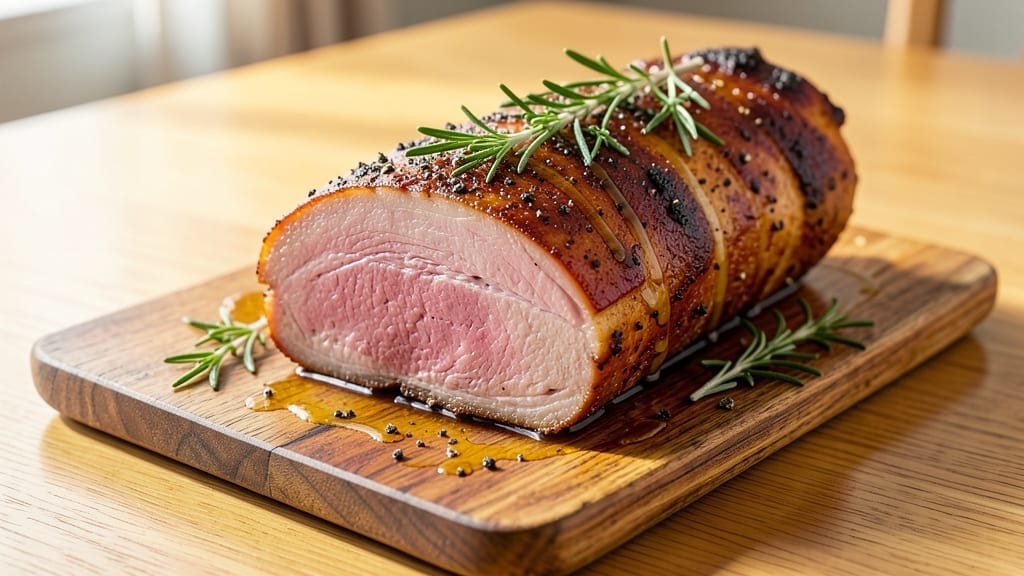
A 10-pound pork loin cooked to juicy perfection with a golden crust is what transforms a family dinner into a showstopper. 🔥 After years of perfecting this technique—especially for large gatherings—I’ve cracked the code: reverse-searing ensures that every slice stays tender while developing that irresistible crust.
The secret lies in precise temperature control and patience, two things that pay off dramatically with a roast this size.
This method works whether you’re feeding a crowd or prepping for leftovers—just plan for 10-12 servings from a single loin. The key steps include a dry brine overnight, a low-and-slow oven cook, and a final high-heat sear to lock in moisture while creating that coveted caramelized exterior.
Convection ovens will shave 10-15 minutes off cook time, but standard ovens deliver equally reliable results when monitored closely.
What you’ll end up with is a pork loin so tender it nearly falls apart, with a crust that’s crisp enough to stand up to even the heartiest appetites.
The reverse-sear technique guarantees juicy meat throughout, while the final sear adds depth of flavor that’ll have your guests asking for seconds. This isn’t just another pork roast—it’s a centerpiece that commands attention.
Pair it with apple-cider pan sauce, roasted root vegetables, or a simple green salad to round out the meal. The leftovers? Even better the next day, sliced thin for sandwiches or reheated in the oven to restore that crisp edge. Let’s get started on a roast that’ll impress every time.
Ingredients for 10 pound pork loin
Ten pounds of pork, two days of prep, and a technique that guarantees juicy, golden perfection every time.
| Ingredient | Amount | Notes |
|---|---|---|
| Bone-In Pork Loin 🐖 | 10 lb | Center-cut, 2-inch thick |
| Kosher Salt 🧂 | 1 ½ cups | Diamond Crystal preferred |
| Freshly Ground Black Pepper 🌶️ | 2 tbsp | Coarse grind for texture |
| Fresh Thyme Sprigs 🌿 | 12 whole | Stems removed, leaves only |
| Fresh Rosemary Sprigs 🌿 | 8 whole | Stems removed, leaves only |
| Extra-Virgin Olive Oil 🫒 | ½ cup | For crust development |
| Unsalted Butter 🧈 | ½ cup | Cold, cubed for sear |
| Garlic Cloves 🧄 | 12 cloves | Smashed, for pan sauce |
| Apple Cider Vinegar 🍎 | ¼ cup | For pan sauce acidity |
| Granulated Sugar 🍬 | 1 tbsp | Balances pan sauce |
| Heavy Cream 🥛 | ½ cup | Full-fat for richness |
| Fresh Parsley 🌿 | ¼ cup | Chopped, for garnish |
The pork loin is the star, so source it from a trusted butcher—look for a center-cut roast with good marbling. Costco or Whole Foods usually carry high-quality 10-pound loins, but call ahead to confirm. The bone-in cut stays juicier and adds flavor, but boneless works too if that’s all you can find. Fresh herbs matter here: Trader Joe’s has great thyme and rosemary bundles, or grab them from your local farmers market. The olive oil should be extra-virgin with a peppery finish—none of that bland supermarket stuff.
No fresh thyme or rosemary? Dried works at half the amount, but the flavor won’t be as vibrant. Short on apple cider vinegar? White wine vinegar or lemon juice will work in a pinch. The butter for searing should be cold and cubed—don’t let it melt before hitting the pan. For the pan sauce, if you’re making it ahead, strain out the garlic bits for a smoother texture. And if you’re worried about the pork being too lean, ask your butcher to trim excess fat—just leave a thin layer for flavor.
This roast reheats beautifully—350°F for 15-20 minutes restores that crisp edge. Store leftovers in airtight containers for up to 5 days, or freeze portions for 3 months. I always slice it thin for sandwiches the next day—add a smear of Dijon mustard for extra flavor. The pan sauce keeps for 3 days in the fridge, but it’s even better the next day as the flavors meld.
Why You’ll Love This Recipe
- No-Fuss Roast: I swear by this—just salt, pepper, and herbs. No fancy marinades or basting drama. The bone-in pork keeps it juicy while the crust forms effortlessly in the oven. Honestly, I’ve roasted it while chatting with friends; that’s how hands-off it is.
- Herb-Crust Magic: That rosemary and thyme? They cling to the meat like a cozy blanket. The salt and pepper deepen as it roasts, giving you a crust that’s crisp enough to shatter but tender enough to melt. Between us, the first bite makes everyone pause.
- Leftovers Heaven: This recipe practically begs for seconds—and thirds. The meat stays moist for days, so I make it for Sunday dinner and still have perfect sandwiches by Thursday. My kids fight over the scraps, and I don’t even pretend to care.
- Budget Feast: A 10-pound pork loin stretches across meals without breaking the bank. Feed a crowd for less than you’d spend on takeout, and the leftovers turn into tacos, salads, or even breakfast hash. Solid move for any wallet.
Step-by-step instructions for reverse-seared pork loin
Here’s how to transform that massive pork loin into tender, juicy perfection with a golden crust.
👨🍳 Step 1: Dry Brine the Pork Loin (The Juiciness Secret)
Pat the bone-in pork loin completely dry with paper towels—this is non-negotiable for that crispy crust. Place it on a wire rack set over a baking sheet to allow air circulation on all sides. In a small bowl, mix the 1.5 cups kosher salt and 2 tbsp freshly ground black pepper until evenly combined.
Generously coat the pork loin with the salt-pepper mixture, pressing it into every crevice and crack. Wrap the pork tightly in plastic wrap and refrigerate for 24 hours. This dry brine draws out moisture from the surface while seasoning deeply, ensuring maximum juiciness when we cook it low and slow. Don’t skip this—it’s what makes the difference between good and spectacular.
🔥 Step 2: Low-Temperature Roast to Perfect Doneness
Remove the pork from the fridge and let it sit at room temperature for 30 minutes before cooking. Preheat your oven to 250°F and place the pork loin on a wire rack in a roasting pan. Roast for 3 hours, or until the internal temperature reaches 140°F when measured at the thickest part of the loin (not touching bone).
Here’s the thing—this slow cook ensures the pork reaches perfect doneness without overcooking. The meat should be tender but still holding its shape, with a slight pink center. Resist the urge to check the temperature early; the pork needs this time to transform. When you see the internal temp hit 140°F, it’s time for the magic to happen.
🔥 Step 3: Build the Herb Butter Crust (The Golden Moment)
While the pork rests, prepare your crust mixture. In a small bowl, combine the 0.5 cup cold cubed unsalted butter, 12 smashed garlic cloves, 12 thyme sprigs, and 8 rosemary sprigs. Generously brush this mixture all over the warm pork loin, making sure to get into every crevice. Let it sit for 10 minutes while the butter softens slightly.
Now for the sear: increase your oven temperature to 450°F. Place the pork loin on a wire rack set over a baking sheet and roast for 15-20 minutes until the crust is deep golden brown and reaches 145°F internally. This high-heat finish creates that beautiful crust while keeping the interior juicy. Watch closely—you want that crust to be golden brown, not burnt.
🍳 Step 4: Create the Apple Cider Pan Sauce
While the pork finishes searing, remove it from the oven and let it rest for 15 minutes (this is crucial for juiciness). Place the same wire rack over a clean stovetop burner and add 0.5 cup extra-virgin olive oil. Heat over medium-high until shimmering, then add the 12 garlic cloves and cook for 30 seconds until fragrant.
Deglaze the pan with 0.25 cup apple cider vinegar, scraping up all those browned bits from the rack. Add 1 tbsp granulated sugar and simmer for 2 minutes until slightly reduced. Pour in 0.5 cup heavy cream and simmer for another 3 minutes until slightly thickened. Season with salt and pepper to taste—this sauce should be rich, tangy, and perfectly balanced.
🍽️ Step 5: Slice and Serve with Herb Garnish
Using a sharp carving knife, slice the pork loin against the grain into 1-inch thick slices. Arrange the slices on a warm platter and ladle the apple cider pan sauce over the top. Garnish with the 0.25 cup chopped fresh parsley for a pop of color and freshness.
Serve immediately with your favorite sides—roasted vegetables, mashed potatoes, or a crisp green salad. Each slice should be tender enough to pull apart with a gentle tug, with that beautiful golden crust and rich, juicy interior. This is the moment you’ve been waiting for after all that careful preparation.
Pro Tips For Making 10 Pound Pork Loin
- USE A MEAT THERMOMETER: A 10-pound pork loin isn’t forgiving—guessing temps leads to dry meat or undercooked centers. Stick the probe into the thickest part (avoid bone) and aim for 140°F internal when pulled from the oven, then let it rest. I learned this the hard way after slicing into a batch that was still pink inside.
- SALT THE LOIN 24 HOURS EARLY: Don’t season right before cooking—rub the pork with 2 tablespoons kosher salt per pound (so ~20 tbsp total) and let it sit uncovered in the fridge. This seasons deeper and prevents a salty crust while keeping the meat juicy. (Yes, it’s a pain to remember, but your future self will notice the difference.)
- SKIP THE CROWDED PAN: If searing in a skillet, work in batches—overloading steams the meat instead of browning it. A hot pan with 1/2 inch oil per side (about 2 tbsp total) is all you need for a proper crust. I used to rush this and ended up with sad, pale pork every time.
- TUCK HERBS INSIDE BEFORE ROASTING: Stuff half the thyme and rosemary sprigs into the fatty pocket near the bone before tying the loin. The heat renders fat and herbs together, infusing flavor deeper than just sprinkling on top. (Pro move: Tie the loin loosely with butcher’s twine—no need for fancy knots.)
Wine and beer pairings for this dish
Red Wine Pairings
For this rich, herb-crusted pork loin, I reach for a bold red wine that stands up to the deep flavors without overpowering them. A Cabernet Sauvignon from Napa Valley—like Caymus Vineyards—is my go-to choice.
Its dark fruit notes and firm tannins complement the pork’s savory crust while the acidity cuts through the richness of the apple cider pan sauce. If you prefer something slightly lighter, a Pinot Noir from Oregon, like Domaine Serene, offers elegant earthiness that pairs beautifully with the herb butter.
Both wines elevate the dish without competing for attention. 🍷
White Wine Alternatives
Don’t let the crust fool you—this pork loin also shines with a well-chilled white wine. A Chardonnay with subtle oak, such as Kendall-Jackson Vintner’s Reserve, works surprisingly well. The buttery notes in the wine mirror the herb butter crust, while its acidity balances the richness.
For a crisp, refreshing option, try a Viognier from California—its floral and stone fruit flavors contrast nicely with the pork’s savory profile. I’ve even enjoyed a dry Riesling from Germany when I want to highlight the apple cider in the sauce. 🍷
Beer Pairings
If you’re serving beer, skip the heavy stouts and go for something with bright acidity and malt balance. A Belgian Witbier, like Hoegaarden, is a fantastic match—its citrus and coriander notes cleanse the palate between bites of pork.
For a local favorite, try a Southern-style amber ale, such as Atlanta’s SweetWater 420, which offers a malty sweetness that complements the herb butter without overpowering. If you prefer something darker, a German Helles with its nutty, caramel undertones pairs beautifully with the pork’s crust. 🍺
Non-Alcoholic Options
Don’t worry if alcohol isn’t an option—there are still excellent choices. A sparkling apple cider, like Martinelli’s Sparkling Apple Cider, mirrors the flavors in the pan sauce while adding a festive touch.
For something more robust, try a ginger beer with a hint of spice, like Brew Dr. Brown’s, which cuts through the richness of the pork. Even a well-chilled sparkling water with a squeeze of lemon can refresh the palate between bites.
These options keep the meal feeling special without the alcohol. 💧
Regional Pairing Tips
Growing up in Georgia, I learned that local wines and beers can elevate a dish just as much as imported options.
For a Southern twist, pair this pork loin with a Georgia Chardonnay, like Chateau Elan, which has a unique mineral finish that pairs beautifully with the herb butter.
If you’re in the Southeast, try a local craft beer, such as Creature Comforts Dirty Bird from Atlanta, which offers a malty sweetness that complements the dish. These regional choices add a personal touch that’s hard to beat. 🗺️
Nutrition facts
Frequently asked questions
How do I adjust this recipe for a convection oven?
Convection ovens cook faster, so reduce your low-temp roast time by 10-15 minutes (aim for 2 hours 45 minutes instead of 3 hours). The high-heat sear at 450°F can stay the same, but watch the crust closely—convection can dry it out faster. Keep your thermometer handy to hit 140°F internally before searing.
Can I cook a 10-pound pork loin without a meat thermometer?
Yes, but it’s trickier! For the low-temp roast, cook for 3 hours then check doneness by inserting a knife—it should slide in easily with slight resistance. For the final sear, look for a deep golden crust and cook until internal temp reaches 145°F (about 15-20 minutes). If you’re unsure, it’s better to undercook slightly than overcook.
What’s the best way to reheat leftover pork loin?
Slice leftovers thin and reheat in a 350°F oven for 15-20 minutes on a wire rack to restore crispness. For sandwiches, warm slices in a skillet with butter for 2-3 minutes per side. Never microwave—it turns the meat rubbery. Store in airtight containers for up to 5 days or freeze for 3 months.
Why does my pork loin turn out dry?
Most likely you skipped the resting time or overcooked it. Always let the pork rest 15 minutes after roasting—juices redistribute during this time. For the low-temp roast, pull it at 140°F, not 160°F. Also check your thermometer calibration—an inaccurate probe can lead to overcooking. The reverse-sear method guarantees juiciness when done correctly.
Can I substitute bone-in for boneless pork loin?
Boneless works just as well—just adjust your cook time slightly (5-10 minutes less for the low-temp roast since it cooks faster without bone). The bone-in version stays juicier longer, but boneless gives you cleaner slices. If using boneless, make sure it’s 2-inch thick for even cooking. Either way, the reverse-sear technique works perfectly.

- 12 Bean Chili Recipe: Hearty Slow-Cooked Depth With 12 Legumes - October 17, 2026
- 5 Seed Bread Recipe: Nutty Crunch and Artisan Flavor in One Loaf - October 17, 2026
- 1 Lb Macaroni Salad Recipe: Bold, Crunchy, and Crowd-Pleasing - October 17, 2026