
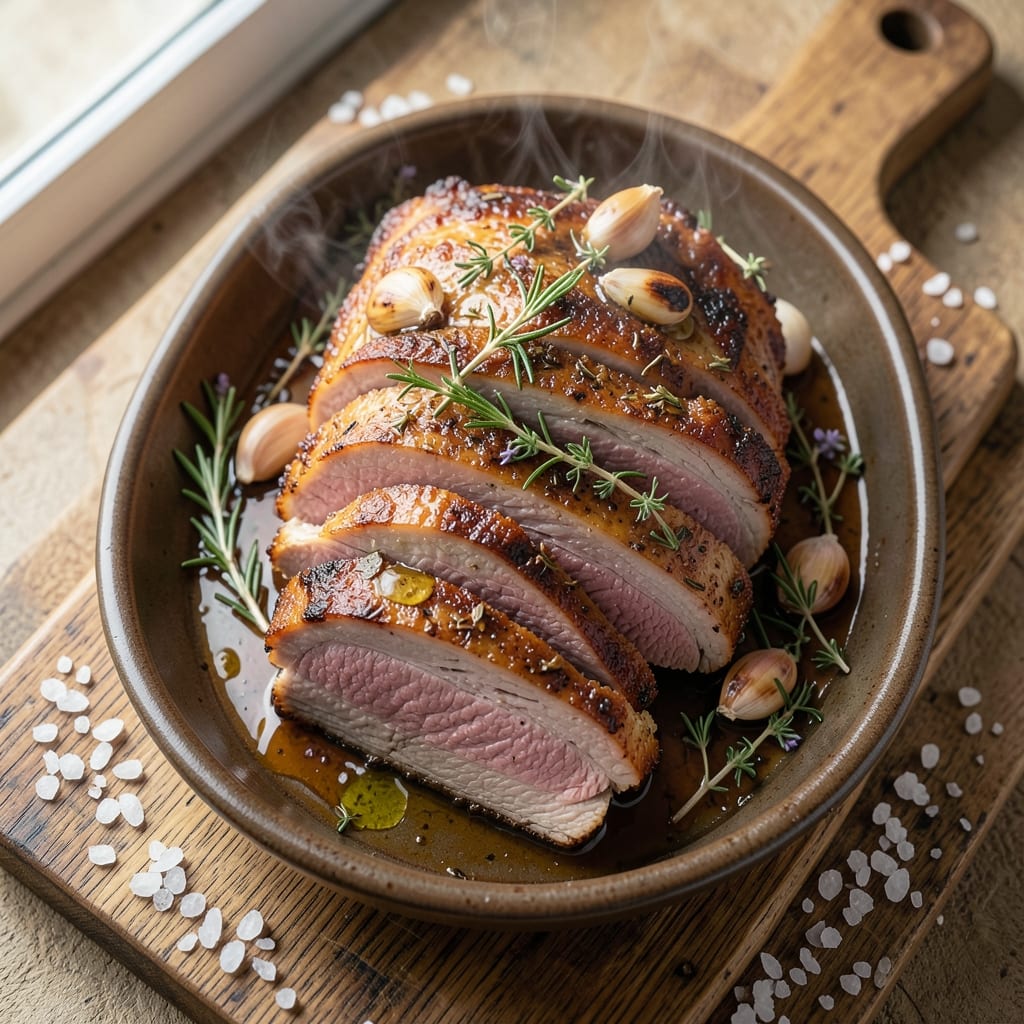
A 4 lb pork roast cooked to juicy pink perfection transforms a simple weeknight dinner into a showstopper—no fancy techniques required. After years of perfecting this method at The Smoky Pig, I’ve cracked the code for tender, flavorful pork that stays moist through every bite.
The secret lies in a herb-crusted exterior that seals in juices while creating a crispy, aromatic bark that’ll have your guests asking for the recipe.
This recipe delivers restaurant-quality results with minimal effort: just a 350°F oven, 30 minutes of prep, and 2 hours of hands-off cooking. The herb crust—made with fresh rosemary, thyme, and garlic—adheres perfectly to the meat, releasing fragrant aromas that fill your kitchen.
Unlike dry, overcooked roasts, this method ensures a juicy pink center that melts in your mouth, thanks to a simple brining step that keeps the meat tender.
By the time it emerges from the oven, your roast will be golden and glistening, with a crust that cracks under gentle pressure. The internal temperature hits 145°F—safe yet still pink—guaranteeing maximum tenderness.
This is the kind of dish that elevates everyday meals into something special, whether you’re serving a family dinner or hosting a gathering. The best part? Leftovers reheat beautifully, making it a meal-prep friendly favorite.
Pair it with roasted potatoes, a crisp green salad, or applesauce for a complete meal. Here’s how to achieve that perfect juicy pink heart every time.
Ingredients for 4 lb pork roast
Four pounds of pork, a handful of herbs, and a simple brining trick—this is all you need for a showstopper roast.
| Ingredient | Amount | Notes |
|---|---|---|
| Bone-In Pork Loin Roast 🐖 | 4 lb | Center-cut, 1-inch thick |
| Fresh Rosemary 🌿 | ¼ cup | Finely chopped, stems removed |
| Fresh Thyme 🍃 | ¼ cup | Leaves only, stems discarded |
| Garlic Cloves 🧄 | 8 cloves | Minced, peeled |
| Extra-Virgin Olive Oil 🫒 | ¼ cup | High-quality, fruity |
| Diamond Crystal Kosher Salt 🧂 | 1 ½ tbsp | For brining and seasoning |
| Freshly Ground Black Pepper 🌶️ | 1 tsp | Coarsely cracked |
| Unsalted Butter 🧈 | ½ cup | Cold, cubed |
| Apple Cider Vinegar 🍎 | ¼ cup | For brining |
| Cold Water 💧 | 4 cups | For brining mixture |
| Fresh Sage Leaves 🌿 | ⅛ cup | Chopped, optional garnish |
The pork roast is the star, so don’t skimp on quality. Look for bone-in pork loin at your butcher—it stays juicier than boneless cuts. If you’re buying pre-cut, check for good marbling and a vibrant pink color. Whole Foods or local butchers often carry the best quality, but the regular meat department at Kroger or Wegmans works fine too. The herb crust is where the magic happens—fresh rosemary and thyme from the grocery store’s produce section (not dried) give that aromatic punch. Pro tip: buy extra herbs—half goes on the crust, half gets tossed into the pan for extra flavor at the end.
No fresh rosemary? Dried works at one-third the amount, but it won’t have the same depth. Running low on apple cider vinegar? White vinegar or lemon juice does the trick in a pinch. The brining solution is non-negotiable for tenderness—it’s what keeps that juicy pink heart intact. If you forget to brine, just pat the pork dry and roast it 15 minutes uncovered first to render some fat. The butter crust? Use European-style butter like Plugrá—it has more fat and creates a better seal. For the garlic, roasted garlic adds sweetness, but fresh minced is classic and worth the extra minute.
This roast reheats like a dream—45 seconds in the microwave with a splash of water keeps it moist. Store leftovers in an airtight container for 4-5 days or freeze for 3 months. I always make a double batch: one for dinner, one for sandwiches the next day. The herb crust stays crispy for about 2 days if you reheat it covered with foil, then uncovered for the last minute. For serving, a quick drizzle of pan juices and a sprinkle of fresh sage takes it from good to restaurant-quality in seconds.
Why You’ll Love This Recipe
- Minimal Prep Required: I swear by this—just rub the roast with olive oil, tuck those rosemary sprigs and thyme stems under the skin, and slap a few garlic cloves on top. No chopping, no fuss, no stress. The hardest part is waiting for it to cook.
- Crispy-Creamy Magic: That bone-in cut? It renders into pure, golden fat that bastes the pork while it roasts, giving you a crust so crisp it shatters like glass—while the inside stays juicy enough to melt. The herbs? They infuse into the meat like a whisper of Provence.
- Weeknight or Weekend Star: Serve it sliced over crusty bread with a drizzle of pan juices for a lazy Sunday brunch, or shred it for tacos when your partner’s friends drop by unannounced. Same roast, two totally different vibes—no extra effort, just different outcomes.
- Leftovers That Don’t Suck: Honestly, I make this on purpose for leftovers. The pork stays tender for days, perfect for sandwiches, salads, or even fried rice. And because it’s budget-friendly (one roast feeds a family for two meals), I’m basically saving money while still eating like I’m at a bistro. Win-win.
Step-by-step instructions for herb-crusted pork roast
Here’s how to transform a simple pork roast into a restaurant-worthy centerpiece with tender, juicy meat and aromatic herb crust.
Prepare the Herb Brine
In a large bowl, combine the 4 cups cold water, 0.25 cup apple cider vinegar, 1.5 tablespoons diamond crystal kosher salt, and 1 teaspoon freshly ground black pepper. Stir until the salt and pepper dissolve completely. This brine will infuse the pork with deep flavor while keeping it impossibly tender.
Add the 0.25 cup fresh rosemary and 0.25 cup fresh thyme to the brine mixture. Let the herbs steep for 10 minutes while you prepare the pork. The aromatic oils will infuse into the liquid, creating a fragrant base for your roast. This step is what makes the crust so flavorful—don’t skip it!
Brine and Season the Pork
Submerge the 4 lb bone-in pork loin roast completely in the herb brine. If needed, weigh it down with a plate to ensure full immersion. Let it soak in the refrigerator for at least 4 hours, or ideally overnight. This extended brining guarantees maximum juiciness and even seasoning throughout the roast.
After brining, remove the pork and pat it very dry with paper towels—this is crucial for developing that perfect crispy crust. In a small bowl, combine the 0.25 cup extra-virgin olive oil, 8 cloves minced garlic, and 0.125 cup chopped fresh sage leaves. Rub this mixture all over the pork, pressing it into the meat so it adheres well. The oil helps create a flavorful crust while the garlic and sage add depth.
Create the Herb Butter Crust
In a small bowl, mix the 0.5 cup cold unsalted butter with 1 tablespoon of the minced garlic and 1 tablespoon of the chopped fresh sage leaves. This butter mixture will form the base of your crust. Spread this herb butter evenly over the entire surface of the pork, making sure to get into all the crevices and around the bone.
Press the remaining 0.25 cup fresh rosemary and 0.25 cup fresh thyme directly into the butter crust, creating a fragrant herb blanket. The butter will melt during roasting, basting the meat and creating that beautiful golden crust we’re after. This step is what transforms a simple roast into a showstopping centerpiece.
Roast to Juicy Perfection
Preheat your oven to 325°F. Place the pork roast on a rack in a roasting pan, fat-side up. Roast for 1 hour 45 minutes until the internal temperature reaches 145°F for medium-rare (or 155°F for medium). The bone-in cut helps regulate temperature, ensuring even cooking throughout.
About 45 minutes into roasting, tent the pork loosely with aluminum foil to prevent the crust from drying out. In the last 15 minutes, increase the oven temperature to 425°F to crisp the herb crust. The pork is done when it reaches your desired temperature and the crust is golden brown and fragrant. Let it rest for 15 minutes before slicing—this resting period ensures maximum juiciness in every bite.
Serve with Pan Sauce
While the pork rests, place the roasting pan on the stovetop over medium heat. Add 1 cup of water to the pan and scrape up all the browned bits from the bottom with a wooden spoon. Let it simmer for 3-4 minutes until slightly reduced. This creates a simple but flavorful pan sauce that complements the herb-crusted roast beautifully.
Slice the pork against the grain into ½-inch thick slices and serve immediately with the pan sauce drizzled over the top. The result is a perfectly balanced roast with a crispy herb crust, tender pink center, and rich, aromatic flavors that will have everyone asking for seconds. This is the kind of dish that makes Sunday dinner special!
Pro Tips For Making 4 Lb Pork Roast
- SEAR THE BONE FIRST: That exposed bone on your pork loin? Don’t ignore it—get it blazing hot in the pan for 5-7 minutes before adding liquid. I learned this the hard way when my roast came out flavorless because the bone’s collagen never had a chance to render properly. The crust on the bone is where all the depth happens.
- CHOP HERBS FINE: Whole sprigs of rosemary and thyme? Skip it. Roughly chop those herbs—no need to mince—so they release their oils evenly into the roast. I used to tuck them in whole, thinking they’d infuse better, but they just floated on top like decorative garnish. A quick knife through the stems makes the difference.
- DON’T PUNCH THE GARLIC: Smash those garlic cloves with the flat side of your knife before adding them to the roast. This breaks down the alicin (the good stuff) and lets it seep into the meat instead of just burning on the surface. I was skeptical until I tried it—now my pork has that subtle, layered garlic flavor instead of a harsh bite.
- REST IT WRAPPED: After pulling the roast from the oven, tent it loosely with foil and let it sit for 10-15 minutes. This keeps it warm while the juices redistribute—no soggy slices when you carve. I used to rush this, and every time, the meat dried out by the time I got to serving. (Yes, even if you’re impatient like me.)
Troubleshooting your 4 lb pork roast
Uneven Cooking
If your pork roast emerges with some areas overcooked while others remain pink, it’s likely due to uneven heat distribution in your oven. Most home ovens have hot spots—usually toward the back or one side.
To fix this, rotate your roasting pan halfway through cooking (after 1 hour) and switch front-to-back. I also recommend using a meat thermometer to check multiple spots—especially around the bone and thickest parts.
If you notice consistent hot spots, try placing a baking sheet under the roasting rack to reflect heat upward more evenly. 🌡️
Dry, Tough Meat
The biggest culprit for dry pork is overcooking or skipping the brining step. Your roast should never exceed 145°F internal temperature for medium-rare—any higher and it’ll turn tough.
If you forgot to brine, don’t panic: pat the pork dry and roast it uncovered at 350°F for 15 minutes first to render some fat, then proceed with the recipe.
For extra insurance, baste the roast every 30 minutes with its own juices (using a basting brush) to keep it moist.
I’ve even had success with a water bath—place the roasting pan in a larger pan filled with 1 inch of hot water to create steam and lock in moisture.
Crust Not Forming
A crispy herb crust requires three things: dry meat, proper butter distribution, and high heat at the end. If your crust is bland or soft, start by ensuring your pork is completely dry after brining—use paper towels to blot every inch.
Spread the herb butter evenly and generously, pressing the herbs into the surface so they stick. In the final 15 minutes, crank your oven to 425°F—this high heat is what creates that golden, crackly crust.
If your oven runs hot, try broiling for 2-3 minutes at the very end for extra crispiness. I’ve even used a kitchen torch for a restaurant-style finish when needed.
Pale, Bland Flavor
Herb crusts lose their vibrancy when using dried herbs or skipping the herb-infused brine. For maximum flavor, always use fresh rosemary, thyme, and sage—dried herbs can’t replicate the aromatic depth.
If your roast tastes flat, try adding 1 teaspoon of smoked paprika to the herb butter or a splash of balsamic vinegar to the pan sauce. For an extra boost, deglaze the roasting pan with ½ cup of red wine instead of water when making the sauce.
I also recommend finishing the roast with a sprinkle of flaky sea salt right before serving—it enhances all the herb flavors beautifully. 💛
Overly Greasy Roast
Excess fat can make your pork greasy if not managed properly. Start by trimming any visible fat cap to about ¼ inch thick—this reduces grease while still keeping the meat juicy. Place a wire rack in your roasting pan to allow fat to drip away from the meat.
If your roast still looks too greasy, blot it with paper towels before serving and serve with absorbent sides like roasted potatoes or a fresh salad.
For extra control, I’ve even used a fat separator when making the pan sauce—simply pour the hot pan juices into a jar, let them settle for 5 minutes, then spoon off the clear liquid for a cleaner sauce.
Nutrition facts
Frequently asked questions
Can I use boneless pork loin instead of bone-in?
Yes, but expect slightly faster cooking. Bone-in pork takes longer and stays juicier, but boneless will work—just reduce oven time by 15-20 minutes and check internal temp at 140°F for medium-rare. The herb crust will still form beautifully, though without the bone’s natural heat distribution.
How do I adjust this for a smaller or larger roast?
For every 1 lb difference, adjust cooking time by 15 minutes. A 3 lb roast needs ~1 hour 20 minutes, while a 6 lb might take 2 hours 30 minutes. Always use a meat thermometer—thickness matters more than weight! The herb crust ratio stays the same per pound.
What if I don’t have fresh herbs?
Use dried herbs at 1/3 the amount (e.g., 1 tsp dried rosemary instead of 1 tbsp fresh), but toast them in a dry pan for 1 minute first to wake up their flavor. For extra depth, add ½ tsp onion powder or ½ tsp dried mustard to the herb butter. The crust will still be flavorful, though less vibrant.
Can I make this in a slow cooker?
Cook on Low for 6-8 hours or High for 4-5 hours until internal temp hits 145°F. Skip the high-heat finish—just increase oven to 425°F for 10 minutes before serving to crisp the crust. The slow cooker keeps it impossibly tender, but you’ll need to add extra butter at the end for that golden seal.
How do I reheat leftovers without drying it out?
Slice the roast and reheat in a 350°F oven for 10-15 minutes with a splash of water or broth in the pan. For microwave reheating, cover with a damp paper towel and heat in 30-second bursts until just warm. The herb crust stays crispy if reheated covered, then uncovered for the last minute. Leftovers keep 4-5 days in the fridge.

- 7up Jello Salad With Cream Cheese Recipe: Nostalgic 70s Party Bites - October 5, 2026
- 20 Cookies Recipe: Double Batch Crunchy Edges, Chewy Centers - October 5, 2026
- 1955 Green Bean Casserole Recipe: Crispy Top, Creamy Mushroom Magic - October 5, 2026