
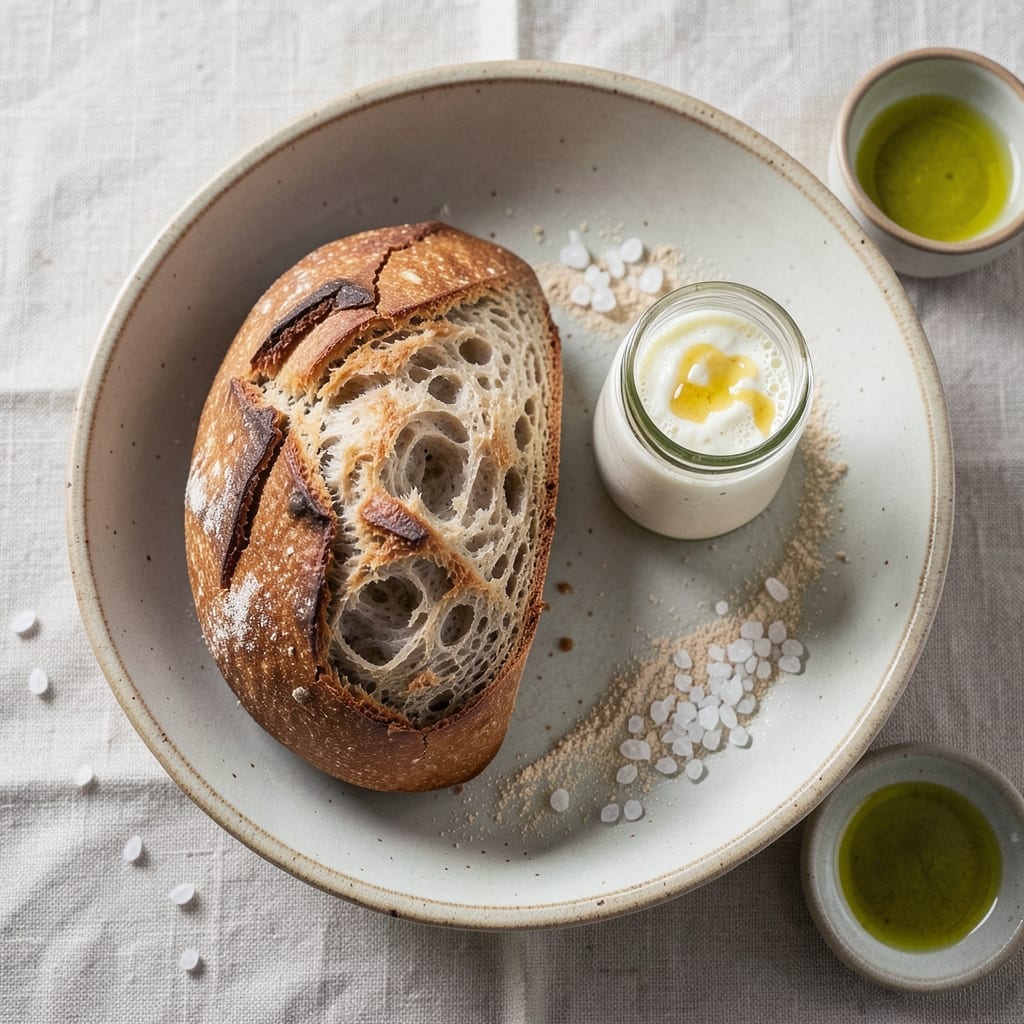
Baking 100% einkorn sourdough bread unlocks the ancient flavors of one of history’s first cultivated grains—nutty, complex, and far more digestible than modern wheat.
This recipe preserves traditional methods while adapting them for modern kitchens, with precise hydration control and fermentation guidance to ensure a perfect open crumb and crisp crust.
The key lies in the einkorn flour’s unique protein structure, which requires careful handling but rewards patient bakers with a bread that’s both rustic and refined.
Unlike commercial sourdoughs, this recipe demands attention to detail from starter maintenance to final proofing, but the results—a loaf with a golden, crackly crust and a tender, open crumb—are worth every step.
We’ll use a 75% hydration dough (higher than most einkorns) to balance structure and tenderness, with a long cold fermentation that develops depth without overproofing. The absence of modern wheat proteins means we’ll focus on proper kneading techniques and proofing times to achieve the same oven spring.
What makes this einkorn sourdough special is its nutty, slightly sweet flavor that develops during fermentation, paired with a texture that’s both airy and substantial. The recipe includes troubleshooting tips for common einkorn challenges—like slower fermentation and weaker gluten development—so you can achieve professional results even on your first attempt.
With proper storage, this bread stays fresh for days, making it perfect for meal prep or gifting.
Whether you’re new to sourdough or an experienced baker, this einkorn recipe offers a chance to connect with ancient grains while using modern techniques. The process is methodical but rewarding, with clear instructions for each stage—from creating your starter to baking the final loaf.
Let’s begin with the foundation every great einkorn sourdough needs: a robust, active starter.
Ingredients for 100 einkorn sourdough bread
These ancient grains and simple pantry staples create a loaf with nutty depth and rustic charm.
| Ingredient | Amount | Notes |
|---|---|---|
| Einkorn Flour 🌾 | 6 ½ cups | Organic, stone-ground preferred |
| Active Sourdough Starter 🍞 | 2 cups | 100% hydration, bubbly and active |
| Filtered Water 💧 | 3 ¼ cups | Room temperature, 75°F |
| Kosher Salt 🧂 | 1 ½ tsp | Diamond Crystal preferred |
| Olive Oil 🫒 | 1 tbsp | Extra-virgin for richness |
| Instant Vital Wheat Gluten 🌾 | ½ cup | For structure, optional but recommended |
| Honey or Maple Syrup 🍯 | 1 tbsp | For fermentation boost |
| Semolina Flour 🌾 | ¼ cup | For dusting and crust |
| Cornmeal 🌽 | ¼ cup | For baking surface |
| Ice Water ❄️ | ½ cup | For final shaping |
Einkorn flour is the star here—organic, stone-ground varieties from King Arthur or Bob’s Red Mill work best, but any einkorn will do. The flour’s lower gluten means we add vital wheat gluten for structure, but don’t skip it—it’s what gives that signature open crumb. If your starter isn’t bubbly, feed it 12-24 hours before using. 75°F water is key for hydration; too cold slows fermentation, too warm kills it. For the best flavor, use extra-virgin olive oil—it adds subtle fruity notes that pair perfectly with einkorn’s nuttiness.
No einkorn flour? Mix 50% whole wheat and 50% bread flour as a substitute, but expect a denser loaf. Running low on starter? 100% hydration white whole wheat starter works in a pinch, though flavor will differ. The honey or maple syrup can be swapped for agave nectar, but avoid artificial sweeteners—they won’t feed the yeast. For the gluten, Bob’s Red Mill vital wheat gluten is my go-to, but any brand works. If you’re baking in a humid climate, reduce water by 1 tbsp to prevent a gummy texture.
This dough keeps beautifully—3 days refrigerated or 3 months frozen. For freezing, shape the loaf, wrap tightly in plastic, then foil. Thaw overnight in the fridge before baking. The loaf stays fresh at room temperature for 2-3 days if wrapped in a towel, but it’s best within 24 hours. For extra crunch, bake again for 5 minutes after slicing. The crust freezes well too—perfect for toast or croutons later.
Why You’ll Love This Recipe
- Fewer Ingredients, More Magic: I swear by this recipe because it’s ridiculously simple—just five ingredients, no fancy ratios to memorize. The einkorn flour does all the heavy lifting, so even if my starter’s a little sluggish, the bread still turns out tender and tangy.
- Nutty, Crusty, Addictive: That first bite? The einkorn’s natural sweetness paired with the sourdough’s sharp tang is chef’s kiss—like a cross between artisanal bread and a warm hug. Honestly, I’ve caught myself eating slices straight from the pan while still hot.
- Weeknight Wonder: This bread is my go-to for meal prep: toast it for breakfast, use it for sandwiches all week, or freeze slices for lazy mornings. Between us, I’ve made it three times in a row because it’s that reliable—no sad, dense loaves here.
- Budget-Friendly Starter: Einkorn flour might sound fancy, but it’s cheaper than most whole grains, and a small batch of starter lasts me months. Plus, the olive oil finish makes it feel special without breaking the bank. My wallet and my taste buds win.
Step-by-step instructions for 100% einkorn sourdough bread
Let’s craft this ancient grain loaf with a crisp crust and nutty interior—every step matters.
Mix the Dough with Precision
In a large mixing bowl, combine the 6.5 cups einkorn flour and 0.5 cup instant vital wheat gluten. This gluten boost gives our bread the structure it needs to hold its shape during fermentation. Create a well in the center and add the 2 cups active sourdough starter, 1 tbsp honey or maple syrup, and 1.5 tsp kosher salt. The syrup here feeds the yeast and enhances fermentation.
Gradually add the 3.25 cups filtered water while mixing with a wooden spoon or dough whisk. The dough will be shaggy at first—this is normal. After about 5 minutes of mixing, the dough should begin to come together. Add the 1 tbsp olive oil and continue mixing until the dough is smooth and elastic. If it’s too sticky, add 1 tablespoon of einkorn flour at a time until it reaches a workable consistency. The dough should be soft but not wet, with a slight sheen on the surface.
Knead and Develop Gluten
Turn the dough onto a lightly floured surface and knead for 8-10 minutes by hand. You’re aiming for a smooth, elastic dough that springs back slowly when poked. The einkorn flour is lower in gluten than modern wheat, so this kneading step is crucial for developing structure. If your hands get too warm, let the dough rest for 1-2 minutes before continuing.
Alternatively, use a stand mixer fitted with a dough hook attachment. Knead on medium speed for 5-6 minutes until the dough pulls away from the sides of the bowl and forms a tight ball. The dough should be slightly tacky but not sticky. Once kneaded, place it back in the bowl, cover with a damp towel, and let it rest for 20 minutes. This resting period relaxes the gluten, making the dough easier to shape later.
First Fermentation (Bulk Rise)
After the rest, shape the dough into a loose round by gathering the edges toward the center and tucking them under. Place it seam-side up in a lightly oiled bowl, cover with the damp towel, and let it ferment at room temperature (75°F) for 4-6 hours. The dough should rise until it’s about 50-75% larger than its original size and looks puffy with bubbles visible on the surface.
Here’s where the magic happens: the einkorn flour ferments more slowly than modern wheat, so patience is key. Check the dough after 3 hours—it should have doubled in size and feel light when pressed gently. If it’s not active enough, let it ferment longer. The ideal dough will have a jiggly, slightly domed top with bubbles ranging from pea-sized to marble-sized. This indicates proper fermentation and flavor development.
Shape and Final Proof
Once the dough has risen sufficiently, turn it out onto a lightly floured surface dusted with 0.25 cup semolina flour. Gently deflate the dough by pressing down with your fingertips. Shape it into a tight round by pulling the edges toward the center and tucking them under. This creates surface tension that helps develop the oven spring later.
Place the shaped dough seam-side up in a banneton or bowl lined with a floured towel. Cover loosely and refrigerate for 12-16 hours (overnight works best). This cold proof slows fermentation, allowing flavors to develop fully. The dough should rise slowly in the fridge, becoming slightly puffy and domed. For the final 1-2 hours before baking, let it come to room temperature while covered.
Score and Bake to Perfection
Preheat your oven to 450°F with a Dutch oven inside for 45 minutes. This ensures a steamy environment for that coveted crisp crust. Once preheated, carefully transfer the dough (still in its proofing bowl) to the hot Dutch oven. Remove the bowl and lid, then score the top of the dough with a sharp razor or lame in a simple crosshatch or diagonal pattern. This prevents over-expansion and adds visual appeal.
Bake covered for 20 minutes, then remove the lid and bake for another 20-25 minutes until the bread reaches an internal temperature of 205-210°F and has a deep golden-brown crust. The bread should sound hollow when tapped on the bottom. If the top browns too quickly, tent loosely with foil. Let it cool on a wire rack for at least 1 hour before slicing—this allows the crumb to set and prevents a gummy texture.
Pro Tips For Making 100 Einkorn Sourdough Bread
- Autolyse First: Mix your einkorn flour and filtered water before adding starter or salt—let it sit for 30-60 minutes. This step hydrates the tough einkorn protein better than immediate mixing, and your dough will develop gluten more predictably. (Yes, even if you’re eager to get going.)
- Test Starter Ripeness: Your einkorn starter should float in water like a cork before using—if it sinks, give it another 30-60 minutes. Cold weather slows it down, so don’t rush; a sluggish starter makes for a dense loaf. I learned this after tossing a batch that tasted flat because I skipped the float test.
- Shape Tightly, Rest Long: Einkorn dough is sticky and weak—wrap it very tightly in your towel and let it rest 20-30 minutes after shaping. This helps the gluten relax and strengthens the structure before baking. (Your hands will hate you, but the crumb won’t.)
- Steam the Pan: Spritz your Dutch oven with olive oil and add a metal tray of boiling water to the oven before baking. The einkorn crust needs that initial steam to rise properly—otherwise, you’ll end up with a sad, collapsed top. (I used to skip this; now I don’t.)
Best sauces and condiments for these flavors
Olive Oil Drizzle
Finish your einkorn sourdough with a light drizzle of extra-virgin olive oil right after baking. I recommend 1 tablespoon of high-quality oil like California Avocado Ranch or Colavita—its fruity notes complement the bread’s nutty flavor beautifully.
Drizzle while the bread is still warm so the oil soaks into the crust slightly, adding richness and a subtle sheen. 🌿
Honey Butter
For a sweet-savory pairing, whip together ½ cup softened unsalted butter with 2 tablespoons local honey and a pinch of flaky sea salt. Spread this on warm slices—it enhances the einkorn’s natural sweetness while balancing its earthy depth.
Store leftovers in an airtight container for up to 5 days in the fridge.
Whole-Grain Mustard
Mix 2 tablespoons Dijon mustard with 1 tablespoon olive oil and a splash of apple cider vinegar for a tangy spread. The mustard’s sharpness cuts through the bread’s richness, while the vinegar adds brightness.
I love this on toasted einkorn with sharp cheddar or smoked salmon. Use within 3 days for best flavor.
Garlic-Herb Compote
Simmer 3 minced garlic cloves with ¼ cup olive oil, 1 tbsp chopped fresh rosemary, and 1 tsp dried thyme until fragrant (5 minutes). Let cool and drizzle over warm bread slices.
The aromatic herbs elevate the einkorn’s nutty profile, making it perfect for hearty sandwiches or as a side with soups. Store in a sealed jar for 1 week.
Spiced Whipped Cream
Whip 1 cup heavy cream with 1 tbsp powdered sugar, ½ tsp vanilla extract, and a pinch of cinnamon. This light, sweet topping pairs wonderfully with the bread’s rustic texture.
I use it for dessert-style toast with fresh berries or dark chocolate shavings. Keep refrigerated in an airtight container for up to 3 days. ✨
Smoked Paprika Aioli
Blend ½ cup mayonnaise with 1 tsp smoked paprika, 1 tsp lemon juice, and ½ tsp garlic powder for a smoky kick. This aioli adds depth to sandwiches or as a dip for toasted einkorn slices.
The paprika enhances the bread’s earthy notes while adding a subtle warmth. Store in the fridge for up to 5 days.
Nutrition facts
Frequently asked questions
Why does einkorn sourdough require vital wheat gluten?
Einkorn flour has naturally lower gluten content than modern wheat, which means it lacks the elastic structure needed for proper oven spring. Adding 0.5 cup vital wheat gluten compensates for this, helping create that signature open crumb and crisp crust. Think of it as a structural support system for the dough’s development during fermentation.
How do I know my einkorn starter is ready to use?
Your starter should be bubbly, domed, and pass the “float test”—drop a small spoonful in water. If it floats, it’s ready! For einkorn, aim for a 100% hydration starter that doubles in size within 4-6 hours after feeding. If it’s sluggish, feed it with fresh einkorn flour and water every 12 hours for 2-3 days to build strength.
Can I skip the cold proofing overnight?
While possible, cold proofing overnight (12-16 hours) is crucial for einkorn’s flavor development. Without it, the bread may lack depth and rise unevenly. If you’re short on time, try a 4-6 hour room temp proof followed by a 2-hour cold proof**—but expect slightly less flavor complexity. The cold slows fermentation, allowing enzymes to break down starches for that nutty, sweet taste.
Why did my einkorn sourdough turn out dense?
Dense einkorn bread usually stems from underdeveloped gluten or overproofing. First, ensure you kneaded for 8-10 minutes by hand (or 5-6 minutes with a mixer). Second, check fermentation times—einkorn ferments slower than modern wheat, so 4-6 hours at room temp is ideal. If the dough collapsed during baking, it may have been overproofed. Next time, reduce bulk fermentation by 1 hour and try a shorter cold proof.
How can I make this recipe without a Dutch oven?
No Dutch oven? No problem! Use a heavy oven-safe pot with a lid or even a baking stone with a steam pan. For extra steam, place a tray of boiling water on the lower oven rack. Score the dough aggressively to prevent over-expansion, and bake at 425°F instead of 450°F—the lower heat helps mimic the steam environment. Expect a slightly less crisp crust but still excellent flavor.

- 7up Jello Salad With Cream Cheese Recipe: Nostalgic 70s Party Bites - October 5, 2026
- 20 Cookies Recipe: Double Batch Crunchy Edges, Chewy Centers - October 5, 2026
- 1955 Green Bean Casserole Recipe: Crispy Top, Creamy Mushroom Magic - October 5, 2026