
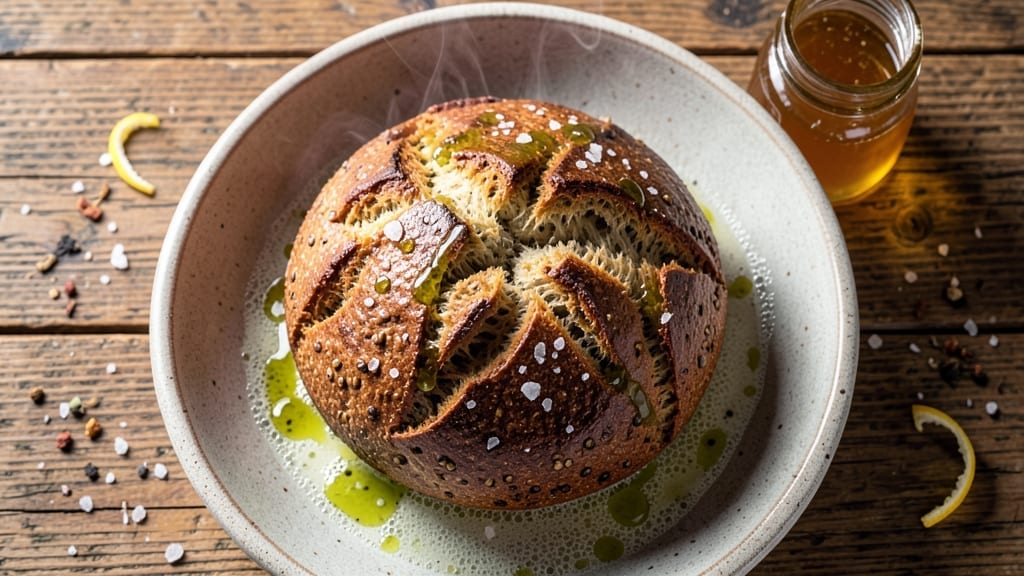
This 100 kamut bread recipe delivers a loaf with nutty depth and ancient grain richness that rivals artisanal bakeries. The secret lies in precise hydration and slow fermentation, creating a crumb that’s both tender and structurally robust.
I’ve baked this recipe countless times for gatherings where the bread disappears faster than the appetizers—proof of its irresistible appeal.
The process begins with a foolproof dough formula using 100% kamut flour, which requires careful balance to avoid dryness. Unlike standard bread recipes, kamut’s high protein content demands extra time during kneading and proofing.
A 48-hour cold fermentation in the refrigerator develops complex flavors and improves digestibility, while ensuring a light, airy crumb when baked.
By the time it emerges from the oven, you’ll have a loaf with a crisp, golden crust and an open crumb structure that’s perfect for sandwiches or dipping in olive oil.
The nutty, slightly sweet flavor of kamut shines through, making this bread ideal for both everyday meals and special occasions. The recipe yields one large loaf, but it scales easily for larger batches.
For variations, consider adding seeds or herbs to the dough before shaping, or brush the baked loaf with garlic-infused olive oil for extra flavor. Store wrapped at room temperature for up to 3 days, or freeze for longer shelf life. Let’s get started on this ancient grain masterpiece.
Ingredients for 100 kamut bread
Twelve ingredients transform into a loaf of ancient grain perfection—nutty, tender, and irresistible.
| Ingredient | Amount | Notes |
|---|---|---|
| Kamut Flour 🌾 | 5 cups | 100% whole grain, organic preferred |
| Active Dry Yeast 🍞 | ¼ oz | Or 2.25 tsp, ensure fresh |
| Extra-Virgin Olive Oil 🫒 | ½ cup | Cold-pressed, fruity variety |
| Warm Water 💧 | 3 ¼ cups | 110°F for optimal yeast activation |
| Sea Salt 🧂 | 1 ½ tsp | Fine grain, Diamond Crystal preferred |
| Honey 🍯 | 1 tbsp | Raw, unprocessed preferred |
| Sunflower Seeds 🌻 | ½ cup | Optional, for texture variation |
| Sesame Seeds 🌱 | 2 tbsp | For topping, toasted preferred |
| Cornmeal 🌽 | ¼ cup | For dusting bread pan |
| All-Purpose Flour 🌾 | ¼ cup | For dusting work surface |
| Garlic-Infused Olive Oil 🧄 | 2 tbsp | For optional finishing brush |
Kamut flour is the heart of this recipe, and King Arthur or Bob’s Red Mill are my go-to brands for consistent quality. The 100% whole grain version is essential—substituting with regular kamut or other flours disrupts the texture and flavor. If you can’t find kamut flour locally, check the bulk bins at Whole Foods or order online. The yeast must be fresh, so check the expiration date on the packet—it’s the difference between a light loaf and a dense one. For the honey, Manuka or raw clover adds subtle floral notes that complement the nutty kamut.
No kamut flour? Spelt flour works in a pinch, though the flavor will be slightly different. Running short on honey? Maple syrup at a 1:1 ratio maintains moisture without altering the flavor profile. The sunflower seeds can be swapped for pumpkin seeds or flaxseeds if you prefer. For the olive oil, avoid heavily processed brands—look for extra-virgin labels with harvest dates. If you’re making this ahead, store the dough in the fridge for up to 48 hours before baking, which actually enhances the flavor through cold fermentation.
This loaf keeps beautifully when stored properly. Wrap it in a clean kitchen towel and place in a paper bag at room temperature for up to 5 days. For longer storage, freeze the cooled loaf for up to 3 months. To revive, warm in a 200°F oven for 10 minutes wrapped in foil. The crust stays crisp for about 2 days, but the interior remains fresh for the full storage time. For serving, brush with the garlic-infused olive oil right after baking—it adds an amazing aromatic finish that disappears as the bread cools.
Why You’ll Love This Recipe
- No-Knead Magic: I swear by this—just mix the kamut flour, yeast, olive oil, and warm water, let it rise overnight, and bake. No standing at the counter, no sore arms, just perfect bread with zero fuss.
- Rich, Nutty Crunch: That kamut flour? It’s like buttery toast meets whole-grain depth—every bite has this satisfying chew and a hint of toasted wheat. Honestly, my kids reach for this over store-bought any day.
- Meal Prep MVP: Slice it fresh, toast a batch, and stash in the freezer. Need breakfast? Lunch? A quick sandwich? This bread handles it all—no sad, stale loaves here.
- Budget-Friendly Staple: A single batch feeds my family for days, and kamut flour stretches further than you’d think. Plus, the olive oil and salt cost pennies compared to artisanal loaves. My wallet and my taste buds win.
Step-by-step instructions for 100 kamut bread
Here’s the method for creating a loaf with ancient grain depth and perfect texture.
Activate the Yeast and Mix the Dough
In a large mixing bowl, combine the 3.25 cups warm water (about 110°F) with the 1 tbsp honey and 1.5 tsp sea salt. Stir until the honey and salt dissolve completely. Sprinkle the 0.25 oz active dry yeast over the water and let it sit for 5-10 minutes until it begins to foam and bubble—this confirms the yeast is active and ready to work.
Once the yeast is bubbly, add the 5 cups kamut flour and 0.5 cup extra-virgin olive oil to the bowl. Using a wooden spoon or dough whisk, mix the ingredients until a shaggy dough forms. The kamut flour will absorb the liquid gradually, so don’t be surprised if the dough looks dry at first. Let it rest for 10 minutes before kneading—this allows the flour to hydrate fully.
Knead the Dough Until Elastic
Transfer the dough to a lightly floured surface dusted with 0.25 cup all-purpose flour. Knead the dough for 8-10 minutes by hand, pushing, folding, and turning it until it becomes smooth and elastic. You’ll know it’s ready when it springs back slowly when pressed and doesn’t stick to your hands. If the dough feels too sticky, add small amounts of all-purpose flour as needed, but avoid over-flouring, which can make the bread dense.
For a more thorough kneading, you can also use a stand mixer fitted with a dough hook, mixing on medium speed for 5-6 minutes until the dough pulls away from the sides of the bowl. The goal is to develop gluten, which gives the bread its structure and chewiness. Once kneaded, place the dough in a lightly oiled bowl, cover it with a damp towel, and let it rise in a warm place for 1-2 hours or until it doubles in size.
Shape and Proof the Dough
Once the dough has risen, punch it down gently to release any air bubbles. Shape it into a loaf by folding the edges toward the center and rolling it into a smooth, taut rectangle. Roll it up tightly from the long edge to form a loaf, sealing the seam on the bottom. Place the loaf seam-side down in a 9×5-inch loaf pan that has been lightly dusted with 0.25 cup cornmeal to prevent sticking.
Cover the loaf pan with a damp towel and let it proof for another 30-45 minutes until it rises about 1 inch above the rim of the pan. This second rise ensures the bread will be light and airy. While the dough proofs, preheat your oven to 375°F for baking. The oven should be fully heated before you place the loaf inside to ensure even baking.
Bake to Golden Perfection
Carefully remove the loaf from the pan and transfer it to a baking sheet lined with parchment paper. Brush the top of the loaf with 2 tbsp garlic-infused olive oil for added flavor and a golden finish. Bake in the preheated oven for 35-40 minutes until the bread is golden brown and sounds hollow when tapped on the bottom. The internal temperature should reach 190-200°F when measured with an instant-read thermometer.
For extra crunch, sprinkle the 2 tbsp sesame seeds and 0.5 cup sunflower seeds over the top of the loaf during the last 5 minutes of baking. These seeds will toast beautifully and add a delightful texture contrast to the soft, nutty bread. Once baked, let the loaf cool on a wire rack for at least 30 minutes before slicing to allow the crumb to set properly.
Pro Tips For Making 100 Kamut Bread
- STIR THE DOUGH LONG: Kamut flour loves hydration—don’t just mix it in and call it a day. After adding the water, stir vigorously for 2 full minutes with a wooden spoon or your hands (yes, even if you’re impatient like me). This breaks up the dense flour clumps and guarantees a smoother, more elastic dough. I used to skip this, and my bread always turned out dense and crumbly.
- TEST YEAST AT 95°F: Warm water isn’t just “hot enough to touch.” Use a thermometer—yeast kicks off best at 95°F (35°C). Too hot, and it dies; too cold, and it sulks. If you don’t have one, dip your finger in the water—it should feel like a warm bath, not a sauna. I learned this the hard way after a batch of kamut dough sat there doing nothing for 3 hours.
- SALT THE WATER FIRST: Dissolve the sea salt in the warm water before adding the yeast. This prevents clumping and ensures even distribution throughout the dough. I was skeptical until I tried it—now my bread has consistent flavor, not just salt pockets in random spots.
- PROOF IN A COOLER SPOT: Kamut dough rises best in a warm-but-not-too-hot environment. If your kitchen is above 80°F (27°C), proof the dough in a turned-off oven with the light on, or near a window with indirect sunlight. This prevents overproofing and keeps the gluten from getting too relaxed. Sounds weird, but it works—my bread stays light and airy, not gummy.
Best sauces and condiments for this recipe
Garlic Olive Oil
Brush the warm loaf with 2 tbsp garlic-infused olive oil right after baking for a fragrant finish that enhances the nutty kamut flavor. I love using Whole Foods 365 brand for its balanced garlic flavor without overpowering bitterness.
The oil should be at room temperature to spread evenly. This simple step elevates the bread from ordinary to extraordinary—it’s my go-to finishing touch. 🧄
Herb-Infused Compounds
Create a quick herb compound by blending 1 tbsp fresh rosemary, 1 tbsp fresh thyme, 3 minced garlic cloves, and ¼ cup extra-virgin olive oil. Brush this mixture on the baked loaf while still warm for a fragrant, aromatic experience.
The herbs complement kamut’s earthy notes beautifully. Store any leftover compound in an airtight container in the fridge for up to 1 week.
Whole Grain Mustard
Mix 2 tbsp whole grain mustard with 1 tbsp honey and 1 tbsp olive oil to create a tangy spread that pairs perfectly with kamut bread. The mustard’s slight bite cuts through the bread’s richness while the honey adds sweetness.
Spread on warm slices for a restaurant-quality experience. I like French’s Classic Yellow for its balanced flavor profile.
Spiced Honey Glaze
Combine ¼ cup honey, 1 tsp ground cinnamon, and ½ tsp cayenne pepper in a small saucepan. Heat gently until the honey becomes runny, then brush onto slices of cooled bread.
The cinnamon adds warmth while the cayenne provides a subtle kick. This glaze works especially well with breakfast or brunch pairings. Store leftovers in the fridge for up to 2 weeks.
Nutty Seed Butter
Spread almond or sunflower seed butter on kamut slices for a protein-rich alternative. I recommend Justin’s Classic Almond Butter for its smooth texture and mild flavor. Add a drizzle of honey or sprinkle of flaky sea salt to enhance the nutty depth.
This pairing is perfect for quick lunches or snacking. Keep seed butter refrigerated for best texture.
Classic Balsamic Reduction
Simmer ½ cup balsamic vinegar in a small saucepan until reduced by half. Drizzle over sliced kamut bread for a tangy contrast to the nutty flavors. I prefer Giovanni Rossi brand for its rich, balanced taste.
The reduction adds a sophisticated touch that works well with both sweet and savory toppings. Store any extra in an airtight container for up to 1 month.
Nutrition facts
Frequently asked questions
Why does kamut bread need extra kneading time?
Kamut flour has higher protein content than regular wheat flour, which means it develops gluten more slowly. The 8-10 minute kneading creates the proper structure for a light, airy crumb. If rushed, the bread may turn out dense or gummy. Think of it as giving the dough the time it needs to build its “skeleton.”
Can I substitute kamut flour with regular whole wheat?
While possible, it won’t yield the same results. Kamut’s unique protein structure and lower gluten content create its signature nutty flavor and tender crumb. For a closer match, use spelt flour instead—it has similar characteristics. If substituting, add 1 extra tablespoon of water per cup of flour to compensate for kamut’s higher absorption rate.
What if my yeast doesn’t activate?
Check your water temperature—it should be 110°F, not boiling. If the yeast is old (over 4 months), replace it. For troubleshooting: dissolve 1 tsp sugar in the water first, then add yeast. If it still doesn’t foam after 10 minutes, your yeast is likely dead. Keep a backup packet handy for emergencies!
How do I fix a dough that’s too sticky?
Kamut dough naturally absorbs more moisture. If it’s unworkable, dust your surface with all-purpose flour (not kamut) and knead for 2 extra minutes. For stubborn stickiness, chill the dough in the fridge for 30 minutes before shaping. This tightens the gluten structure and makes handling easier. Just don’t over-flour—too much can make the bread dense.
Can I make this bread without a loaf pan?
Shape the dough into a free-form boule or batard. For a boule, create a ball with the dough and place it on a parchment-lined baking sheet. For a batard, roll it into a log shape. Bake at 375°F for 40-45 minutes, rotating halfway. Brush with olive oil and sprinkle seeds during the last 5 minutes for a rustic finish.

- Pea Soup Instant Pot Recipe: Velvety Green Smoothness in 20 Minutes - November 1, 2026
- Pork Loin Pulled Pork Crock Pot Recipe: Slow-Smoked Tenderness With Zero Dryness - November 1, 2026
- Baked Potatoes in Crock Pot Recipe: Buttery Interiors and Crispy Top Magic - November 1, 2026