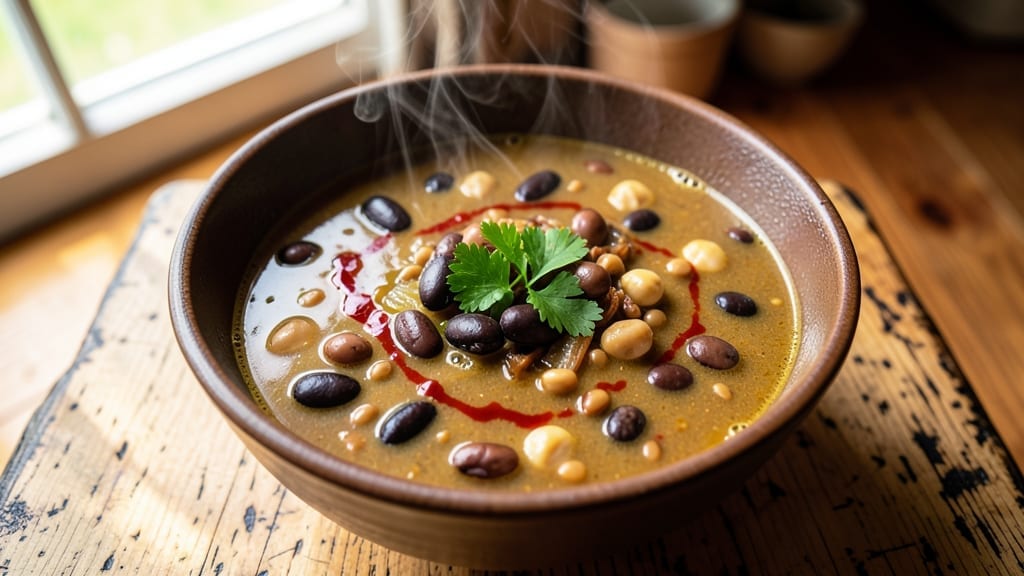
This vegetarian 15 bean soup slow cooker recipe delivers a hearty, protein-packed stew that transforms simple pantry staples into a satisfying meal. The slow cooker does all the work while developing deep, savory flavors that come together effortlessly.
What makes this recipe special is its ability to feed a crowd or provide leftovers for days without sacrificing taste or texture.
The beauty of this dish lies in its versatility—15 different beans create a complex texture and flavor profile that’s both filling and nutritious. With just 30 minutes of prep time and 8 hours on low heat, you’ll end up with a rich, aromatic soup that’s perfect for chilly evenings.
The combination of earthy beans, aromatic herbs, and warming spices creates a dish that’s comforting yet sophisticated.
What you’ll achieve is a protein-rich vegetarian stew with tender beans, hearty vegetables, and a flavorful broth that coats every spoonful. The slow cooking process ensures maximum flavor extraction, transforming humble ingredients into something extraordinary.
This is the kind of meal that tastes even better the next day, making it ideal for meal prep and batch cooking.
Serve with crusty bread or over rice to soak up every last drop of that flavorful broth. The possibilities for variations are endless—add smoked paprika for depth, a splash of balsamic for brightness, or fresh herbs for freshness. Here’s everything you need to create this nourishing, satisfying stew.
👨🍳
Difficulty
Medium
🌿
Diet
Vegetarian
🔥
Calories
Med Cal
Ingredients for 15 bean soup slow cooker recipe vegetarian
Fifteen varieties of beans create a protein-rich vegetarian masterpiece in your slow cooker.
Ingredient
Amount
Notes
Dried Navy Beans 🌱
1 cup
Rinsed before cooking
Dried Black Beans 🌱
1 cup
Rinsed before cooking
Dried Kidney Beans 🌱
1 cup
Rinsed before cooking
Dried Pinto Beans 🌱
1 cup
Rinsed before cooking
Dried Chickpeas 🌱
1 cup
Rinsed before cooking
Dried Lentils 🌱
1 cup
Green or brown preferred
Dried White Beans 🌱
1 cup
Cannellini or great northern
Dried Red Beans 🌱
1 cup
Rinsed before cooking
Dried Lima Beans 🌱
½ cup
Butter beans work too
Dried Split Peas 🌱
½ cup
Yellow or green
Dried Adzuki Beans 🌱
½ cup
Rinsed before cooking
Dried Anasazi Beans 🌱
½ cup
Rinsed before cooking
Dried Fava Beans 🌱
½ cup
Rinsed before cooking
Dried Butter Beans 🌱
½ cup
Rinsed before cooking
Dried Great Northern Beans 🌱
½ cup
Rinsed before cooking
Vegetable Broth 💧
6 cups
Low-sodium preferred
Yellow Onion 🧅
1 whole
Diced, medium size
Carrot 🥕
3 medium
Peeled and chopped
Celery Stalks 🌿
3 whole
Chopped, medium size
Garlic Cloves 🧄
4 cloves
Minced, fresh preferred
Tomato Paste 🍅
½ cup
Squeeze tube or can
Canned Diced Tomatoes 🍅
1 can
28 oz, fire-roasted preferred
Bay Leaves 🌿
2 whole
Fresh or dried
Dried Thyme 🌿
1 tsp
Or 1 tbsp fresh
Ground Cumin 🌿
1 tbsp
Toasted for depth
Smoked Paprika 🌶️
1 tsp
For smoky depth
Salt 🧂
1 ½ tsp
Diamond Crystal preferred
Black Pepper 🌶️
½ tsp
Freshly ground
Olive Oil 🫒
2 tbsp
Extra-virgin for richness
The beans are the foundation—mix dried varieties for texture and flavor complexity. Bob’s Red Mill or Whole Foods
bulk bins offer the widest selection, but any grocery store carries the basics. Look for beans with vibrant color and no signs of moisture or pests. For convenience, Trader Joe’s sells pre-mixed bean blends that work perfectly (just supplement with extra varieties). The key is using a mix of textures: creamy butter beans, firm kidney beans, and tender lentils. If you’re short on time, pre-soaked beans cut prep to 15 minutes—just add them all at once to the slow cooker.
No vegetable broth? Water plus 1 tbsp soy sauce works in a pinch, though homemade broth elevates the dish. Fresh herbs like thyme and bay leaves can be swapped for dried at one-third the amount, but fresh garlic and onion are non-negotiable for depth. The tomato paste can be omitted if you prefer less acidity, but it adds a rich umami backbone. For extra protein, stir in 1 cup cooked quinoa at the end, or top with crumbled feta if serving vegetarian (not vegan). The smoked paprika adds complexity—substitute chipotle powder for a spicier kick.
This soup tastes even better the next day as flavors meld. Store in an airtight container in the fridge for 5-6 days or freeze portions for up to 6 months. For meal prep, double the recipe and freeze half immediately. Reheat gently on the stove or microwave until steaming. The beans will soften further, but the broth remains rich and flavorful. To serve, garnish with fresh parsley or a drizzle of olive oil—never skip the fresh herbs at the table for brightness.
❤️
Why You’ll Love This Recipe
Dump-and-Go Magic: I swear by this—just toss in the beans (no soaking!), add the veggies and broth, and walk away. The slow cooker does all the work while you’re out running errands or pretending to fold laundry.
Earthy Depth Bomb: That mix of navy, black, and kidney beans? It’s like a flavor party in your mouth—creamy, smoky, and just a little funky in the best way. The chickpeas add a satisfying bite that keeps me coming back.
Weeknight to Potluck: Serve it with crusty bread for a lazy dinner, or double the batch for a potluck crowd. Honestly, I’ve brought it to Thanksgiving, book club, and even my mom’s house—no one ever asks for seconds? Liar.
Pantry Goldmine: This recipe turns cheap dried beans into a meal that feeds four for under $8. Leftovers taste even better the next day (yes, I’ve tested this), and it’s my go-to when I’m broke or busy—or both.
Step-by-step instructions for hearty vegetarian 15 bean stew
This slow cooker method transforms dried legumes into a rich, protein-packed stew with minimal effort.
1
Prepare All Beans for Even Cooking
Sort through all the dried beans and pick out any stones or damaged pieces. Rinse each type thoroughly under cold water in a colander—this removes dust and impurities that can make the soup cloudy. I find using separate bowls for each bean type helps prevent mixing before cooking, though you can combine them later if preferred.
For beans that require soaking (like kidney beans, chickpeas, and fava beans), place them in a large bowl and cover with plenty of cold water. Let them soak for at least 4 hours or overnight. This step dramatically reduces cooking time and improves digestibility. Drain and rinse these soaked beans before adding to the slow cooker.
2
Sauté Aromatics to Build Flavor Foundation
Heat the 2 tablespoons olive oil in a large skillet over medium heat. Add the diced yellow onion, chopped carrots, and celery stalks, cooking for 8-10 minutes until the vegetables soften and the onion becomes translucent. This step develops the base flavor that carries through the entire stew.
Add the minced garlic cloves and cook for another 30 seconds until fragrant. Immediately transfer the vegetable mixture to the slow cooker. Here’s the thing—don’t let the garlic burn, as it will turn bitter. The slight char from the vegetables is perfect, but garlic needs gentle treatment.
3
Combine All Ingredients in the Slow Cooker
Add all the prepared beans (soaked and rinsed types plus the unsoaked varieties) to the slow cooker with the sautéed vegetables. Pour in the 6 cups vegetable broth, 0.5 cup tomato paste, and the contents of the 1 can diced tomatoes (with juices). Stir in the 2 whole bay leaves, 1 teaspoon dried thyme, 1 tablespoon ground cumin, 1 teaspoon smoked paprika, 1.5 teaspoons salt, and 0.5 teaspoon black pepper.
Give everything a thorough stir to ensure even distribution of seasonings. The beans should be completely submerged under the liquid. If any beans float to the top, gently press them down with a spoon. This ensures uniform cooking and prevents uneven texture in the finished soup.
4
Cook on Low Until Beans Are Tender
Cover the slow cooker and cook on low heat for 8-10 hours. This long, gentle cooking time allows the beans to become fork-tender while developing rich, complex flavors. The soup should reduce slightly, creating a thick, hearty consistency. I check the texture after 6 hours—if the beans are still firm, leave them another 2 hours.
Here’s where patience pays off: The beans should be soft enough to crush between your fingers but still hold their shape. If they’re mushy, you’ve overcooked them. The soup should smell deeply aromatic with notes of cumin, thyme, and the natural bean flavors. Taste and adjust seasoning if needed—some beans absorb more liquid than others.
5
Finish and Serve with Fresh Herbs
Remove the 2 whole bay leaves and discard them. For extra brightness, stir in 1 tablespoon chopped fresh parsley or 1 teaspoon chopped fresh thyme if available. The acidity from fresh herbs cuts through the richness of the beans beautifully. Let the soup sit for 10 minutes before serving to allow flavors to meld completely.
This stew keeps well in the refrigerator for 5-6 days or can be frozen for up to 3 months. The flavors actually deepen over time. Serve with crusty bread or over rice to soak up every last bit of that protein-rich broth. Each spoonful delivers a perfect balance of earthy beans, smoky spices, and tender vegetables.
👨🍳
Pro Tips For Making 15 Bean Soup Slow Cooker Recipe Vegetarian
SOAK NAVIES FIRST: Navy beans take the longest to soften, so I learned the hard way—skip the overnight soak for the whole mix and just soak the navies for 4 hours instead. This guarantees they’ll be tender while the others catch up, no matter how rushed you are.
SORT BEANS BY SIZE: Big beans (kidney, pinto) and small beans (black, chickpeas) cook at different speeds. Toss the larger ones in first, then add the smaller ones after 2 hours. Otherwise, you’ll end up with mushy chickpeas and rock-hard kidney beans—trust me, I’ve done it.
STIR THE POT: After the first hour, give the soup a quick stir with a wooden spoon. The slow cooker’s heat doesn’t circulate like a pot on the stove, so the beans near the edges can dry out or stick. Just a few minutes of mixing keeps everything even and prevents a gummy mess.
USE BAY LEAF + STAR ANAISE: Toss in a bay leaf and a whole star anise with the beans—they infuse flavor without you even noticing. Skip the fancy spices if you’re short on time, but these two make the broth taste deeper and more complex. (Yes, even if you’re not a spice snob.)
Regional styles of this recipe
Italian Rustic Style
In Tuscany, this soup becomes a rustic zuppa di fagioli with additions like diced pancetta (optional for vegetarians, use mushrooms) and sun-dried tomatoes. I love adding ½ cup chopped rosemary and serving with crusty ciabatta bread.
The Italians often finish with a drizzle of extra-virgin olive oil and a sprinkle of Pecorino Romano cheese. 🌿
Spanish-Inspired Version
Transform it into a Spanish-style fabada by adding ½ cup smoked Spanish chorizo (vegetarian chorizo made from mushrooms works) and 1 cup white wine during cooking. The Spanish version often includes garlic croutons on top and a sprinkle of smoked paprika.
Serve with paella rice to soak up the rich broth. 🍷
Southern U.S. Twist
For a Southern American adaptation, add ½ cup collard greens and 1 smoked ham hock (vegetarian option: use smoked tofu or mushrooms). The Southern version often includes a cornbread dressing on the side and a dash of hot sauce for serving.
I love using low-country boil spices like cayenne and mustard powder for extra depth. 🌶️
Mexican-Inspired Bean Stew
Give it a Mexican flair by adding 1 cup corn kernels, 1 diced bell pepper, and 1 chipotle pepper in adobo sauce. Stir in 1 tablespoon cumin and 1 teaspoon oregano for authentic flavor.
Serve with warm tortillas or over cilantro-lime rice. Top with avocado slices and sour cream for a creamy finish. 🌮
Mediterranean Herb Version
For a Greek-inspired twist, add ½ cup chopped kalamata olives and 1 teaspoon dried oregano. Finish with a sprinkle of feta cheese and fresh dill.
Serve with warm pita bread and a side of tzatziki sauce. The Mediterranean version often includes lemon wedges for a bright, tangy finish. 🍋
Asian-Inspired Adaptation
For an Asian-inspired version, add 1 tablespoon grated ginger, 1 tablespoon soy sauce, and 1 teaspoon sesame oil at the end. Stir in ½ cup chopped scallions and top with toasted sesame seeds.
Serve with steamed jasmine rice and a side of miso soup. The umami-rich broth pairs beautifully with Asian flavors. 🍜
Nutrition facts
Servings 6
Amount Per Serving
Calories310kcal
% Daily Value *
Total Fat 8g10%
Saturated Fat 1g5%
Cholesterol 0mg0%
Sodium 580mg25%
Total Carbohydrate 52g18%
Dietary Fiber 18g64%
Sugars 8g
Protein 26g52%
* Percent Daily Values are based on a 2,000 calorie diet. Your daily values may be higher or lower depending on your calorie needs.
Frequently asked questions
1
Can I substitute canned beans for dried beans in this recipe?
You can, but with adjustments! Use 3 cups total canned beans (drained and rinsed) instead of dried. For best texture, mix varieties like black beans, kidney beans, and chickpeas. The soup will be ready in 3-4 hours on low heat since canned beans cook faster. Just reduce the broth to 4 cups to maintain consistency.
2
How do I make this soup vegan?
Skip the honey and use 1 tablespoon maple syrup instead. Ensure your broth is vegetable-based (no chicken or beef). For extra protein, add 1 cup cooked quinoa or ½ cup nutritional yeast at the end. All other ingredients are already vegan-friendly!
3
Why does my slow cooker 15 bean soup turn out watery?
This usually happens when beans aren’t fully submerged or the broth quantity is too high. After cooking, let the soup sit uncovered for 10-15 minutes – the beans will absorb excess liquid. For next time, reduce broth to 5 cups and cook 1 extra hour to thicken naturally. Stirring in 1 tablespoon cornstarch mixed with water at the end also helps.
4
Can I freeze this soup for later?
Let the soup cool completely, then transfer to airtight containers. It freezes beautifully for up to 6 months. Thaw overnight in the fridge and reheat gently on the stove – never microwave directly from frozen. The flavors actually deepen after freezing!
5
What’s the best way to serve this hearty soup?
Pair it with crusty whole grain bread or garlic toast for perfect dipping. For extra heartiness, serve over steamed basmati rice or with cornbread muffins. Top with fresh herbs like parsley or cilantro, and a drizzle of olive oil for brightness. The combination of textures makes every bite satisfying!
I'm Patrick Lewis, and my love affair with cooking started in my grandmother Dorothy's cramped kitchen in Buffalo, New York, where she'd let me roll out pierogi dough at age six while Patsy Cline played on her ancient radio. The smell of onions caramelizing in butter still makes me think of her chipped yellow countertops and that tiny window overlooking her tomato plants. Since 2011, I've been developing recipes professionally, though my biggest breakthrough came in 2017 when I finally nailed my grandmother's secret ingredient for her famous lasagna - a pinch of nutmeg in the béchamel sauce, which she'd never written down. These days I live in Portland, Oregon with my wife Sarah and our daughter Maya (age 9), who thinks my obsession with documenting every recipe in a weathered Moleskine notebook is totally weird. When I'm not in the kitchen, I'm usually biking around town with our rescue mutt Cooper or hosting backyard movie nights with neighbors. My kitchen quirk? I absolutely cannot cook without my lucky Red Sox cap - my wife tried to wash it once and I almost called off dinner entirely. It's seen better days, but so have most of my cast iron pans.