
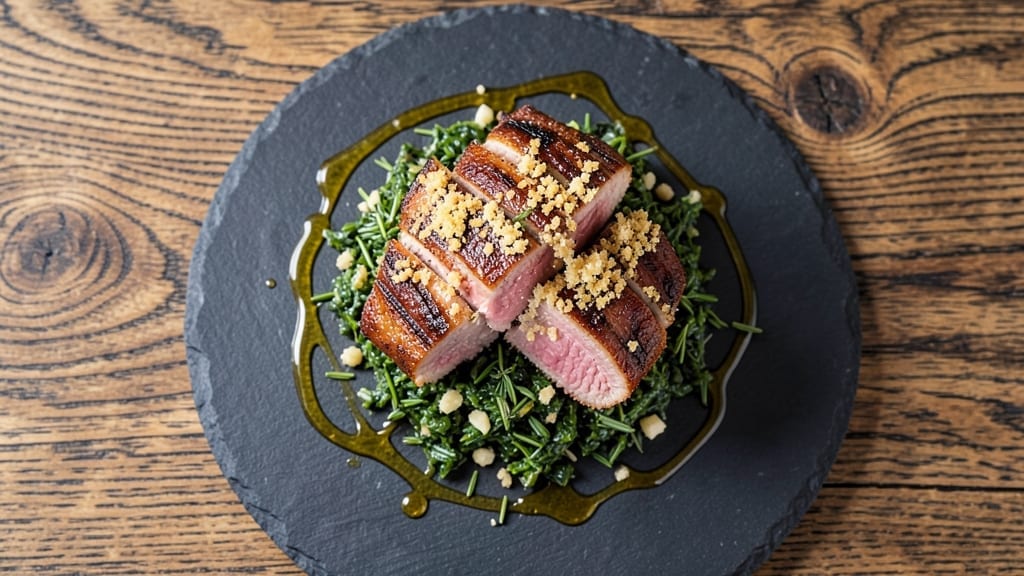
A 12 oz pork tenderloin cooked to juicy pink perfection is the centerpiece of any dinner table—especially when you nail that crispy crust and tender heart. After years of perfecting this cut at The Smoky Pig, I’ve developed a method that guarantees restaurant-quality results every time, even for home cooks.
The secret lies in the herb crust and precise pan-searing technique that locks in moisture while creating that coveted caramelized exterior.
This recipe starts with a simple yet effective dry brine—just salt and time—that transforms tough pork into melt-in-your-mouth tenderness. The herb crust, made with fresh rosemary, thyme, and garlic, adds aromatic depth without overpowering the natural flavor of the meat.
Pan-searing ensures a crispy exterior while maintaining that signature juicy pink center, a technique I’ve refined over hundreds of pounds of pork at my restaurant.
By following these steps, you’ll end up with a pork tenderloin that’s crispy on the outside, juicy pink in the middle, and infused with herbaceous flavor in every bite.
The dish pairs beautifully with roasted root vegetables or a crisp white wine reduction—elevating a simple weeknight dinner into something special. Trust me, this is the kind of recipe that makes people ask for seconds.
What makes this method foolproof is the combination of dry brining and controlled searing—no guesswork, no overcooking. The pork rests just long enough to redistribute juices, ensuring every slice is succulent.
Whether you’re cooking for a family dinner or impressing guests, this recipe delivers professional results with minimal effort. Let’s get started on the perfect pork tenderloin.
Ingredients for 12 oz pork tenderloin
Twelve ounces of pork tenderloin transformed into a restaurant-worthy centerpiece with a crispy herb crust and juicy pink heart.
| Ingredient | Amount | Notes |
|---|---|---|
| Pork Tenderloin 🥩 | 12 oz | Center-cut for even cooking |
| Kosher Salt 🧂 | 1 ½ tsp | Diamond Crystal preferred |
| Fresh Rosemary 🌿 | ½ oz | Finely chopped, stems removed |
| Fresh Thyme 🌿 | ½ oz | Leaves only, finely chopped |
| Garlic Cloves 🧄 | 4 cloves | Minced for herb crust |
| Extra-Virgin Olive Oil 🫒 | 1 ½ tbsp | High-quality, fruity variety |
| Unsalted Butter 🧈 | 2 tbsp | Cold, cut into 4 pieces |
| All-Purpose Flour 🌾 | 1 tbsp | For dredging crust |
| Fresh Parsley 🌿 | ¼ cup | Chopped, for garnish |
| White Wine 🍷 | ¼ cup | Dry, for deglazing |
| Chicken Stock 🍲 | ¼ cup | Low-sodium preferred |
| Fresh Lemon 🍋 | 1 whole | Zested and juiced |
The pork tenderloin should be center-cut and uniform—ask your butcher for the straightest cut possible. Whole Foods or a trusted local butcher will have the best quality, but any reputable grocery store carries it. Look for a piece with even thickness and minimal silver skin, which can affect cooking. The herb crust relies on fresh rosemary and thyme—Penzeys Spices or your local market’s bulk section are ideal for vibrant, flavorful herbs. For garlic, freshly minced is non-negotiable; pre-minced jars lack the aromatic punch needed for this technique.
No fresh rosemary? Dried works at one-third the amount, but the texture won’t be as crisp. Substitute thyme with fresh oregano if needed, though it has a slightly different profile. For the olive oil and butter, high-quality extra-virgin olive oil and European-style unsalted butter (like Plugrá) elevate the dish—don’t skimp here. The white wine can be swapped for dry vermouth or even apple cider in a pinch, though wine adds depth. If you’re avoiding alcohol entirely, use extra chicken stock and a splash of lemon juice for brightness.
Pork tenderloin keeps best in the fridge for 2 days before cooking—dry brine it the night before for optimal tenderness. Fresh herbs should be stored in damp paper towels in a sealed container for up to 5 days. The herb crust mixture can be prepped a day ahead and refrigerated, saving time on cooking day. Leftover pork reheats beautifully in a 350°F oven for 10-12 minutes covered with foil, though it’s best enjoyed fresh when the crust is at its peak crispiness.
Why You’ll Love This Recipe
- Here’s what sold me: this recipe actually tastes better the next day. The flavors meld into something even richer, and it reheats like a dream. I’ll often roast two tenderloins at once—one for dinner, one for sandwiches later. No sad, dry reheated meat here. Just solid, reliable leftovers.
- One-Pan Magic: I swear by this recipe when I’m too tired to wash dishes. Just season the tenderloin with salt, crushed garlic, and a sprig of each herb—no fancy prep, no extra pans. The rosemary and thyme cling to the meat while it roasts, and honestly? That’s all you need for a restaurant-worthy result.
- Crispy-Creamy Perfection: Between us, this is the only way to cook pork tenderloin that doesn’t turn out dry. The garlic and herbs caramelize into a fragrant crust, while the inside stays juicy as can be. That crispy edge with the tender center? It’s the kind of bite that makes people ask for seconds before the plate’s even empty.
- Weeknight to Weekend: I make this for everything—busy Tuesday dinners, potlucks where I don’t want to fuss, or even as a centerpiece for a lazy Saturday brunch. Slice it thin, toss with a simple salad, or serve it over mashed potatoes. It’s the kind of dish that adapts without trying too hard.
Step-by-step instructions for herb-crusted pan-seared pork tenderloin
Here’s the method for achieving perfectly tender, juicy pork with a flavorful herb crust every time.
Prepare the Herb Crust Mixture
In a small bowl, combine the 0.5 oz fresh rosemary, 0.5 oz fresh thyme, 4 cloves garlic cloves, and 1 tbsp all-purpose flour. Pulse in a food processor until finely minced, or finely chop by hand with a sharp knife. The mixture should resemble coarse sandpaper texture, ensuring even distribution when applied to the pork.
This herb blend creates the signature crust that seals in moisture while adding aromatic depth. I like to taste the mixture at this stage—it should be fragrant and slightly garlicky. If using fresh herbs, make sure they’re finely chopped to prevent any bitter stems from affecting the flavor.
Season and Coat the Pork Tenderloin
Pat the 12 oz pork tenderloin completely dry with paper towels—this step is crucial for achieving a good sear. Season generously with 1.5 tsp kosher salt on all sides, then rub the herb mixture evenly over the entire surface. Press the herbs gently into the meat so they adhere well.
The salt will draw out moisture initially, but this evaporation creates steam during cooking that keeps the interior juicy. Let the seasoned pork rest at room temperature for 15 minutes before cooking. This allows the meat to cook more evenly and prevents shocking the center with cold meat.
Pan-Sear to Perfect Medium-Rare
Heat 1.5 tbsp extra-virgin olive oil in a heavy skillet over medium-high heat until shimmering. Add the pork tenderloin and sear for 4-5 minutes per side, turning once, until the exterior develops a deep golden-brown crust. The internal temperature should reach 135°F at this point—use an instant-read thermometer to check.
Don’t rush this step. You’ll know it’s ready when the crust releases easily from the pan and the edges are deeply browned. If the pork releases too early, let it cook another minute before flipping. During the last minute of searing, add 2 tbsp cold unsalted butter to the pan—the butter will foam and baste the meat, adding richness.
Finish in the Oven for Even Cooking
Transfer the skillet to a 400°F preheated oven and cook for 8-10 minutes, or until the internal temperature reaches 145°F (medium-rare). The pork should still have a juicy pink center with a firm exterior. If you prefer medium doneness, continue cooking until 150°F is reached.
This oven finish ensures even cooking throughout the entire piece, especially important for tenderloin which can dry out if overcooked. The residual heat in the pan helps maintain the crust while gently cooking the center. Remove the pork from the oven and let it rest for 5 minutes before slicing—this resting period is critical for redistributing juices.
Create the Pan Sauce
While the pork rests, remove the skillet from the oven and place it over medium heat. Add 0.25 cup white wine and scrape up any browned bits from the bottom with a wooden spoon. Let the wine reduce by half, then add 0.25 cup chicken stock and the zest and juice of 1 whole fresh lemon. Simmer for 3-4 minutes until the sauce thickens slightly.
Strain the sauce through a fine-mesh sieve to remove any herb bits, then return it to the pan. The sauce should coat the back of a spoon and have a bright, citrusy flavor. Taste and adjust seasoning with additional salt if needed. Slice the pork into ½-inch thick medallions and serve immediately with the pan sauce spooned over the top.
Pro Tips For Making 12 Oz Pork Tenderloin
- USE A MEAT THERMOMETER: I learned this the hard way—pork tenderloin is small and cooks fast, so eyeballing it leads to dry meat. Pull it at 140°F (it’ll rise to 145°F while resting), not the USDA’s 145°F for larger cuts. Trust the thermometer, not the clock.
- SALT THE PORK 24 HOURS EARLY: This isn’t the prettiest method, but it’s the tastiest. A 12 oz tenderloin needs 1 teaspoon kosher salt rubbed in before cooking—let it sit uncovered in the fridge overnight. The salt penetrates deeper than last-minute seasoning, and the crust forms better when you finally sear it.
- SMASH THE GARLIC CLOVES: Whole garlic cloves? Skip it. Mince 4 cloves (not crushed) and mix them into the herb paste with rosemary and thyme—this way, the flavor distributes evenly. I used to just press them on top, and half the time they’d stay raw inside. (Yes, even if you’re impatient like me.)
- REST IT UNDER FOIL: I skip this when I’m lazy, but the dish is noticeably better when I don’t. After cooking, tent the tenderloin with foil and let it sit 5-10 minutes—this keeps it juicy while you prep sides. Cutting into it too soon turns a perfect slice into a sad, stringy mess. (Your future self will thank you.)
Wine and beer pairings for this dish
White Wine Pairings
For this herb-crusted pork tenderloin, I always reach for a dry Riesling from Germany’s Mosel Valley—its crisp acidity and subtle honeyed notes cut through the rich butter and rosemary beautifully. The mineral finish cleanses your palate between bites, making each slice taste even more vibrant.
If you prefer something lighter, a Sancerre from the Loire Valley delivers zesty citrus notes that echo the lemon in the pan sauce. 🍷
Crisp Beer Options
A Belgian Witbier like Stella Artois or Hoegaarden is my go-to beer pairing—its coriander and citrus flavors complement the herb crust while the effervescence refreshes. For something more robust, try a German Pilsner like Warsteiner; its clean, grassy profile balances the pork’s richness without overpowering.
Avoid heavy stouts or lagers that would muddy the dish’s delicate flavors.
Red Wine Exception
If you’re serving this to red wine lovers, a light Pinot Noir from Oregon’s Willamette Valley works surprisingly well. Its bright cherry and earthy undertones harmonize with the rosemary and thyme crust.
Look for a 2021-2023 vintage with moderate tannins—avoid bold Cabernets or Syrahs that would clash with the dish’s delicate balance. 🍇
Non-Alcoholic Alternatives
For a sparkling alternative, a dry sparkling water infused with lemon slices and fresh rosemary mimics the crispness of wine. I also love a ginger beer with a squeeze of lime—its spicy kick complements the herb crust.
For something richer, a non-alcoholic Riesling like Freixenet 0.0% offers the same acidity and fruitiness without the alcohol.
Regional Pairing Tips
In the Southeast, where I grew up, we’d often pair pork tenderloin with sweet tea—its honeyed sweetness contrasts perfectly with the savory crust. For a more sophisticated touch, a Southern-style bourbon cocktail with lemon and rosemary garnish elevates the dish.
If you’re cooking for a crowd, offer both wine and beer options to accommodate different preferences.
Nutrition facts
Frequently asked questions
Can I cook a 12 oz pork tenderloin to well-done without drying it out?
For well-done, aim for an internal temperature of 160°F and start with a slightly larger cut (14-16 oz) to account for shrinkage. Use the same herb crust method but reduce oven time to 6-8 minutes after searing, then baste frequently with butter and pan juices. The key is to avoid overcrowding the pan during searing—cook in batches if needed.
How do I adjust this recipe for a larger tenderloin?
For every additional 4 oz, increase the herb mixture by 1 tbsp and cooking time by 2-3 minutes. Use a meat thermometer to guide doneness—larger cuts need more time to reach temperature evenly. Divide the pork into 2-3 sections if it exceeds 18 oz to ensure even cooking and crispy crusts on all sides.
What’s the best way to store leftovers?
Slice the pork into ½-inch medallions and store in an airtight container with the pan sauce. It keeps well in the fridge for 3-4 days or freezes for 2 months. For reheating, warm in a skillet over medium heat with a splash of water or stock to prevent drying. Never microwave—it ruins the crust.
Can I substitute butter with oil in the crust?
You can replace 1 tbsp butter with 1 tbsp olive oil in the herb mixture, but the crust will be less flavorful. For best results, keep the butter—it adds richness and helps create that signature caramelized crust. If you’re avoiding dairy, use 2 tbsp extra olive oil instead of the 2 tbsp butter during searing.
Why did my pork turn out dry?
Overcooking is the #1 cause—pork tenderloin dries out quickly once it hits 150°F. Always use a meat thermometer and remove from heat at 145°F for medium-rare. Also, patting the meat too aggressively before cooking can draw out too much moisture. For extra insurance, try a 10-minute dry brine (just salt) before the herb crust.

- 3 Pea Salad Recipe: Sweet Peas and Herbed Cream Cheese Twist - October 6, 2026
- 6 Egg Bites Recipe: Microwave-Made Protein-Packed Breakfasts - October 6, 2026
- 100 Oat Bread Recipe: No-Knead Crusty Loaf With Nutty Depth - October 6, 2026