
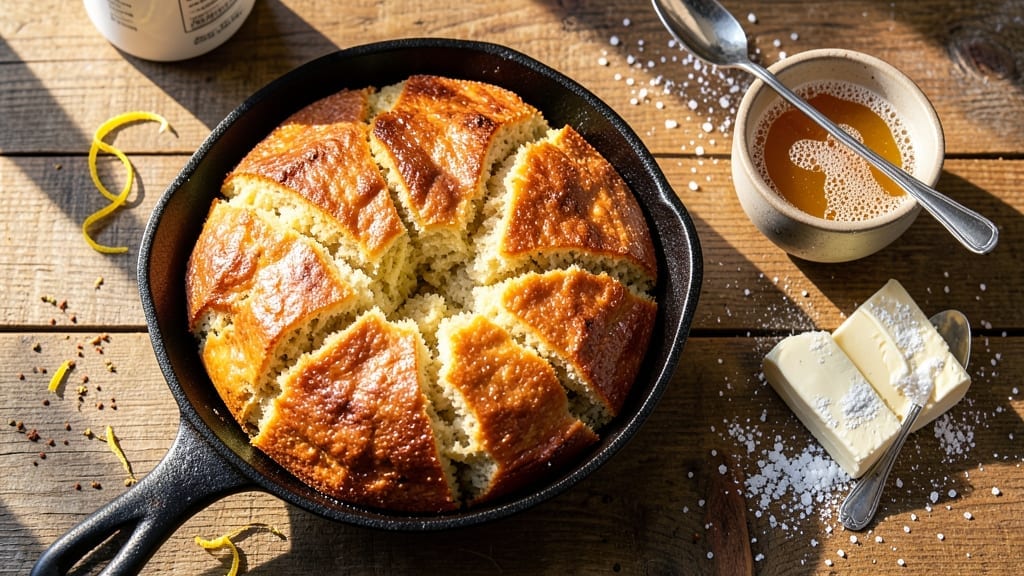
This 123 beer bread recipe delivers a golden, buttery loaf with a crispy crust and tender crumb—all from your skillet. The secret? A perfect balance of flour, beer, and butter that transforms a simple mix into something restaurant-worthy.
I’ve made this exact recipe for game days, Sunday suppers, and even as a side for my famous chili—it disappears faster than you can say “second slice.”
The dough comes together in 10 minutes with just five ingredients, and the beer isn’t just for flavor—it keeps the crumb moist while the crust gets that irresistible crunch. No fancy equipment needed; just a cast-iron skillet or baking dish and your favorite cold beer (light or dark, your call).
The best part? It’s foolproof—even if you’ve never baked bread before.
Picture this: a warm, buttery loaf pulled straight from the oven, sliced open to reveal a golden crust and soft, pillowy interior. The aroma alone will have everyone gathering around the table.
Serve it with soup for dipping, alongside sandwiches, or just enjoy it plain with a pat of butter melting into every bite. Trust me, this is the kind of bread that makes people ask for the recipe.
Pro tip: For extra crispiness, brush the crust with melted butter right after baking. And if you’re feeling adventurous, swap out half the beer for a splash of milk or even coffee for a twist.
Whether you’re feeding a crowd or treating yourself to a cozy night in, this beer bread is the perfect sidekick to any meal.
Ingredients for 123 beer bread
Five simple ingredients transform into golden, buttery beer bread—crispy outside, tender inside.
| Ingredient | Amount | Notes |
|---|---|---|
| All-Purpose Flour 🌾 | 3 cups | Sifted for lighter texture |
| Cold Beer 🍺 | 1 cup | Light or dark, unsweetened |
| Unsalted Butter 🧈 | ½ cup | Cold, cubed for best flavor |
| Granulated Sugar 🍚 | 2 tbsp | For subtle sweetness |
| Baking Powder 🍞 | 1 tbsp | Freshly opened for lift |
| Salt 🧂 | 1 tsp | Kosher or sea salt |
| Milk 🥛 | ¼ cup | Optional for extra tenderness |
The beer makes all the difference here. Local craft beers add depth, but even a budget-friendly lager from the grocery store works—just avoid anything too hoppy or sweet. I usually grab Coors Light or Budweiser when I’m in a pinch, but craft beers like Sierra Nevada Pale Ale (if you’re feeling fancy) bring a whole new level of flavor. The butter? Cold and cubed is key—it melts into little pockets of goodness while baking, creating that irresistible buttery aroma. If you’re short on time, melted butter brushed on top after baking gives that same golden sheen. And trust me, the flour? King Arthur or Gold Medal brands are my go-tos—they bake up lighter and fluffier.
No beer? Substitute with milk or even coffee—it’ll still taste amazing, just with a different twist. Short on butter? Olive oil works in a pinch, though the flavor will be subtly different. The milk is optional but worth it for that extra tender crumb—whole milk gives the best texture. If you’re feeling adventurous, swap half the beer for stout beer or even hot coffee for a richer, deeper flavor. And if your baking powder is old? Test it first—it loses potency over time, and you’ll end up with flat bread. Pro move: keep a small jar in the fridge to preserve freshness.
This bread is best made fresh, but leftovers reheat beautifully. Wrap in foil and pop in a 350°F oven for 5-10 minutes to restore that crispy crust. Keeps at room temperature for 2 days in an airtight container, or freeze for up to 3 months—just thaw overnight in the fridge. Slice it thick for sandwiches or tear it into chunks for dipping. And here’s a secret: brush the warm bread with extra melted butter right out of the oven. You’ll thank me later.
Why You’ll Love This Recipe
- Here’s what sold me: it’s cheap to make, but it feels special. You’re using pantry basics—flour, sugar, butter—and a six-pack you’d buy anyway. A single batch feeds four, and leftovers? They last days if you wrap them tight. I’ve even frozen slices for quick toast later—no one has to know it’s not fresh-baked.
- No-Mix Needed: I swear by this recipe because it’s literally dump-and-bake. Just toss the flour, sugar, and baking powder in a bowl, pour in the cold beer, stir until it’s just combined—no kneading, no fuss—and you’re done. That butter gets folded in like a dream, and suddenly you’ve got something that feels homemade without the effort.
- Beer-Infused Magic: Between us, the beer isn’t just a liquid—it’s the secret weapon. That malty, slightly sweet depth from the cold beer (I use a light lager) cuts through the richness of the butter, giving it a crispy crust and a soft, pillowy crumb that’s ridiculously satisfying. Honestly, I’ve tried other beer breads, and this one actually tastes like it belongs with dinner, not just as a sidekick.
- Game for Any Meal: This bread is my go-to for everything: a quick sandwich at lunch, toasted with butter for breakfast, or even as a base for open-faced sliders. I’ll be real—it’s especially great when I’m prepping for game day or a lazy Sunday because it reheats perfectly and pairs with just about anything. (Yes, even on a Tuesday night.)
Step-by-step instructions for crusty, buttery beer bread
Here’s how to make the perfect skillet bread with a golden crust and tender crumb.
Mix the Wet and Dry Ingredients
In a large mixing bowl, combine the 3 cups all-purpose flour, 1 tablespoon baking powder, and 1 teaspoon salt. Stir gently to distribute the dry ingredients evenly. I like to use a whisk for this step to avoid developing too much gluten, which can make the bread dense.
In a separate bowl, mix together the 1 cup cold beer, 0.5 cup unsalted butter (cubed), 2 tablespoons granulated sugar, and 0.25 cup milk (if using). The butter should remain cold and cubed—this helps create flaky layers in the final bread. Use your hands or a fork to gently mix until the butter is mostly melted but still has a few small pieces remaining.
Pour the wet mixture into the dry ingredients and stir with a wooden spoon until just combined. You’ll see small lumps form, and the dough will be shaggy. That’s perfect—overmixing will make the bread tough. The dough should hold together when pressed but still feel slightly sticky. If it’s too dry, add a splash more beer; if too sticky, sprinkle in a little extra flour.
Shape and Prepare the Skillet
Lightly grease a 10-inch cast-iron skillet or oven-safe skillet with a little butter or cooking spray. The skillet should be cold when you add the dough—hot skillets can cause the butter to melt too quickly and make the bread greasy. Transfer the dough to the prepared skillet and spread it evenly to fill the bottom completely, about ½-inch thick. Use a spatula to smooth the top, but don’t worry about perfection—it’ll look rustic.
Here’s the thing—this dough is sticky, and that’s normal. Wet your fingers slightly to help shape it without sticking. If the dough feels too wet to handle, let it sit for 5 minutes while you preheat the oven. The heat will help it firm up just enough to work with.
Bake Until Golden and Hollow-Sounding
Preheat your oven to 375°F. Once the oven is fully preheated, place the skillet in the center rack and bake for 25-30 minutes. You’re looking for a bread that’s deep golden brown on top and pulls away slightly from the sides of the skillet. The edges should be crisp, but the center should still feel slightly soft to the touch.
To check for doneness, tap the top of the bread lightly with your knuckle. It should sound hollow when tapped—this indicates it’s fully baked. If it sounds dull, give it another 5 minutes. Be careful not to overbake; beer bread dries out quickly once removed from the oven. The internal temperature should reach 190-195°F when measured with an instant-read thermometer.
Rest and Serve Warm
Remove the bread from the oven and let it cool in the skillet for 5 minutes. This resting period allows the steam inside to redistribute, making the crumb even more tender. After cooling, use a sharp knife to loosen the edges from the skillet, then invert the bread onto a wire rack or cutting board. The bottom should be beautifully browned from the skillet.
Slice the bread while it’s still warm for the best texture—each slice should reveal a light, airy crumb with a crisp, buttery crust. Serve immediately with honey butter, your favorite jam, or alongside a hearty soup. The beer bread keeps well at room temperature for 2 days, but trust me, it won’t last that long!
Pro Tips For Making 123 Beer Bread
- Chill the Beer First: I learned this the hard way—pouring room-temperature beer into the batter makes the dough gummy and dense. Pop that bottle in the fridge for 10 minutes before measuring, and your bread will rise properly without turning into a sad, flat brick.
- Mix Just Until Combined: Overworking the dough after adding the butter is a fast track to tough bread. Stir the flour, sugar, and baking powder first, then cut in the cold butter until it’s pea-sized lumps—no need to turn it into cookie dough. The beer will do the mixing for you.
- Don’t Overfill the Loaf Pan: This isn’t a bread machine—your batter will rise, and if you pack it too high, it’ll spill over or collapse. Fill the pan only halfway, then let it puff up like a happy cloud. (Yes, it’ll look underfilled at first—that’s the point.)
- Add a Pinch of Salt: The recipe might not call for it, but trust me: unsalted butter and baking powder need a little help balancing the flavors. A ¼ teaspoon of salt makes the beer’s bitterness shine and rounds out the sweetness. (Your future self will notice the difference.)
Wine and beer pairings for this 123 beer bread
Beer Pairings
Since this bread uses beer as an ingredient, why not pair it with the same beer you baked it with? A light lager like Coors Light or Budweiser complements the buttery, crispy texture without overpowering it.
For a more adventurous pairing, try a wheat beer like Blue Moon—its citrus notes brighten the rich, caramelized crust. If you used a dark stout like Guinness, the deep maltiness will harmonize beautifully with the bread’s toasted edges. 🍺
Wine Pairings
A crisp Sauvignon Blanc from New Zealand or California cuts through the bread’s richness with its zesty acidity and herbal notes. For something lighter, a Pinot Grigio from Italy offers a clean, refreshing contrast.
If you prefer red wine, a light-bodied Pinot Noir with its red fruit flavors won’t compete with the bread’s buttery aroma. Avoid heavy, oaky whites or bold reds—they’ll overpower the delicate balance of this skillet bread.
Non-Alcoholic Options
For a non-alcoholic twist, try a sparkling apple cider like Martinelli’s—its effervescence and slight tartness cleanse the palate between bites. A ginger beer (like Brew Dr. Brown’s) adds a spicy kick that pairs surprisingly well with the bread’s caramelized crust.
Even a cold glass of milk works if you’re keeping it simple—it’s classic for a reason!
Coffee or Tea
If you’re serving this bread for breakfast or brunch, a dark roast coffee with its bold, toasty notes enhances the bread’s crusty texture. For something lighter, an Earl Grey tea with its bergamot and floral notes adds an elegant touch.
The tannins in black tea also help balance the richness, making each bite feel fresh and balanced. ☕
Dessert Pairings
For a sweet finish, serve slices of beer bread with a honey butter drizzle and a dark chocolate square—the contrast of salty, sweet, and bitter is pure magic.
A vanilla ice cream** with a drizzle of caramel sauce also works wonderfully, especially if you’ve used a stout beer in your bread. The deep maltiness in the bread pairs perfectly with the creamy, sweet dessert. 🍫
Nutrition facts
Frequently asked questions
Why does my beer bread turn out dense instead of light and airy?
Overmixing the dough is the #1 culprit! Stir just until combined—lumps are normal. Also, make sure your baking powder is fresh (old powder loses lift). For extra fluffiness, let the dough rest for 5 minutes before baking, and use cold butter (not melted) to create steam during baking.
Can I make this beer bread without beer?
Swap the beer for 1 cup milk + 1 teaspoon vinegar (buttermilk substitute) or 1 cup coffee for a richer flavor. For a neutral taste, use 1 cup water + 1 teaspoon baking soda. Just reduce any added liquid by 2 tablespoons since you’re skipping the beer’s moisture.
How do I get the crust extra crispy?
Brush the top with melted butter right after removing from the oven, then place under the broiler for 1-2 minutes—watch closely to avoid burning. For even more crunch, bake in a cast-iron skillet (preheated) instead of a regular baking dish. The direct heat creates that perfect crispy bottom.
Can I make this in a loaf pan instead of a skillet?
Yes! Grease a 9×5-inch loaf pan well and press the dough evenly inside. Bake at 375°F for 30-35 minutes until golden. For extra crispiness, sprinkle coarse sugar on top before baking. The texture will be slightly softer than skillet bread but still delicious—great for sandwiches!
How long can I keep homemade beer bread?
Store wrapped in an airtight container at room temperature for 2 days for best freshness. For longer storage, freeze slices wrapped in plastic for up to 3 months. To reheat, warm in a 350°F oven for 5-10 minutes until crispy again. Pro tip: Freeze in single slices for easy grab-and-bake portions!

- Pea Soup Instant Pot Recipe: Velvety Green Smoothness in 20 Minutes - November 1, 2026
- Pork Loin Pulled Pork Crock Pot Recipe: Slow-Smoked Tenderness With Zero Dryness - November 1, 2026
- Baked Potatoes in Crock Pot Recipe: Buttery Interiors and Crispy Top Magic - November 1, 2026