
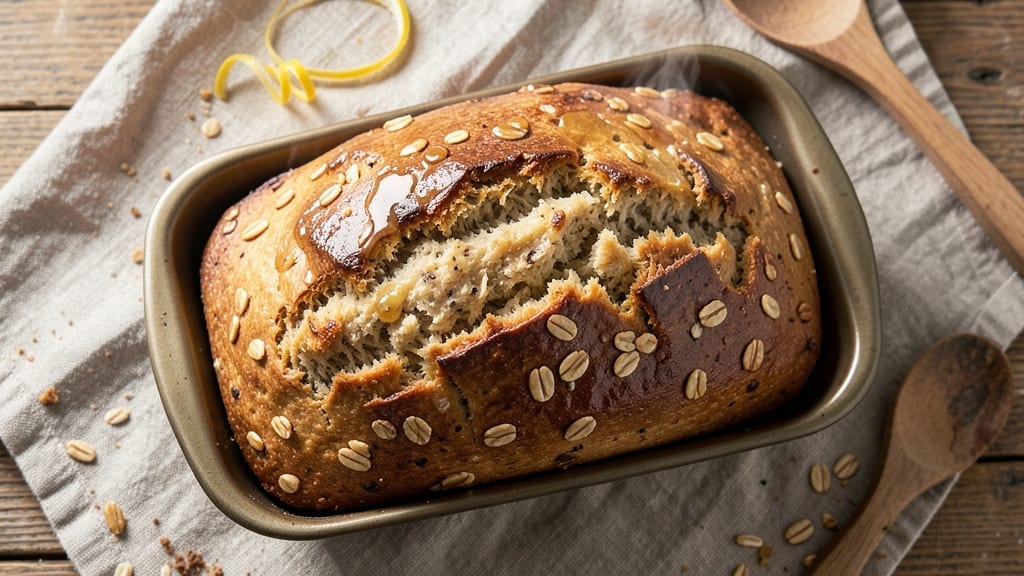
This 100 whole wheat oatmeal bread machine recipe delivers the perfect balance of hearty texture and nutty flavor—no kneading required. The secret lies in precise hydration and a slow rise, transforming dense whole grains into a loaf with a crisp crust and tender crumb.
I developed this after struggling with dry, crumbly whole wheat loaves until I cracked the ratio of oats to flour and adjusted the kneading cycle.
The beauty of this recipe is its simplicity: just toss ingredients into your bread machine, select the basic white bread setting, and let it do the work.
Whole wheat flour absorbs more moisture, so we add extra water and a touch of honey to prevent dryness while enhancing the oatmeal’s natural sweetness. The result? A nutty, satisfying loaf that’s perfect for toast, sandwiches, or serving warm with butter.
What sets this apart is the dense yet tender crumb—achieved by using rolled oats for texture and a longer fermentation time. The crust develops a beautiful golden-brown crust with a subtle crunch, while the interior remains moist and hearty.
This recipe proves whole wheat bread can be both nutritious and delicious without sacrificing texture. Store leftovers in an airtight container for up to 5 days or freeze for longer storage. The flavor actually improves overnight, making it ideal for meal prep. Ready to bake?
Ingredients for 100 whole wheat oatmeal bread machine
Whole wheat flour, oats, and yeast—simple ingredients for a bread machine masterpiece.
| Ingredient | Amount | Notes |
|---|---|---|
| Whole Wheat Flour 🌾 | 3 ½ cups | High-protein preferred for structure |
| Rolled Oats 🥣 | 1 cup | Old-fashioned, not quick oats |
| Water 💧 | 1 ½ cups | Warm for better activation |
| Honey 🍯 | 2 tbsp | Light variety for subtle sweetness |
| Active Dry Yeast 🍞 | 2 tsps | Ensure freshness with expiration date |
| Salt 🧂 | 1 ½ tsp | Diamond Crystal preferred |
| Olive Oil 🫒 | 2 tbsp | Extra-virgin for richness |
| Large Eggs 🥚 | 2 whole | Room temperature for even mixing |
| Milk 🥛 | ½ cup | Whole milk for extra tenderness |
| Brown Sugar 🍚 | 1 tbsp | Enhances oatmeal flavor |
| Ground Flaxseed 🌱 | 1 tbsp | Adds nutrition and moisture |
The whole wheat flour is the foundation, but not all flours are created equal. King Arthur or Bob’s Red Mill are my go-tos—they handle hydration better than generic brands. Rolled oats add that nutty texture, but quick oats won’t work—they’re pre-cooked and turn mushy. For the yeast, check the expiration date—old yeast won’t rise properly. I always buy mine from Whole Foods or Trader Joe’s where they’re stored properly. The honey should be light, not dark—it blends better without overpowering the flavor. And if you’re using a bread machine pan, make sure it’s the right size for your machine—some brands have different capacities.
No whole wheat flour? Substitute half with all-purpose flour—but expect a lighter loaf. Out of rolled oats? Blended whole oats work in a pinch, but texture will differ. The eggs can be replaced with 2 tbsp flax eggs (2 tbsp ground flax + 6 tbsp water) for a vegan version, though the crumb will be slightly denser. If you’re short on time, instant yeast works at half the amount, but active dry gives better flavor development. The olive oil can be swapped for melted butter if you prefer, but it adds richness that changes the texture. And if you’re worried about the bread drying out, add an extra 1 tbsp water—whole wheat absorbs more moisture than regular flour.
This loaf keeps beautifully—5 days in an airtight container at room temperature or 3 months frozen for longer storage. For freezing, slice first and wrap tightly in plastic wrap before bagging. The flavor actually improves overnight, so bake a day ahead if you can. I like to reheat slices in a toaster or warm them in the oven at 350°F for 5 minutes to restore that fresh-baked texture. And if you’re making multiple loaves, double the recipe—it’s worth the extra effort for sandwiches all week.
Why You’ll Love This Recipe
- Machine Magic: I swear by my bread machine for this one—just dump in the whole wheat flour, rolled oats, and water, then let it do the kneading. No standing over a bowl, no sticky hands, and zero guesswork about overmixing.
- Honey-Oat Crunch: That rolled oats-to-honey combo? It’s the star. The oats add a subtle chew that disappears as you chew, while the honey keeps it from tasting like cardboard. (Yes, even my kids ask for seconds.)
- Weeknight Wonder: I make a double batch on Sundays—it’s perfect for toast, sandwiches, or even French toast. The texture holds up for days, so you’re not scrambling to bake fresh bread midweek.
- Budget-Friendly Staple: Whole wheat flour and oats are cheap, and this recipe stretches further than store-bought. Plus, the honey adds a touch of luxury without breaking the bank. My wallet and my taste buds win.
Step-by-step instructions for whole wheat oatmeal bread machine recipe
Here’s how to transform simple ingredients into a hearty, nutty loaf with minimal effort.
Mix the Wet Ingredients
In a large mixing bowl, combine the 1.5 cups warm water, the 2 tbsp honey, the 2 tbsp olive oil, the 0.5 cup milk, and the 1 tbsp brown sugar. Stir until the honey and sugar dissolve completely – you should see a smooth, golden liquid with no graininess. The warm water helps activate the yeast later, so don’t skip this step.
Next, whisk in the 2 whole large eggs until fully incorporated. I like to use a fork for this part – it creates small air pockets that will help the bread rise beautifully. The mixture should be slightly thick but still pourable. If it looks too thin, add 1 tablespoon more whole wheat flour from the 3.5 cups total you’ve set aside.
Combine Dry Ingredients
In a separate bowl, whisk together the 3.5 cups whole wheat flour, the 1 cup rolled oats, the 2 tsps active dry yeast, the 1.5 tsp salt, and the 1 tbsp ground flaxseed. The rolled oats add wonderful texture and nuttiness, while the flaxseed provides extra moisture and nutrition. Sift the mixture lightly if you have any lumps – this prevents dense pockets in your final loaf.
Make a well in the center of the dry ingredients and pour in the wet mixture. Using a wooden spoon or silicone spatula, gently fold everything together until just combined. You’ll see streaks of flour throughout – don’t overmix or you’ll develop too much gluten, which can make the bread tough. The dough should be slightly sticky but manageable.
Prepare the Bread Machine
Transfer the dough to your bread machine pan and use a lightly oiled spatula to scrape out any remaining dough from the bowl. The pan should be filled about 2/3 full – this gives the bread room to rise properly. Don’t press down on the dough or you’ll compact it before it even starts to proof.
Select the “Basic White Bread” setting on your machine – this cycle typically runs for about 3 hours. The machine will automatically knead, rise, and bake the bread for you. Here’s the thing – whole wheat dough is denser than white flour dough, so it might take slightly longer to rise. If your machine has a “whole wheat” setting, use that instead for optimal results.
Monitor and Test for Doneness
About 15 minutes before the cycle should complete, start checking the bread. You’ll know it’s done when you hear a distinct “ding” sound and see steam rising from the pan. The bread should have a deep golden brown crust with a nutty aroma that fills your kitchen. Tap the top – it should sound hollow when done, not dull.
Remove the bread from the pan immediately and place it on a wire rack to cool for atstrong>10 minutes. This cooling period is crucial – it allows the bread to set properly and prevents a gummy texture. The crust will continue to crisp up as it cools, developing that perfect crunch you’re after. For extra flavor, brush the warm bread with a little melted butter right after removing it from the machine.
Slice and Serve
Use a sharp serrated knife to cut through the bread. Whole wheat bread can be dense, so don’t force the knife – let it do the work. The interior should be moist but not wet, with visible oatmeal flecks throughout. Each slice should have a satisfying chew and that wonderful nutty flavor from the oats and whole wheat.
This bread makes perfect toast, sandwiches, or even French toast. For best results, store any leftovers in an airtight container at room temperature for up to 3 days. The flavor actually improves slightly as it stales, developing even more depth. Enjoy your homemade whole wheat oatmeal bread – it’s worth every minute of the no-knead process!
Pro Tips For Making 100 Whole Wheat Oatmeal Bread Machine
- TOAST THE OATS FIRST: Whole wheat oats can taste bland if you skip this—toss them in a dry skillet over medium heat for 3-4 minutes until golden and nutty. I learned this the hard way: raw oats make the bread taste like cardboard, but toasted ones add real depth. (Yes, even if you’re impatient like me.)
- WEIGH YOUR FLOUR: Whole wheat flour is dense—scooping it leads to inconsistent results. Use a kitchen scale for 3 cups (about 360g) and level it off with a knife; packed cups add too much. My first two batches were either dense or crumbly until I stopped eyeballing it.
- DON’T OVERMIX THE DOUGH: Once you add the yeast and honey, stir just until combined—overmixing develops gluten and makes the bread tough. Whole wheat dough is fragile; let the machine do the work after that. I used to knead it by hand, and the texture suffered.
- USE WARM WATER, NOT HOT: Yeast loves 110°F water, not boiling—pour honey into the water first, then let it sit 5 minutes until it’s warm to the touch. Hot water kills the yeast before it even starts working. I’ve ruined batches by rushing this step.
Make-ahead tips for leftovers
Prep Ahead Strategy
Mix all your wet ingredients the night before and store them in an airtight container in the fridge. The honey and sugar will dissolve completely overnight, saving you time in the morning.
I like to label it clearly so I don’t forget what it is—trust me, you’ll want to use it fresh! 🌙
Dough Prep Head Start
Combine your dry ingredients in a large bowl and cover with a damp towel. This keeps them ready to go when you’re ready to mix. Store the bowl at room temperature for up to 24 hours—this works especially well if you’re baking in the morning.
The oats and flaxseed stay fresh this way, and you won’t have to measure them again. ✨
Baking Schedule
Set your bread machine to start baking at 6:00 AM if you want freshly baked bread for breakfast. The 3-hour cycle means it’ll be ready just as you’re getting ready for the day.
Pro tip: Place the machine on a low oven rack if your kitchen gets too hot—this helps with even baking. 🏠
Storage Solutions
Slice the bread immediately after cooling and store the slices in a freezer bag for up to 3 months. This prevents the loaf from drying out and makes toast or sandwiches super convenient.
I like to freeze individual slices wrapped in parchment paper—they thaw in just 30 seconds in the toaster. 🍞
Batch Prep Tips
Double or triple the recipe and bake multiple loaves at once. Use a stand mixer with a dough hook to combine ingredients if you’re making more than one batch—it saves time and effort.
Store extra loaves in paper bags at room temperature for up to 5 days to keep them fresh. 💪
Reheating Secrets
For that fresh-from-the-oven taste, wrap slices in foil and reheat in a 350°F oven for 5 minutes. Or, for quick toast, use a toaster set to medium-high heat—the oats add a nice crunch.
Avoid the microwave unless you’re in a rush, as it can make the bread gummy. 🔥
Nutrition facts
Frequently asked questions
Why does my whole wheat oatmeal bread turn out dense instead of light?
Whole wheat flour absorbs more moisture than white flour, so the dough needs extra hydration. Try adding 1 extra tablespoon of water or 1 extra tablespoon of milk to the recipe. Also, avoid overmixing—the dough should be slightly sticky but not wet. Whole wheat bread naturally has a denser texture, but this recipe balances it with oats for a tender crumb.
Can I make this recipe without a bread machine?
Yes! Mix all ingredients as directed, then let the dough rise for 1-2 hours until doubled. Shape into a loaf and bake at 375°F for 35-40 minutes, covered with foil for the first 20 minutes to prevent over-browning. The texture will be slightly denser than machine-baked, but still delicious.
How do I prevent my bread from sticking to the pan?
Lightly grease your bread machine pan with olive oil or use a silicone baking mat. For extra insurance, dust the pan with 1 teaspoon of flour after adding the dough. Whole wheat dough is stickier, so don’t press it down—just transfer it gently. The bread will release easily when fully baked and cooled for 10 minutes.
What’s the best way to revive stale whole wheat oatmeal bread?
Wrap slices in a damp paper towel and microwave for 10-15 seconds—just enough to soften without making it gummy. For better texture, reheat in a toaster or 350°F oven for 5 minutes with a sprinkle of water on top. The oats help retain moisture longer than regular bread. Store leftovers in an airtight container with a slice of apple to keep them fresh.
Can I substitute quick oats for rolled oats in this recipe?
Not recommended! Quick oats are pre-cooked and will make your bread gummy. Rolled oats provide the perfect chewy texture and nutty flavor. If you’re out of rolled oats, blend whole oats in a food processor until they resemble rolled oats, but expect a slightly different texture. The recipe counts on rolled oats for that satisfying bite.

- 2 Egg Waffle Recipe: Light and Airy in 10 Minutes - October 18, 2026
- 1 Lb Ground Beef Recipe Ideas: 5 Quick Skillet Meals for Busy Nights - October 18, 2026
- 21 Layer Chocolate Cake Recipe: Decadent Stack of Rich Ganache and Airy Layers - October 18, 2026