
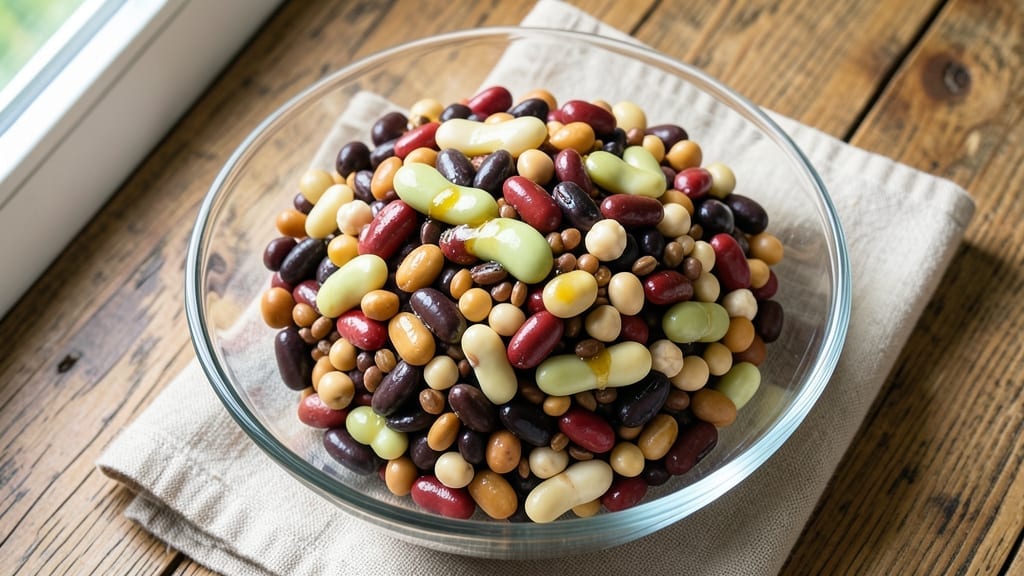
This 13 bean salad recipe delivers the ultimate pantry-to-table meal with rich, smoky flavors that taste like a Southern kitchen hug. The secret lies in slow-cooked beans—black-eyed peas, navy beans, and more—simmered with vinegar, mustard, and spices until tender and infused with depth.
I’ve perfected this version to balance traditional Southern roots with modern convenience, making it a staple for picnics, potlucks, or weeknight dinners.
The beauty of this dish is its versatility—it works as a side, a main course, or even a filling for sandwiches. The beans develop a tender yet firm texture from simmering, while the tangy vinegar-mustard dressing cuts through the richness.
No fancy ingredients required; just pantry staples and time. For extra heartiness, add diced ham or hard-boiled eggs, but the classic version stands strong on its own.
What you’ll end up with is a bold, flavor-packed salad that keeps well for days, making it perfect for meal prep. The beans meld into a harmonious bite, each variety contributing its own texture and taste—creamy butter beans, earthy pinto beans, and peppery black-eyed peas.
Serve it warm or at room temperature, and watch it disappear from the table.
Ready to transform simple beans into a showstopper? This recipe scales effortlessly—double it for gatherings or halve it for smaller servings. The key is patience; letting the beans simmer until they’re perfectly tender ensures every bite is packed with flavor. Here’s how to make it.
Ingredients for 13 bean salad
Pantry staples transform into a Southern classic—13 varieties of beans simmered with vinegar and mustard for bold, tangy depth.
| Ingredient | Amount | Notes |
|---|---|---|
| Dried Black-Eyed Peas 🌱 | 1 cup | Rinsed before cooking |
| Dried Navy Beans 🌱 | 1 cup | Rinsed before cooking |
| Dried Pinto Beans 🌱 | 1 cup | Rinsed before cooking |
| Dried Butter Beans 🌱 | 1 cup | Rinsed before cooking |
| Dried Lima Beans 🌱 | 1 cup | Rinsed before cooking |
| Dried Kidney Beans 🌱 | 1 cup | Rinsed before cooking |
| Dried Great Northern Beans 🌱 | 1 cup | Rinsed before cooking |
| Dried Chickpeas 🌱 | 1 cup | Rinsed before cooking |
| Dried White Beans 🌱 | 1 cup | Rinsed before cooking |
| Dried Lentils 🌱 | 1 cup | Green or brown preferred |
| Yellow Onion 🧅 | 1 whole | Diced into small pieces |
| Celery Stalks 🥬 | 2 whole | Diced into small pieces |
| White Vinegar 🍶 | ½ cup | White or apple cider |
| Dijon Mustard 🍯 | 2 tbsp | High-quality for tang |
| Granulated Sugar 🍚 | 2 tbsp | Light brown preferred |
| Salt 🧂 | 1 ½ tsp | Diamond Crystal preferred |
| Black Peppercorns 🌶️ | 1 tsp | Freshly cracked |
| Dried Thyme 🌿 | 1 tsp | Or 1 tbsp fresh |
| Bay Leaves 🍃 | 2 whole | Removed after cooking |
| Vegetable Broth 💧 | 4 cups | Low-sodium preferred |
The beans are the foundation, so quality matters. Dried beans from bulk bins at stores like Whole Foods or WinCo deliver the best texture—avoid canned for this recipe. Each variety brings its own character: creamy butter beans, earthy pinto, and peppery black-eyed peas. If you can’t find all 13, swap in any other dried beans you have on hand. The onion and celery add aromatic depth, so don’t skip them. For the broth, Imagine or Pacific Foods low-sodium options work perfectly—they won’t overpower the delicate bean flavors.
No white vinegar? Apple cider vinegar works beautifully, though it’ll have a slightly different profile. Dijon mustard can be swapped for yellow mustard, but the flavor will be milder. Short on sugar? Maple syrup or honey (if vegetarian) can substitute at a 1:1 ratio, though the flavor will shift slightly. The thyme and bay leaves are non-negotiable—they’re what give this dish its signature Southern warmth. If you’re using fresh thyme, double the amount. For a smokier profile, add ½ tsp smoked paprika to the broth. The beans should be tender but still hold their shape, so adjust cooking time based on your bean mix.
This salad tastes even better the next day as the flavors meld. Store in an airtight container in the fridge for up to 5 days. For meal prep, portion into individual containers—it’s perfect for lunches or potlucks. The beans will keep their texture for 3 months if frozen, though the dressing may separate slightly. To reheat, just warm gently on the stove with a splash of broth or water. The dressing can be made ahead and stored separately for up to 1 week—just stir before serving.
Why You’ll Love This Recipe
- Earthy Umami Bomb: That mix of navy beans, pinto beans, and butter beans? It’s like a flavor symphony—navy beans bring the deep, meaty notes, while the butter beans add a buttery richness. Honestly, the first bite makes me wonder why I ever skipped this.
- Potluck MVP: Between us, this salad is the real star at any gathering. It’s hearty enough to stand alone at a picnic, but it also plays nice with grilled chicken or sandwiches. I’ve brought it to BBQs, church dinners, and even my book club—everyone asks for the recipe.
- Pantry Goldmine: I keep a bag of dried beans on hand just for this—it’s my budget-friendly secret weapon. A single batch stretches for days, and I can freeze extras for when I’m too tired to cook. Plus, the cost? A fraction of canned beans, with way more flavor.
Step-by-step instructions for 13 bean salad
Transform these dried legumes into a rich, flavorful salad that keeps beautifully for days.
Prepare the Beans for Cooking
Combine all 13 cups of dried beans (black-eyed peas, navy beans, pinto beans, butter beans, lima beans, kidney beans, great northern beans, chickpeas, white beans, and lentils) in a large bowl. Rinse them thoroughly under cold water to remove any debris, then drain. This step ensures clean beans that won’t make your salad taste bitter.
Transfer the rinsed beans to a large stockpot and cover them with 4 cups of cold vegetable broth. Add the whole yellow onion (diced), 2 whole celery stalks (diced), 2 whole bay leaves, 1 tsp dried thyme, 1.5 tsp salt, and 1 tsp black peppercorns. Stir gently to combine—this aromatic base will infuse the beans as they cook.
Simmer Until Tender
Bring the mixture to a boil over high heat, then immediately reduce to a gentle simmer. Cover the pot and cook for 1.5 to 2 hours, stirring occasionally to prevent sticking. The beans are done when they’re tender but not mushy—you should be able to pierce them easily with a fork.
Real talk: If you notice the liquid level drops significantly, add ½ cup of hot vegetable broth at a time to keep the beans submerged. This prevents burning and ensures even cooking. The beans should absorb the broth and develop a deep, savory flavor.
Mix the Dressing Ingredients
While the beans cook, prepare the dressing in a small bowl. Whisk together the 0.5 cup white vinegar, 2 tbsp Dijon mustard, 2 tbsp granulated sugar, 1 tsp salt, and a pinch of black peppercorns. This tangy-sweet blend is the secret to balancing the earthy flavors of the beans.
Taste the dressing before adding it to the beans—adjust the sugar or vinegar if needed. The dressing should be smooth and well-emulsified, with a bright acidity that cuts through the richness of the cooked beans. This is where the salad gets its signature Southern tang.
Combine and Chill
Once the beans are tender, drain any remaining liquid and transfer them to a large mixing bowl. Stir in the dressing until everything is evenly coated—you’ll see the beans glisten as the flavors meld together. Remove the bay leaves at this point, as they’ve done their job.
Cover the bowl and refrigerate the salad for at least 4 hours, or preferably overnight. This chilling time allows the flavors to develop fully and the beans to soak up the dressing. The longer it sits, the more cohesive and flavorful it becomes—this is not a salad you can rush.
Serve and Enjoy
Before serving, give the salad a gentle stir to redistribute any settled dressing. The beans should be tender, flavorful, and coated in a glossy dressing. Serve chilled or at room temperature, perfect for picnics, potlucks, or as a hearty side dish.
This salad keeps well in the refrigerator for up to 5 days, making it an ideal make-ahead dish. The flavors only improve with time, and it pairs beautifully with grilled meats, crusty bread, or as a standalone vegetarian main.
Pro Tips For Making 13 Bean Salad
- SOAK BEANS OVERNIGHT: Dried beans are stubborn when rushed. Toss them in a bowl with cold water, cover, and let them sit at least 8 hours—or better, overnight. I learned this the hard way: skipping the soak means tough, uneven cooking, and navy beans especially stay rock-hard if you try to speed it up.
- USE A MIXED-POT TEMPERATURE: Start beans in boiling water, then immediately drop the heat to a simmer. Butter beans and lima beans need gentle treatment—they turn mushy fast if you keep the pot at a rolling boil. Navy beans and pinto beans, though? They’ll soften faster if you crank the heat back up for the last 10 minutes.
- DRAIN BEANS WELL: After cooking, give those beans a thorough drain and a cold-water rinse. Leftover starch in the water makes the salad gummy, and no one wants a gluey 13-bean mess. Pat them dry with a kitchen towel if you’re really ambitious—it makes all the difference when mixing in the dressing later.
- COOK BEANS IN BATCHES: Don’t overload the pot—crowded beans steam instead of simmer, and that’s how you end up with half-cooked pinto beans hiding among the perfectly soft black-eyed peas. Split them into two pots if needed; I usually cook pintos and butter beans first since they take longer, then add the quicker navy beans to the second batch.
Troubleshooting this recipe
Beans Too Hard
If your beans aren’t tender after 2 hours of simmering, don’t panic—just add ½ cup hot broth and continue cooking for another 30-45 minutes. Older beans or hard water can slow cooking, so check the water hardness in your area.
I’ve found that Bob’s Red Mill dried beans cook more evenly than store-brand options. For extra insurance, soak beans overnight in cold water with a pinch of baking soda before cooking. 🌱
Dressing Too Thin
The dressing can separate if the beans absorb too much liquid. Fix this by whisking in 1 tbsp cornstarch mixed with 2 tbsp cold water to thicken it. For prevention, reduce the vinegar by 1 tbsp next time and add ½ tsp xanthan gum to stabilize the emulsion.
I keep a small jar of Maille mustard on hand—its smoother texture helps prevent separation better than powdered mustard. ✨
Mushy Texture
Overcooked beans lose their shape and turn mushy. To avoid this, start checking for doneness at 1 hour and taste-test occasionally. If they’re already too soft, drain and rinse with cold water to stop cooking.
For future batches, reduce simmering time by 15-20 minutes and use a mix of firm beans like kidney beans and softer varieties like butter beans in equal parts. 💡
Bland Flavor
If your salad tastes flat, it’s likely underseasoned. Boost flavor by adding ½ tsp smoked paprika or ¼ tsp cayenne pepper to the broth during cooking. For extra depth, stir in 1 tbsp soy sauce (if vegetarian, use coconut aminos) and 1 tsp apple cider vinegar after chilling.
I swear by Penzeys Spices for their bold flavors—just ¼ tsp onion powder makes a noticeable difference. 🔥
Dressing Too Tangy
Too much vinegar can overwhelm the beans. Balance it by adding 1 tbsp honey or maple syrup to the dressing. For a smoother flavor, reduce the vinegar by 2 tbsp and add 1 tbsp olive oil to round out the taste.
If the dressing is already made, stir in ½ cup broth from the beans to dilute the acidity slightly. 💛
Storage Issues
If your salad develops an off smell or slimy texture after refrigerating, it’s gone bad. To prevent spoilage, always store in an airtight container and press plastic wrap directly on the surface to minimize air exposure.
For longer storage, divide into smaller portions to reduce surface area. I use Glasslock containers because they seal tightly and keep beans crisp for 5 days without sogginess. ❄️
Nutrition facts
Frequently asked questions
Why do some 13 bean salad recipes use canned beans instead of dried?
Canned beans offer convenience but sacrifice texture and flavor depth. Dried beans develop a richer, meatier taste when simmered slowly, while canned versions often taste starchy. For authentic Southern flavor, dried beans are worth the extra time—just ensure they’re properly soaked or simmered for 1.5-2 hours until tender.
Can I make this salad without vinegar?
While vinegar is traditional, you can substitute with lemon juice or apple cider vinegar for a milder taste. For a completely vinegar-free version, use 1 tbsp soy sauce (or coconut aminos) plus 1 tsp honey to mimic the tangy-sweet balance. The dressing will taste different but still complement the beans.
How do I adjust this recipe for a vegetarian diet?
This recipe is naturally vegetarian, but you can enhance it with hard-boiled eggs or crumbled tofu for protein. For extra heartiness, add diced bell peppers or chopped parsley. The traditional version relies entirely on beans and pantry staples, making it a great plant-based meal.
What’s the best way to reheat this salad?
This salad is best served cold, but if reheating is necessary, warm it gently in a skillet with 2 tbsp broth over low heat for 5-7 minutes, stirring often. Avoid microwaving—it can make the beans mushy. For best results, serve at room temperature after refrigeration.
Can I substitute any of the 13 beans?
Swap any dried bean for another variety—just maintain the 1:1 ratio. For example, replace kidney beans with cannellini beans or swap lima beans for black beans. The key is balancing textures: include at least 3 firm beans (like kidney or pinto) and 2 creamy beans (like butter beans) for the best mouthfeel.

- Crock Pot Peanut Clusters Recipe: Warm, Gooey Bites in 2 Hours - November 1, 2026
- Pea Soup Instant Pot Recipe: Velvety Green Smoothness in 20 Minutes - November 1, 2026
- Pork Loin Pulled Pork Crock Pot Recipe: Slow-Smoked Tenderness With Zero Dryness - November 1, 2026