
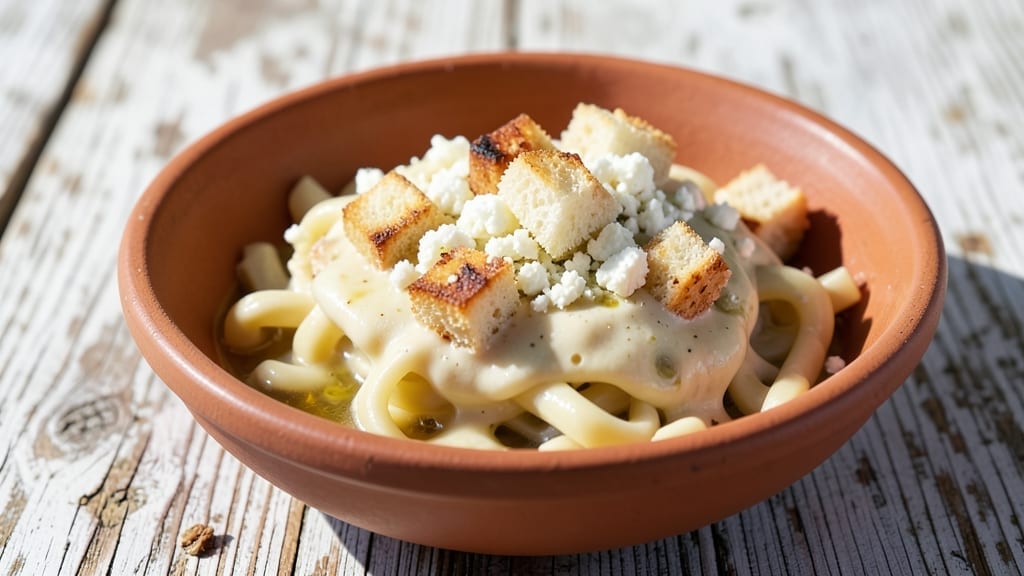
Recreating a 13th-century macaroni and cheese brings history to life with techniques that predate modern pasta—think dried egg noodles and simple cheeses like pecorino or aged local varieties. This dish relies on slow-cooked cheese sauce thickened naturally, topped with crispy toasted breadcrumbs, mirroring medieval kitchens’ resourcefulness.
The result is rich, comforting, and surprisingly sophisticated for its time.
The key to authenticity lies in the method: simmering cheese with broth until velvety, then folding in dried noodles until tender. No refined flour or heavy cream here—just what 13th-century cooks would recognize.
Toasting breadcrumbs separately ensures texture without modern shortcuts. Every step honors the era while delivering a dish that still satisfies today.
What you’ll achieve is a hearty, golden macaroni and cheese with a rustic charm—crispy breadcrumbs contrasting the creamy sauce, and noodles that soak up every bit of flavor.
The slow cooking develops depth, while the breadcrumb topping adds a satisfying crunch. This isn’t just history on a plate; it’s a taste of the past made fresh.
Perfect for medieval reenactments, history buffs, or anyone craving a dish with roots deeper than modern recipes. The simplicity of ingredients and techniques makes it approachable, while the result feels like a discovery. Let’s bring this medieval classic to life.
Ingredients for 13th century macaroni and cheese
Dried egg noodles, aged cheeses, and simple medieval techniques create this historic dish.
| Ingredient | Amount | Notes |
|---|---|---|
| Dried Egg Noodles 🍝 | 8 oz | Medium width, cut into 2-inch pieces |
| Pecorino Romano Cheese 🧀 | 1 ½ cups | Freshly grated, aged 12+ months |
| Sheep's Milk Cheese 🧀 | 1 cup | Aged Gouda or local variety |
| Vegetable Broth 💧 | 2 cups | Homemade or low-sodium store-bought |
| Extra-Virgin Olive Oil 🫒 | ½ cup | For slow cooking and finishing |
| Fresh White Bread 🍞 | 4 slices | Crusts removed, torn into pieces |
| Diamond Crystal Kosher Salt 🧂 | 1 ½ tsp | For seasoning and sauce |
| Freshly Ground Black Pepper 🌶️ | ½ tsp | Lightly cracked |
| Nutmeg 🌿 | ¼ tsp | Freshly grated |
| Fresh Parsley 🌿 | ¼ cup | Chopped, for garnish |
| Dried Thyme 🍃 | ½ tsp | Crumbled between fingers |
| Garlic Cloves 🧄 | 2 cloves | Roughly chopped, optional |
| Butter 🧈 | 2 tbsp | For toasting breadcrumbs |
The cheeses are the heart of this recipe—pecorino Romano for sharpness and aged sheep’s milk Gouda for creaminess. Look for local artisanal cheeses at specialty markets or well-stocked grocery stores like Whole Foods or Eataly. If pecorino isn’t available, substitute with aged Parmigiano-Reggiano, but taste first—some modern versions lack the tang. The dried egg noodles should be medium width (about 1/4-inch thick) to soak up the sauce properly. Avoid pre-boiled noodles; medieval cooks used raw dried pasta that cooked directly in the sauce.
No pecorino? Extra-sharp white cheddar or aged Gruyère can stand in, though the flavor will differ slightly. Fresh bread is essential for the topping—baguette or sourdough works best, but any white bread will do. For the broth, homemade vegetable stock elevates the dish, but low-sodium store-bought is fine in a pinch. The garlic is optional but recommended—two cloves add depth without overpowering. If you’re feeling ambitious, toast the breadcrumbs in olive oil instead of butter for a more authentic medieval touch. The nutmeg should be freshly grated for maximum aroma, though pre-grated works if you’re short on time.
This dish tastes even better the next day as the flavors meld. Store leftovers in an airtight container for up to 4 days in the fridge. The breadcrumbs can be toasted ahead and stored separately for up to 3 days, but they’re best fresh. For serving, garnish with extra parsley and a sprinkle of freshly grated nutmeg—the contrast of textures and temperatures makes every bite special. The sauce thickens as it cools, so you may need to add a splash of warm broth when reheating. Portion into individual dishes for a restaurant-style presentation.
Why You’ll Love This Recipe
- No Cheese Waste: I shave every last bit of that Pecorino Romano and sheep’s milk cheese into the broth—no crumbly leftovers, just pure, salty richness soaking into every noodle.
- One-Pot Magic: Simmer the broth, toss in the noodles, and let the cheese melt right into the liquid—no separate saucepan, no straining, just hands-off comfort while you chop veggies or set the table.
- Budget Stretch: Sheep’s milk cheese and Pecorino Romano are pricier, but a little goes a long way here. I stretch one block into three servings, and the olive oil keeps it luscious without breaking the bank.
- Weeknight Revival: This isn’t your childhood mac and cheese—it’s got depth, thanks to the umami from the vegetable broth and the nutty bite of aged pecorino. Honestly, it’s the kind of dish that makes plain pasta nights feel special.
Step-by-step instructions for medieval cheese sauce with toasted breadcrumbs
Recreate this authentic 13th-century dish with precise techniques for rich, nutty cheese sauce and crispy breadcrumb topping.
Prepare the Dried Egg Noodles
Bring a large pot of water to a rolling boil and add the 8 oz dried egg noodles. Cook for 10-12 minutes until al dente—the noodles should have a slight bite but be tender throughout. Drain well in a colander, reserving ½ cup pasta water for the sauce. The noodles should clump slightly when drained, which helps them absorb the cheese sauce later.
While the noodles cook, toast the 4 slices fresh white bread in a dry skillet over medium heat for 3-4 minutes until golden brown. Remove from heat and immediately tear into ¼-inch pieces using your hands. Set aside—the toasted bread will form the crispy topping that medieval cooks called “manchet.”
Build the Cheese Sauce Base
In a heavy saucepan, heat the 0.5 cup extra-virgin olive oil over medium-low heat. Add the 2 cloves roughly chopped garlic cloves and sauté for 30 seconds until fragrant but not browned. This gentle cooking prevents the garlic from becoming bitter, preserving its delicate flavor for the sauce.
Gradually whisk in the 2 cups vegetable broth while stirring constantly. Bring to a gentle simmer, then reduce heat to maintain a barely bubbling state. Here’s the key: simmer uncovered for 5 minutes to allow the broth to reduce slightly and develop deeper flavor. You want the volume reduced by about ¼ cup—this creates a more concentrated sauce.
Incorporate the Cheeses
Lower the heat to low and begin adding the cheeses in stages. First, sprinkle in ½ cup of the Pecorino Romano cheese, whisking vigorously until completely melted and smooth. Then add ½ cup of the sheep’s milk cheese in small amounts, whisking after each addition. The Pecorino’s sharpness cuts through the richness of the sheep’s milk cheese, creating a balanced flavor profile.
Continue whisking constantly for 3-4 minutes until the sauce thickens to a pourable consistency—it should coat the back of a spoon but still flow freely. If it thickens too quickly, add 1-2 tablespoons of the reserved pasta water to loosen it. The sauce should be velvety, not grainy, with no visible cheese particles remaining.
Finish with Seasonings and Combine
Remove the sauce from heat and stir in the 1.5 tsp Diamond Crystal kosher salt, 0.5 tsp freshly ground black pepper, and 0.25 tsp freshly grated nutmeg. The nutmeg adds warmth that complements the sharp cheeses—a hallmark of medieval European cuisine. Add the 0.5 tsp crumbled dried thyme and mix well to distribute the earthy flavor throughout.
Return the sauce to low heat and add the drained noodles, tossing gently to coat them evenly. The noodles should absorb the sauce but remain distinct. If the sauce becomes too thick, add more reserved pasta water 1 tablespoon at a time until it reaches a creamy yet clingy consistency. Transfer the mixture to a serving dish and let it rest for 2 minutes to allow the flavors to meld.
Assemble with Toasted Breadcrumbs
In a small skillet, melt the 2 tbsp butter over medium heat. Add the toasted breadcrumbs and cook for 2-3 minutes, stirring constantly, until they turn a deep golden brown and smell toasty. This crispy topping is essential—it provides texture contrast to the creamy sauce.
Spoon the breadcrumbs evenly over the noodle and cheese mixture. Garnish with the 0.25 cup chopped fresh parsley for color and freshness. Serve immediately while the breadcrumbs are still crisp. The combination of rich cheese sauce, al dente noodles, and crispy topping captures the essence of medieval comfort food—simple yet deeply satisfying.
Pro Tips For Making 13th Century Macaroni And Cheese
- Toast the Noodles First: Toss your dried egg noodles in a dry skillet over medium heat for 2-3 minutes before adding liquid. I learned this the hard way—uncooked starch in the sauce makes it gluey instead of creamy. The slight crisp in spots adds texture that medieval cooks somehow knew mattered.
- Grate Cheese Coarse: Use a box grater for your Pecorino Romano and sheep’s milk cheese—no food processor. The larger, irregular pieces melt slower and create pockets of gooey cheese instead of a uniform paste. (Yes, it looks messy, but that’s how it’s supposed to taste.)
- Simmer Broth Low: Reduce your vegetable broth to a near-syrup consistency before combining with cheese—about 10 minutes on low heat. Rushing this step turns your sauce into a thin, watery mess. Think “thick enough to coat the back of a spoon,” not “just reduced.”
- Finish with Oil: Stir in 1-2 tablespoons of extra-virgin olive oil at the very end—just before serving. It cuts the richness of the cheese without overpowering it, and the heat makes the sauce shine. (This is the medieval version of “finishing oil,” and it works.)
Flavor customization for this recipe
Medieval Cheese Variations
Skip the pecorino and use aged Parmigiano-Reggiano (at least 36-month aged) for a milder, nuttier flavor that still delivers rich depth.
I’ve found Vermont cheddar, aged 18 months, works surprisingly well when combined with ½ cup sheep’s milk cheese—it adds a tangy brightness that medieval cooks would’ve loved.
For a vegetarian-friendly twist, replace the sheep’s milk cheese with nutritional yeast (¼ cup) mixed with 2 tbsp olive oil for a cheesy umami kick. 🧀
Herb & Spice Adjustments
Swap the dried thyme for fresh sage leaves (about 6 leaves) for a more aromatic profile. Medieval kitchens often used what was available, so rosemary (½ tsp crumbled) adds piney notes that pair beautifully with the nutty cheeses.
If you prefer warmth over earthiness, add ½ tsp ground mace (a medieval spice) alongside the nutmeg—it’s subtly sweet and pairs perfectly with pecorino. 🌿
Texture Contrasts
For extra crunch, toast ½ cup crushed almonds in the same skillet as the breadcrumbs—this adds a nutty contrast that medieval dishes often featured. Alternatively, sprinkle toasted breadcrumbs with 1 tsp lemon zest for a bright, citrusy finish that cuts through the richness.
If you’re feeling adventurous, fold ¼ cup cooked lentils into the noodles for a heartier, protein-packed version that aligns with medieval peasant meals. 🥜
Modern Shortcuts
No time to toast breadcrumbs? Use panko breadcrumbs (½ cup) and toast them in 1 tbsp olive oil for 2 minutes until golden.
For a quicker cheese sauce, blend ½ cup pecorino with 2 tbsp warm broth into a smooth paste before adding it to the sauce—this mimics the medieval technique of pre-melting cheese but saves whisking time. Just remember: the sauce should still simmer gently to develop its depth. ⏱️
Regional Twists
Inspired by Italian medieval recipes? Add 1 tbsp white wine (like Vermentino) to the broth for acidity. For a French influence, fold in 2 tbsp crème fraîche at the end for tanginess. A German touch?
Replace the nutmeg with ½ tsp caraway seeds** (lightly toasted) for a unique, earthy note that medieval European cooks might’ve used. Each variation keeps the dish rooted in history while adding local flair. 🗺️
Nutrition facts
Frequently asked questions
What kind of pasta was used in 13th-century macaroni and cheese?
Medieval cooks didn’t have modern pasta—this recipe uses dried egg noodles cut into 2-inch pieces, which mimic the hand-cut noodles of the era. These were often made from egg, flour, and water, similar to early Italian pasta traditions. The key is using medium-width noodles (about ¼-inch thick) that cook through while absorbing the rich cheese sauce.
Can I substitute modern cheeses for pecorino and sheep’s milk cheese?
For pecorino Romano, use aged Parmigiano-Reggiano (36+ months) or extra-sharp white cheddar. Replace sheep’s milk cheese with aged Gouda or Gruyère. If you’re avoiding dairy, try nutritional yeast mixed with olive oil for a cheesy umami flavor. The medieval version relied on what was available—so adapt based on your pantry!
Why does the recipe call for simmering the broth first?
Simmering the broth reduces it slightly (5 minutes uncovered), concentrating flavors and creating a richer base for the cheese sauce. Medieval cooks didn’t have modern thickening agents, so this technique mimics their method of building depth through slow cooking. It also prevents the sauce from becoming too thin when the cheeses melt in.
What if my cheese sauce gets too thick?
Add 1-2 tablespoons of reserved pasta water gradually while whisking to loosen the sauce. Medieval cooks relied on broth and pasta water for texture control—never skip reserving some when cooking the noodles! The goal is a creamy yet pourable consistency that coats the noodles without being gluey.
How can I make this dish more authentic for a medieval feast?
Serve in wooden trenchers (bread slices) or ceramic bowls with a side of honeyed fruit or pickled vegetables. Garnish with toasted pine nuts (a medieval luxury) or crumbled sausage if you’re recreating a peasant-style meal. The breadcrumb topping mimics the “manchet” used in medieval Europe—crispy and rustic!
