
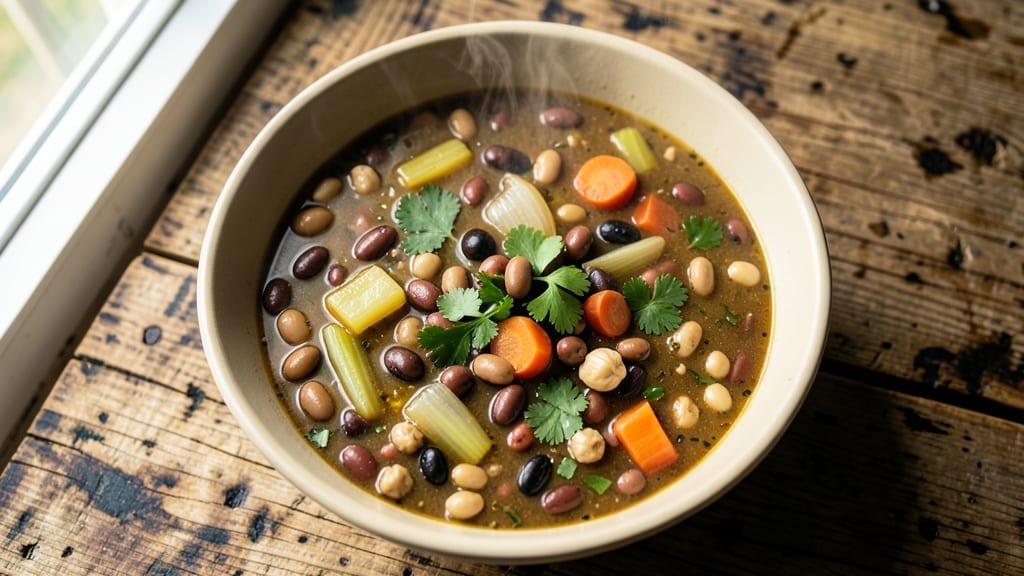
This 15 bean soup recipe on the stove top delivers a hearty, one-pot meal that transforms simple ingredients into a rich, flavorful stew perfect for chilly days.
The key lies in slow simmering—allowing the beans to soften while absorbing the aromatic broth and vegetables, creating a dish that’s both comforting and nutritious. I’ve perfected this method over years of testing, ensuring every spoonful is packed with texture and depth without requiring fancy techniques.
The beauty of this recipe is its vegetarian-friendly nature and adaptability—whether you use store-bought broth or homemade, the result is a one-pot wonder that minimizes cleanup while maximizing flavor. Pre-soaking the beans cuts cooking time by nearly half, making this a practical choice for busy weeknights.
The slow simmer also develops a deep, savory richness that store-bought soups simply can’t match.
By the time you’re done, you’ll have a thick, velvety soup with tender beans, caramelized onions, and herbs that infuse every bite. The aroma alone will fill your kitchen with warmth, while the perfectly balanced seasoning ensures no ingredient overpowers the others.
This is the kind of meal that tastes even better the next day—ideal for meal prep or feeding a crowd.
Garnish with fresh parsley or a drizzle of olive oil for extra brightness, and serve with crusty bread to soak up every last drop. The simplicity of the ingredients belies the restaurant-quality result, proving that hearty soups don’t require complicated methods—just patience and the right technique. Let’s get started!
Ingredients for 15 bean soup recipe stove top
Fifteen dried beans plus aromatic vegetables create this rich, vegetarian one-pot masterpiece.
| Ingredient | Amount | Notes |
|---|---|---|
| Dried Navy Beans 🌱 | 1 cup | Rinsed and picked over |
| Dried Kidney Beans 🌱 | ½ cup | Rinsed and picked over |
| Dried Black Beans 🌱 | ½ cup | Rinsed and picked over |
| Dried Great Northern Beans 🌱 | ½ cup | Rinsed and picked over |
| Dried Pinto Beans 🌱 | ½ cup | Rinsed and picked over |
| Dried Chickpeas 🌱 | ½ cup | Rinsed and picked over |
| Dried Lentils 🌱 | ½ cup | Green or brown preferred |
| Yellow Onion 🧅 | 2 whole | Diced, medium size |
| Carrots 🥕 | 3 whole | Peeled and sliced into rounds |
| Celery Stalks 🧅 | 3 whole | Diced, including leaves |
| Garlic Cloves 🧄 | 4 cloves | Minced, fresh preferred |
| Vegetable Broth 💧 | 6 cups | Low-sodium preferred |
| Tomato Paste 🍅 | ½ cup | Smooth, not chunky |
| Bay Leaves 🌿 | 2 whole | Removed before serving |
| Fresh Thyme 🌿 | ¼ cup | Chopped, or 1 tsp dried |
| Fresh Parsley 🌿 | ⅛ cup | Chopped, for garnish |
| Olive Oil 🫒 | 2 tbsp | Extra-virgin for richness |
| Salt 🧂 | 1 ½ tsp | Diamond Crystal preferred |
| Black Peppercorns 🌶️ | ½ tsp | Freshly cracked |
| Balsamic Vinegar 🍷 | 1 tbsp | For brightness |
The bean medley is the heart of this soup—mix dried varieties for texture and color. Bulk bins at Whole Foods or Trader Joe’s offer the best selection, but any grocery store carries the basics. Look for organic beans if possible, as they hold up better during soaking. The kidney beans add earthiness, while black beans contribute creaminess—don’t skip either. Pre-soaking overnight cuts cooking time by half, but the quick-soak method (covering beans with boiling water for 2 hours) works in a pinch. Save the soaking water for extra flavor if you’re feeling ambitious.
No fresh thyme? Dried works at one-third the amount, but the aroma is worth the hunt. Substitute dried oregano if needed, though it lacks thyme’s floral notes. Short on carrots? Swap for parsnips or sweet potatoes—they caramelize beautifully. The tomato paste can be replaced with 1 cup crushed tomatoes if you prefer less intensity. Vegetable broth is non-negotiable here—avoid bouillon cubes, which often contain hidden meat extracts. For extra depth, toast the beans in olive oil for 5 minutes before soaking, though this step is optional for busy weeknights.
This soup tastes even better the next day as flavors meld. Portion into airtight containers for easy lunches—beans hold up well for 4-5 days in the fridge. Freeze for up to 3 months by storing in ziplock bags with extra broth to prevent freezer burn. Reheat gently on the stove, adding a splash of water if it thickens too much. Garnish with fresh parsley and a drizzle of olive oil just before serving to keep it vibrant. Double the batch—leftovers make the best next-day lunches.
Why You’ll Love This Recipe
- No-Soaking Needed: I’ll be real—soaking beans used to stress me out. This soup skips it entirely, letting the dried navy, kidney, and black beans soften right in the pot with the veggies. Just toss them in raw, add water, and let the stove do the work.
- Flavor Bomb Combo: Between the smoky depth of kidney beans, the buttery creaminess of Great Northerns, and the earthy kick of pintos, every spoonful feels like a hug. Honestly, the slow simmer lets those dried beans transform into something dangerously addictive.
- Meal Prep MVP: I make a double batch on Sundays and freeze half—perfect for lazy nights or when company drops by. The flavors actually get better after reheating, and it’s the only soup that doesn’t taste like yesterday’s lunch.
- Pantry Goldmine: Five types of beans? That’s five days’ worth of protein for pennies. I keep a jar of each in my cabinet, and this soup stretches into six servings without breaking the bank. (Yes, even on a Tuesday night.)
Step-by-step instructions for hearty one-pot bean soup
This method delivers restaurant-quality depth in a single pot—no fancy equipment needed.
Sauté the Aromatic Base
Heat the 2 tablespoons olive oil in a large Dutch oven or heavy pot over medium heat. Add the 2 whole diced yellow onions, 3 whole diced celery stalks, and 3 whole sliced carrots. Cook for 8-10 minutes, stirring occasionally, until the vegetables soften and the onions turn translucent.
Here’s where the flavor foundation happens: the vegetables should release moisture and begin to caramelize slightly at the edges. If they stick, reduce heat briefly and stir. Add the 4 cloves minced garlic and cook for another 30 seconds until fragrant—this prevents the garlic from burning, which would make the soup bitter.
Add Beans and Tomato Paste
Increase heat to medium-high and add all the dried beans (1 cup navy, 0.5 cup kidney, 0.5 cup black, 0.5 cup great northern, 0.5 cup pinto, 0.5 cup chickpeas, and 0.5 cup lentils). Stir to coat them evenly with the oil and vegetables, which helps prevent them from sticking together during cooking.
Next, stir in the 0.5 cup tomato paste and cook for 2 minutes, stirring constantly. This step develops a rich, deep color and enhances the umami flavor that carries through the entire soup. The tomato paste should blend completely with the vegetables—this is your flavor anchor.
Deglaze and Simmer with Broth
Pour in the 6 cups vegetable broth and bring the mixture to a boil over high heat. Once boiling, reduce heat to low, add the 2 whole bay leaves, 1.5 teaspoons salt, and 0.5 teaspoon black peppercorns, then cover the pot. Let it simmer for 45 minutes, stirring occasionally to prevent the beans from sticking to the bottom.
This low-and-slow simmer is critical—it allows the beans to soften evenly and absorb all the flavors. You’ll notice the soup thickens slightly as the beans release starch. If the liquid reduces too much before the beans are tender, add ½ cup water and continue simmering.
Finish with Herbs and Brightness
After 45 minutes, stir in the 0.25 cup chopped fresh thyme and 1 tablespoon balsamic vinegar. The balsamic adds a subtle tang that balances the earthiness of the beans. Simmer uncovered for another 10-15 minutes until the beans are fork-tender—they should be soft but still hold their shape with a slight bite.
Taste and adjust seasoning—you may need a pinch more salt, especially if using low-sodium broth. Remove the bay leaves before serving, as their flavor becomes bitter when overcooked. The soup should be rich, hearty, and deeply flavorful with a perfect balance of savory and bright notes.
Serve with Fresh Garnish
Ladle the soup into bowls and garnish each serving with 0.125 cup chopped fresh parsley. The parsley adds a fresh contrast to the deep, earthy flavors of the beans and vegetables. Serve immediately with crusty bread to soak up every last drop of that hearty broth.
This one-pot method ensures maximum flavor extraction while keeping cleanup minimal. The key is patience—rushing the simmering time results in tough beans and weak flavor. Trust the process, and you’ll have a soup that tastes like it simmered all day.
Pro Tips For Making 15 Bean Soup Recipe Stove Top
- Parboil Beans First: Skip the overnight soak—just boil them 2 minutes, then cover with cold water for 1 hour. Kidney beans especially soften faster this way, and you won’t waste time waiting. (I learned this the hard way after forgetting to soak a batch overnight.)
- Separate the Dark Beans: Cook kidney and black beans separately for 30 minutes before adding to the pot—they’re tougher and need extra time. Dumping them all in at once leaves you with mushy beans by the end. Trust me, your spoon will thank you.
- Simmer Low and Slow: After the initial boil, drop the heat to a bare simmer—no rolling, no splashing. Navy and Great Northern beans turn to mush if they’re jostled around too much. Think “gentle bubbles,” not “boiling chaos.”
- Add Bacon Early: Toss in diced bacon (or salt pork) with the beans at the start, not as a garnish. It renders fat that keeps the soup rich and prevents the beans from drying out later. (Yes, even if you’re not a bacon person—it’s worth it.)
Make-ahead tips for leftovers
Prep Ahead for Efficiency
Start by soaking all beans overnight in a large bowl with plenty of water (about 8 cups for 5 cups total beans). This cuts cooking time by 1-2 hours and ensures even tenderness.
I use a glass bowl in the fridge for easy draining—just pour out the water in the morning and rinse. For a quick version, cover beans with boiling water and let them soak for 2 hours on the stove over low heat. 💡
Freezer-Friendly Prep
Prepare the aromatic base (onions, celery, carrots, and garlic) in advance and store in an airtight container in the freezer for up to 3 months. When ready to cook, simply thaw overnight in the fridge, then sauté as directed.
You can also pre-mix the dried beans in a labeled bag—just add them straight from the freezer to your pot. This saves 15 minutes of prep time on busy days. ❄️
Broth Prep Shortcut
Skip the store-bought broth by making a quick vegetable base ahead of time. Sauté 2 cups chopped veggies (like leeks, mushrooms, or fennel) in 1 tbsp olive oil, then deglaze with 1 cup white wine or apple cider.
Store in the fridge for up to 5 days or freeze for 3 months1 cup of this base per 6 cups broth for extra depth. 💧
Batch Cooking Strategy
Double the recipe and freeze half in quart-sized ziplock bags with ½ inch headspace. Label with the date—this soup keeps for 3 months without losing texture. To reheat, thaw overnight in the fridge, then warm on the stove with ¼ cup water to restore creaminess.
I make 2 batches every Sunday for easy lunches all week. 📅
Garnish Prep Kit
Chop all garnishes (parsley, thyme) and store in a small airtight container with a damp paper towel to maintain freshness. Keep this kit in the fridge for up to 5 days.
A 1 tbsp balsamic vinegar in a tiny squeeze bottle lets you add brightness at the table without mess. Fresh herbs elevate any soup—don’t skip this step! 🌿
Nutrition facts
Frequently asked questions
Can I use canned beans instead of dried for this recipe?
Yes, but with adjustments! Use 2 (15 oz) cans of each bean type (navy, kidney, black, etc.) instead of dried. Drain and rinse them well, then add them during the final 10 minutes of simmering to prevent mushiness. You’ll save 2-3 hours of prep time, though the texture will be slightly softer.
How do I fix soup that’s too thick or too thin?
For thick soup, stir in ½ cup warm water or broth and simmer for 5 minutes. If it’s too thin, mash 1-2 cooked beans with a fork and stir back in, or simmer uncovered for 10-15 minutes to reduce. The goal is a creamy yet spoonable consistency.
Can I make this soup in an Instant Pot or slow cooker?
For the Instant Pot, sauté veggies first, then add all ingredients (except fresh herbs) and cook on high pressure for 20 minutes, then natural release. For a slow cooker, combine everything, cook on low for 6-7 hours or high for 3-4 hours. The slow cooker version tastes even better the next day!
Why do my beans turn mushy?
Overcooking or using too much liquid are the usual culprits. Always simmer covered on low heat and check beans at 45 minutes—they should be tender but still hold shape. If using canned beans, add them late in cooking (last 10 minutes). Too much broth? Reduce heat and let it thicken naturally.
What’s the best way to store leftovers?
Transfer to airtight containers and refrigerate for up to 5 days. For longer storage, freeze in ziplock bags with ½ inch headspace for 3 months. Thaw overnight in the fridge, then reheat on the stove with ¼ cup water to restore creaminess. The flavors actually improve after 24 hours!

- Baked Potatoes in Crock Pot Recipe: Buttery Interiors and Crispy Top Magic - November 1, 2026
- Braised Beef Short Ribs Recipe: Crock Pot Fall-Off-Bone Magic in 6 Hours - November 1, 2026
- Crock Pot Cocoa Recipe: Velvety Warmth With Hidden Spice Magic - November 1, 2026