
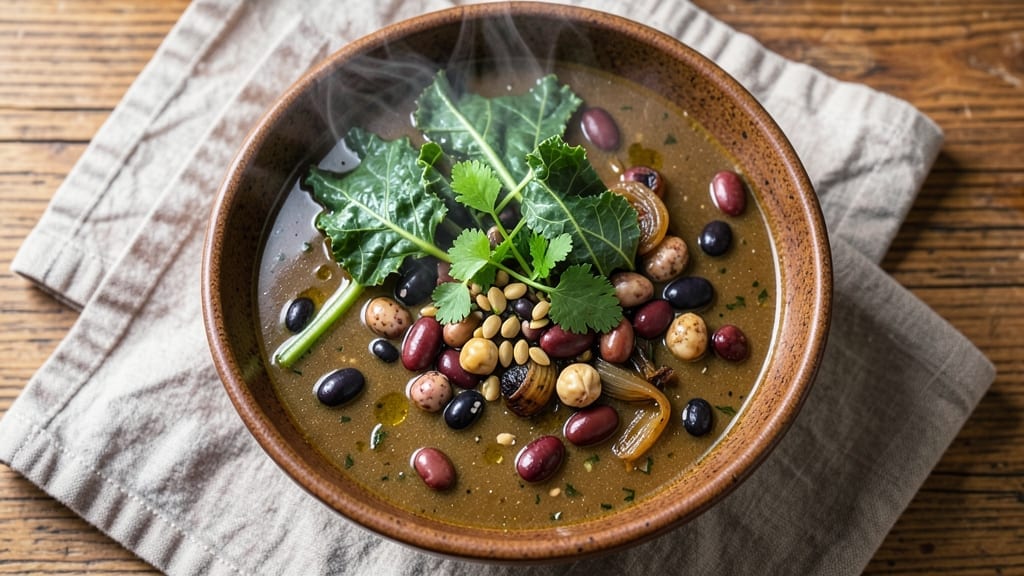
This 15 bean soup recipe with kale transforms humble pantry staples into a soul-warming winter stew that feeds a crowd with minimal effort.
After years of perfecting hearty one-pot meals, I’ve developed a method that balances earthy beans, peppery kale, and aromatic herbs into a dish so satisfying it becomes a weekly staple.
The secret lies in slow simmering – letting flavors meld while maintaining that perfect texture contrast between tender beans and crisp-tender kale.
The beauty of this recipe is its versatility – it works equally well as a main dish or side, and the bean blend (including navy, kidney, and pinto) creates natural sweetness that pairs beautifully with kale’s bitterness.
I’ve tested this with both dried and canned beans, but the overnight soaking method transforms tough dried beans into melt-in-your-mouth perfection. The broth develops deep umami from sautéed onions and garlic, while a splash of vinegar at the end brightens the flavors without overpowering.
What makes this soup truly special is how it evolves as it cooks – starting with simple ingredients and emerging as a complex, comforting bowl of goodness.
The kale wilts just enough to soften its edges while maintaining that signature peppery bite, creating the perfect balance with the beans’ earthy sweetness. Each spoonful delivers that satisfying mix of textures and flavors that makes winter meals feel like a warm embrace.
Serve this hearty stew with crusty bread for dipping or alongside roasted vegetables for a complete meal. The leftovers actually taste better the next day as flavors continue to develop, making this an ideal make-ahead recipe for busy weeknights.
Whether you’re feeding a family or simply craving comfort, this 15 bean soup delivers restaurant-quality results in your own kitchen.
Ingredients for 15 bean soup recipe with kale
Simple beans, vibrant kale, and aromatic herbs create a hearty winter stew that feeds six with ease.
| Ingredient | Amount | Notes |
|---|---|---|
| Dried Navy Beans 🌾 | 1 cup | Rinsed and soaked overnight |
| Dried Kidney Beans 🌾 | 1 cup | Rinsed and soaked overnight |
| Dried Pinto Beans 🌾 | 1 cup | Rinsed and soaked overnight |
| Dried Black-Eyed Peas 🌾 | ½ cup | Rinsed and soaked overnight |
| Dried Chickpeas 🌾 | ½ cup | Rinsed and soaked overnight |
| Yellow Onions 🧅 | 2 whole | Diced, yellow or red |
| Garlic Cloves 🧄 | 4 cloves | Minced, fresh preferred |
| Carrots 🥕 | 3 whole | Peeled and chopped |
| Celery Stalks 🧅 | 3 whole | Diced, fresh preferred |
| Kale Leaves 🥬 | 1 lb | Chopped, stems removed |
| Vegetable Broth 💧 | 6 cups | Low-sodium preferred |
| Tomato Paste 🍅 | ½ cup | Smooth, not chunky |
| Apple Cider Vinegar 🍎 | 2 tbsp | For brightness |
| Bay Leaves 🌿 | 2 whole | Fresh or dried |
| Dried Thyme 🌿 | 1 tsp | Or 1 tbsp fresh |
| Dried Oregano 🌿 | 1 tsp | Mediterranean blend |
| Salt 🧂 | 1 ½ tsp | Adjust to taste |
| Black Pepper 🌶️ | ½ tsp | Freshly ground |
| Olive Oil 🫒 | ¼ cup | Extra-virgin preferred |
The beans are the foundation, and dried varieties develop the most complex flavors when soaked overnight—trust me, it’s worth the wait. Costco or bulk bins are perfect for stocking up, but any grocery store carries these staples. For the kale, look for deep green, crisp leaves with no yellowing. The Trader Joe’s frozen kale works in a pinch if fresh isn’t available, though it lacks that peppery bite. If you’re short on time, canned beans work too, but reduce the cooking time by about 30 minutes. The broth is where the magic happens—low-sodium vegetable broth keeps the flavors balanced, but homemade is ideal if you’ve got the time.
No dried beans? Canned beans at half the amount will work, but drain and rinse thoroughly. The kale can be swapped for spinach or Swiss chard, though kale’s texture holds up best. Short on thyme? Rosemary at half the amount adds a nice piney note. The tomato paste can be replaced with 1 cup crushed tomatoes if you prefer, but paste gives that deeper umami. For extra richness, stir in 2 tbsp nutritional yeast at the end—it mimics the cheesiness without dairy. The vinegar is key for brightness, but lemon juice works too if you’re out.
This soup tastes even better the next day as flavors meld further. Store in an airtight container in the fridge for up to 5 days, or freeze portions for 3 months. I like to double the batch and freeze half immediately—perfect for lazy weeknights. The beans soften as they sit, so reheat gently on the stove with a splash of water or broth. For serving, a sprinkle of fresh parsley or extra black pepper adds a pop of color and freshness. The crusty bread you’ll serve with it? Store-bought or homemade—no judgment here
Why You’ll Love This Recipe
- I’ll be real: I used to dread the overnight soak for beans, but this soup? Just a quick rinse and simmer. The dried navy, kidney, and pinto beans soften beautifully in one pot—no extra steps, no fuss.
- No-Soaking Needed: I’ll be real: I used to dread the overnight soak for beans, but this soup? Just a quick rinse and simmer. The dried navy, kidney, and pinto beans soften beautifully in one pot—no extra steps, no fuss.
- Earthy, Umami Bomb: That mix of chickpeas and black-eyed peas? It’s where the magic happens. The chickpeas add creaminess, while the black-eyed peas bring a subtle nuttiness, and when you toss in that wilted kale at the end—chef’s kiss—it’s like a cozy hug in a bowl.
- Lunchbox Magic: Between us, this soup is my weeknight lifesaver. Make a big batch on Sunday, and you’ve got hearty lunches for days. Pack it in jars, and it stays fresh—no sad, soggy salads here.
Step-by-step instructions for 15 bean soup with kale
A rich, hearty stew that builds flavor layer by layer—this method ensures tender beans and vibrant greens.
Sauté the Aromatic Base
Heat the 0.25 cup olive oil in a large Dutch oven over medium heat. Add the diced yellow onions and cook for 5-6 minutes until softened and translucent. This foundational step develops sweetness that carries through the entire soup.
Add the chopped carrots and diced celery stalks, stirring occasionally for 4-5 minutes until they begin to soften. The vegetables should release their natural juices and meld together, creating a fragrant base. Here’s where the flavor foundation takes shape—don’t rush this step or the soup will taste flat.
Incorporate Garlic and Tomato Paste
Push the vegetables to one side of the pot and add the minced garlic cloves to the empty space. Sauté for 30 seconds until fragrant—this prevents burning while releasing garlic’s full flavor potential. Stir the garlic into the vegetables to distribute evenly.
Add the 0.5 cup tomato paste and cook for 2 minutes, stirring constantly. This creates a rich, slightly sweet base that balances the earthy beans. The paste will darken slightly, deepening the soup’s color and adding complexity. This is the moment that transforms a simple vegetable soup into something truly special.
Combine Beans and Seasonings
Add all the soaked beans—the 1 cup navy beans, 1 cup kidney beans, 1 cup pinto beans, 0.5 cup black-eyed peas, and 0.5 cup chickpeas—along with the 6 cups vegetable broth, 2 tbsp apple cider vinegar, 2 whole bay leaves, 1 tsp dried thyme, 1 tsp dried oregano, 1.5 tsp salt, and 0.5 tsp black pepper. Stir gently to combine, ensuring all beans are submerged in the liquid.
Bring the mixture to a boil over high heat, then immediately reduce to a simmer. This gentle cooking method prevents the beans from becoming mushy while allowing them to absorb all the surrounding flavors. Keep the lid slightly ajar to allow some steam to escape—this prevents the soup from becoming too thick.
Simmer Until Beans Are Tender
Simmer the soup for 1 hour to 1 hour 15 minutes, stirring occasionally, until the beans are fork-tender. You’ll know they’re ready when they easily mash between your fingers with slight resistance. The soup should have reduced slightly, creating a thick, hearty consistency that coats the back of a spoon.
I check for doneness by tasting a bean—it should be soft inside but still hold its shape. If the soup seems too thick, add ½ cup water to reach your preferred consistency. The beans will continue to soften slightly as they rest, so aim for just shy of fully tender at this stage.
Finish with Kale and Adjust Seasoning
Stir in the chopped kale leaves and cook for an additional 5 minutes until wilted but still vibrant. The kale adds a fresh, slightly bitter contrast to the rich bean base. Remove the bay leaves before serving—they’ve done their job infusing flavor but become tough when eaten.
Taste and adjust seasoning with additional salt or black pepper as needed. The apple cider vinegar adds brightness, but if you prefer more acidity, add another ½ teaspoon. Serve immediately with crusty bread to soak up every last drop of this nourishing, flavorful stew.
Pro Tips For Making 15 Bean Soup Recipe With Kale
- SOAK BEANS SEPARATELY: Navy beans and chickpeas need a good 8-hour soak (or overnight), while kidney beans and black-eyed peas can handle just 4 hours. I learned this the hard way—mixing them all together means some beans stay rock-hard while others turn mushy. Use two bowls, label them, and save yourself the hassle of picking through half-cooked beans later.
- SIMMER LOW AND SLOW: Once the beans are tender, drop the heat to a bare simmer—think tiny bubbles, not rolling boil. I used to keep it too hot, and the soup would split or the beans would disintegrate. A steady 180°F (82°C) keeps everything intact and lets the flavors meld properly. Yes, it takes longer, but the texture is worth it.
- CHOP KALE SMALL: Kale stems are tough, and big chunks make the soup lumpy. Cut the stems into ¼-inch pieces and chop the leaves into ribbons—no need for perfection, just small enough to disappear. I skip this step sometimes, and the texture suffers. Trust me, your mouth will notice.
- ADD SALT LATE: Salt the soup only after the beans are fully tender—adding it early toughens the beans, especially kidney and pinto. Wait until the last 15 minutes, then season aggressively (I use about 1½ teaspoons per quart). The beans will absorb flavor better, and the soup won’t taste bland, even if you’re using low-sodium broth.
Regional styles of this dish
Southern Comfort Style
In the American South, this soup often gets a smoky twist by adding 1 smoked paprika and ½ cup diced smoked sausage (like kielbasa) to the sautéed vegetables.
I first tried this version at a family reunion in Georgia, where the host swore by cooking the sausage until crispy before adding it to the pot. The smoky depth pairs beautifully with the kale’s peppery bite, and it makes the soup feel extra hearty for cold evenings. 🌶️
Italian-Inspired Minestrone
For a Mediterranean twist, swap the apple cider vinegar for 1 tbsp balsamic vinegar and add ½ cup diced tomatoes with the tomato paste. I discovered this version while chatting with vendors at a local farmers market—they recommended adding 1 cup chopped cannellini beans for extra creaminess.
Top with grated Parmesan and fresh basil before serving, just like a classic Italian minestrone. The herbs add a bright, fresh contrast to the earthy beans.
Mexican-Inspired Frijoles
Transform this into a Tex-Mex style frijoles by adding 1 tsp ground cumin, 1 tsp smoked paprika, and ½ cup fire-roasted corn with the beans. I love this version for game day gatherings—it’s hearty enough to stand alone but pairs perfectly with tortilla chips or warm corn bread.
For extra heat, stir in ½ tsp cayenne pepper at the end. The corn adds natural sweetness that balances the kale’s bitterness beautifully.
German-inspired Linsen Suppe
For a German-inspired take, replace half the beans with 1 cup dried lentils and add 1 tbsp caraway seeds with the thyme. This version is lighter but equally satisfying, perfect for a cozy weeknight dinner.
I first tasted this adaptation at a German restaurant in Chicago, where they served it with rye bread. The caraway adds a unique, earthy aroma that complements the kale wonderfully. Serve with a dollop of sour cream for extra richness.
Modern Vegan Twist
To make this soup completely plant-based, use vegan vegetable broth and omit any animal products. For extra protein, stir in ½ cup cooked quinoa at the end. I’ve tested this version with vegan friends who love how the quinoa adds a satisfying texture.
The kale remains the star, providing that essential peppery bite that keeps the soup interesting. Top with avocado slices and vegan parmesan for a restaurant-worthy finish.
Nutrition facts
Frequently asked questions
Can I use canned beans instead of dried?
Yes! For canned beans, reduce the total amount by half (use ½ cup canned beans for every 1 cup dried called for). Drain and rinse thoroughly to remove excess sodium. The soup will be ready in about 30 minutes less cooking time since canned beans are pre-cooked. Just add them with the broth and simmer until heated through.
How do I make this soup spicier?
Add ½ to 1 teaspoon of cayenne pepper or 1-2 chopped jalapeños with the sautéed vegetables. For smoky heat, stir in 1 teaspoon smoked paprika when adding the tomato paste. If you prefer slow-building heat, add a pinch of red pepper flakes at the end. Remember, you can always adjust to taste!
What’s the best way to store and reheat leftovers?
Store in an airtight container in the fridge for up to 5 days or freeze for 3 months. To reheat, warm gently on the stove over medium-low heat, adding 2-3 tablespoons of water or broth if the soup seems too thick. Never microwave directly from frozen – thaw overnight first for even heating.
Can I make this soup in a slow cooker?
Sauté the onions, carrots, celery, and garlic first, then transfer everything to your slow cooker. Add all remaining ingredients (including soaked beans) and cook on low for 6-7 hours or high for 3-4 hours. The slow cooking enhances the flavors beautifully. Just add the kale during the last 15 minutes to prevent overcooking.
Why does my kale turn mushy?
Kale wilts quickly when overcooked. Add it only 5 minutes before serving to maintain that perfect crisp-tender texture. If using frozen kale, thaw and drain it first, then cook for just 3 minutes. For extra flavor, massage the kale with a pinch of salt and 1 teaspoon lemon juice before adding it to the soup.

- 12 Bean Chili Recipe: Hearty Slow-Cooked Depth With 12 Legumes - October 17, 2026
- 5 Seed Bread Recipe: Nutty Crunch and Artisan Flavor in One Loaf - October 17, 2026
- 1 Lb Macaroni Salad Recipe: Bold, Crunchy, and Crowd-Pleasing - October 17, 2026