
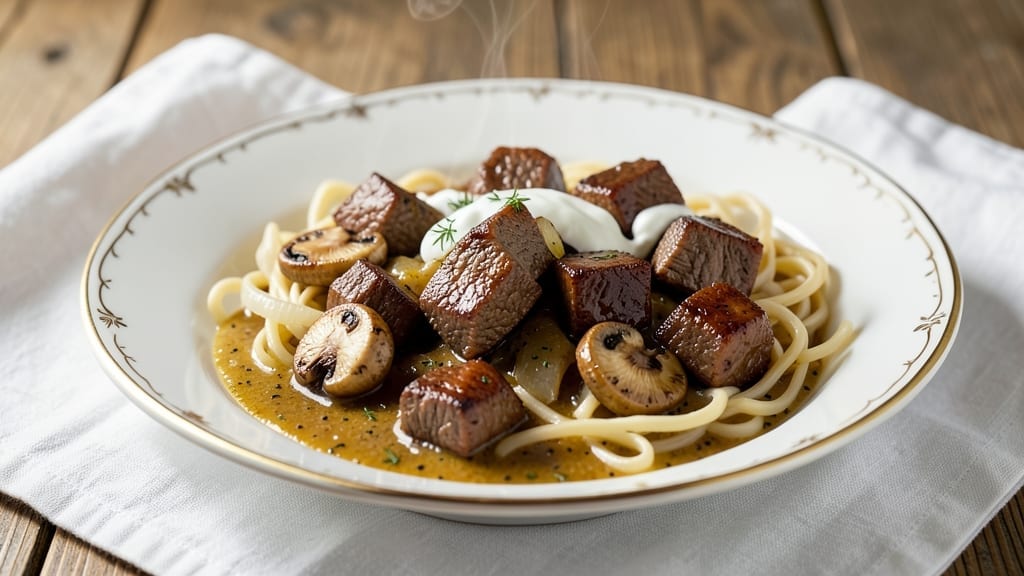
This 1871 beef stroganoff recipe brings the elegance of Russian aristocracy to your dinner table with its rich, mushroom-laced cream sauce and tender beef over egg noodles.
The dish traces its origins to the Stroganov family, where it was originally prepared with beef, mushrooms, and a velvety sour cream sauce—now adapted for home cooks with modern techniques.
The key lies in searing the beef to lock in flavor before simmering it in a wine-infused broth, then blending it with sautéed mushrooms and onions for depth.
The sauce is where the magic happens—sour cream lends its signature tang, while a touch of Dijon mustard brightens the richness. Traditional recipes relied on simple pantry staples, but today’s version often includes a splash of white wine for acidity and fresh herbs like dill or parsley for freshness.
Cooking the egg noodles al dente ensures they hold up beneath the luxurious sauce, creating a harmonious balance of textures.
What sets this stroganoff apart is its foolproof technique: the beef is cooked just until tender, not dry, and the sauce is reduced to a velvety consistency without breaking. The result is a dish that feels both nostalgic and refined—perfect for a cozy weeknight dinner or an elegant gathering.
Serve it with crusty bread to soak up every last drop of that creamy, mushroom-infused sauce.
For those who love history with their meals, this recipe pays homage to its Russian roots while making it accessible for modern kitchens. Whether you’re recreating a classic or putting your own spin on it, the key is patience—letting flavors meld and the sauce thicken gradually.
Here’s how to bring this timeless dish to life in your own kitchen.
Ingredients for 1871 beef stroganoff
Rich beef, earthy mushrooms, and velvety sauce—this classic comes together with pantry staples.
| Ingredient | Amount | Notes |
|---|---|---|
| Beef Chuck Roast 🥩 | 1 ½ lb | Cut into 1-inch cubes |
| Egg Noodles 🍝 | 8 oz | Fresh or dried, cooked al dente |
| White Onions 🧅 | 1 whole | Thinly sliced, about 1 cup |
| Cremini Mushrooms 🍄 | 8 oz | Sliced, stems removed |
| Garlic Cloves 🧄 | 4 cloves | Minced, about 1 tsp |
| All-Purpose Flour 🌾 | 1 tbsp | For dusting beef |
| Unsalted Butter 🧈 | 4 tbsp | For searing beef |
| Dry White Wine 🍷 | ½ cup | Sauvignon Blanc preferred |
| Beef Broth 💧 | 1 cup | Low-sodium preferred |
| Sour Cream 🥛 | ½ cup | Full-fat for richness |
| Dijon Mustard 🌶️ | 1 tsp | For brightness |
| Fresh Dill 🌿 | 2 tbsp | Chopped, for garnish |
| Salt 🧂 | 1 tsp | Kosher or sea salt |
| Black Pepper 🌶️ | ½ tsp | Freshly ground |
| Crusty Bread 🍞 | 1 loaf | For serving (optional) |
The beef is everything here. Chuck roast gives you that melt-in-your-mouth texture—sirloin or ribeye will stay too tough. Look for good marbling at Costco or Whole Foods if you want to splurge, but the regular supermarket chuck works fine. Cut it into even 1-inch cubes so it cooks uniformly. Fresh mushrooms make a difference too—cremini or baby bella have more flavor than white button mushrooms. Slice them thin so they cook down nicely in the sauce. The onions should be sweet, not bitter—yellow or white both work, just make sure they’re fresh.
No white wine? Substitute extra beef broth—just add an extra splash of lemon juice for brightness. The sour cream is non-negotiable for that signature tang, but if you’re avoiding dairy, Greek yogurt works in a pinch. Fresh dill is ideal, but dried dill at half the amount gets you close. For the flour, all-purpose is fine—bread flour makes the sauce gummy. The Dijon mustard adds depth, but yellow mustard works too. If you’re making this ahead, the sauce actually tastes better the next day once everything melds—just reheat gently.
Store leftovers in an airtight container for 3-4 days in the fridge. The sauce thickens when chilled, so stir in a splash of warm water or broth when reheating. This freezes beautifully too—up to 3 months. I always make a double batch because it’s perfect for lunches. The egg noodles? Cook them fresh when serving—al dente holds up better under the sauce. If you’re serving with bread, toast it first so it’s nice and crispy to soak up all that creamy goodness.
Why You’ll Love This Recipe
- One-Pot Magic: I swear by this—just brown the chuck roast, toss in onions and mushrooms, and let the sauce simmer. No extra pans, no fuss, and that deep, savory aroma fills the whole house while you’re still chopping garlic.
- Umami Bomb: The cremini mushrooms and slow-cooked beef create this rich, almost smoky depth that’s next-level for stroganoff. Honestly, the first time I tasted it, I thought, “Why haven’t I been doing this all along?”
- Leftovers That Win: This recipe actually improves the next day. The flavors meld even more, and it reheats like a dream—perfect for packed lunches or lazy dinners. My freezer’s full of portions because it’s that good.
- Budget Stretch: A chuck roast and a bag of egg noodles go a long way here. I feed four people for under $15, and there’s always enough for seconds. Not to mention, it’s way cheaper than takeout but way better.
Step-by-step instructions for mushroom-laced beef stroganoff
Here’s how to create a rich, creamy stroganoff with tender beef and earthy mushrooms over egg noodles.
Prepare the Beef and Sear to Perfection
Cut the 1.5 lb beef chuck roast into 1-inch cubes and pat them dry with paper towels. This step is crucial—any moisture on the beef will prevent a proper sear. In a large skillet, melt 2 tablespoons of the unsalted butter over medium-high heat until foaming. Add half the beef cubes in a single layer and let them sear undisturbed for 3-4 minutes until deeply browned on all sides.
Once browned, transfer the beef to a plate and repeat with the remaining cubes, adding another 1 tablespoon of butter if needed. The beef should develop a rich, caramelized crust that forms the flavor base for your stroganoff. If the pan starts smoking excessively, reduce the heat slightly but keep it high enough to maintain a good sear.
Sauté Onions and Mushrooms for Depth of Flavor
In the same skillet (no need to clean it—the browned bits add flavor), add the remaining 2 tablespoons of butter over medium heat. Toss in the thinly sliced white onions and cook for 4-5 minutes until softened and translucent. Add the 8 oz sliced cremini mushrooms and cook for another 5-6 minutes until they release their moisture and begin to brown.
Stir in the minced garlic cloves and cook for 30 seconds until fragrant. The mushrooms should be tender but still hold their shape—overcooking them turns them mushy. Season lightly with ½ teaspoon of the salt and ¼ teaspoon of the black pepper at this stage to enhance their natural flavors. Remove the skillet from heat temporarily while you prepare the flour mixture.
Create the Sauce Base with Wine and Broth
In a small bowl, whisk together the 1 tablespoon all-purpose flour and ½ teaspoon of the salt. Sprinkle this mixture over the onions and mushrooms in the skillet, stirring constantly for 1-2 minutes to cook off the raw flour taste. Pour in the ½ cup dry white wine and scrape up any browned bits from the bottom of the pan—this is where all the flavor hides.
Bring the mixture to a gentle simmer, then add the 1 cup beef broth and 1 teaspoon Dijon mustard. Let it cook for 5-6 minutes until the sauce thickens slightly. The wine should mostly evaporate, leaving behind a rich, aromatic base. If the sauce thickens too much, add a splash of water or broth to reach your desired consistency.
Finish with Cream and Return the Beef
Reduce the heat to low and stir in the ½ cup sour cream and the reserved beef cubes. Simmer gently for 3-4 minutes, stirring occasionally, until the beef is heated through and the sauce has thickened to a velvety consistency. The stroganoff should coat the back of a spoon but remain smooth—not too thick or it will be heavy.
Taste and adjust seasoning with the remaining ½ teaspoon salt and ¼ teaspoon black pepper. Stir in the 2 tablespoons chopped fresh dill just before serving to brighten the flavors with a fresh herbal note. The dish should be rich, creamy, and full of savory depth from the beef and mushrooms.
Serve Over Egg Noodles with Crusty Bread
Cook the 8 oz egg noodles according to package instructions until al dente, then drain and return them to the pot. Toss the noodles with 1 tablespoon of the unsalted butter to prevent sticking and to add a touch of richness. Divide the noodles among serving plates, then spoon the beef stroganoff generously over the top.
Garnish with additional chopped fresh dill and serve immediately with slices of crusty bread on the side. The bread helps cut through the richness of the stroganoff, balancing each bite. For the best experience, serve while the noodles are still warm and the sauce is silky—this dish tastes even better the next day, but the texture is ideal when freshly made.
Pro Tips For Making 1871 Beef Stroganoff
- Sear the Chuck First: Don’t just toss the beef into the pan—cut the chuck roast into 1-inch cubes, pat them bone-dry, and sear them in batches over high heat until deeply browned. That crust is what carries flavor through the slow simmer, and skipping it means a meal that tastes more like stew than stroganoff.
- Slice Mushrooms Thin: Cremini mushrooms soak up sauce like sponges, so slice them paper-thin before adding them to the pan. I used to chop them roughly, and they’d turn to mush—now I run them through a mandoline for even cooking and a cleaner bite. (Yes, even if you’re impatient like me.)
- Deglaze with Beer, Not Water: After browning the onions and garlic, don’t reach for broth—use a cold beer (lager or pale ale works best) to deglaze. The alcohol burns off, but the maltiness adds depth that water or stock can’t match. If you’re avoiding alcohol, a splash of apple cider vinegar works in a pinch.
- Finish with Sour Cream Late: Stir in the sour cream off the heat, or you’ll end up with scrambled eggs in your stroganoff. Let the sauce cool slightly first—just until it’s warm to the touch—and fold it in gently. This keeps the sauce silky, not curdled. (Your future self will thank you.)
Storing and reheating your 1871 beef stroganoff
Refrigerator Storage
Let your beef stroganoff cool completely before transferring to an airtight container—I use glass Pyrex with snap-on lids. Store in the fridge at 40°F or below for up to 4 days.
The sauce actually improves overnight as flavors meld, but stir in a splash of warm water or broth when reheating to restore creaminess. 🥛
Freezer Prep Tips
For long-term storage, freeze stroganoff in quart-sized freezer bags with 1-inch headspace to prevent expansion cracks. Label with the date—it stays fresh for 3 months. Thaw overnight in the fridge before reheating. I always freeze the sauce separately from noodles to avoid sogginess. 🧊
Stovetop Reheating
This is my go-to method for restaurant-quality results. Heat stroganoff in a heavy-bottomed pot over medium-low heat with 2 tablespoons of beef broth to prevent drying. Stir frequently for 8-10 minutes until reaching 165°F. Taste and adjust seasoning—it often needs a pinch more salt after reheating. 🔥
Microwave Safety
For quick meals, transfer stroganoff to a microwave-safe dish and heat on 50% power in 1-minute intervals, stirring between each. Cover loosely with a damp paper towel to retain moisture. Avoid full power—it can curdle the sour cream. 💡
Noodle Refresh
Reheat noodles separately in boiling water for 1-2 minutes before mixing with stroganoff. This keeps them al dente and prevents mushiness. For extra richness, toss with 1 tablespoon melted butter before combining. 🍝
Sauce Rescue
If your sauce separates after reheating, whisk in 1 tablespoon cornstarch mixed with 1 tablespoon cold water until smooth. Simmer for 1 minute to restore velvety texture. This trick works wonders for broken sauces! ✨
Nutrition facts
Frequently asked questions
Why does the original 1871 stroganoff recipe use beef chuck instead of tender cuts?
The chuck roast was historically chosen for its affordability and rich flavor when slow-cooked. Unlike tender cuts like sirloin, chuck develops incredible tenderness when braised in its own juices and wine-infused broth. The slow cooking process breaks down the connective tissue, creating that melt-in-your-mouth texture that defines classic stroganoff.
Can I make this stroganoff without white wine?
Replace the wine with an extra ½ cup beef broth plus 1 teaspoon lemon juice for acidity. The wine adds depth, but the broth maintains the same creamy texture. For extra flavor, add a splash of apple cider vinegar or Worcestershire sauce to mimic the wine’s complexity.
What’s the secret to preventing a broken sauce?
Never boil the sauce after adding sour cream—keep heat at low and stir constantly. The sauce thickens gradually, not instantly. If it separates, whisk in 1 tablespoon cornstarch slurry (cornstarch + cold water) and simmer for 1 minute to restore its velvety consistency.
How do I adapt this for a vegetarian version?
Swap the beef for portobello mushrooms or chickpeas (for protein) and use vegetable broth instead. Sauté the mushrooms longer (8-10 minutes) to develop deep flavor. For a heartier option, add crumbled tempeh or lentils—just ensure they’re cooked through before adding to the sauce.
Can I make stroganoff ahead and reheat it?
Yes! The flavors actually improve overnight. Store in an airtight container for 4 days or freeze for 3 months. Reheat on the stovetop with 2 tablespoons broth over medium-low heat for 8-10 minutes, stirring frequently. If reheating from frozen, thaw in the fridge first for even cooking.

- Pea Soup Instant Pot Recipe: Velvety Green Smoothness in 20 Minutes - November 1, 2026
- Pork Loin Pulled Pork Crock Pot Recipe: Slow-Smoked Tenderness With Zero Dryness - November 1, 2026
- Baked Potatoes in Crock Pot Recipe: Buttery Interiors and Crispy Top Magic - November 1, 2026