
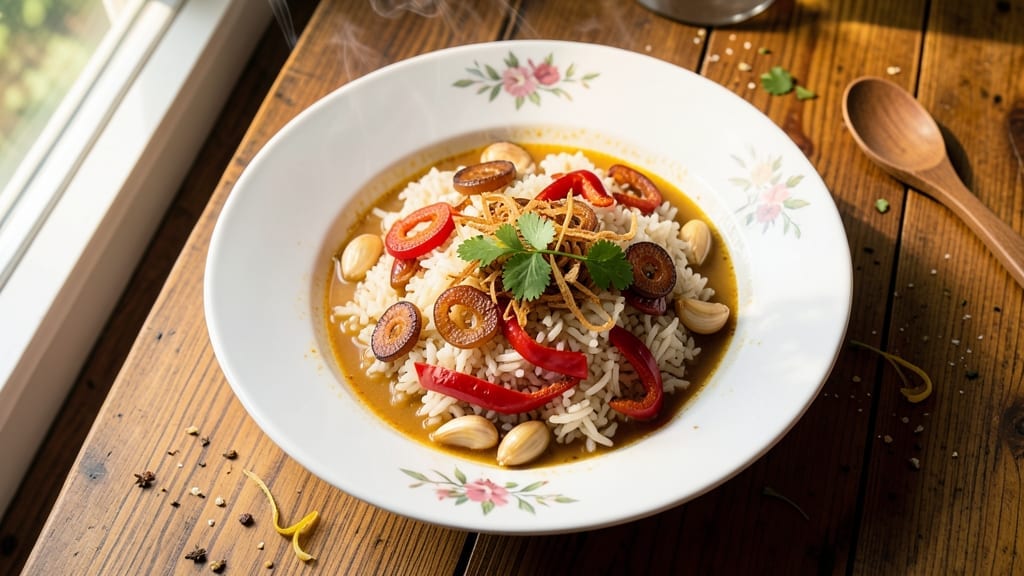
This 1960s Spanish rice recipe transports you straight to mid-century kitchens where saffron-infused grains met smoky sofrito for a dish that became a Tex-Mex staple. The secret lies in slow-cooked aromatics—garlic, onions, and bell peppers—that build deep flavor before rice absorbs the broth into perfect, tender grains.
I’ve recreated it using authentic techniques while keeping the method approachable for modern cooks.
The one-pan approach preserves tradition while simplifying cleanup, and the saffron—even a pinch—adds that signature golden hue and earthy aroma that defines Spanish rice. A proper rice-to-liquid ratio (1:2) ensures each grain stays distinct yet absorbs enough liquid to achieve that signature creamy texture without mushiness.
This isn’t just a side dish; it’s a flavor foundation that elevates any meal.
By the time you’re done, you’ll have a fragrant, golden-brown pot of rice with layers of smoky, sweet, and slightly spicy notes—just like the versions that graced 1960s dinner tables.
The dish works as a standalone side or pairs perfectly with grilled meats, black beans, or a simple fried egg on top. Ready to bring a piece of culinary history to your kitchen?
For authenticity, I’ve included optional additions like chorizo or tomatoes, but the core recipe stays true to its roots while adapting to today’s tastes. Let’s get cooking—this Spanish rice is simpler than it looks, but the flavor is anything but basic.
Ingredients for 1960s spanish rice
Pantry staples meet Spanish heritage in this saffron-kissed rice masterpiece.
| Ingredient | Amount | Notes |
|---|---|---|
| Long-Grain White Rice 🍚 | 1 cup | Uncooked, medium grain preferred |
| Saffron Threads 🌼 | ⅛ tsp | High-quality, crumbled threads |
| Yellow Onion 🧅 | 1 whole | Medium size, finely diced |
| Red Bell Pepper 🍅 | 1 whole | Medium, seeded and diced |
| Garlic Cloves 🧄 | 4 cloves | Fresh, minced |
| Chicken Broth 💧 | 2 cups | Low-sodium preferred |
| Tomato Sauce 🍅 | ½ cup | Canned, crushed tomatoes |
| Extra-Virgin Olive Oil 🫒 | 2 tbsp | For sautéing |
| Bay Leaf 🌿 | 1 whole | Dried, for infusion |
| Ground Cumin 🌿 | ½ tsp | Toasted for depth |
| Smoked Paprika 🌶️ | ½ tsp | For smoky flavor |
| Salt 🧂 | 1 tsp | Kosher or sea salt |
| Black Pepper 🌶️ | ¼ tsp | Freshly ground |
| Optional Chorizo 🌭 | ¼ lb | Diced, for extra richness |
Saffron is the star here—buy threads, not powder, for authentic flavor. Penzeys or specialty markets carry the best quality, but even a small pinch transforms this dish. The rice-to-liquid ratio (1:2) is non-negotiable for perfect grains. Mahatma or Calrose rice works best for that signature texture. For the sofrito base, Spanish onions add sweetness, but yellow onions work fine. The bell pepper should be ripe but firm—no mushy spots. Toast your cumin in a dry pan first for deeper flavor (30 seconds is enough).
No saffron? Turmeric at one-tenth the amount mimics the color (but lacks aroma). Substitute chicken broth with vegetable broth for vegetarian versions. The tomato sauce can be fresh if you prefer—San Marzano tomatoes are ideal. Smoked paprika shortages? Regular paprika plus a pinch of liquid smoke works in a pinch. The chorizo is optional but adds incredible depth—Spanish chorizo is best, but Mexican will do. Skip it if you’re avoiding pork.
This rice tastes even better the next day, so make extra. Store in an airtight container in the fridge for 4-5 days or freeze for 3 months. The saffron flavor intensifies over time, so don’t rush it. For meal prep, portion into individual containers—perfect for lunches. If reheating, add a splash of water or broth to restore moisture. The one-pan method means cleanup is a breeze, but save the saffron-infused liquid for future rice dishes if you’re feeling fancy.
Why You’ll Love This Recipe
- One-Pot Magic: I swear by this—no extra bowls, no fuss. Just rice, veggies, and a splash of broth simmering together until the saffron turns everything golden. That’s it. No stress, no cleanup.
- Saffron Magic: Honestly, a pinch of saffron threads transforms this into something special. The rice gets this luxurious, honeyed depth that makes it taste like a restaurant dish. (Yes, even on a Tuesday night.)
- Budget Bright Spot: Long-grain rice and basic veggies keep costs low, but the saffron makes it feel indulgent. Leftovers reheat perfectly, so I make double batches and freeze portions. Smart, tasty, and wallet-friendly.
Step-by-step instructions for saffron-infused Spanish rice
This classic one-pan dish delivers vibrant color and deep flavor—let’s bring 1960s Spanish cuisine to life.
Bloom the Saffron in Broth
In a small bowl, crumble the 0.125 teaspoon saffron threads between your fingers to release their vibrant color and aroma. Add these to the 2 cups chicken broth and let steep for 5 minutes—this infuses the liquid with that signature floral depth. Meanwhile, bring the broth to a gentle simmer over medium heat in a medium saucepan.
Here’s the thing—saffron is delicate. If you skip the blooming step, you’ll miss that luxurious aroma that makes this dish special. The threads should turn the broth a beautiful golden hue. Keep it warm while you prepare the remaining ingredients.
Sauté the Aromatic Base
Heat the 2 tablespoons extra-virgin olive oil in a large, heavy skillet over medium heat until shimmering. Add the 1 whole finely diced yellow onion and 1 whole diced red bell pepper, cooking for 5-6 minutes until softened but not browned. Stir in the 4 cloves minced garlic, 0.5 teaspoon ground cumin, and 0.5 teaspoon smoked paprika, cooking for another 30 seconds until fragrant.
This step builds the flavor foundation. The onions should be translucent, and the peppers should release their natural sweetness. If you smell burning, reduce the heat slightly—you want to develop flavor, not char the vegetables. The spices should dissolve completely into the oil.
Add Tomato and Chorizo (If Using)
Pour in the 0.5 cup tomato sauce and stir to combine with the vegetable mixture. If using, add the 0.25 pound diced chorizo and cook for 2 minutes until slightly crisped. Remove the skillet from heat and let cool for 1 minute—this prevents the rice from cooking prematurely when added.
Real talk: the chorizo adds a wonderful smoky richness that complements the saffron perfectly. If you’re skipping it, just proceed without. The tomato sauce will help balance the flavors and create a cohesive base for the rice.
Layer and Cook the Rice
Add the 1 cup long-grain white rice to the skillet, stirring gently to coat each grain with the tomato mixture. Pour in the warm saffron-infused broth until the rice is just covered. Add the 1 whole bay leaf, 1 teaspoon salt, and 0.25 teaspoon black pepper. Bring to a boil over medium-high heat, then immediately reduce to low heat, cover tightly with a lid, and simmer for 15 minutes without disturbing.
This is where patience pays off. The rice needs undisturbed time to absorb the liquid evenly. If you peek too soon, you’ll release steam and potentially dry out the rice. After 15 minutes, check for doneness—grains should be tender but still have a slight bite in the center.
Rest and Serve
Remove the skillet from heat and let the rice rest, covered, for 5 minutes. This resting period allows any remaining liquid to absorb and the flavors to meld. Discard the bay leaf before serving. Fluff the rice gently with a fork, then serve immediately as a side dish or main course.
You’ve just recreated that iconic 1960s Spanish flavor profile. The saffron-infused rice should be fragrant, with grains that are separate yet tender. Each bite delivers that perfect balance of smoky paprika, sweet bell pepper, and floral saffron notes. Serve with grilled meats or as part of a festive paella-inspired meal.
Pro Tips For Making 1960s Spanish Rice
- CRANK THE HEAT FIRST: The first 3 minutes with the rice, onion, and bell pepper should be screaming hot—almost smoking. I learned this the hard way when my rice turned out mushy because I played it safe with medium heat. Once the onion starts to sizzle and the bell pepper darkens, drop the heat to medium-low and keep stirring.
- SOAK THE SAFFRON: Toss those saffron threads in a teaspoon of warm water and let them sit for 5 minutes before adding to the rice. I used to just sprinkle it in dry, and it never gave that deep, golden color. The water extracts the flavor and color—no more sad, pale rice.
- DON’T STIR THE RICE AFTER WATER: Once you pour in the broth or water, stir once to distribute the rice, then stop. I know, I know—you want to check if it’s sticking, but constant stirring breaks the grains. Just give it a quick swirl, then let it cook undisturbed for the first 10 minutes.
- USE A LITTLE FAT: A tablespoon of oil or butter in the pot before toasting the veggies makes all the difference. The rice will toast instead of steaming, giving it that classic 1960s Spanish rice texture—crisp at the edges, tender inside. Skip it, and you’ll get soggy rice. Trust me.
Troubleshooting this dish
Grain Texture Issues
If your rice turns out mushy or undercooked, the rice-to-liquid ratio is likely off. Stick to the 1:2 ratio (1 cup rice to 2 cups broth) and avoid stirring while cooking—this disturbs the grains and causes uneven absorption.
For extra insurance, use Mahatma or Calrose rice, which hold up better to the one-pan method. 🍚
Overcooking is the #1 culprit for mushy rice. After 15 minutes of simmering, check for doneness by tasting a grain—it should be tender but still have a slight bite.
If it’s mushy, reduce the simmering time to 13-14 minutes next time. Also, ensure your pot has a tight-fitting lid to trap steam efficiently.
Saffron Color Fading
The vibrant golden hue from saffron can fade if not bloomed properly. Always crumble the 0.125 tsp saffron threads directly into the warm broth and let steep for 5 minutes before adding to the rice. Avoid pre-dissolving it in cold water, as this weakens the flavor.
If your rice lacks color, try steeping the saffron in 1 tbsp warm water for 10 minutes first, then adding it to the broth. 🌼
Burnt or Bitter Flavors
Burnt aromatics ruin the dish’s delicate balance. Keep heat at medium when sautéing onions and peppers—never let them brown. If you smell burning, immediately reduce heat or remove the pan from the stove.
For extra insurance, use a heavy-bottomed skillet (like Lodge cast iron) to distribute heat evenly. If the flavors taste bitter, start fresh with a new batch of aromatics.
Broth Too Salty
Low-sodium broth is key, but if your rice tastes too salty, balance it with 1 tbsp tomato sauce or a splash of lemon juice (about 1 tsp). For future batches, use half the salt (start with 0.5 tsp) and adjust to taste at the end.
If you’re using homemade broth, reduce the salt by 25% compared to store-bought versions. Taste the broth before adding rice—it should be seasoned but not overwhelming.
Dry or Underseasoned Rice
If your rice is dry, you likely used too much heat or didn’t cover it tightly. Next time, reduce heat to low after boiling and keep the lid on snugly.
For underseasoned rice, boost flavor by adding 1 tsp smoked paprika or 0.5 tsp ground cumin to the broth before cooking. A pinch of chili powder or garlic powder can also elevate the dish without overpowering it. 🌶️
Nutrition facts
Frequently asked questions
Can I make this Spanish rice without saffron?
Yes! While saffron gives authentic color and aroma, you can substitute ⅛ teaspoon turmeric for the golden hue (though it lacks saffron’s floral notes). For flavor, add 1 extra pinch of smoked paprika to compensate. The dish will still taste delicious—just with a slightly different profile.
How does this 1960s version differ from modern Spanish rice?
The 1960s version relies on a simpler sofrito base (onion, pepper, garlic) with more broth and less tomato. Modern recipes often include diced tomatoes or tomato sauce for brightness. This classic version also uses long-grain white rice cooked low-and-slow for distinct grains—no stir-frying!
What’s the best way to store leftover Spanish rice?
Store in an airtight container in the fridge for 4-5 days or freeze for 3 months. The saffron flavor actually intensifies over time! When reheating, add 1-2 tbsp water or broth to restore moisture. For meal prep, portion into individual containers—perfect for lunches.
Can I make this vegetarian?
Skip the chorizo and use vegetable broth instead of chicken. For extra umami, add 1 tbsp soy sauce or 1 tsp nutritional yeast to the broth. The dish remains rich and flavorful without meat.
Why does my rice turn out gummy?
Gummy rice usually means overcooking or the wrong rice type. Use long-grain white rice (like Mahatma) and stick to the 1:2 rice-to-liquid ratio. Avoid stirring while cooking—let it simmer undisturbed for 15 minutes on low heat. If it’s still gummy, reduce cooking time to 13-14 minutes next time.

- 12 Bean Chili Recipe: Hearty Slow-Cooked Depth With 12 Legumes - October 17, 2026
- 5 Seed Bread Recipe: Nutty Crunch and Artisan Flavor in One Loaf - October 17, 2026
- 1 Lb Macaroni Salad Recipe: Bold, Crunchy, and Crowd-Pleasing - October 17, 2026