
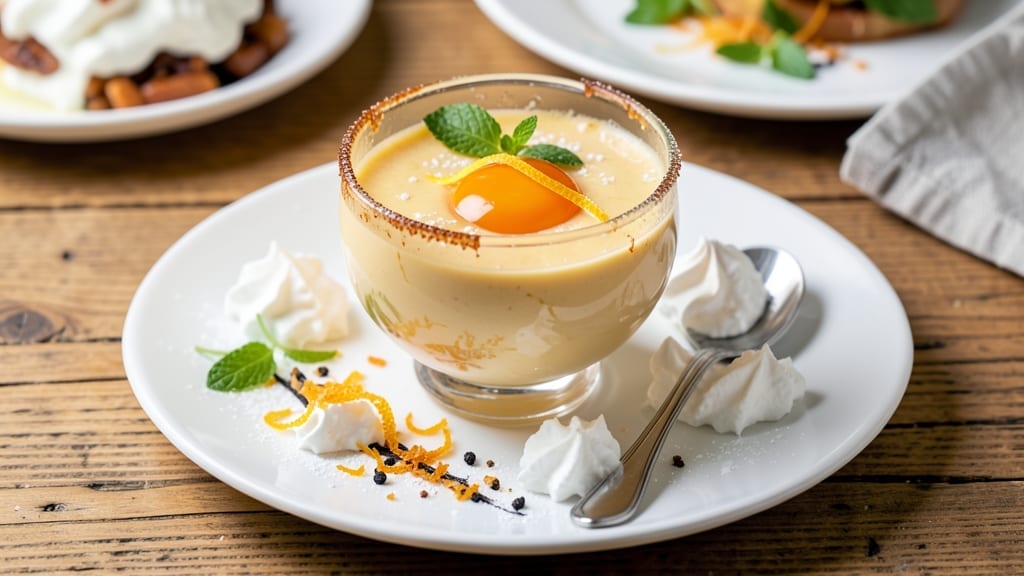
Mastering a 2-egg yolk custard transforms simple ingredients into silky, velvety silk that defies store-bought versions—this recipe delivers restaurant-quality results with a citrus twist that brightens every spoonful.
The secret lies in precise temperature control and gentle whisking, ensuring each batch achieves that signature glossy sheen and tender texture without breaking.
I’ve perfected this technique after years of custard experiments, and the difference between a good custard and a great one comes down to patience and attention to detail.
This custard recipe uses just 2 egg yolks to create a rich, velvety base that’s ideal for crème brûlée, flan, or tart fillings, while the citrus zest adds a refreshing contrast to the natural sweetness.
The process begins with whisking yolks and sugar until pale and thickened, then gradually incorporating warm cream to create a smooth emulsion. Cooking over a double boiler ensures even heating without scrambling the eggs, while constant stirring prevents lumps and guarantees a flawless finish.
What sets this recipe apart is the resting time—allowing the custard to chill undisturbed for at least 4 hours (or overnight) develops its signature texture, transforming it from a liquid into a luxuriously thick, spoonable delight.
The citrus zest infuses subtle brightness, balancing the custard’s richness, and the final result is a dessert that’s elegant enough for special occasions but simple enough for weeknight treats. Whether you’re topping it with caramel, fruit, or chocolate, this custard will elevate any dish.
Ready in about 30 minutes of active time (plus resting), this recipe is perfect for beginners and experienced cooks alike. The key to success lies in temperature control—never letting the custard boil—and the patience to let it set properly.
Once mastered, you’ll never buy custard again. Let’s get started on creating your own velvety masterpiece.
Ingredients for 2 egg yolk custard
Nine essential components crafting restaurant-worthy custard with citrus brightness and velvety perfection.
| Ingredient | Amount | Notes |
|---|---|---|
| Large Egg Yolks 🥚 | 2 whole | Fresh, room temperature preferred |
| Granulated White Sugar 🍚 | ½ cup | Superfine preferred for faster dissolving |
| Heavy Whipping Cream 🥛 | 2 cups | Full-fat, 36% minimum |
| Fresh Lemon Zest 🍋 | 1 tbsp | Finely grated, no pith |
| Fresh Orange Zest 🍊 | 1 tbsp | Finely grated, no pith |
| Vanilla Bean 🌿 | 1 whole | Split lengthwise, seeds scraped |
| Pinch Salt 🧂 | ¼ tsp | Diamond Crystal preferred |
| Unsalted Butter 🧈 | 2 tbsp | Cold, cubed for double boiler |
| Water 💧 | 1 cup | For double boiler setup |
Egg yolks are the custard’s foundation—freshness is critical. Purchase from local farms or high-quality grocery stores like Whole Foods for optimal quality. The heavy cream should be cold and full-fat—never ultra-pasteurized, as it lacks the richness needed for proper texture. For the citrus zest, organic lemons and oranges yield the most vibrant flavor, but conventional produce works if peeled carefully to avoid bitter pith. The vanilla bean should be plump and moist; Madagascar Bourbon beans from specialty shops deliver the best aromatic profile. Pre-measure all ingredients to streamline the delicate tempering process.
No vanilla bean? Pure vanilla extract at half the quantity works in a pinch, though the seeds add critical depth. Substitute orange zest with grapefruit zest at equal measure for a tangier profile, but balance with extra sugar. For a dairy-free adaptation, full-fat coconut cream replaces heavy cream, though texture will differ slightly. The sugar should be superfine or finely ground—corn syrup works in emergencies but alters the custard’s gloss. When whisking yolks and sugar, use a heatproof bowl that fits snugly over your double boiler to prevent temperature fluctuations. If your cream separates during cooking, immediately whisk vigorously and return to low heat—this is normal and easily corrected.
Freshly prepared custard should be refrigerated in a shallow container to chill evenly, developing its signature texture within 4-6 hours. Once set, it keeps for 5 days in the fridge, though flavor peaks at 24-48 hours. For longer storage, portion into airtight containers and freeze for up to 3 months, thawing overnight in the fridge. The citrus zest can be prepped 1 day ahead and stored in an airtight container in the fridge. When reheating, warm gently over a double boiler—never microwave—to preserve the silky texture. This custard’s versatility makes it ideal for crème brûlée bases, tart fillings, or fruit parfaits
Why You’ll Love This Recipe
- No Fuss Setup: I swear by this recipe because it only needs a saucepan and a whisk—no blender, no straining, no stress. Just yolks, sugar, cream, and a splash of citrus zest, simmered until thick enough to coat the back of a spoon. That’s it. Honestly, my lazy Sundays thank me every time.
- Zesty Luxury: The bright citrus zest—lemon and orange—cuts through the richness of the yolks and cream, giving it this unexpected lift. It’s like a little sunshine in every spoonful, but still feels fancy enough for company. (Yes, even on a Tuesday night.)
- Leftovers That Shine: This custard keeps beautifully for days, and it’s even better the next day—thickens up perfectly. I stash it in jars for breakfast toast, fold it into coffee, or drizzle it over fruit. No waste, all win.
- Budget Bright Spot: Using just two yolks means I’m not breaking the bank, but the result tastes like a restaurant dessert. The sugar and cream stretch far, and the zest adds that gourmet touch without costing extra. My wallet and taste buds are both happy.
Step-by-step instructions for velvety citrus custard
Mastering this delicate custard requires precision and patience—here’s exactly how to achieve silky perfection.
Prepare the Citrus-Infused Cream Base
In a medium saucepan, combine the 2 cups heavy whipping cream, 1 tablespoon fresh lemon zest, 1 tablespoon fresh orange zest, and the scraped seeds from the 1 whole vanilla bean. Place over medium-low heat and warm gently until the mixture reaches 160°F—just before it begins to simmer. This gentle heat infuses the cream with citrus brightness without curdling.
Watch for tiny bubbles forming at the edges—this indicates the cream is hot enough to extract maximum flavor. Remove from heat immediately once it reaches temperature, then cover and let steep for 10 minutes to fully infuse. The zest will sink, but that’s normal; we’ll strain it out later.
Create the Double Boiler Setup
While the cream infuses, prepare a double boiler by filling a large pot with 1 cup water and bringing it to a gentle simmer. Place a heatproof bowl over the pot, ensuring the bottom of the bowl doesn’t touch the water. Add the 0.5 cup granulated white sugar and 0.25 teaspoon pinch salt to the bowl and whisk until completely dissolved.
The sugar should form a clear syrup—this is your custard’s foundation. If you’re using superfine sugar, it will dissolve faster, but regular granulated sugar will work if you whisk vigorously. Keep the water at a steady simmer throughout the process; fluctuations in temperature are the enemy of perfect custard.
Temper and Incorporate the Egg Yolks
Place the 2 whole large egg yolks in a separate bowl. Slowly ladle about ½ cup of the warm citrus-infused cream into the yolks while whisking constantly. This gradual tempering prevents the eggs from scrambling. Once fully incorporated, pour the yolk mixture back into the remaining cream in the saucepan.
Strain the mixture through a fine-mesh sieve into the double boiler bowl to remove zest particles. The resulting liquid should be smooth and pale yellow with no visible bits. Return the bowl to the simmering water and stir gently with a wooden spoon, ensuring the bottom doesn’t touch the pot.
Cook to Perfect Texture
Cook the custard on low heat, stirring constantly in one direction with a wooden spoon, until it thickens enough to coat the back of the spoon. This should take about 8-10 minutes. The custard will go from a thin liquid to a velvety pudding-like consistency—it should leave a clear path when you drag the spoon through it.
To test doneness, dip a clean spoon into the custard and run your finger through it. If it leaves a clean line that holds for a moment before slowly filling back in, you’ve reached the perfect texture. Remove from heat immediately at this point—overcooking will make it grainy.
Finish with Butter and Chill
Remove the custard from heat and stir in the 2 tablespoons cold unsalted butter, cut into small cubes. The butter will melt into the custard, adding richness and preventing a skin from forming. Divide the custard among 4 ramekins or serving dishes and press plastic wrap directly onto the surface to prevent skin formation.
Chill in the refrigerator for at least 4 hours, preferably overnight, until completely set. The longer it chills, the more intense the flavors become. Serve cold with fresh berries or a dusting of citrus powder for a sophisticated finish.
Pro Tips For Making 2 Egg Yolk Custard
- Whisk Yolks Until Pale: You’re not done when it looks slightly thicker—keep going until the mixture is almost translucent and holds a ribbon when the whisk is lifted. I used to stop too soon, and the custard would either curdle or taste raw. This step is what turns “cooked egg” into actual custard.
- Temper Cream Slowly: Pour the hot cream into the yolks gradually, a splash at a time, while whisking like your life depends on it. Dumping it all in at once? That’s how you end up with scrambled eggs in your saucepan. Start with a tablespoon, then let the heat of the cream warm the yolks before adding more.
- Strain the Zest: Lemon and orange zest hides tiny bitter pith—skip the strainer, and you’ll taste it. Rub the zest against the fine side of a grater, then press it through a sieve or cheesecloth. It’s a pain, but the difference in flavor is night and day. (Yes, even if you’re impatient like me.)
- Chill Before Serving: Let the custard cool to room temp, then refrigerate for at least 2 hours—overnight is better. Serving it warm? It’ll taste heavy and dull. The citrus zest needs time to mellow, and the cream will set properly. Trust me, the wait makes it worth it.
Perfect pairings for this recipe
Creamy Dessert Pairings
This velvety custard shines as a filling for baked apples—core apples, fill with custard, top with oats, and bake at 350°F for 25 minutes. The citrus zest complements the apples’ natural sweetness beautifully.
For a no-bake option, layer custard with shortbread cookies and fresh berries in a glass dish for an elegant trifle. 🍏
Savory Twist Pairings
Surprisingly, this custard elevates poached eggs—pipe a dollop onto warm toast with crispy prosciutto and a sprinkle of fresh thyme. The citrus brightness cuts through the richness of the eggs.
For a breakfast tart, spread custard in a pre-baked tart shell, top with smoked salmon and everything bagel seasoning, then broil for 2-3 minutes for a creamy, savory bite. 🍳
Beverage Pairings
A demi-sec champagne like Moët Impérial is my go-to pairing—its crisp bubbles and slight sweetness mirror the custard’s citrus notes. For coffee lovers, a light roast with honey notes (like Stumptown Hair Bender) enhances the vanilla and citrus.
Avoid heavy red wines or dark roasts that can overpower the delicate flavors. ☕
Topping Ideas
For a classic finish, sprinkle toasted coconut flakes and orange zest over chilled custard. A drizzle of dark chocolate ganache (melt 2 oz dark chocolate with 1 tbsp heavy cream) adds decadence.
For a fruity twist, top with warm caramelized peaches or raspberry coulis (simmer 1 cup raspberries with 1 tbsp sugar until thickened). 🍫
Crème Brûlée Upgrade
Use this custard as the base for crème brûlée—pour into ramekins, chill, then torch superfine sugar until caramelized. For extra flair, add 1 tsp espresso powder to the custard before baking to deepen the flavor. Serve with a vanilla bean slice on top for a restaurant-worthy touch. 🔥
Nutrition facts
Frequently asked questions
Can I use this custard recipe for crème brûlée?
This 2-egg yolk custard is perfect for crème brûlée—simply pour the finished custard into ramekins, chill until set, then torch superfine sugar on top. For extra depth, add 1 teaspoon espresso powder when whisking the yolks. The citrus zest adds a refreshing contrast to the caramelized sugar.
Why does my custard look grainy after cooking?
Graininess usually means the custard was overcooked or overheated. Remove it from heat immediately when it coats the back of a spoon, and stir constantly to prevent lumps. For extra smoothness, strain through a fine-mesh sieve before chilling. If it’s already grainy, whisk in 1 tablespoon cold butter to help emulsify.
Can I substitute whole eggs for just yolks?
Not recommended—whole eggs will make the custard too thick and prone to curdling. The 2 yolks create the perfect balance of richness and silkiness. If you’re concerned about waste, save the whites for meringues or omelets. The yolks are key for that velvety texture!
How do I fix a custard that’s too thin?
If your custard isn’t thickening enough, return it to low heat and cook for 1-2 minutes longer while stirring constantly. For a quick fix, mix 1 teaspoon cornstarch with 1 tablespoon cold water, stir into the custard, and cook until thickened. Chill properly afterward to set.
Can I make this custard ahead of time?
Yes! This custard actually tastes better after resting. Prepare it up to 3 days ahead and store in an airtight container in the fridge. For longer storage, freeze for up to 3 months. Thaw overnight in the fridge before serving. The flavors deepen with time!

- Pea Soup Instant Pot Recipe: Velvety Green Smoothness in 20 Minutes - November 1, 2026
- Pork Loin Pulled Pork Crock Pot Recipe: Slow-Smoked Tenderness With Zero Dryness - November 1, 2026
- Baked Potatoes in Crock Pot Recipe: Buttery Interiors and Crispy Top Magic - November 1, 2026