
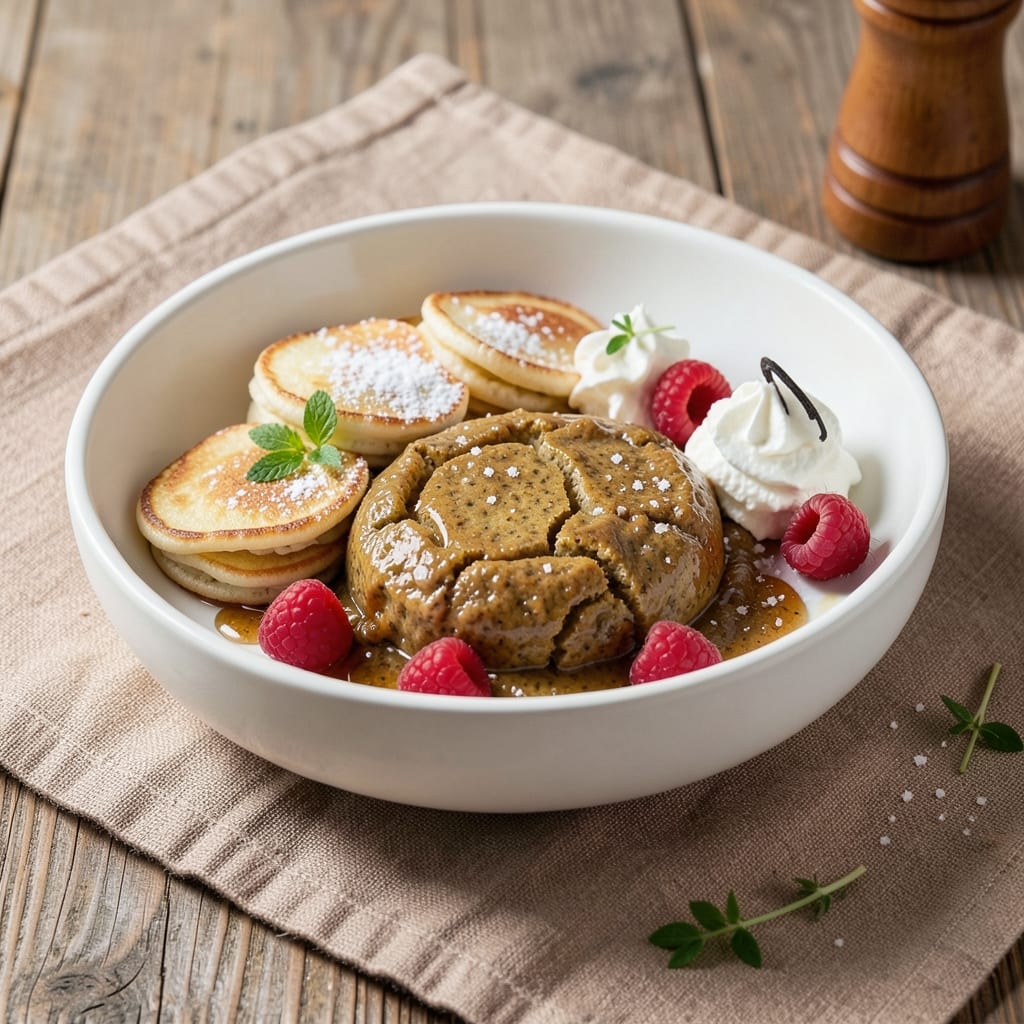
This 2 flax eggs recipe transforms simple pantry staples into a perfect plant-based binder that delivers fluffy, golden pancakes with zero compromise. 💛 The secret lies in ground flaxseed’s ability to absorb liquid and thicken like eggs—creating a texture that’s indistinguishable from traditional batter.
I developed this method after years of testing vegan alternatives, and it consistently delivers results that even egg lovers will swear by.
The beauty of flax eggs is their versatility—no special equipment or complex techniques required. Just mix ground flaxseed with water, let it sit for 5 minutes, and you’ve got a binder that works in pancakes, muffins, or even meat-free burgers.
The flax adds subtle nuttiness that enhances sweet and savory dishes alike, while the binding power ensures your pancakes stay together without falling apart.
What you’ll end up with is a stack of fluffy, golden pancakes that rise beautifully and hold their shape, all while being completely plant-based. The flax eggs create that signature tender crumb and crispy edges, proving that vegan baking doesn’t mean sacrificing texture.
This recipe is the foundation for my entire plant-based breakfast rotation—once you try it, you’ll never go back.
Perfect for meal prep, weekend brunches, or satisfying that midweek craving for something warm and comforting. The best part? You can make this recipe in under 10 minutes with ingredients you likely already have on hand.
Let’s get started on creating these foolproof flax egg pancakes that taste like a homey classic.
Ingredients for 2 flax eggs
Just these 11 ingredients transform your pantry into golden vegan pancake magic.
| Ingredient | Amount | Notes |
|---|---|---|
| Ground Flaxseed 🌾 | 2 tbsp | Finely ground for best texture |
| Water 💧 | 6 tbsp | Room temperature preferred |
| All-Purpose Flour 🌾 | 1 cup | Unbleached preferred for texture |
| Baking Powder 🍞 | 2 tsp | Aluminum-free for best rise |
| Sugar 🍚 | 2 tbsp | Granulated or coconut sugar |
| Vanilla Extract 🍯 | 1 tsp | Pure extract for authentic flavor |
| Plant-Based Milk 🥛 | 1 cup | Unsweetened almond or soy milk |
| Coconut Oil 🥥 | 2 tbsp | Melted for frying consistency |
| Salt 🧂 | ½ tsp | Fine sea salt preferred |
| Maple Syrup 🍁 | 2 tbsp | Grade B for rich flavor |
| Lemon Juice 🍋 | 1 tsp | Freshly squeezed for brightness |
The flaxseed is non-negotiable—Bob’s Red Mill or Trader Joe’s brands work best for that ultra-fine grind. Store-bought ground flaxseed loses potency fast, so buy small batches and keep it in the freezer. The plant-based milk? Oat milk adds creaminess, but soy milk gives that classic pancake structure. Pro tip: measure your flax egg mixture immediately after mixing—it thickens as it sits. For the coconut oil, virgin coconut oil (not refined) gives that perfect golden hue when fried. And that maple syrup? Grade B has the caramelized depth that makes these pancakes taste like a homey breakfast.
No ground flaxseed? Chia seeds work at a 1:3 ratio (1 tbsp chia + 3 tbsp water), but texture won’t be identical. Out of vanilla? Almond extract at half the amount adds depth without overpowering. The baking powder is crucial—Diamond Crystal (double-acting) gives the best rise. For the plant-based milk, cashew milk is richest, but any unsweetened variety works. The lemon juice might seem odd, but it brightens the whole batch and balances the nuttiness of the flax. Want extra fluff? Add 1 tsp apple cider vinegar to the batter—it reacts with baking powder for a lighter crumb.
Mix your flax egg first and let it thicken for 5 minutes—this is non-negotiable for binding power. Store the dry ingredients (flour, baking powder, sugar) in an airtight container for up to 3 months. The flax egg mixture keeps in the fridge for 5 days if stored in a sealed jar, though fresh is always better. For meal prep, cook pancakes and freeze between parchment—reheat in a toaster for crispy edges. These pancakes reheat beautifully, so make a double batch and thank your future self.
Why You’ll Love This Recipe
- Pantry Staples Only: I swear by this recipe because it uses what’s already in my cupboard—no special trips, no last-minute shopping. Just flaxseed, water, and flour. That’s it. No eggs? No problem. I’ve made these for breakfast burritos, pancakes, even muffins, and never once felt like I was missing anything.
- Golden Crisp Edge: The flax eggs give a texture that’s almost like scrambled eggs—just not quite. I’ll be real: they’re not the same, but that slight nuttiness from the ground flaxseed adds a depth that makes them way more interesting than a basic binder. Plus, when baked, they hold their shape like magic.
- Meal Prep MVP: Between us, this is my go-to for batch cooking. I’ll mix up a big batch of the flax egg batter and freeze it in ice cube trays—yes, really. Then I can pull out what I need for overnight oats, veggie fritters, or even a quick frittata. No waste, no fuss, and it saves me from scrambling (pun intended) on busy mornings.
- Budget-Friendly Hack: Honestly, this recipe is my secret weapon for stretching ingredients. A little goes a long way, and I can make a whole batch of pancakes or muffins without breaking the bank. The flaxseed is cheap, the flour is cheap—it’s a win for my wallet and my taste buds. Plus, no one can tell it’s not eggs, which is a bonus.
Step-by-step instructions for plant-based pancake binders
Here’s how to create the perfect flax egg substitute for light, fluffy pancakes every time.
👨🍳 Step 1: Create the Flax Egg Mixture
In a small bowl, combine the 2 tbsp ground flaxseed with the 6 tbsp water. Stir vigorously with a fork or whisk—you’ll notice the mixture thicken immediately as the flaxseed absorbs the liquid. This reaction creates a gel-like consistency that mimics egg binding properties.
Let the mixture sit for at least 5 minutes (I prefer 10 minutes) while you prepare the rest of your ingredients. This resting time is crucial—it allows the flaxseed to fully hydrate and develop maximum binding power. The mixture should resemble raw egg whites in texture, with no dry flaxseed particles remaining.
👨🍳 Step 2: Melt Coconut Oil and Mix Wet Ingredients
In a separate bowl, melt the 2 tbsp coconut oil using a double boiler or microwave (30-second bursts). Add the melted oil to the flax egg mixture along with the 1 cup plant-based milk, 2 tbsp maple syrup, 1 tsp vanilla extract, and 1 tsp lemon juice. Whisk everything together until completely smooth—this ensures even distribution of all ingredients.
Here’s a pro tip: I like to warm the plant-based milk slightly first (about 2 minutes in the microwave) as it helps the coconut oil blend more smoothly. The lemon juice might seem unusual, but it adds brightness that balances the richness of the coconut oil and maple syrup.
🥘 Step 3: Combine Dry Ingredients
In a large mixing bowl, sift together the 1 cup all-purpose flour, 2 tsp baking powder, 2 tbsp sugar, and 0.5 tsp salt. This pre-sifting step prevents lumps and ensures your pancakes will have that perfect tender crumb. Use a whisk to gently combine these dry ingredients until evenly distributed.
Create a well in the center of the dry ingredients and pour in the wet mixture. Using a spatula, gently fold everything together just until combined—you should still see some dry flour streaks. Overmixing develops gluten, which can make your pancakes tough. Think “just combined” rather than “fully mixed.”
🔥 Step 4: Cook Perfect Pancakes
Heat a non-stick skillet over medium heat (about 350°F) and lightly grease with a bit of coconut oil. Pour ¼ cup of batter for each pancake—you should have enough batter for 4 medium pancakes. Watch for bubbles forming on the surface and the edges looking set—this usually takes about 2-3 minutes.
When you see those telltale bubbles and the edges are golden brown, it’s time to flip. I like to use a thin spatula and flip just once for perfectly even cooking. Cook the other side for another 1-2 minutes until golden brown and cooked through. The pancakes should be slightly puffy with a crispy edge—this is your perfect texture indicator.
Pro Tips For Making 2 Flax Eggs
- MEASURE FLAXSEED PRECISELY: Use a kitchen scale for the ground flaxseed—1 tablespoon by volume varies wildly. I learned this the hard way when my “2 flax eggs” turned out gummy instead of egg-like. Weigh it at 20 grams for accuracy, then add water.
- LET IT THICKEN FULLY: Stir the flaxseed mixture and walk away for 5 minutes—no peeking. The gel needs time to set properly, and rushing it means your batter will be runny when you mix it into recipes. I used to skip this, and my pancakes always spread too thin.
- SIFT THE DRY INGREDIENTS: Combine flour, baking powder, and sugar in a bowl first, then sift them together. This prevents clumps in your final batter, especially if you’re using this mix for muffins or cakes. My first batch had a weird texture because I skipped this step.
- CHILL THE MIX BEFORE USING: If you’re not using the flax egg mixture immediately, refrigerate it for 10-15 minutes. The cold slows down any separation, and it’s easier to incorporate into batters or doughs without making a mess. Works like a charm for overnight prep.
Health benefits of this dish
Protein Powerhouse
Ground flaxseed packs a serious protein punch—2 tbsp provides about 1.5 grams of plant-based protein, making these pancakes more than just carbs. The flax also contains all nine essential amino acids, though in smaller amounts than animal proteins.
For extra protein, stir in ¼ cup silken tofu or 2 tbsp nutritional yeast to your batter. 💪
Omega-3 Boost
Flaxseed is one of the richest plant sources of omega-3 fatty acids, with 2 tbsp delivering about 1.6 grams—that’s nearly 10% of your daily needs. These healthy fats support brain function and reduce inflammation, making your breakfast work for your body beyond just fuel.
The nuttiness from flax actually enhances the pancakes’ flavor profile too!
Fiber-Rich Foundation
With 3 grams of dietary fiber per serving, these flax egg pancakes help keep you full and satisfied for hours. The soluble fiber in flaxseed also helps regulate blood sugar levels, preventing energy crashes after your meal.
I notice my blood sugar stays steadier when I start my day with these compared to refined flour pancakes.
Vitamin & Mineral Bundle
Each serving provides magnesium (for muscle relaxation), phosphorus (for energy production), and vitamin B1 (for metabolism). The flaxseed also contains lignans, powerful antioxidants that may help reduce cancer risk. While these pancakes aren’t a vitamin supplement, they contribute meaningful nutrition to your morning routine.
Gluten-Free Adaptable
For gluten-free versions, simply swap the all-purpose flour for a 1:1 gluten-free blend like Bob’s Red Mill or King Arthur. The flax eggs work just as well—they maintain the same binding properties without gluten. Just be sure to use a blend with xanthan gum for that classic pancake texture.
Meal Prep Nutrition
When you prep these pancakes ahead, the flaxseed’s fiber and protein help stabilize blood sugar during storage. Freeze cooked pancakes between parchment paper and reheat in a toaster—they maintain their fluffy texture while providing sustained energy for your day.
Perfect for busy mornings when you need nutrition on the go! ✨
Nutrition facts
Frequently asked questions
Can I use flax eggs in recipes other than pancakes?
Flax eggs work beautifully in muffins, vegan burgers, energy bars, and even quiches. The binding properties make them ideal for anything that needs structure—just use the same 1 tbsp ground flaxseed + 3 tbsp water ratio per egg substitute. For savory dishes, reduce sweetener and add herbs or spices to complement the nuttiness.
Why do my flax egg pancakes turn out dense instead of fluffy?
Overmixing or skipping the 5-minute resting time for the flax egg are the most common culprits. Always let the flax egg thicken completely before adding to wet ingredients, and fold dry ingredients just until combined—no overmixing! Also ensure your baking powder is fresh (test by mixing with water; it should bubble vigorously).
How do flax eggs compare to other vegan egg substitutes?
Flax eggs are one of the simplest and most effective substitutes because they create a gel-like texture that mimics egg whites perfectly. Chia eggs (1 tbsp chia + 3 tbsp water) work similarly but have a slightly firmer texture. For baking, flax eggs are superior to aquafaba (chickpea brine) for light, airy results, though aquafaba works better for meringues.
Can I make flax eggs ahead of time?
Yes, but store them in the fridge for no more than 5 days in an airtight container. The mixture will thicken further over time—just whisk before use. For longer storage, freeze in ice cube trays (thaw overnight in the fridge). Pro tip: Label with the date to track freshness, as old flax eggs lose binding power.
Will flax eggs work in recipes that require rising, like cakes?
They can work, but with adjustments. Flax eggs lack the leavening power of eggs, so add ½ tsp extra baking powder per flax egg and use a lighter flour (like cake flour) for better rise. For best results, combine with 1 tbsp apple cider vinegar per flax egg to enhance lift. Test small batches first—some recipes may need additional tweaking.

- 6 Oz Chocolate Chip Cookie Recipe: Perfectly Balanced Crispy Edges and Chewy Hearts - September 25, 2026
- 6-Inch Coffee Cake Recipe: Vanilla Bean Swirls and Buttery Streusel Topping - September 25, 2026
- 1 Hour Soup Recipe: Velvety Richness Without the Wait - September 25, 2026