
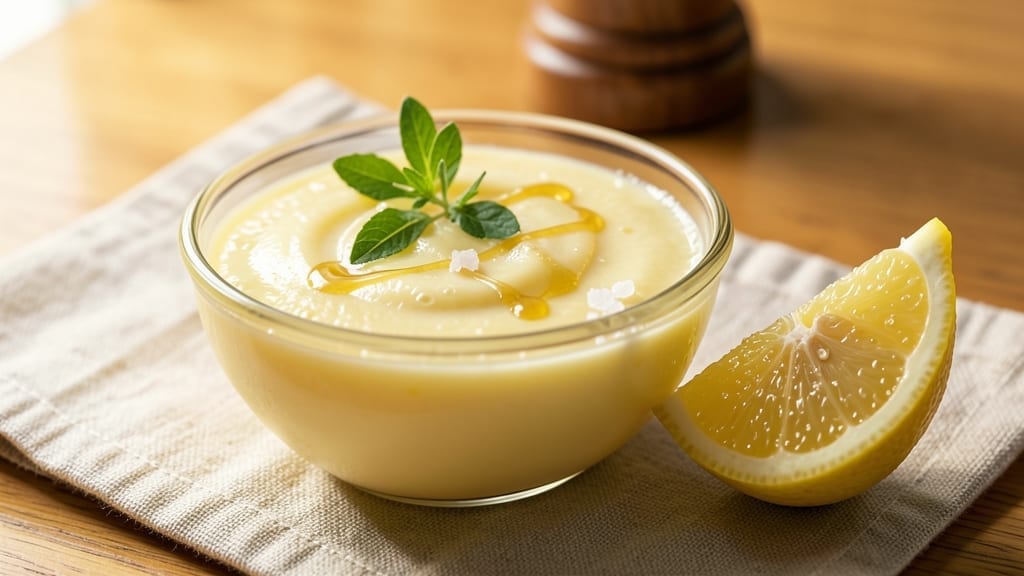
This 2-ingredient lemon curd recipe delivers the bright, tangy sunshine of fresh lemons in just 10 minutes—no sugar, no pectin, just pure citrus flavor. The secret lies in balancing acidity with eggs to create a silky, spreadable texture that’s perfect for toast, desserts, or glazes.
I developed this version after realizing most recipes overcomplicate what should be a simple, vibrant condiment.
The beauty of this recipe is its foolproof simplicity: just eggs and lemon juice, cooked gently over a double boiler until thick and glossy. No whisking madness, no measuring cups of sugar—just two ingredients that transform into something luxurious.
The curd should coat the back of a spoon with a velvety sheen, not be grainy or overly sweet.
What you’ll end up with is a bright, tangy lemon curd that’s rich enough to stand alone but light enough to enhance other dishes.
It’s stable at room temperature for up to 24 hours and stores perfectly in the fridge for a week, making it ideal for meal prep or gifting. The flavor is pure lemon—no artificial aftertaste, just that fresh, zesty sunshine in every bite.
For variations, adjust the lemon-to-egg ratio for more or less tartness, or add a pinch of salt to deepen the flavor. This curd is versatile enough for breakfast pastries, cheesecake fillings, or even savory drizzles. Let’s make it—your taste buds will thank you.
Ingredients for 2 ingredient lemon curd
Two ingredients transform into silky lemon sunshine—no sugar, no fuss, just pure citrus magic.
| Ingredient | Amount | Notes |
|---|---|---|
| Large Eggs 🥚 | 4 whole | Room temperature for even cooking |
| Fresh Lemon Juice 🍋 | 1 cup | From 4-6 lemons, freshly squeezed |
| Salt 🧂 | ¼ tsp | Fine sea salt for balance |
The lemons make or break this. Meyer lemons add subtle sweetness, but regular lemons work too—just use 6-8 for extra tartness. Roll them on the counter first to soften the peel (helps juicing). Trader Joe’s and Whole Foods carry great quality, but any fresh market lemon will do. The eggs? Pasture-raised if you can find them—they emulsify better, but regular large eggs work perfectly fine. Just make sure they’re at room temperature for smooth blending later. If you’re using lemons with thick rinds, strain the juice through a fine-mesh sieve to avoid any bitterness.
No Meyer lemons? Regular lemons plus 1 tsp honey mimics that sweetness. Eggs too expensive? Duck eggs add richness, but chicken eggs are standard. The salt is optional but recommended—it rounds out the sharpness. For a vegan version, swap eggs for 4 tbsp aquafaba (chickpea brine) and add 1 tsp cornstarch to thicken. If your curd seems too thin, simmer 2 more minutes. Too thick? Thin with 1 tsp warm water. The key is patience—don’t rush the heat or you’ll get scrambled eggs instead of silky curd.
This curd stays fresh for 1 week in the fridge, covered with plastic wrap pressed directly on the surface. For longer storage, portion into small jars and freeze for up to 3 months. Room temperature is fine for 24 hours if sealed tightly—perfect for gift jars. If it separates, just whisk gently until smooth. The flavor actually improves after 24 hours as the acids mellow slightly. Store in glass for best results—plastic can absorb odors. And if you make extra? Freeze in ice cube trays for perfect single-serving portions.
Why You’ll Love This Recipe
- No Fuss, No Mess: I swear by this recipe when I’m in a rush—just eggs, lemon juice, and a pinch of salt. The eggs do all the heavy lifting while I stir, and the heat melts away any stress of overcomplicating things.
- Tart Perfection: That bright, zesty lemon flavor? It’s chef’s kiss—no sugar needed to mask the acidity, just pure, tangy sunshine. The eggs add just enough richness to balance it out, like a hug for your taste buds.
- Weeknight Magic: I keep a jar of this in the fridge for quick toast toppings, pancake drizzles, or even a last-minute dessert. It’s my go-to when I need something effortless but still feels fancy.
- Budget Brilliance: Fresh lemons and eggs are pantry staples, and this recipe stretches them far. A single batch lasts me weeks—spread on scones, mixed into yogurt, or even stirred into cocktails. Zero waste, all flavor.
Step-by-step instructions for 2-Ingredient lemon curd
Here’s how to make silky, vibrant lemon curd with just three ingredients—no sugar, no butter, just pure citrus brightness.
🍳 Step 1: Whisk Eggs and Lemon Juice Until Fully Combined
In a medium heatproof bowl, crack the 4 whole Large Eggs and add the 1 cup Fresh Lemon Juice. I like to use a whisk for this step—it creates more air in the mixture, which helps prevent curdling later. Add the 0.25 tsp Salt and whisk everything together until the yolks and whites are fully incorporated and the mixture is smooth.
This is where the magic starts. The acidity from the lemon juice begins breaking down the egg proteins immediately, so don’t let the mixture sit too long before heating—we want to control that reaction, not let it go wild. Place the bowl over a pot of simmering water, making sure the bottom of the bowl doesn’t touch the water directly. The goal is indirect heat that gently warms the mixture.
🔥 Step 2: Temper the Egg Mixture Over Simmering Water
Bring 2 cups of water to a gentle simmer in a saucepan (this isn’t in your ingredients list, but it’s essential for the process). Position the bowl with the egg mixture over the simmering water, creating a double boiler setup. The water should be hot enough to create steam but not so violent that it splashes into the bowl.
Now comes the critical part: constant stirring. Use a wooden spoon or silicone spatula to stir the mixture in a figure-eight motion. You’ll see it start to thicken after about 3-4 minutes—this is when the eggs begin to coagulate. Keep stirring vigorously for another 4-5 minutes until the mixture reaches 160°F on an instant-read thermometer and coats the back of a spoon. This texture should be thick but still pourable, like heavy cream.
⏰ Step 3: Strain and Cool for Perfect Texture
Once the mixture reaches 160°F and has thickened to a glossy, custard-like consistency, remove it from the heat. Immediately strain it through a fine-mesh sieve into a clean bowl to remove any cooked egg bits that might make the final curd grainy. This step is non-negotiable—it’s what transforms your curd from good to restaurant-quality smooth.
Let the strained curd cool to room temperature, stirring occasionally to prevent a skin from forming. The curd will thicken further as it cools, becoming more vibrant and glossy. Once cooled completely, it should be thick enough to hold its shape when spooned but still spreadable. If it’s too thin, you can thicken it further by chilling it in the refrigerator for 1-2 hours—this is especially helpful if you’re using it for fillings where a firmer texture is needed.
🍽️ Step 4: Use or Store Your Bright Lemon Curd
Your lemon curd is now ready to use. It’s perfect for spreading on toast, swirling into yogurt, or filling delicate pastries. The flavor should be intensely citrusy with just a hint of saltiness to balance the acidity. If you’re not using it immediately, transfer it to an airtight container and refrigerate for up to 1 week, or freeze for up to 3 months. When frozen, thaw it in the refrigerator overnight for the best texture.
Here’s the thing about this lemon curd—it’s not just a dessert topping. The bright, tangy flavor makes it a fantastic marinade for seafood or a glaze for grilled chicken. And because it’s sugar-free, you can use it liberally without worrying about sweetness overpowering other flavors. The simplicity of the ingredients makes the technique even more impressive—you’re getting all the benefits of traditional lemon curd with none of the fuss.
Pro Tips For Making 2 Ingredient Lemon Curd
- Whisk Until Ribbon Stage: Stop when the egg mixture coats the back of a spoon and leaves a slow, clear trail—like cold honey. Over-whisking turns it into scrambled eggs, and under-whisking means you’ll end up with a lumpy curd that’ll make you question your life choices.
- Strain the Juice: Use a fine-mesh sieve or cheesecloth to remove pulp—even a little bit ruins the texture. I learned this the hard way when my first batch had gritty bits that made me feel like I’d just eaten lemon-flavored sand.
- Low and Slow Heat: Keep the pot at a gentle simmer, not a rolling boil. Too much heat scrambles the eggs, and you’ll end up with a sad, grainy mess instead of silky perfection. If it’s not thickening in 5-7 minutes, lower the heat further.
- Temper the Eggs First: Slowly whisk in the lemon juice into the eggs while stirring constantly—this prevents curdling. I was lazy once and dumped the juice all at once, and let’s just say the result was more like lemon-flavored egg soup than curd.
Flavor customization for 2 ingredient lemon curd
Tartness Control
Adjust the lemon-to-egg ratio to control tartness. For a milder curd, reduce lemon juice to ¾ cup—this balances the acidity while keeping the bright flavor. If you love intense tartness, increase to 1¼ cups lemon juice.
I find 1 cup gives perfect balance, but Meyer lemons (sweeter) let you go slightly bolder with 1¼ cups without overpowering. 🍋
Sweetness Boost
Skip the sugar? No problem. Add 1-2 teaspoons honey or agave nectar to the warm curd after straining. Stir gently until dissolved—this adds subtle sweetness without altering the silky texture.
For a more pronounced sweetness, use 3 teaspoons maple syrup** instead. The key is to add sweetener after cooking to prevent curdling.
Herb Infusions
Transform your curd with fresh herbs. Add 1 tablespoon finely chopped thyme or mint leaves to the warm mixture before straining. For a savory twist, infuse with ½ teaspoon dried tarragon or rosemary.
These herbs blend seamlessly into the curd, creating elegant variations perfect for seafood dishes or herb-forward desserts.
Spiced Variations
Warm spices elevate this curd to new heights. Add a pinch of ground cardamom or cinnamon while whisking the eggs—just ¼ teaspoon is enough. For a smoky depth, stir in ⅛ teaspoon smoked paprika after cooking.
These spices work especially well with the bright lemon, creating complex flavor profiles that surprise and delight.
Creamy Upgrade
For a richer texture, whisk in 2 tablespoons heavy cream or Greek yogurt after cooling. This creates a lighter, spreadable consistency perfect for toast or pancakes. I like adding it just before serving to maintain the curd’s vibrant color. For a vegan option, use full-fat coconut milk instead.
Storage Hacks
Extend freshness by storing in small jars with a thin layer of lemon juice on top—this preserves color and prevents oxidation. For freezing, portion into 1-ounce silicone molds—perfect for single-serving portions.
When thawing, microwave in 10-second bursts to maintain texture. The curd actually tastes better after 24 hours as flavors meld. 💫
Nutrition facts
Frequently asked questions
Why does my lemon curd turn grainy?
Graininess happens when egg proteins overcook or the mixture sits too long before heating. Always whisk eggs and lemon juice together immediately before creating the double boiler, and never let the water boil vigorously—keep it at a gentle simmer. Straining through a fine-mesh sieve is the secret to silky texture. If it’s already grainy, whisk in 1 teaspoon warm water to smooth it out.
Can I make this curd without a double boiler?
Use a heatproof bowl over a saucepan with 2 inches of simmering water, ensuring the bowl doesn’t touch the water. A metal mixing bowl works perfectly—just stir constantly to prevent curdling. For extra insurance, place a tea towel between the bowl and pan to diffuse heat more gently. The key is indirect, even heat at all times.
How do I know when the lemon curd is done?
Your curd is ready when it reaches 160°F on an instant-read thermometer and coats the back of a spoon smoothly. It should look glossy and thicken to a pudding-like consistency. If you don’t have a thermometer, test by dipping a spoon in—when the curd holds its shape but still flows slightly, it’s perfect. Overcooking makes it rubbery, so remove it just as it reaches this stage.
Can I use bottled lemon juice instead of fresh?
Bottled lemon juice works, but fresh is ideal for vibrant flavor. If using bottled, choose a brand with no added water or preservatives. For the same 1 cup measurement, you might need 1½ cups bottled juice since it’s more concentrated. Fresh juice contains natural oils that enhance texture and aroma—worth the squeeze for that restaurant-quality shine.
What can I do with extra lemon curd?
This versatile curd works in both sweet and savory dishes! Spread it on toasted brioche with smoked salmon, swirl it into Greek yogurt for a tangy dip, or use it as a glaze for roasted chicken. For desserts, fill macarons, layer in cheesecakes, or drizzle over panna cotta. It also makes a stunning gift—package in small jars with a ribbon for holidays. The possibilities are endless!

- Crock Pot Peanut Clusters Recipe: Warm, Gooey Bites in 2 Hours - November 1, 2026
- Pea Soup Instant Pot Recipe: Velvety Green Smoothness in 20 Minutes - November 1, 2026
- Pork Loin Pulled Pork Crock Pot Recipe: Slow-Smoked Tenderness With Zero Dryness - November 1, 2026