
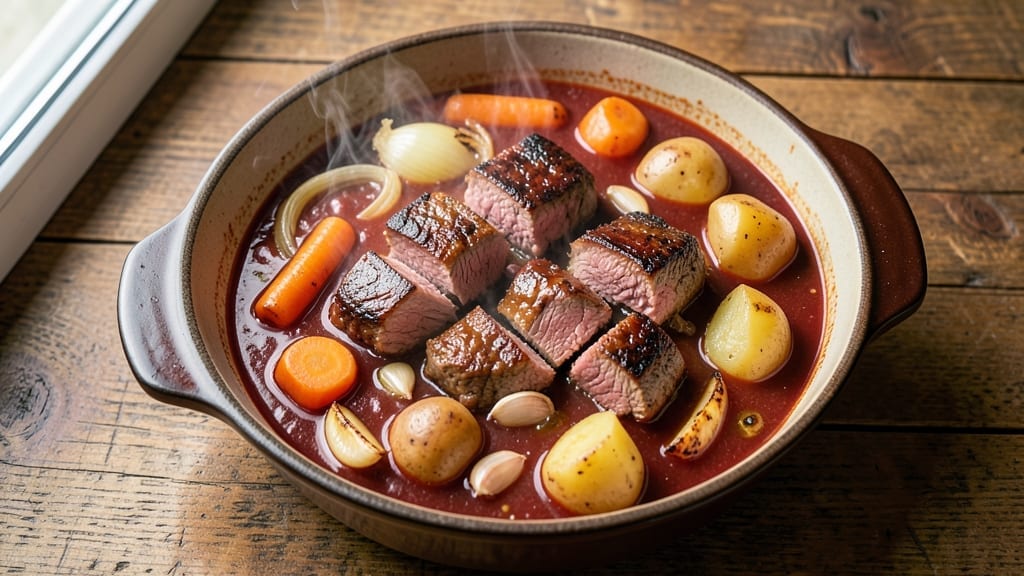
Mastering a 2 lb beef stew recipe transforms tough cuts into melt-in-your-mouth tenderness, where caramelized roots and rich broth create a dish that tastes like a homecoming. The secret lies in proper searing and slow braising—techniques that develop deep flavor while keeping the meat fork-tender.
This isn’t just a stew; it’s a weeknight meal that feels like a Sunday dinner, with layers of savory, smoky, and slightly sweet notes that linger long after the last bite.
What sets this recipe apart is the balance of technique and simplicity. You’ll start with a 30-minute sear to build flavor, then let the slow cooker or Dutch oven work its magic for 3-4 hours, where tough beef shoulder becomes irresistibly tender.
The vegetables—carrots, potatoes, and onions—caramelize beautifully, adding natural sweetness that rounds out the dish. This method ensures every bite delivers that perfect harmony of textures and flavors, making it a foolproof way to impress without spending hours in the kitchen.
By the time you serve this stew, you’ll have a pot of deeply aromatic, velvety broth swimming with perfectly cooked beef and vegetables that practically melt in your mouth.
The aroma alone will have everyone gathering at the table, and the first spoonful delivers on that promise of comfort food done right. The beauty of this recipe is its versatility—serve it with crusty bread for soaking up every last drop or alongside roasted vegetables for a complete meal.
Whether you’re cooking for a family dinner or meal prepping for the week, this beef stew delivers restaurant-quality results with minimal effort. The slow-cooked method means you can prepare it ahead and let the flavors deepen over time, making it perfect for busy schedules.
Here’s how to create this hearty, satisfying dish that tastes like home.
Ingredients for 2 lb beef stew
Short list. Big flavor. Everything you need for that slow-braised beef stew magic.
| Ingredient | Amount | Notes |
|---|---|---|
| Beef Chuck Roast 🥩 | 2 lb | Cut into 1.5-inch cubes |
| Yellow Onion 🧅 | 1 whole | Sliced into half-moons |
| Carrots 🥕 | 4 medium | Cut into 1-inch chunks |
| Russet Potatoes 🥔 | 3 medium | Cut into 1.5-inch chunks |
| Garlic Cloves 🧄 | 4 cloves | Minced for depth |
| Tomato Paste 🍅 | ½ cup | For rich color |
| Beef Broth 💧 | 2 cups | Low-sodium preferred |
| Red Wine 🍷 | 1 cup | Bold dry variety |
| Olive Oil 🫒 | 2 tbsp | For searing |
| Thyme 🌿 | 1 tbsp | Fresh or dried |
| Rosemary 🌿 | 1 tsp | Fresh sprigs preferred |
| Salt 🧂 | 1 ½ tsp | Kosher or sea salt |
| Black Pepper 🌶️ | 1 tsp | Freshly ground |
| Bay Leaves 🍃 | 2 whole | For aromatic depth |
| Worcestershire Sauce 🍶 | 1 tbsp | For umami punch |
The beef is non-negotiable here—chuck roast with good marbling is your best bet. Costco or local butchers usually carry it pre-cut, but if you’re buying a whole roast, ask for the chuck section. Look for pieces with visible fat—this renders down during cooking and keeps the meat juicy. I grab mine from Trader Joe’s when I’m doing a quick grocery run, but any supermarket with a decent meat counter works. The potatoes and carrots? Organic if you can swing it—they’ll caramelize better without dirt. Store-bought is fine too, just scrub them well.
No red wine? Dry sherry or extra beef broth works in a pinch, but wine adds that depth you can’t replicate. Fresh thyme and rosemary are ideal, but dried at one-third the amount gets you close if that’s what you’ve got. The tomato paste can be those little squeeze tubes from Trader Joe’s—way less waste than a can. For the carrots and potatoes, baby versions work too, but they’ll cook faster so keep an eye on them. Worcestershire sauce? Lea & Perrins is the classic choice, but any good-quality brand does the trick. No Worcestershire? A splash of soy sauce adds umami.
This stew tastes even better the next day—plan ahead. The beef stays tender for 4-5 days in the fridge, and the broth freezes beautifully for up to 3 months. I always make extra because reheating leftovers is just as good as the first serving. Store in airtight containers, and the flavors actually deepen overnight. For meal prep, portion into individual containers so you can grab and go. The broth? Save it for soups or gravies—it’s liquid gold.
Why You’ll Love This Recipe
- One-Pot Magic: The chuck roast and potatoes soften together—no extra bowls, no fuss. Just dump everything in, simmer, and walk away while it transforms into something rich and hearty.
- Deep, Savory Crunch: That caramelized onion and garlic base? It’s the secret weapon. The beef gets so tender it falls apart, but the carrots stay crisp—like a flavor bomb in every bite.
- Weeknight to Dinner Party: Make a double batch on Sunday, freeze half, and pull it out for lazy nights or impress guests. The potatoes soak up all the beefy goodness, so it always feels special.
- Budget Feeds Five: Two pounds of chuck roast stretches to feed a family (or two) for days. Leftovers reheat like a dream—better the next day, honestly—and your wallet stays happy.
Step-by-step instructions for slow-braised beef stew
Here’s how to build deep flavor layer by layer—no shortcuts, just rich, tender beef and caramelized vegetables.
Sear the Beef Chuck Roast Until Deeply Browned
Heat a large Dutch oven over medium-high heat. Add the 2 tablespoons olive oil and let it get shimmering hot. Working in batches to avoid crowding, add the 2 lb beef chuck roast cut into 1.5-inch cubes and sear for 3-4 minutes per side until deeply browned. You’re not just cooking here—you’re building flavor through the Maillard reaction.
Resist the urge to move the beef around. Let it develop that rich crust in one spot before turning. Once all pieces are browned, transfer them to a plate and set aside. You’ll notice the pan will have some beautiful browned bits—those are flavor gold. Don’t wipe them out; we’ll deglaze with wine next.
Sauté the Vegetables and Aromatics
In the same Dutch oven, add the 1 whole yellow onion sliced into half-moons and 4 medium carrots cut into 1-inch chunks. Cook for 5-6 minutes until the onions soften and the carrots begin to caramelize at the edges. Add the 3 medium russet potatoes cut into 1.5-inch chunks and cook for another 2 minutes to warm them through.
Stir in the 4 cloves minced garlic, 1 tablespoon thyme, and 1 teaspoon rosemary. Cook for 30 seconds until fragrant—this is where all the aromatic magic happens. The garlic should smell pungent and the herbs should release their earthy notes. If you notice any bits sticking, add a splash of beef broth to help lift them.
Deglaze and Build the Rich Base
Pour in the 1 cup red wine and scrape up all those browned bits from the bottom of the pot with a wooden spoon. Let it simmer for 3-4 minutes until reduced by half. This step is crucial—it concentrates the wine’s flavors and removes the alcohol.
Add the 0.5 cup tomato paste, 1.5 teaspoon salt, 1 teaspoon black pepper, and 1 tablespoon Worcestershire sauce. Stir well to combine, then pour in the 2 cups beef broth. The liquid should come up about halfway up the vegetables. Add the 2 whole bay leaves and return the seared beef to the pot.
Slow-Braise Until Fork-Tender
Bring the stew to a gentle simmer, then reduce heat to low. Cover and let it cook for 2 hours, stirring occasionally. This long, slow cook time is what transforms tough beef into melt-in-your-mouth tenderness. You’ll know it’s ready when a fork slides in easily through the beef and potatoes.
After 2 hours, check the liquid level. If it’s reduced too much, add ¼ cup water or broth. The stew should be saucy but not watery. Taste and adjust seasoning if needed—you might need a bit more salt or pepper to balance all the rich flavors.
Finish and Rest for Maximum Flavor
Remove the stew from heat and let it rest for 15 minutes covered. This resting period allows all the flavors to meld together and the juices to redistribute throughout the beef. Skim off any excess fat that has risen to the surface if you prefer a leaner stew.
Serve the stew hot, ladling the beef and vegetables with their rich sauce over crusty bread or mashed potatoes. Each bite should deliver tender beef, caramelized vegetables, and a deep, complex sauce that’s perfect for chilly evenings. The longer it sits, the better it tastes—this stew only gets more flavorful as it cools.
Pro Tips For Making 2 Lb Beef Stew
- Sear the Chuck Hard: That beef roast won’t melt in your mouth if you treat it like a steak first. Hit it with a hot cast-iron or heavy pot—no oil needed on chuck—until deep brown crusts form. I learned this the hard way when my stew tasted bland because I rushed the sear.
- Cut Potatoes Last: Tossing whole potatoes in early turns them to mush. Wait until the beef’s halfway cooked, then add them cut into 1-inch chunks. They’ll soak up flavor without falling apart—no one wants gluey stew potatoes.
- Don’t Crowd the Pot: Packing everything in tight steams the veggies instead of browning them. Cook onions and carrots in batches if needed, then add the beef back in with just enough liquid to cover half the meat. The rest will come from the veggies as they cook.
- Salt the Potatoes Twice: Sprinkle them with ½ teaspoon salt when they hit the pot, then another ½ teaspoon 20 minutes before serving. The first salt draws out moisture, the second seasoning penetrates—like my grandmother’s trick for restaurant-quality texture.
Essential equipment for this dish
Dutch Oven Essentials
Your Dutch oven is the heart of this recipe—it needs to be heavy enough to retain heat and distribute it evenly. I swear by a Lodge 5.5-quart cast iron Dutch oven for its durability and heat retention.
If you don’t own one, a stainless steel Dutch oven from All-Clad or Le Creuset works too. Avoid non-stick versions; they can’t handle the high heat needed for searing. Preheat your Dutch oven for 5-10 minutes before adding oil to ensure a proper sear. 🔥
Meat Thermometer Must-Have
A meat thermometer is non-negotiable for perfect doneness. I use the ThermoWorks Smoke because it’s accurate and durable, but even a $10 digital thermometer from Amazon Basics will do. Insert the probe into the thickest piece of beef—it should reach 203°F for fork-tender results.
If you don’t have one, test with a fork: the beef should slide off easily when done. Pro tip: Keep the thermometer in the pot during cooking to avoid temperature fluctuations.
Wooden Spoon & Tongs
Use a wooden spoon (like Oxo Good Grips) to stir and scrape up those flavorful browned bits during deglazing. A tongs set (I love Mercer Culinary Genius) helps lift beef and veggies without breaking them up.
Avoid metal utensils—they can scratch your Dutch oven’s seasoning over time. A ladle is also handy for serving, especially if you’re scooping up thick chunks of beef and veggies. 🍲
Slow Cooker Adaptation
No Dutch oven? A 6-quart slow cooker (like Hamilton Beach) works perfectly for hands-off cooking. Sear the beef in a skillet first, then transfer everything to the slow cooker and cook on low for 7-8 hours or high for 4-5 hours.
The key difference: slow cookers can’t brown meat, so searing separately is crucial. For even cooking, place the beef in a single layer at the bottom before adding veggies and liquid. Stir once halfway through to distribute heat evenly.
Instant Pot Shortcut
For a pressure cooker like the Instant Pot Duo, sear the beef in a separate pan, then add everything to the pot and cook on high pressure for 45 minutes. Release the pressure naturally for 10 minutes before opening.
The Instant Pot cuts cooking time dramatically, but the flavor depth is just as rich. Just be sure to deglaze the pot after searing to capture those flavorful bits—don’t skip this step! ⚡
Nutrition facts
Frequently asked questions
Can I substitute chuck roast with another beef cut?
Yes, but choose wisely! Beef short ribs or chuck shoulder work beautifully—they’re fatty enough to stay tender. Avoid lean cuts like sirloin; they’ll dry out. For 3-4 lb cuts, adjust cooking time by 1 hour longer. If using ground beef, brown it thoroughly first and reduce cooking time to 1.5 hours.
How do I make this stew in a slow cooker?
Sear the beef in a skillet first, then transfer everything to a 6-quart slow cooker. Cook on low for 7-8 hours or high for 4-5 hours. The key? Don’t skip the sear—it builds flavor slow cookers can’t replicate. Stir once halfway through for even cooking. The wine will reduce faster in a slow cooker, so add ½ cup extra broth if needed.
Why does my stew taste bland?
Most likely, you skipped the sear or didn’t deglaze properly. The browned bits in the pan are flavor gold! Always sear the beef until deeply browned, then scrape up every bit with wine. Taste as you go—add more Worcestershire sauce for umami or a pinch of smoked paprika for depth. Remember: flavors meld during resting time, so patience pays off!
Can I use frozen beef instead of fresh?
Fresh is ideal, but frozen works if thawed properly. Place the beef in the fridge for 24 hours or use the microwave’s defrost setting. Never cook frozen beef—it won’t brown properly and may stay tough. For extra insurance, pat thawed beef dry with paper towels before searing to get that perfect crust.
What’s the best way to reheat leftovers?
Gently reheat on the stove over medium-low heat for 5-10 minutes, stirring occasionally. Microwave in 30-second bursts, stirring between each, to avoid drying out the beef. The stew actually tastes better reheated—flavors deepen overnight! Store in airtight containers for up to 5 days or freeze for 3 months.

- 6 Oz Chocolate Chip Cookie Recipe: Perfectly Balanced Crispy Edges and Chewy Hearts - September 25, 2026
- 6-Inch Coffee Cake Recipe: Vanilla Bean Swirls and Buttery Streusel Topping - September 25, 2026
- 1 Hour Soup Recipe: Velvety Richness Without the Wait - September 25, 2026