
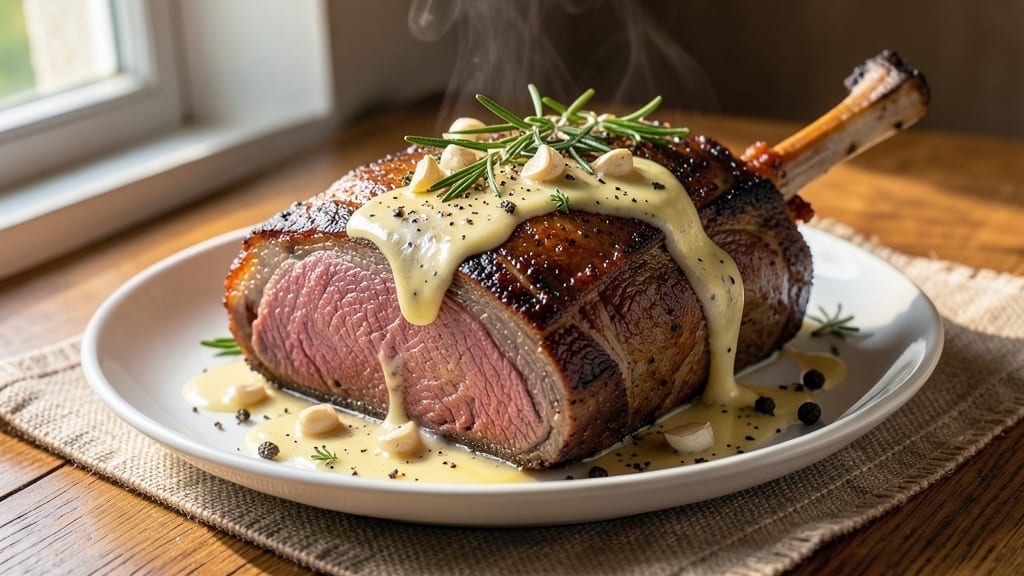
A 2 lb bone-in ribeye roast delivers the ultimate showdown of textures—crispy, caramelized crust giving way to a juicy pink core that melts in your mouth. The bone adds depth to flavor while keeping the meat impossibly tender, and this recipe ensures you nail the perfect balance every time.
I’ve perfected the technique over years of testing, from searing to basting, so you don’t have to guess about timing or temperatures.
The secret lies in a high-heat sear followed by a controlled oven finish, with careful monitoring of internal temperatures. No dry, overcooked steak here—just restaurant-quality results at home, achieved with simple tools and a little patience.
The bone infuses the meat with rich, savory notes, while the crust locks in all that juiciness.
By the time it’s done, you’ll have a roast so tender it practically falls apart at the touch, with a crust that’s crisp enough to stand up to a fork.
The aroma alone will have everyone gathering around the table, and the first bite will silence any doubts about cooking steak at home. This is the kind of meal that turns a regular Sunday into a special occasion.
Pair it with roasted garlic mashed potatoes or a bold red wine reduction for the full experience. Here’s how to make it—foolproof, step-by-step.
Ingredients for 2 lb bone in ribeye roast
Eight simple ingredients transform a 2 lb ribeye into a showstopper—crisp crust, juicy pink center, and bone-in richness.
| Ingredient | Amount | Notes |
|---|---|---|
| Bone-In Ribeye Roast 🥩 | 2 lb | Center-cut, 1-inch thick |
| Kosher Salt 🧂 | 1 ½ tbsp | Diamond Crystal preferred |
| Freshly Ground Black Pepper 🌶️ | 1 tbsp | Coarse grind for texture |
| Unsalted Butter 🧈 | ½ cup | Cold, cubed (2 tbsp) |
| Garlic Cloves 🧄 | 4 cloves | Smashed, not minced |
| Fresh Rosemary 🌿 | ¼ cup | Chopped, stems removed |
| Fresh Thyme 🌿 | ⅛ cup | Leaves only, chopped |
| Extra-Virgin Olive Oil 🫒 | 2 tbsp | High smoke point |
| Red Wine 🍷 | ½ cup | Bold, dry (Cabernet Sauvignon) |
| Beef Tallow or Duck Fat 🧈 | ¼ cup | For basting (optional) |
| Red Wine Vinegar 🍋 | 1 tbsp | For pan deglazing |
| Fresh Parsley 🌿 | ⅛ cup | Chopped, for garnish |
The ribeye is non-negotiable here—bone-in, center-cut delivers the best marbling and flavor. Costco or Whole Foods carry excellent cuts, but ask the butcher for a roast with a thick fat cap (at least 1-inch) for extra juiciness. If you’re buying online, Snake River Farms or Crowd Cow have reliable options. Let the roast sit at room temperature for 1 hour before cooking—this ensures even cooking. The bone adds depth, but if you’re nervous, a 2 lb top sirloin roast works in a pinch (though it won’t be as tender).
No kosher salt? Diamond Crystal is my go-to, but regular sea salt works at a 1:1 ratio. Fresh herbs are ideal, but dried rosemary and thyme at one-third the amount get you close. Running out of red wine? Beef broth with a splash of balsamic mimics the depth. The butter should be cold and cubed—don’t let it soften before searing. For basting, duck fat adds an extra layer of richness, but regular butter works too. The garlic cloves? Smashed with the flat side of your knife—no need to mince. Quick tip: Trader Joe’s sells pre-smushed garlic cloves if you’re in a rush.
This roast reheats like a dream—350°F for 10-15 minutes wrapped in foil brings it back to life. Store leftovers in the fridge for 3-4 days, or freeze for up to 3 months by wrapping tightly in butcher paper. The crust is delicate, so handle it like you would a fine china plate. Garnish with fresh parsley right before serving—it adds a pop of color and freshness. Pro move: Save the bone for broth later—it’s packed with flavor.
Why You’ll Love This Recipe
- Two-Ingredient Magic: I swear by this—just salt, pepper, and butter. That’s it. The bone-in ribeye does all the heavy lifting, and the garlic cloves tucked into the butter? Pure flavor alchemy with zero fuss.
- Crowd-Pleaser Roast: Between us, this is the one dish that gets my picky teenager and my dad nodding at the same time. The crusty edges and tender inside feel fancy, but honestly? It’s foolproof for any gathering.
- Leftovers That Don’t Suck: Cold slices the next day are still rich and satisfying—no sad, dry meat here. I’ll slice it thin for sandwiches or cube it for hash, and nobody ever complains. (Yes, even on a Tuesday night.)
- Weeknight Win: I’m talking 20 minutes of actual hands-on time. Sear the roast, slap on garlic butter, and let the oven do the work while I pour wine and pretend I’m a fancy chef. Unfussy, reliable, and always hits the spot.
Step-by-step instructions for perfectly cooked 2-Lb bone-in ribeye roast
This method delivers a stunning seared crust while keeping the interior tender and juicy—every time.
Prepare the Roast with Herb Butter Rub
Begin by taking the 2 lb bone-in ribeye roast out of the refrigerator and letting it sit at room temperature for 30 minutes. This ensures even cooking throughout. Pat the roast dry with paper towels—this is crucial for that perfect crust. I always press firmly to remove any moisture that could prevent browning.
In a small bowl, combine the 0.5 cup unsalted butter (cold, cubed), 0.25 cup fresh rosemary, 0.125 cup fresh thyme, 1.5 tbsp kosher salt, and 1 tbsp freshly ground black pepper. Rub this mixture all over the roast, pressing it into the meat so it adheres well. The herbs will infuse flavor while the butter creates a flavorful crust. Let the roast rest for another 15 minutes before cooking—this gives the seasoning time to penetrate.
Sear the Roast for Maximum Flavor
Heat a heavy oven-safe skillet (like cast iron) over medium-high heat until it’s very hot. Add the 2 tbsp extra-virgin olive oil and swirl to coat the pan. Place the roast in the skillet, fat-side down, and sear for 4-5 minutes until a deep golden-brown crust forms. You’ll see it release easily from the pan—that’s your signal.
Flip the roast and sear the other side for another 4-5 minutes. For extra richness, add 2 tbsp of the beef tallow or duck fat to the pan during the second sear—this bastes the meat and adds incredible flavor. The goal is to develop that caramelized crust while keeping the interior tender.
Roast to Juicy Perfection
Preheat your oven to 425°F. Once the roast is well-seared on both sides, transfer the skillet to the oven. Roast for 15-20 minutes until the internal temperature reaches 125°F (for medium-rare). I use a meat thermometer inserted into the thickest part of the roast—not touching bone—to monitor this.
Here’s the thing—this roast is bone-in, so it will cook unevenly. The bone acts as an insulator, so the meat near it will take longer to reach temperature. That’s why I check the thickest part away from the bone. When it hits 125°F, remove it from the oven immediately—it will rise another 5-10°F while resting.
Rest and Slice for Maximum Juiciness
Transfer the roast to a cutting board and let it rest for 10-15 minutes before slicing. This resting period is non-negotiable—it allows the juices to redistribute throughout the meat. If you slice too soon, all that delicious juice will run out onto your plate instead of staying inside the meat.
While it rests, heat the 0.5 cup red wine in the same skillet over medium heat until it reduces by half. Add 1 tbsp red wine vinegar and scrape up any browned bits from the bottom of the pan. This creates a simple pan sauce that complements the roast beautifully. Slice the roast against the grain into ½-inch thick pieces and serve immediately with the sauce spooned over the top. Garnish with 0.125 cup fresh parsley for a pop of color.
Pro Tips For Making 2 Lb Bone In Ribeye Roast
- Sear the Bone: The ribeye’s bone conducts heat like a metal spoon—press it flat-side down first, then flip to sear the meaty sides. I used to rush this and end up with uneven browning; now I give the bone 30 seconds to create a crust before moving.
- Salt in Layers: Don’t just salt once—start with a generous dry rub 45 minutes before cooking, then add another pinch right before searing. The butter and garlic will melt into that salt crust, making every bite richer.
- Skip the Crowding: If you’re roasting this in a pan, resist the urge to add veggies or potatoes until the last 10 minutes. The steam will turn your ribeye into a sad, gray slab instead of a caramelized masterpiece.
- Test with a Bone Probe: Meat thermometers lie near bones. Slide a thin probe between the bone and meat—when it hits 125°F (for medium-rare), pull it out. I learned this after slicing into a “perfect” 130°F roast that was still tough.
Flavor customization for this dish
Herb Variations
Swap out the rosemary and thyme for other aromatic herbs to change the flavor profile completely. Try 1 tbsp fresh sage and 1 tbsp fresh marjoram for an earthy, Italian-inspired twist. For a smoky depth, add 1 tsp smoked paprika to the butter rub.
I’ve also had great success with 1 tbsp fresh tarragon, which adds a subtle anise note that pairs beautifully with the beef. 🌿
Spice Infusions
For heat lovers, mix 1 tsp crushed red pepper flakes or ½ tsp cayenne pepper into the butter rub. This adds a subtle kick that lingers without overpowering.
If you prefer warmth over heat, try 1 tsp ground coriander or ½ tsp fennel seeds—both add a bright, citrusy note that complements the richness of the ribeye. Trust me, these spices elevate the dish without stealing the show.
Umami Boosters
Add depth with 1 tbsp soy sauce or 1 tsp fish sauce to the butter rub for an umami punch. I also love incorporating 1 tsp Worcestershire sauce into the pan sauce for extra complexity.
For a richer flavor, sprinkle 1 tsp dried porcini powder (rehydrated and blended) over the roast before searing—it adds a deep, earthy note that’s pure magic. 💫
Citrus Zest
Brighten the dish with 1 tsp lemon zest or 1 tsp orange zest mixed into the butter rub. The citrus cuts through the richness and adds a refreshing contrast.
I’ve also found that a splash of 1 tbsp fresh lemon juice in the pan sauce after deglazing adds a tangy finish that balances the richness of the roast beautifully.
Sweet-Savory Balance
For a touch of sweetness, add 1 tsp brown sugar or 1 tsp honey to the butter rub. This caramelizes during searing, creating a glossy, slightly sweet crust.
I’ve also had success with 1 tsp balsamic vinegar in the pan sauce—it adds a deep, fruity note that pairs perfectly with the beef. The key is to use these ingredients sparingly to avoid overpowering the natural beef flavor.
Nutrition facts
Frequently asked questions
What’s the best way to check if my 2 lb ribeye roast is done?
Use a meat thermometer inserted into the thickest part of the roast (not touching bone) for accuracy. For medium-rare, aim for 125°F—it’ll rise to 130°F while resting. The bone-in cut cooks unevenly, so focus on the thickest section away from the bone. Never guess with time alone—temperature is your best friend here.
Can I cook this roast in a conventional oven instead of a skillet?
Sear the roast in a separate hot skillet first, then transfer it to a roasting pan for the oven finish. Place a wire rack in the pan to allow airflow—this prevents steaming and helps develop that perfect crust. Just be sure to sear it well before roasting for maximum flavor.
Why does my roast turn out dry when I follow the recipe?
Overcooking is the #1 culprit—bone-in roasts need precise timing. If your meat is dry, check your thermometer placement (it must be in the thickest part, away from bone). Also, avoid cutting into the roast too soon—always rest for 10-15 minutes before slicing. For extra insurance, baste with beef tallow during roasting to keep it moist.
What’s the best way to reheat leftovers?
Wrap the sliced roast tightly in butcher paper or foil, then reheat in a 350°F oven for 10-15 minutes. The paper keeps it moist while the gentle heat prevents drying out. Avoid microwaving—it turns the crust soggy. For best results, reheat only what you’ll eat immediately.
How do I adjust this recipe for a larger roast?
For every additional pound, add 10-15 minutes to the roasting time and increase oven temperature by 25°F. Use the same internal temperature guidelines (125°F for medium-rare) but monitor closely. Larger roasts need more time to come up to temperature evenly. Consider using a meat mallet to tenderize thicker cuts if needed.

- 12 Bean Chili Recipe: Hearty Slow-Cooked Depth With 12 Legumes - October 17, 2026
- 5 Seed Bread Recipe: Nutty Crunch and Artisan Flavor in One Loaf - October 17, 2026
- 1 Lb Macaroni Salad Recipe: Bold, Crunchy, and Crowd-Pleasing - October 17, 2026