
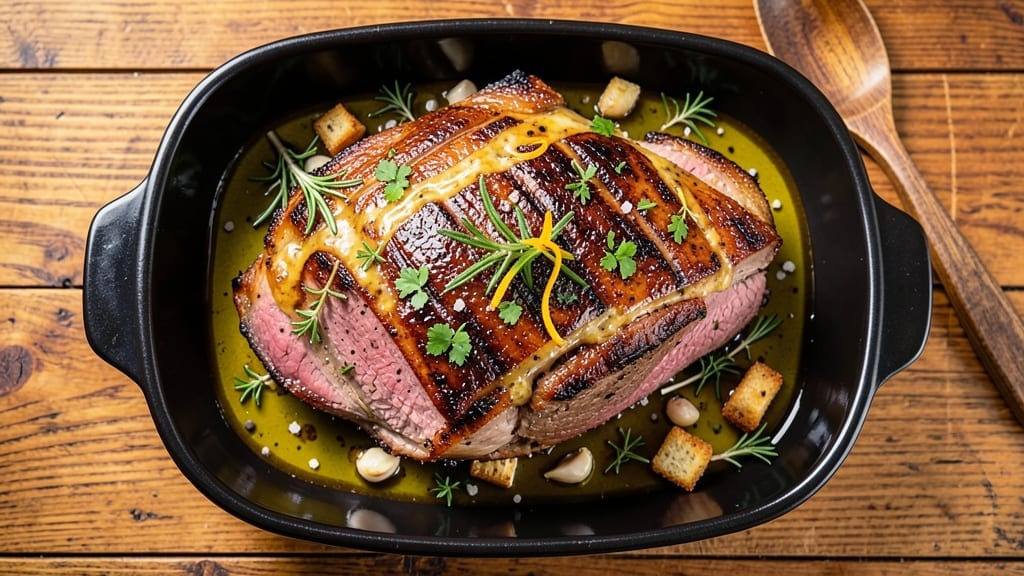
A 2 lb boneless prime rib roast delivers the ultimate showstopping dinner—tender, juicy pink centers with a crusty herb crust that seals in every flavor. This recipe transforms a simple roast into a restaurant-worthy centerpiece, perfect for special occasions or when you want to impress without stress.
The secret lies in precise temperature control and a flavor-packed crust that adds depth without overpowering the beef’s natural richness.
What sets this apart is the foolproof method for achieving medium-rare perfection—no guesswork, no overcooking. We’ll use a high-heat sear to create that coveted crust, then finish with a low-and-slow roast in the oven to ensure a juicy pink center every time.
The herb crust isn’t just decorative; it’s a flavor bomb that infuses the meat as it cooks, creating layers of aroma and taste that’ll have your guests asking for seconds.
By the time you carve into this roast, you’ll be rewarded with slices that are tender yet firm, with a golden crust that crumbles slightly at the touch.
The internal temperature will hit 125°F for that ideal medium-rare finish, and the resting time ensures those juices stay locked in where they belong—inside the meat, not on your plate. This isn’t just dinner; it’s an experience that turns any meal into a memorable event.
Pair it with classic sides like roasted garlic mashed potatoes or a bright horseradish cream sauce to elevate the dish further. The crust technique is simple but transformative, and the cooking method guarantees success—even for those new to prime rib. Let’s get started on creating your most impressive roast yet.
Ingredients for 2 lb boneless prime rib roast
The perfect prime rib starts with these twelve ingredients—juicy beef, aromatic herbs, and a few key elements for that legendary crust.
| Ingredient | Amount | Notes |
|---|---|---|
| Boneless Prime Rib Roast 🥩 | 2 lb | Center-cut for tenderness |
| Fresh Rosemary 🌿 | ½ cup | Finely chopped, fresh preferred |
| Fresh Thyme 🌿 | 2 tbsp | Leaves only, stems removed |
| Fresh Parsley 🌿 | ¼ cup | Flat-leaf, finely chopped |
| Garlic Cloves 🧄 | 6 cloves | Peeled and minced |
| Extra-Virgin Olive Oil 🫒 | ¼ cup | High-quality, fruity |
| Kosher Salt 🧂 | 2 tbsp | Diamond Crystal preferred |
| Freshly Ground Black Pepper 🌶️ | 1 tbsp | Freshly cracked |
| Unsalted Butter 🧈 | ½ cup | Cold, cubed |
| Red Wine 🍷 | ½ cup | Bold, dry variety |
| Beef Tallow or Ductile Fat 🧈 | 2 tbsp | For extra richness |
| Yellow Mustard 🍯 | 1 tbsp | Dijon style preferred |
The prime rib makes or breaks this dish—center-cut is non-negotiable for tenderness. Look for marbled beef with a bright red color at your butcher or grocery store’s meat counter. Costco and Whole Foods typically have excellent options, but ask for the ribeye section if your store doesn’t carry prime rib. The herbs? Fresh is essential—dried won’t give that same vibrant crust. I usually buy rosemary in small bunches and trim the woody stems myself. For garlic, smash the cloves lightly with the side of your knife before mincing to release more flavor.
No fresh herbs? Dried rosemary and thyme at half the amount works, but you’ll miss that aromatic punch. Short on red wine? Beef broth with a splash of balsamic mimics the depth. The butter should be cold when you mix it with the crust—this helps create that perfect golden seal. If you can’t find beef tallow, extra butter works too. For the crust, I always use Diamond Crystal kosher salt because it dissolves more easily than other brands. The mustard adds a subtle tang that balances the richness—don’t skip it.
Keep the roast uncovered in the fridge for up to 2 days before cooking. The crust mix can be prepped 1 day ahead and stored in the fridge—just bring it to room temperature before applying. Leftover roast? It reheats beautifully—low oven at 250°F for 15 minutes with a splash of beef broth keeps it moist. For maximum flavor, portion and freeze slices in airtight containers for up to 3 months. The crust mix keeps dry in the pantry for 2 weeks if you want to make extra.
Why You’ll Love This Recipe
- No-Fuss Prep: I swear by this—just sear the roast, stuff it with garlic and herbs, and let the oven do the work. Ten minutes of active time, and you’re done. (Yes, even on a Tuesday night.)
- Herb-Crusted Magic: That rosemary-thyme blend clinging to the edges? It’s like a little flavor bomb every bite. The garlic peeking out from under the crust? Pure satisfaction.
- Weeknight or Celebration: Same recipe, totally different vibes—throw it on for a lazy Sunday or impress guests with minimal effort. The roast’s rich, buttery center feels fancy without the fuss.
- Leftovers That Don’t Suck: Cold slices the next day are still tender and packed with flavor. Honestly, I make this on purpose just to have sandwiches later—no one skips seconds.
Step-by-step instructions for juicy prime rib roast with herb crust
Here’s how to transform your prime rib into a showstopping centerpiece with tender pink meat and a fragrant herb crust.
Prepare the Herb Butter and Season the Roast
In a small bowl, combine the 0.5 cup unsalted butter, 0.5 cup fresh rosemary, 2 tbsp fresh thyme, 0.25 cup fresh parsley, 6 cloves minced garlic, 2 tbsp kosher salt, and 1 tbsp freshly ground black pepper. Mix until fully incorporated and the herbs are evenly distributed throughout the butter. This herb butter will create both flavor and that coveted crust.
Pat the 2 lb boneless prime rib roast completely dry with paper towels—this is crucial for achieving a crispy crust. Spread the herb butter mixture evenly over the entire surface of the roast, pressing gently to ensure it adheres. Let the roast sit at room temperature for 30 minutes before cooking, allowing it to come to room temperature and ensuring even cooking throughout.
Sear the Roast for Maximum Flavor
Preheat your oven to 450°F. Heat a large oven-safe skillet over medium-high heat and add 2 tbsp beef tallow or ductile fat along with 0.25 cup extra-virgin olive oil. Once the fat is shimmering but not smoking, place the roast in the skillet, fat-side down. Sear for 4-5 minutes until the bottom develops a deep golden-brown crust.
Flip the roast and sear the other side for another 4-5 minutes. This step is critical—it locks in juices and creates a flavorful crust. Once both sides are well-seared, transfer the skillet to the preheated oven. Pour the 0.5 cup red wine into the skillet, scraping up any browned bits from the bottom. This deglazing step adds depth of flavor to your roast.
Roast to Perfect Medium-Rare
Roast the prime rib for 20-25 minutes at 450°F, then reduce the oven temperature to 325°F. Continue roasting for an additional 1 hour to 1 hour 15 minutes, or until the internal temperature reaches 120-125°F for medium-rare. This temperature range ensures a juicy pink center while still allowing for carryover cooking during resting.
Here’s the thing—your roast will continue cooking after you remove it from the oven. Use a meat thermometer to check the temperature; it’s the most reliable method. The roast should have a deep golden-brown crust and the internal temperature should read 120-125°F in the thickest part of the roast. If you don’t have a meat thermometer, you can use the finger test: press your finger gently on the roast. If it feels like it’s between 120-125°F (similar to the temperature of your palm), it’s ready.
Rest and Create the Mustard Glaze
Remove the roast from the oven and transfer it to a cutting board. Tent loosely with aluminum foil and let it rest for 15-20 minutes. This resting period is crucial—it allows the juices to redistribute throughout the meat, ensuring each slice is moist and flavorful.
While the roast rests, prepare the mustard glaze by mixing 1 tbsp yellow mustard with 1 tbsp of the red wine from the skillet. Brush this glaze evenly over the surface of the roast just before serving. The mustard adds a tangy contrast to the rich, herby crust and helps create a glossy finish.
Slice and Serve with Confidence
Once the roast has rested, slice it against the grain into ½-inch thick slices. The grain direction is easy to spot—you’ll see lines running through the meat. Slicing against the grain shortens the muscle fibers, making each bite more tender.
Serve the prime rib immediately, garnished with any remaining herb butter and a sprinkle of freshly cracked black pepper. Each slice should have a juicy pink center surrounded by a crispy, fragrant herb crust. Pair it with roasted vegetables, creamy mashed potatoes, or a simple green salad to complete the meal. The result is a prime rib that’s both impressive and delicious—perfect for any special occasion.
Pro Tips For Making 2 Lb Boneless Prime Rib Roast
- CRANK THE HEAT FIRST: Start your prime rib over medium-high heat for 5 minutes—this sears the surface and locks in juices before you lower the temp. I used to skip this, and the crust always tasted weak.
- SMASH THE GARLIC: Peel and lightly crush those garlic cloves with the flat side of your knife before tossing them into the pan. Whole cloves won’t infuse; smashed ones melt into the butter and herbs.
- DON’T SKIP THE REST: After roasting, tent that prime rib with foil and let it sit for 10 minutes—yes, even if you’re starving. Cutting into it early turns a tender roast into dry, sad slices.
- STUFF THE HERBS: Loosely pack the rosemary, thyme, and parsley inside the meat’s crevices before roasting. Half the herbs end up on the cutting board if you just scatter them on top.
Perfect pairings for these flavors
Classic Horseradish Cream
This tangy, creamy sauce cuts through the richness of prime rib beautifully. Mix ½ cup sour cream with 2 tbsp prepared horseradish, 1 tbsp Dijon mustard, 1 tbsp fresh lemon juice, and 1 tsp minced shallot.
Adjust horseradish to taste—start with 1 tbsp if you prefer milder heat. Serve warm alongside roasted potatoes or as a dipping sauce. I love drizzling it over the sliced prime rib just before serving. 🌟
Roasted Garlic Mashed Potatoes
Creamy, rich, and packed with flavor, these potatoes elevate your prime rib dinner. Boil 2 lbs Yukon Gold potatoes until tender, then mash with ½ cup unsalted butter, ½ cup warm milk, 4 roasted garlic cloves, 1 tsp kosher salt, and ½ tsp black pepper.
For extra indulgence, fold in ¼ cup grated Parmesan cheese. Roast whole garlic cloves in 375°F oven for 30 minutes before squeezing out the pulp. 🥔
Red Wine Reduction
Use the leftover red wine from your prime rib pan to create a quick, flavorful reduction. Simmer ½ cup red wine with 1 tbsp butter and 1 tsp balsamic vinegar until reduced by half.
Strain through a fine-mesh sieve and drizzle over the sliced prime rib or use as a sauce for roasted vegetables. This adds a sophisticated touch without extra effort. 🍷
Crispy Brussels Sprouts
Roasted Brussels sprouts add a perfect crunchy contrast to tender prime rib. Toss 1 lb halved Brussels sprouts with 2 tbsp olive oil, 1 tbsp balsamic glaze, ½ tsp smoked paprika, and ¼ tsp salt.
Roast at 425°F for 20-25 minutes until crispy. A sprinkle of crumbled bacon on top adds smoky depth. 🌱
Balsamic-Glazed Carrots
Sweet, tangy, and vibrant, these carrots complement the richness of prime rib. Sauté 1 lb baby carrots in 1 tbsp butter for 5 minutes, then add 2 tbsp balsamic vinegar and 1 tsp honey.
Simmer for 3-4 minutes until glossy. Finish with a pinch of fresh thyme for an aromatic touch. 🥕
Wine and Cheese Pairings
For drinks, a bold Cabernet Sauvignon or Malbec complements the beef’s richness. For cheese lovers, serve with aged Gouda or blue cheese—both pair beautifully with the herby crust. If you prefer wine pairings, try a Syrah for its peppery notes that mirror the prime rib’s depth. 🍷
Nutrition facts
Frequently asked questions
Why is my prime rib roast coming out dry?
Overcooking is the #1 culprit! Prime rib needs precise timing—aim for an internal temp of 120-125°F for medium-rare. Use a meat thermometer and avoid cutting into it too soon. Resting for 15-20 minutes after roasting lets juices redistribute. Pro tip: Pat the roast completely dry before searing to prevent steam from forming under the crust.
Can I cook a 2 lb prime rib in a regular oven without a skillet?
Place the roast on a wire rack over a baking sheet to allow air circulation. Preheat your oven to 450°F, then sear the roast in a separate skillet first (or use a cast-iron pan in the oven). After searing, transfer it to the oven with the red wine for roasting. The key is still achieving that 450°F sear before lowering the temp to 325°F.
How do I adjust cooking time for a different weight prime rib?
Use the 15 minutes per pound rule for medium-rare: 2 lb = ~30 minutes total at 325°F after searing. For example, a 3 lb roast would need 45 minutes at 325°F. Always check internal temp—it’s more accurate than time alone. The sear time remains 4-5 minutes per side regardless of size.
What’s the best way to reheat leftover prime rib?
Slice the roast and reheat in a 250°F oven for 15-20 minutes with a splash of beef broth. For sandwiches, pan-sear slices in butter for 1-2 minutes per side to revive the crust. Never microwave—it turns the meat tough. Store leftovers in airtight containers for up to 3 days or freeze for 3 months.
Can I make the herb crust ahead of time?
Yes! Mix the herb butter up to 1 day ahead and store it in the fridge. Bring it to room temperature before applying to the roast. The crust mix itself keeps dry in the pantry for 2 weeks. For maximum flavor, let the roast sit at room temperature for 30 minutes before cooking—this ensures even cooking and better crust adhesion.

- Pea Soup Instant Pot Recipe: Velvety Green Smoothness in 20 Minutes - November 1, 2026
- Pork Loin Pulled Pork Crock Pot Recipe: Slow-Smoked Tenderness With Zero Dryness - November 1, 2026
- Baked Potatoes in Crock Pot Recipe: Buttery Interiors and Crispy Top Magic - November 1, 2026