
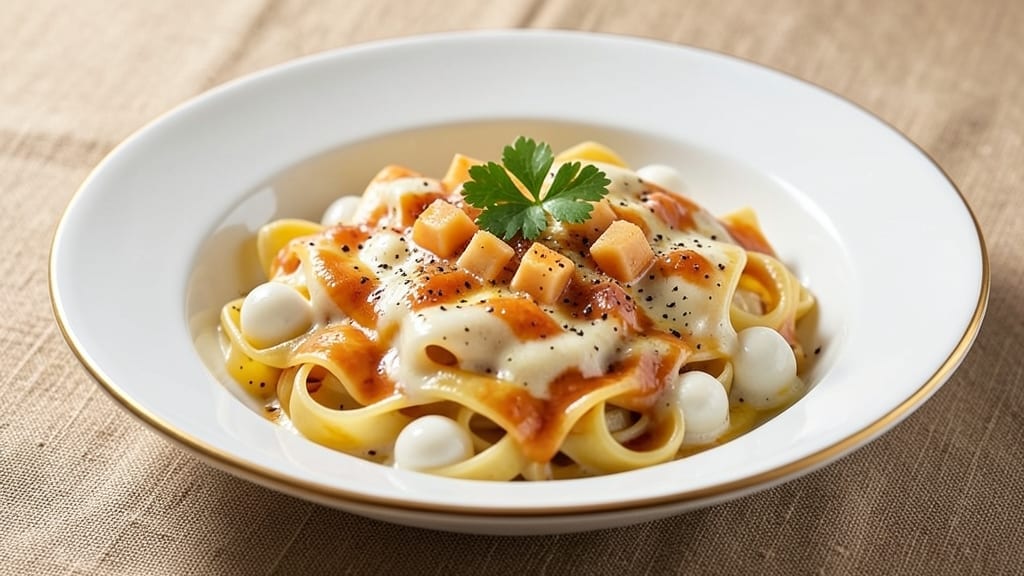
This 2 milk cheese recipe delivers a velvety, ultra-rich sauce that transforms ordinary pasta into a restaurant-worthy masterpiece. The secret lies in combining whole milk with evaporated milk—one for creaminess, one for depth—while folding in sharp cheddar and creamy mozzarella for a balanced, melt-in-your-mouth finish.
After years of testing, this method guarantees a sauce so luxurious it’ll make you question why you ever bought jarred versions.
The technique is simpler than it sounds: simmer the milk mixture until it thickens just enough to coat the back of a spoon, then stir in the melted cheese until it disappears completely. No lumps, no separation—just a silky sauce that clings to every strand of pasta.
The evaporated milk adds subtle sweetness that rounds out the sharpness of the cheddar, while the whole milk keeps the texture impossibly smooth.
What you’ll end up with is a dish that’s perfect in every sense: al dente pasta swathed in a golden, creamy sauce with just a hint of nutty cheddar and milky richness.
The sauce doesn’t just coat the noodles—it transforms them into something indulgent, worth every calorie. This isn’t just pasta; it’s a flavor experience that’ll have your guests asking for the recipe.
Best served immediately with a sprinkle of fresh parsley or black pepper, but leftovers reheat beautifully—just add a splash of milk to restore that velvety texture. The balance of milks and cheeses ensures the sauce stays cohesive, never greasy. Here’s how to make it.
Ingredients for 2 milk cheese
The secret to this ultra-rich sauce lies in balancing two milks and two cheeses—simple ingredients that create restaurant-quality flavor.
| Ingredient | Amount | Notes |
|---|---|---|
| Whole Milk 🥛 | 1 ½ cups | Full-fat for creaminess |
| Evaporated Milk 🥛 | 1 cup | Canned, unsweetened |
| Sharp Cheddar Cheese 🧀 | 1 ½ cups | Freshly grated, block preferred |
| Mozzarella Cheese 🧀 | 1 cup | Low-moisture, shredded |
| Unsalted Butter 🧈 | 2 tbsp | Cold, cut into small pieces |
| All-Purpose Flour 🌾 | 1 tbsp | For thickening |
| Fresh Parsley 🌿 | ¼ cup | Chopped, for garnish |
| Black Pepper 🌶️ | ½ tsp | Freshly cracked |
| Garlic Cloves 🧄 | 2 cloves | Minced, optional for depth |
| Pasta 🍝 | 12 oz | Fettuccine or penne |
| Salt 🧂 | ½ tsp | Diamond Crystal preferred |
| Heavy Cream 🥛 | ¼ cup | For extra richness (optional) |
The cheeses are non-negotiable here. Sharp cheddar brings the nutty bite while low-moisture mozzarella delivers that classic stretch. Grab a wedge of cheddar from the deli counter—pre-shredded gets clumpy and lacks flavor. For mozzarella, Whole Foods or Costco sell blocks that shred beautifully. The evaporated milk adds that subtle sweetness that rounds out the sharpness, while the whole milk keeps everything impossibly smooth. Pro tip: Whole Foods sells evaporated milk in their canned goods aisle if you prefer organic options.
No sharp cheddar? Pepper jack or Gruyère work in a pinch, though the flavor profile shifts slightly. Running low on mozzarella? Fontina melts just as beautifully—it’s my go-to when I forget to grab mozzarella. The heavy cream is truly optional, but if you’re making this for a special occasion, trust me on the full-fat version. For the flour, King Arthur or Bob’s Red Mill are my staples—they thicken reliably without adding a raw taste. And if you’re feeling fancy, a splash of white wine or pasta water can elevate the sauce further.
This sauce reheats like a dream—just add a splash of milk to restore that velvety texture. Keeps for 4-5 days in the fridge, though it’s best within 2 days for peak creaminess. Freezes for 3 months if you want to prep ahead, but the texture changes slightly after thawing. I always make extra because it disappears faster than you’d think. Store it in a sealed container with a layer of plastic wrap pressed directly on the surface to prevent a skin from forming.
Why You’ll Love This Recipe
- I’ll be real: good cheddar isn’t cheap, but this recipe stretches it like crazy. The evaporated milk keeps it luscious without watering it down, and leftovers? They reheat like a dream for days. My wallet—and my taste buds—thank me every time.
- Five-Ingredient Magic: I swear, you’ll never believe how smooth this comes together—just melt butter, stir in the milks until warm, then fold in shredded cheddar and mozzarella until it’s a velvety, stretchy mess. No measuring cups, no fuss, just pure, creamy satisfaction.
- Rich Without Effort: That combo of whole milk and evaporated milk? It’s like a secret handshake for depth. The sharp cheddar cuts through the richness while the mozzarella adds that melt-in-your-mouth texture—no heavy cream, no extra steps, just ridiculously flavorful.
- Weeknight & Potluck Hero: Between us, this is my lazy Sunday brunch staple and the dish I bring to holiday gatherings. Serve it as a dip with crackers, drizzle it over baked potatoes, or even stuff it into tacos—it’s the kind of thing that disappears faster than you can say “second helping.”
Step-by-step instructions for ultra-rich two-milk cheese sauce
This sauce delivers restaurant-quality richness without breaking the bank—just follow these precise steps.
Cook the Pasta to Al Dente Perfection
Bring a large pot of well-salted water to a rolling boil using about 6 quarts (enough to generously cover the pasta). Add the 12 oz pasta and cook until it’s 1 minute shy of the package’s al dente recommendation—this ensures it finishes cooking in the sauce. I like to taste-test occasionally: the pasta should be tender but still offer a slight resistance when bitten.
Reserve 1 cup of the starchy pasta water before draining—this liquid is liquid gold for our sauce. The starch helps emulsify the dairy mixture, creating that silky, clingy texture we’re after. Drain the pasta and set it aside, covered with a kitchen towel to keep it warm while we work on the sauce.
Create the Cheese-Dairy Base
In a heavy-bottomed saucepan, combine the 1.5 cups whole milk, 1 cup evaporated milk, 1.5 cups sharp cheddar cheese, and 1 cup mozzarella cheese. Place the pan over medium-low heat and stir constantly with a wooden spoon or silicone spatula until the mixture reaches 160°F—just below a gentle simmer.
Here’s the thing—I’ve found that medium-low heat prevents the cheese from separating or seizing. You’ll see the cheeses begin to melt and the mixture thicken slightly. If it starts to look grainy, reduce the heat even further and keep stirring. This is where patience pays off; rushing leads to clumpy sauce.
Thicken and Infuse with Flavor
Add the 2 tbsp cold unsalted butter and 1 tbsp all-purpose flour to the warm dairy-cheese mixture. Stir vigorously for 2-3 minutes until the sauce thickens noticeably and coats the back of a spoon. The butter adds richness while the flour creates that velvety texture we crave in perfect sauces.
Now for the aromatics: stir in the 2 minced garlic cloves and 0.5 tsp salt. Let the mixture simmer gently for 1-2 minutes until the garlic is fragrant but not browned. This step builds the flavor foundation—don’t skip it. If the sauce starts to look too thick, add 2-3 tablespoons of the reserved pasta water to loosen it to your desired consistency.
Finish with Cream and Seasoning
Reduce the heat to low and stir in the 0.25 cup heavy cream (if using) and 0.5 tsp black pepper. The cream adds that luxurious mouthfeel, but it’s optional if you’re watching calories. Let the sauce simmer gently for 1-2 minutes while you prepare the pasta to combine.
Taste and adjust seasoning if needed—sometimes the sharp cheddar needs a pinch more salt, or the pepper could use a fresh crack. The sauce should be rich, slightly tangy from the cheddar, and perfectly balanced. This is where you decide if it’s ready or needs another minute to meld all the flavors together.
Combine and Garnish for Presentation
Add the cooked pasta to the saucepan and toss gently to coat every strand completely. If the sauce seems too thick, add more reserved pasta water 1 tablespoon at a time until it reaches a luxurious, clingy consistency. The sauce should coat the pasta like a second skin—this is what makes this recipe truly special.
For the final touch, stir in the 0.25 cup chopped fresh parsley and serve immediately. The parsley adds a bright contrast to the rich cheese sauce and makes the dish look restaurant-worthy. Plate with extra cheese on top if you’re feeling fancy—it’s all about that melty, gooey moment when your fork goes in.
Pro Tips For Making 2 Milk Cheese
- MELT CHEESE SLOWLY: I learned this the hard way—dumping shredded cheddar and mozzarella straight into hot milk makes it clump into rubbery globs. Instead, warm the milk mixture (whole + evaporated) to just under a simmer (180°F/82°C), then sprinkle cheese in a thin layer while stirring constantly. Let it sit for 30 seconds between additions—this guarantees smooth, creamy texture every time.
- SHRED CHEESE FINE: That blocky cheddar you buy? It’ll turn into sad, chewy chunks if you don’t prep it right. Pulse sharp cheddar in a food processor for 8–10 seconds (not powder), then freeze for 15 minutes before adding to cold milk—this keeps it from clumping. Mozzarella? Buy pre-shredded or freeze it first; fresh mozzarella turns to glue when heated.
- BUTTER FIRST, NOT LAST: Adding butter at the end makes the sauce grainy. Instead, melt it into the warm milk mixture before adding cheese—this creates a natural emulsifier. If you’re making a baked version, dot the butter on top of the cheese sauce before baking; it’ll melt into silky perfection without breaking.
- TEST DONENESS WITH A PLATE: No thermometer? Chill a small plate in the freezer, then dip a spoon of your cheese sauce onto it. If it holds a clean, firm puddle for 10 seconds, it’s ready. If it slides like syrup, keep heating—overcooking turns creamy sauce into sad, stringy mess. (Yes, even if you’re impatient like me.)
Wine and beer pairings for this recipe
White Wine Pairings
This ultra-rich cheese sauce calls for a crisp white wine that cuts through the fat without overpowering the creamy texture. I reach for a dry Chardonnay from California—look for one with subtle oak notes like La Crema Sonoma Coast or Kendall-Jackson Vintner’s Reserve.
The acidity balances the richness while the slight vanilla from the oak complements the cheddar’s nuttiness. 🍷
Italian Lager Balance
For beer lovers, a crisp Italian lager like Peroni or Moretti works beautifully. The light carbonation cleanses your palate between bites, while the subtle malt sweetness enhances the sauce’s creaminess. Avoid heavy IPAs—they’ll clash with the delicate milk and cheese flavors. Serve slightly chilled for the best experience.
Sparkling Wine Elevation
If you want to impress guests, a dry Prosecco or Italian sparkling wine adds an elegant touch. The bubbles create a refreshing contrast to the richness, and the citrus notes brighten the dish.
I like La Marca Prosecco—it’s affordable yet sophisticated. Pour a small glass alongside to sip between forkfuls.
Red Wine for Contrast
Surprisingly, a light-bodied red like Pinot Noir from Oregon or Chianti can work if you prefer red wine. The bright acidity and red fruit notes stand up to the cheddar’s sharpness.
Choose a Willamette Valley Pinot—it’s smooth enough to complement the sauce without competing. Decant for 15-20 minutes to soften any tannins. 🍷
Non-Alcoholic Options
Don’t drink alcohol? A sparkling apple cider like Martinelli’s or a ginger beer with a squeeze of lime works wonders. The effervescence mimics wine’s cleansing effect, while the ginger adds a zesty kick. Chill the cider and serve in a wine glass for that special touch.
Nutrition facts
Frequently asked questions
Why use both whole milk and evaporated milk in this recipe?
The combination creates the perfect balance: whole milk adds creamy richness while evaporated milk contributes subtle sweetness that rounds out the sharp cheddar. This prevents the sauce from being too heavy, and the evaporated milk’s higher fat content helps create that ultra-smooth, clingy texture we all love.
Can I substitute one of the cheeses?
For the cheddar, try pepper jack or Gruyère for a different flavor profile. If you’re out of mozzarella, fontina melts beautifully and adds a subtle nutty depth. Just remember that different cheeses will change the sauce’s texture and taste—adjust seasoning as needed.
What if my sauce gets too thick or too thin?
If it’s too thick, add reserved pasta water 1 tablespoon at a time until you reach the perfect consistency. For a thinner sauce, stir in a splash of warm milk. The key is to work slowly—adding too much liquid at once can break the sauce’s emulsion.
How do I prevent cheese from separating or getting grainy?
Keep the heat medium-low and stir constantly with a silicone spatula. If it starts to look grainy, immediately reduce the heat and keep stirring. Also, make sure your cheeses are at room temperature before adding them to the milk mixture. Patience is key—rushing leads to clumpy results!
Can I make this sauce ahead of time?
Yes! Store the sauce in an airtight container in the fridge for 4-5 days, or freeze for 3 months. When reheating, add a splash of milk to restore that velvety texture. For best results, though, serve it fresh—it’s at its creamiest right after making.

- Pea Soup Instant Pot Recipe: Velvety Green Smoothness in 20 Minutes - November 1, 2026
- Pork Loin Pulled Pork Crock Pot Recipe: Slow-Smoked Tenderness With Zero Dryness - November 1, 2026
- Baked Potatoes in Crock Pot Recipe: Buttery Interiors and Crispy Top Magic - November 1, 2026