
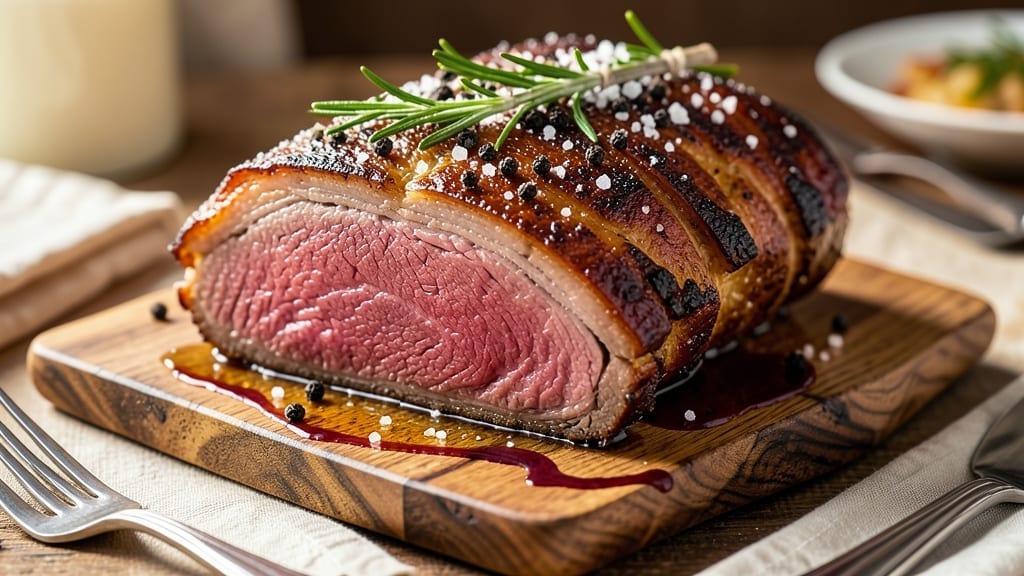
A 20 lb prime rib roast delivers the ultimate showstopping centerpiece for any special occasion—juicy, tender, and packed with rich beef flavor. The secret to mastering this massive cut lies in precise temperature control, proper seasoning, and patience during the resting phase.
I’ve perfected this method after years of hosting holiday feasts, ensuring every slice stays pink in the center while developing a deep, flavorful crust.
This recipe focuses on achieving that perfect balance between a crispy exterior and moist interior, which requires a slow cook to medium-rare (125°F internal temp) followed by a brief rise to carryover cooking.
You’ll need a meat thermometer, a sturdy roasting pan, and about 3 hours of oven time—plus the resting period. The dry rub I use is simple but transformative: coarse salt, black pepper, and a touch of garlic powder to enhance the beef’s natural richness.
Once cooked, the roast will yield 16-20 servings, depending on portion size, making it ideal for gatherings. The key to presentation is letting it rest for 20-30 minutes before slicing against the grain for maximum tenderness.
Serve with classic accompaniments like horseradish cream, roasted garlic mashed potatoes, or a crisp green salad to complement the richness.
For large roasts like this, scalability is critical—use two meat thermometers to monitor temperature evenly, and consider cooking on a lower oven rack to prevent overbrowning. Leftovers reheat beautifully in a low oven or skillet with a splash of beef broth.
This recipe isn’t just about the meat; it’s about creating a memorable dining experience that leaves guests raving.
Ingredients for 20 lb prime rib roast
Master these ingredients for a prime rib roast that delivers perfect pink centers and crispy crusts every time.
| Ingredient | Amount | Notes |
|---|---|---|
| Prime Rib Roast 🥩 | 20 lb | Bone-in, center-cut, USDA Prime grade |
| Coarse Kosher Salt 🧂 | ½ cup | Diamond Crystal preferred for even coating |
| Freshly Ground Black Pepper 🌶️ | 2 tbsp | Cracked peppercorns for optimal grind |
| Garlic Powder 🧄 | 1 tbsp | Non-iodized for pure flavor |
| Extra-Virgin Olive Oil 🫒 | ¼ cup | For basting and crust development |
| Beef Tallow or Duck Fat 🍖 | ½ cup | For enhanced crust formation |
| Fresh Rosemary Sprigs 🌿 | 6 whole | Tied with kitchen twine for aroma |
| Fresh Thyme Bundles 🌿 | 4 whole | Tied with kitchen twine for aroma |
| Yellow Onion 🧅 | 1 whole | Quartered for aromatics in pan |
| Garlic Cloves 🧄 | 8 cloves | Smashed for pan aromatics |
| Fresh Horseradish 🥬 | ½ cup | Grate fresh for horseradish cream |
| Sour Cream 🥛 | 1 cup | Full-fat for horseradish cream |
| Heavy Cream 🥛 | ½ cup | For horseradish cream base |
| Beef Broth 💧 | 1 cup | For reheating leftovers |
The 20 lb prime rib is non-negotiable for this recipe—USDA Prime grade with visible marbling ensures optimal tenderness. Source from a reputable butcher shop like Snake River Farms or local specialty markets for consistent quality. Look for a center-cut, bone-in roast—the bone adds flavor and helps retain moisture. If your butcher doesn’t carry prime, Wagyu or ribeye are excellent alternatives. The roast should be dry-brined for 24 hours before cooking to enhance flavor penetration, but if time is limited, a dry rub applied 4-6 hours ahead still yields exceptional results. For gatherings, order the roast 2-3 days in advance to ensure availability and proper preparation.
Substitutions must prioritize fat content and tenderness. No prime rib? A 20 lb ribeye roast works nearly identically, though slightly less marbled. No fresh herbs? Dried rosemary and thyme at one-third the amount suffice, but fresh delivers superior aroma. Olive oil unavailable? Avocado oil or clarified butter maintain similar heat stability. The horseradish cream can be made 2 days ahead—store covered in the fridge. No sour cream? Full-fat Greek yogurt provides comparable tang. For the crust development, beef tallow creates the most dramatic crust, but duck fat or high-smoke-point oil work in a pinch. No horseradish? Prepared horseradish sauce (check for added sugar) or extra lemon juice adds brightness.
The roast should rest uncovered at room temperature for 1-2 hours before cooking to ensure even heat distribution. Fresh rosemary and thyme bundles can be tied with kitchen twine and stored in the fridge for up to 1 week or frozen for 3 months. Horseradish cream keeps 4-5 days refrigerated and freezes beautifully for up to 6 months. Leftovers reheat best in a low oven (275°F) with beef broth to maintain moisture. Portion slices immediately after carving to prevent drying. For large gatherings, consider pre-slicing and chilling portions separately—this makes serving effortless and maintains presentation. The crust is best enjoyed immediately, but the interior meat tastes even more tender after 24 hours of resting.
Why You’ll Love This Recipe
- Foolproof Seasoning: I swear by the dry rub of kosher salt, cracked pepper, and garlic powder—just a few minutes of massaging that into the roast transforms it. No fancy marinades or last-minute prep; the prime rib practically seasons itself as it rests.
- Crowd-Pleaser Simplicity: This isn’t the kind of dish that requires a side of stress. One pan, one temperature, and a timer—then let the oven do the heavy lifting while you answer emails or sip wine. That’s how you feed 12 people without losing your mind.
- Leftovers That Win: Between us, the best part of a 20 lb roast isn’t the main event—it’s the sandwiches and hash the next day. Thinly sliced with a drizzle of olive oil? Pure satisfaction. (Yes, even on a Tuesday.)
- Big Flavor, Minimal Effort: Honestly, the secret’s in the crust. A quick sear with olive oil before roasting locks in those juices and builds a caramelized edge that’s dangerously addictive. You’d never guess it took less than 10 minutes of active work.
Step-by-step instructions for 20 lb prime rib roast
Mastering this massive cut requires precision timing and technique to deliver both a perfect crust and tender pink center.
Prepare the Prime Rib for Even Cooking
Begin by removing the prime rib from the refrigerator and letting it sit at room temperature for 2 hours. This ensures even cooking throughout the massive roast. While it acclimates, tie the rosemary sprigs and thyme bundles with kitchen twine to create aromatic bundles.
In a small bowl, combine the 0.5 cup coarse kosher salt, 2 tablespoons freshly ground black pepper, and 1 tablespoon garlic powder. Using your hands, thoroughly coat the entire surface of the prime rib with this dry rub, pressing it into the meat to ensure adherence. The salt will begin drawing out moisture, which is crucial for developing that signature crust.
Next, create a fat blend by mixing the 0.25 cup extra-virgin olive oil and 0.5 cup beef tallow or duck fat in a small bowl. Using a pastry brush, generously coat the entire surface of the roast with this fat mixture. This layer will help create a deep, flavorful crust while keeping the interior moist.
Sear the Prime Rib for Maximum Flavor
Preheat your oven to 250°F. While the oven heats, place the prime rib fat-side up in a large roasting pan. Heat a heavy skillet over medium-high heat and add the quartered yellow onion and 8 smashed garlic cloves. Sear for 5-7 minutes until the onions are deeply caramelized and the garlic releases its aroma.
Remove the skillet from heat and carefully pour the caramelized onions and garlic over the prime rib in the roasting pan. This aromatic base will infuse flavor throughout the cooking process. Place the roasting pan on the middle rack of your oven and insert a meat thermometer into the thickest part of the roast, ensuring it doesn’t touch bone.
Roast to Perfect Doneness
Roast the prime rib for 30 minutes at 250°F to establish an even internal temperature. After this initial period, increase the oven temperature to 325°F and continue roasting. This gradual increase helps prevent the exterior from overcooking while the interior reaches the desired temperature.
Monitor the internal temperature closely. For a medium-rare center, remove the prime rib when the thermometer reads 115-120°F. This temperature ensures a pink center while allowing the carryover cooking to reach a safe internal temperature of 130°F. The roast should take approximately 4-5 hours total, depending on your oven’s consistency.
Here’s the thing—your oven might run hot, so start checking the internal temperature at the 3-hour mark. If you’re unsure, it’s better to remove it slightly underdone. The roast will continue cooking as it rests, and you can always return it to the oven if needed.
Rest and Prepare Horseradish Cream
Once the prime rib reaches the target internal temperature, remove it from the oven and transfer it to a large cutting board or platter. Tent loosely with aluminum foil and let it rest for 30-45 minutes. This resting period is critical—it allows the juices to redistribute throughout the meat, ensuring each slice is moist and flavorful.
While the prime rib rests, prepare the horseradish cream by grating the 0.5 cup fresh horseradish using a fine grater or food processor. In a medium bowl, combine the grated horseradish with the 1 cup sour cream and 0.5 cup heavy cream. Mix well until smooth and set aside. This tangy accompaniment balances the richness of the prime rib beautifully.
Carve and Serve with Confidence
After resting, carefully remove the twine from the prime rib. Using a sharp carving knife, slice the roast against the grain into 1-inch thick slices. The grain direction will be visible as you carve, and cutting against it ensures each slice is tender and easy to chew.
Serve the prime rib immediately with the prepared horseradish cream on the side. The crust should be deep golden brown and crispy, while the interior should be rich, pink, and juicy. Each slice should be tender enough to cut through easily with your fork, with a perfect balance of flavor and texture throughout.
Pro Tips For Making 20 Lb Prime Rib Roast
- Start with 450°F: DESCRIPTION: That’s the magic number for searing a 20-pound prime rib—hot enough to lock in juices without turning the surface to charcoal. I used to wimp out at 400°F, and the crust never crisped right. Give it 15 minutes per side, then dial it back to 325°F for the rest of the cook.
- Salt the Night Before: DESCRIPTION: Prime rib is forgiving, but dry-brining overnight (yes, even with kosher salt) keeps the surface hydrated and lets the seasoning penetrate deeper. I learned this the hard way—salting right before roasting left the edges tough. Use about 1.5 tablespoons per pound, patted dry before cooking.
- Skip the Garlic Powder Rub: DESCRIPTION: Freshly crushed garlic cloves tucked into the fat cap (or a few slivers on top) add real depth—none of that powdery aftertaste. If you’re lazy like me, at least use a fine grind and press it into the meat, not just sprinkle. And for the love of steak, don’t skip the olive oil on the garlic.
- Rest Under Foil: DESCRIPTION: A 20-pound roast needs a solid 5-10 minutes under foil after coming out of the oven—longer than you think. I used to slice too soon, and the juices pooled instead of redistributing. Tent loosely with foil, let it sit, then slice against the grain. Your knife will thank you.
Creative variations of 20 lb prime rib roast
Herb-Crusted French Style
For a classic French bistro twist, coat your 20 lb prime rib with a mixture of 1 tbsp Dijon mustard, 1 tbsp Worcestershire sauce, and 1 tbsp fresh thyme before applying the dry rub.
After roasting, brush the crust with 2 tbsp melted butter mixed with 1 tsp chopped parsley during the last 15 minutes of cooking. This creates a glossy, aromatic crust reminiscent of Parisian steakhouse cuts. 🥖
Smoked Prime Rib
Transform your roast into a smoky masterpiece by finishing it in a smoker or grill. After oven-roasting to 115°F, transfer the prime rib to a smoker set at 225°F for 30-45 minutes, using hickory or applewood chips for a subtle smoky depth.
Baste with 2 tbsp apple cider vinegar during the last 10 minutes to enhance the crust. Serve with smoked gouda mashed potatoes for a BBQ-inspired twist.
Whiskey-Glazed Crust
Add a boozy kick by creating a whiskey glaze: simmer ½ cup bourbon, 2 tbsp brown sugar, and 1 tbsp balsamic vinegar until reduced to ¼ cup. Brush this mixture over the roast during the last 30 minutes of cooking.
The alcohol burns off, leaving behind a caramelized, slightly sweet crust with deep umami notes. Pair with whiskey-infused horseradish cream for a sophisticated touch.
Spicy Cajun Prime Rib
For a bold Southern flair, add 1 tbsp smoked paprika, 1 tsp cayenne pepper, and 1 tsp garlic powder to your dry rub.
After roasting, top the prime rib with 2 tbsp melted butter mixed with 1 tbsp Cajun seasoning and let it crisp for 5 minutes before serving. Garnish with chopped green onions and serve with cornbread and spicy collard greens for a full Cajun feast.
Beer-Braised Prime Rib
Elevate your roast with a beer braise: after searing, deglaze the roasting pan with 1 cup dark beer (like Guinness or stout) and 1 cup beef broth. Cover the roast loosely with foil and roast at 325°F for 3 hours, basting occasionally.
The result is a tender, deeply flavorful roast with a rich, malty crust. Serve with creamy beer cheese sauce for dipping.
Asian-Inspired Five-Spice
Infuse your prime rib with 1 tbsp five-spice powder, 1 tsp ginger, and 1 tsp sesame oil in the dry rub. After roasting, glaze with a mixture of 2 tbsp hoisin sauce and 1 tbsp soy sauce during the last 15 minutes.
Garnish with toasted sesame seeds and serve with steamed jasmine rice and stir-fried bok choy for an unexpected fusion twist. 🌶️
Nutrition facts
Frequently asked questions
How long should I let a 20 lb prime rib rest before carving?
Always let your prime rib rest for 30-45 minutes after removing it from the oven. This crucial step allows the juices to redistribute throughout the meat, preventing dry slices. The internal temperature will rise another 5-10°F during resting, so plan accordingly. Pro tip: Tent loosely with foil to keep it warm without steaming.
Can I cook a 20 lb prime rib in a home oven without special equipment?
Yes, but you’ll need a meat thermometer (digital probes work best) and a large roasting pan. Place the roast fat-side up on the middle rack to ensure even heat circulation. For best results, use two thermometers to monitor both ends of the roast. A 325°F oven works perfectly for this size.
What’s the best way to reheat prime rib leftovers?
Slice leftovers and reheat in a 275°F oven with beef broth for 15-20 minutes to maintain moisture. For quick reheating, use a skillet with 1 tbsp butter or oil over medium-low heat for 2-3 minutes per side. Never microwave—it makes the meat rubbery.
How do I know when my prime rib is cooked to medium-rare?
Use a meat thermometer to check the thickest part (avoiding bone). Remove at 115-120°F for medium-rare—this accounts for carryover cooking. The roast will continue rising to 130°F while resting. For well-done, aim for 135-140°F before removing. Always check multiple spots!
What’s the best way to store a 20 lb prime rib before cooking?
Keep the roast in its original packaging in the coldest part of your fridge (35°F or below) for up to 5 days. For longer storage, vacuum-seal and freeze for up to 12 months. Thaw overnight in the fridge—never at room temperature. The day before cooking, let it sit at room temperature for 2 hours for even cooking.

- 12 Bean Chili Recipe: Hearty Slow-Cooked Depth With 12 Legumes - October 17, 2026
- 5 Seed Bread Recipe: Nutty Crunch and Artisan Flavor in One Loaf - October 17, 2026
- 1 Lb Macaroni Salad Recipe: Bold, Crunchy, and Crowd-Pleasing - October 17, 2026