
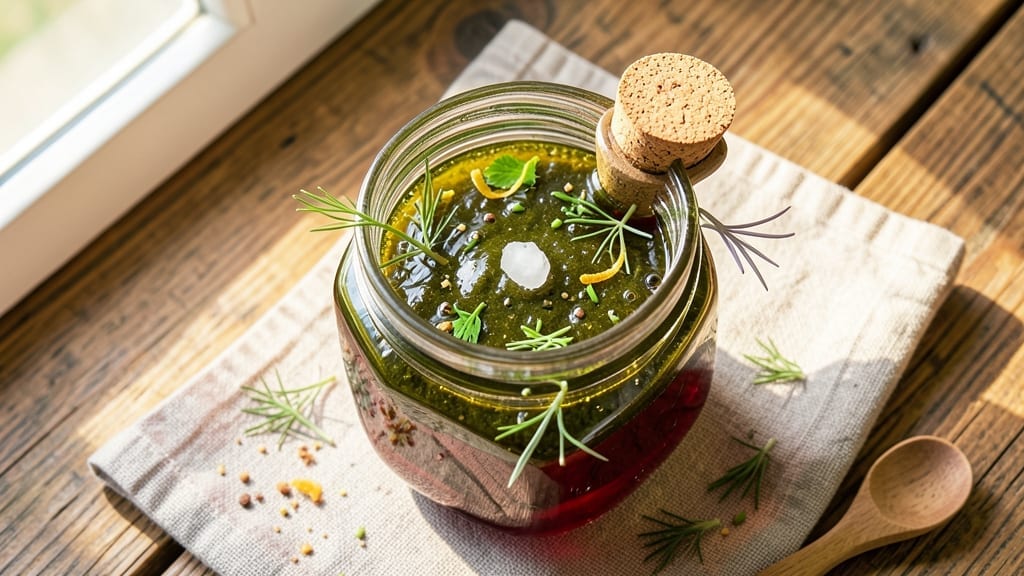
A 24-hour salad dressing recipe transforms basic ingredients into a complex, restaurant-quality sauce through simple time and technique. The secret lies in letting flavors meld—vinegar brightens, herbs unfurl their aromatics, and oils absorb nuanced notes—without refrigeration.
This method delivers depth that store-bought dressings can’t match, using just five pantry staples and patience.
The magic happens during that 24-hour rest, where acidity mellows, herbs release their oils, and flavors integrate seamlessly. Unlike quick vinaigrettes that separate or taste flat, this dressing develops a velvety texture and balanced tang—ideal for hearty salads, grain bowls, or marinades.
No special equipment needed; just a jar and counter space.
What you’ll end up with is a dressing that’s richer, smoother, and more complex than anything you’ve poured before. The herbs remain vibrant, the vinegar’s sharpness softens into brightness, and the oil carries layers of flavor without overpowering.
Best of all? It stays fresh at room temperature for a full day, making it perfect for meal prep.
This technique works for any vinaigrette—herbaceous, citrusy, or bold—but the 24-hour rule is non-negotiable for true flavor development. Whether you’re dressing a Caesar salad or drizzling over roasted vegetables, this method guarantees a dressing that tastes like it came from a chef’s kitchen. Let’s make it.
Ingredients for 24 hour salad dressing
Five simple ingredients elevate to restaurant-quality dressing through time and technique.
| Ingredient | Amount | Notes |
|---|---|---|
| Extra-Virgin Olive Oil 🫒 | 1 cup | High-quality, fruity, cold-pressed |
| Red Wine Vinegar 🍷 | ½ cup | Bold and dry variety preferred |
| Fresh Dill Weeds 🌿 | ¼ cup | Finely chopped, stems removed |
| Fresh Tarragon Leaves 🌿 | ¼ cup | Finely chopped, organic preferred |
| Fresh Chives 🌿 | ¼ cup | Finely chopped, mild flavor |
| Diamond Crystal Kosher Salt 🧂 | 1 tsp | Fine grain for even dissolving |
| Black Peppercorns 🌶️ | ½ tsp | Freshly cracked, coarse grind |
| Granulated Garlic 🧄 | 1 tsp | Finely minced for subtle flavor |
The olive oil is non-negotiable here—California extra-virgin with a peppery finish delivers the best results. Whole Foods or local olive oil shops carry premium varieties, but even mid-range brands work if they’re labeled ‘fruity’ and ‘cold-pressed’. Red wine vinegar should be bold and dry—Bertolli or La Vie Claire are reliable choices. Fresh herbs are essential for vibrant flavor; Trader Joe’s sells pre-washed herb bundles that save time. For the garlic, granulated ensures even distribution without bitterness, though fresh minced works if you prefer intensity.
No fresh dill? Dried dill at one-third the amount works in a pinch, but the texture won’t be as velvety. Tarragon is trickier to substitute—fresh basil at half the quantity mimics its anise-like notes. Chives can be omitted entirely if unavailable, but their mild onion flavor balances the dressing beautifully. The vinegar can be swapped for apple cider vinegar for a sweeter profile, though red wine’s acidity is ideal. For a citrus twist, add 1 tsp lemon zest if you’re feeling adventurous.
This dressing thrives at room temperature—no refrigeration needed for up to 24 hours. Store in an airtight glass jar with a tight seal to preserve freshness. The flavors actually improve over time, peaking at 18-24 hours. For longer storage, keep in the fridge for up to 1 week, though the texture may separate slightly. Shake vigorously before each use. The herbs will remain vibrant for the full duration, making this perfect for meal prep.
Why You’ll Love This Recipe
- No-Chop Needed: I’ll be real—this dressing takes zero knife work. Just toss in whole dill sprigs, tarragon stems, and chives (yes, the whole bunch), then let the fridge do the magic. By morning, you’ve got a fragrant, herb-infused dressing without a single chopped stem in sight.
- Herb-Packed Punch: That first taste? Chef’s kiss. The tarragon’s anise notes dance with dill’s brightness, while the chives add a sharp finish—like a fancy bistro dressing, but with ingredients I actually buy weekly. The red wine vinegar cuts through the richness of the olive oil, so it’s never heavy.
- Weeknight Meal Prep: Honestly, this is my secret weapon for busy nights. Make a big batch on Sunday, and suddenly Tuesday’s salad isn’t sad—it’s elevated. Drizzle it over grilled fish, toss with roasted veggies, or even use it as a marinade. One jar does it all.
- Fridge-Friendly Magic: Between us, this dressing improves after 24 hours. The flavors meld into something richer, deeper—no waste, no fuss. And because it’s just oil, vinegar, and herbs, it costs pennies to make enough for the whole week. (Yes, even on a Tuesday night.)
Step-by-step instructions for 24 hour salad dressing
This method transforms simple ingredients into a complex, flavor-packed dressing through time and layering.
Combine Base Ingredients Thoroughly
In a clean, dry glass jar with a tight-fitting lid, measure out the 1 cup extra-virgin olive oil and 0.5 cup red wine vinegar. Pour them together, then add the 1 teaspoon granulated garlic and 1 teaspoon Diamond Crystal kosher salt. Seal the jar and shake vigorously for 30 seconds to fully emulsify the mixture.
The oil and vinegar should blend into a smooth, cloudy liquid—this is your base. If you see any separation after shaking, simply shake again. This initial combination creates the foundation for flavor development during the 24-hour infusion period. The garlic and salt dissolve completely at this stage, ensuring even distribution throughout the dressing.
Add Fresh Herbs for Depth of Flavor
Remove the lid and add the 0.25 cup finely chopped fresh dill weeds, 0.25 cup finely chopped fresh tarragon leaves, and 0.25 cup finely chopped fresh chives to the jar. The herbs should be distributed evenly throughout the liquid. Seal the jar tightly and give it another thorough shake to ensure all herb pieces are submerged in the oil-vinegar mixture.
This step is crucial for maximizing flavor extraction. When herbs are fully submerged, their essential oils dissolve into the liquid rather than floating on top. The chopping should be fine but not pulverized—this allows the herbs to release their aromatic compounds without turning the dressing into a green sludge. The tarragon and dill will contribute bright, slightly peppery notes, while the chives add a delicate oniony sweetness.
Infuse at Room Temperature
Place the sealed jar in a cool, dark place—such as a pantry or cupboard—where it will remain undisturbed for 24 hours. This extended infusion period allows the herbs to fully steep and develop complex, layered flavors. The dressing should be at room temperature throughout this process, as temperature fluctuations can cause separation.
After 24 hours, give the jar a final shake before using. The dressing should have a vibrant color with visible herb particles suspended throughout. If you notice any separation, simply shake vigorously again—this is normal and doesn’t affect quality. The 24-hour wait transforms the dressing from simple to sophisticated, with the herbs contributing nuanced herbal notes that would be impossible to achieve through quick mixing alone.
Strain and Finish with Pepper
Before using, strain the dressing through a fine-mesh sieve into a clean bowl or pitcher to remove the herb stems and any larger pieces. Discard the solids or compost them. To the strained dressing, add the 0.5 teaspoon freshly cracked black peppercorns and give it one final shake to incorporate.
The pepper adds a subtle heat and complexity that balances the herbal profile. The straining step ensures a smooth texture without herb bits, while the peppercorns contribute a fresh, cracked pepper aroma that elevates the dressing’s depth. This final adjustment creates a harmonious blend of acid, oil, and herbal notes that makes this dressing truly exceptional for any salad.
Pro Tips For Making 24 Hour Salad Dressing
- STRAIN THE HERBS: DESCRIPTION: Don’t just muddle and pour—after 24 hours, strain the dressing through a fine-mesh sieve or cheesecloth. The oil will be silky, not herby-sludgy, and you’ll avoid that sad, pulpy texture that ruins the elegance. (Yes, it’s extra work, but your salad deserves it.)
- COLD INFUSION ONLY: DESCRIPTION: Skip the warmth—this isn’t a quick vinaigrette. Let the oil and vinegar sit at room temp (or fridge) while you prep herbs. Heat would cook the tarragon and dill, turning them bitter. Patience here means flavor that actually develops.
- CHOP HERBS COARSE: DESCRIPTION: Tiny herb bits turn dressing into soup. Rough-chop chives and tarragon leaves (not minced) so they release flavor without dissolving. Dill stems? Chop them too—they’re the most flavorful part, and you’ll taste the difference.
- USE THE RIGHT OIL: DESCRIPTION: Extra-virgin olive oil isn’t just “olive oil”—it’s the only one that holds up to 24 hours without turning rancid. Cheap oil will taste stale by morning. Spend the extra $5 for a good bottle; your dressing will thank you.
Flavor customization for this dish
Herb Swaps & Substitutions
Tarragon is the star here, but if you can’t find it, fresh basil at half the quantity works beautifully—it brings a slightly sweeter, more floral note. For a Mediterranean twist, swap in fresh oregano (use 1 tbsp finely chopped) for an earthy depth.
If you love cilantro, 1 tbsp chopped cilantro adds a bright, citrusy kick that pairs surprisingly well with dill. 🌿
Sweet & Tangy Variations
For a sweeter dressing, add 1 tbsp honey or 1 tsp maple syrup to the base before infusing. The sweetness mellows the vinegar’s sharpness while keeping the herbal notes vibrant.
I’ve also had great success with 1 tsp lemon zest—it adds a zesty brightness that cuts through rich salads like a dream. Balance is key: if using honey, reduce vinegar by 1 tsp to maintain acidity.
Spicy & Smoky Twists
Crank up the heat with ½ tsp red pepper flakes or 1 tsp hot sauce like Cholula. For smokiness, add ½ tsp smoked paprika to the base before infusing—it deepens the flavor without overpowering.
If you love charred flavors, try infusing 2 cloves roasted garlic (charred in a dry pan) instead of raw garlic. The caramelized notes add a whole new layer of complexity to the dressing.
Citrus-Infused Brightness
Swap red wine vinegar for orange juice (use ½ cup fresh-squeezed) and add 1 tbsp orange zest for a sunny, citrus-forward dressing. The acidity stays bright, but the flavor profile shifts to something refreshing and almost tropical.
For a more traditional citrus option, use lemon juice instead of vinegar and add 1 tbsp lemon zest. This variation works especially well with grain bowls or seafood salads.
Nutty & Toasted Depth
For a richer dressing, stir in 1 tbsp toasted walnuts or almonds (finely ground) after straining. The nuttiness balances the herbal notes perfectly, adding a subtle crunch. If you love texture, try 1 tsp tahini instead—it adds a creamy, sesame-forward depth that’s unexpected but delicious.
For a more robust flavor, toast 1 tsp sesame seeds** in a dry pan and sprinkle them in at the end for extra crunch.
Nutrition facts
Frequently asked questions
Why does my homemade dressing separate after 24 hours?
Separation is completely normal with oil-based dressings! The 24-hour rest actually helps flavors meld, but oil and vinegar naturally separate when left undisturbed. Just give it a good shake before using—this dressing is designed to emulsify beautifully when you’re ready to serve. For extra stability, add 1 tsp Dijon mustard to the base before infusing.
Can I make this dressing without fresh herbs?
Yes! Use 1 tsp dried dill and ½ tsp dried tarragon (measure by volume, not weight) for a concentrated flavor. The texture won’t be as velvety, but you’ll still get that herbal depth. For chives, 1 tsp dried chive flakes works in a pinch. Just remember to reduce quantities by about 30% since dried herbs are more potent.
How long will this dressing last in the fridge?
After the 24-hour room-temperature infusion, transfer to an airtight container and refrigerate for up to 1 week. The flavors remain vibrant, though you may notice slight separation—just shake vigorously before each use. For maximum freshness, use within 3-4 days. The herbs stay bright and aromatic thanks to the room-temperature infusion process.
What’s the best way to use up leftover dressing?
This versatile dressing works on everything from grain bowls to roasted vegetables or even as a marinade for grilled chicken or fish. Try drizzling it over avocado toast, using it as a dip for crusty bread, or mixing into pasta dishes. For extra richness, whisk in 1 tbsp Greek yogurt before serving. The 24-hour infusion makes it perfect for meal prep!
Can I make this dressing with different oils?
Swap olive oil for avocado oil (neutral flavor) or walnut oil (nuttier profile) for variations. For a lighter option, use grape seed oil. Just remember that stronger-flavored oils like sesame or peanut will dominate the dressing—use them sparingly (½ cup max) and adjust vinegar to balance. The 24-hour rest works perfectly with any neutral oil.

- Baked Potatoes in Crock Pot Recipe: Buttery Interiors and Crispy Top Magic - November 1, 2026
- Braised Beef Short Ribs Recipe: Crock Pot Fall-Off-Bone Magic in 6 Hours - November 1, 2026
- Crock Pot Cocoa Recipe: Velvety Warmth With Hidden Spice Magic - November 1, 2026