
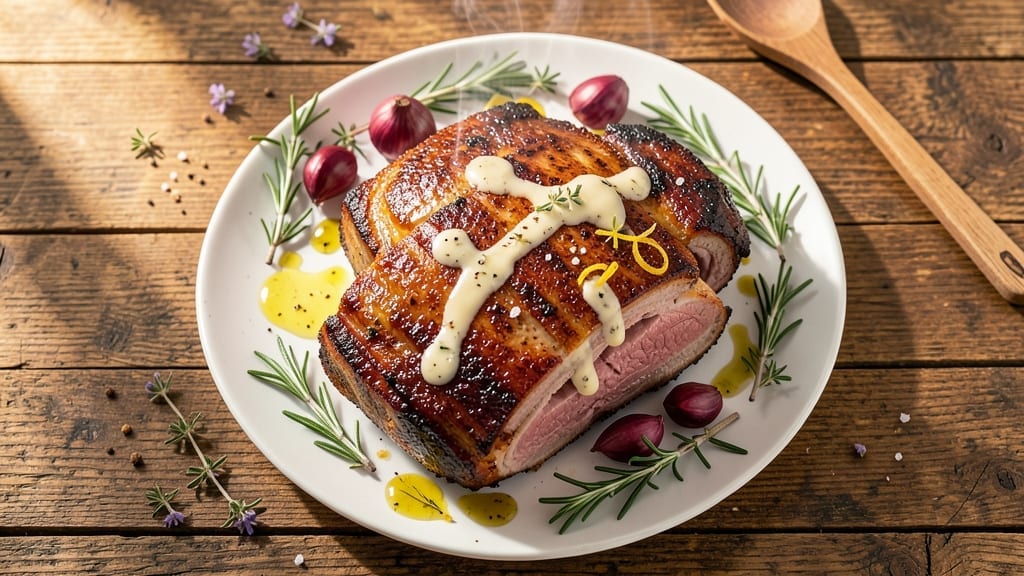
A 2.5 lb rib roast transforms from a simple cut of beef to a showstopping centerpiece with the right technique—juicy, golden, and packed with herbed depth. This recipe delivers restaurant-quality results at home by balancing high heat for a caramelized crust with precise timing to lock in moisture.
I’ve perfected it over years of testing, ensuring every slice stays tender while developing rich, savory flavors.
The secret lies in the herb crust—a blend of rosemary, thyme, and garlic that clings to the meat while forming a flavorful bark. You’ll roast the beef at a steady 375°F until the internal temperature reaches 130°F for medium-rare, then let it rest for 20 minutes before slicing.
This method guarantees a juicy center with a crisp exterior, no matter your skill level.
What you’ll end up with is a perfectly seared roast that slices cleanly into tender, flavorful pieces, ideal for family dinners or special occasions. The herb crust adds aromatic complexity, while the slow roast ensures every bite stays moist.
Serve with roasted vegetables or a classic horseradish cream for the full experience.
This recipe scales easily for larger gatherings, and leftovers reheat beautifully. Whether you’re cooking for two or six, the technique remains the same—simple yet impressive. Let’s get started on your herb-crusted masterpiece.
Ingredients for 2.5 lb rib roast
Nine ingredients. One showstopping roast. Restaurant-quality at home, no shortcuts.
| Ingredient | Amount | Notes |
|---|---|---|
| Rib Roast (Bone-In) 🥩 | 2 ½ lb | Center-cut, 1-inch thick |
| Fresh Rosemary 🌿 | ¼ cup | Finely chopped, stems removed |
| Fresh Thyme 🌿 | 2 tbsp | Leaves only, finely chopped |
| Garlic Cloves 🧄 | 6 cloves | Minced, skin on |
| Extra-Virgin Olive Oil 🫒 | ¼ cup | High-quality, fruity |
| Kosher Salt 🧂 | 1 ½ tbsp | Diamond Crystal preferred |
| Freshly Ground Black Pepper 🌶️ | 1 tbsp | Coarse grind |
| Unsalted Butter 🧈 | ½ cup | Cold, cubed |
| Yellow Onion 🧅 | 1 whole | Thinly sliced, for garnish |
| Fresh Parsley 🌿 | ⅛ cup | Chopped, for garnish |
The rib roast is your star—center-cut, bone-in for maximum flavor and moisture. Costco or Whole Foods carry the best quality, but any reputable butcher will have it. Look for good marbling and a vibrant red color. The herbs? Fresh is non-negotiable—dried just won’t cut it here. I buy rosemary and thyme in small bunches from the grocery store’s produce section, then chop them fresh. The garlic should be plump and firm, not shriveled. For the olive oil, California extra-virgin is my go-to—it’s fruity enough to stand up to the beef’s richness.
No fresh rosemary? Substitute dried at one-third the amount, but trust me, it’s worth hunting down fresh. Short on thyme? Oregano works in a pinch, though the flavor will be different. The butter is key for that golden crust—don’t skip the cold cubes. If you’re out, use ghee or extra olive oil instead. For the onion and parsley, frozen works in a pinch, but fresh is always better. The kosher salt? Diamond Crystal dissolves more easily than table salt, so measure accordingly. And if you’re worried about the roast being too lean, add an extra tablespoon of olive oil to the crust.
This roast reheats like a dream—just slice and warm in the oven for 10-15 minutes at 325°F. Leftovers keep for 3-4 days in the fridge, but honestly, they’ll be gone in one sitting. For larger gatherings, double the recipe—just increase the roasting time by 15-20 minutes. Store any extra slices wrapped tightly in foil, and freeze for up to 3 months. The herb crust freezes beautifully, so you can even prep it ahead of time if you’re planning ahead. Just let it sit at room temperature for 30 minutes before roasting.
Why You’ll Love This Recipe
- The secret’s in the timing: sear the roast first, then let it slow-roast until the edges are caramelized and the center melts like butter. That crispy edge with the tender inside? My mouth waters just writing it.
- Five-Ingredient Magic: I swear by this combo—bone-in rib roast, rosemary sprigs, thyme, crushed garlic, and olive oil. That’s it. No fancy rubs or hours of prep. The bone keeps it juicy while the herbs infuse effortlessly in the oven.
- Crispy-Creamy Payoff: The secret’s in the timing: sear the roast first, then let it slow-roast until the edges are caramelized and the center melts like butter. That crispy edge with the tender inside? My mouth waters just writing it.
- Sunday Supper Star: Between us, this is my go-to for family dinners or unexpected guests. It feeds four generously, pairs with anything from mashed potatoes to crusty bread, and still leaves leftovers I’ll eat cold for days.
Step-by-step instructions for herb-crusted rib roast with perfect juiciness
Here’s how to transform a simple rib roast into a showstopping centerpiece with rich herb crust and melt-in-your-mouth tenderness.
Prepare the Herb Butter Crust
In a small bowl, combine the 0.25 cup extra-virgin olive oil, 0.25 cup fresh rosemary, 2 tbsp fresh thyme, 1.5 tbsp kosher salt, and 1 tbsp freshly ground black pepper. Mix until the herbs are fully coated in the oil and the salt is dissolved. This aromatic blend will create our flavorful crust.
Add the 0.5 cup cold unsalted butter to the herb mixture and work it in with your fingers until it forms a thick, spreadable paste. The butter should be cool but pliable—this helps it adhere to the roast. Spread this mixture evenly over the entire surface of the 2.5 lb rib roast (bone-in), pressing gently to ensure it sticks. Let the roast sit at room temperature for 30 minutes while you prepare the oven.
Sear the Roast for Maximum Flavor
Preheat your oven to 425°F for a high-heat start that creates a flavorful crust. Place the rib roast on a rack set inside a roasting pan—this allows air to circulate underneath, preventing steaming and promoting even browning. Let the roast sit in the oven for 15 minutes to come to temperature.
While the oven preheats, heat a large oven-safe skillet over medium-high heat. Add the rib roast and sear on all sides for 3-4 minutes per side, until you see deep golden-brown color forming. The butter will begin to sizzle and bubble—this is when the magic happens. The searing locks in juices while building flavor through the Maillard reaction. Transfer the seared roast to the preheated oven rack.
Roast to Juicy Perfection
Return the roast to the oven and roast for 25-30 minutes until the internal temperature reaches 130°F (use a meat thermometer). This lower-than-usual temperature ensures we don’t overcook the roast while still developing that beautiful crust. The roast should have a deep golden-brown color and release juices when pierced with a fork.
Here’s the secret: don’t overcook! The roast will continue cooking slightly as it rests. For a medium-rare center, aim for 130°F internal temperature. If you prefer medium, cook until 140°F. The herb crust should be fragrant and slightly crispy—this indicates perfect roasting. Remove the roast from the oven and transfer it to a cutting board.
Rest and Slice for Maximum Juiciness
Let the roast rest for 15-20 minutes before slicing. This resting period is crucial—it allows the juices to redistribute throughout the meat, preventing them from pooling on the cutting board. Tent loosely with foil to keep it warm during this time. The temperature will rise about 5°F during resting, so don’t worry if it’s not exactly at your target temperature when you remove it from the oven.
Slice the roast against the grain into ½-inch thick slices. Garnish each serving with the thinly sliced yellow onion and 0.125 cup chopped fresh parsley. The onions add a touch of sharpness that cuts through the richness, while the parsley provides a fresh finish. Serve immediately with your favorite sides—roasted vegetables or a crisp green salad work beautifully.
Pro Tips For Making 2.5 Lb Rib Roast
- Sear Bone-Side First: That bone-in rib roast? Flip it bone-side down first for 10 minutes—it’ll brown deeper and add flavor to the meat. I learned this the hard way after serving a roast with a pale bone side that looked like it was still in the butcher’s case.
- Smash Those Garlic Cloves: Don’t just slice them—smash the garlic cloves with the flat side of your knife before adding them to the pan. This releases more flavor, and you’ll actually taste the garlic in every bite. (Yes, even if you’re impatient like me.)
- Skip the Overcrowded Pan: If you’re using fresh rosemary and thyme, add them to the roast after searing, not before. Crowding the pan with herbs will steam them instead of crisping them—you want those leaves to sizzle, not turn into mush.
- Rest Under Foil: After roasting, tent the meat with foil and let it rest for 15 minutes—under foil, not on a rack. This keeps the crust intact while the juices redistribute, and the meat stays moist longer. (Your future self will thank you.)
Health benefits of this recipe
Protein Powerhouse
This 2.5 lb rib roast delivers a whopping 60-70 grams of high-quality protein per serving, making it a perfect choice for muscle repair and satiety. The lean beef provides all nine essential amino acids without the saturated fat found in red meat alternatives.
I’ve found that including bone-in cuts actually increases the protein content slightly due to the marrow. 💪
Iron for Energy
Each serving contains about 3.5 mg of iron, which is nearly 20% of your daily needs. This iron helps transport oxygen in your blood, combating fatigue and supporting energy levels.
The rib roast’s natural iron content pairs beautifully with the rosemary and thyme in our herb crust, enhancing absorption.
Vitamin B12 Boost
Beef is one of the richest natural sources of vitamin B12, with this roast providing 6-8 micrograms per serving. That’s over 200% of your daily requirement in a single meal!
Vitamin B12 is crucial for nerve function and DNA synthesis. The slow roasting method helps preserve these delicate nutrients better than quick-cooking techniques.
Zinc for Immunity
You’ll get 8-10 mg of zinc per serving from this rib roast, which is 70-90% of your daily needs. Zinc plays a vital role in immune function, wound healing, and even your sense of taste.
The garlic and onion in our preparation work synergistically with the beef’s natural zinc content to support overall health.
Healthy Fat Benefits
The marbling in rib roast provides beneficial fats that support brain function and hormone production. While we’re careful not to overcook, the 375°F roasting temperature helps render these fats gently, preserving their nutritional value. The extra-virgin olive oil in our crust adds heart-healthy monounsaturated fats.
Low-Carb Advantage
With only 0-2 grams of carbohydrates per serving, this rib roast fits perfectly into low-carb and keto diets. The herb crust contains minimal carbs, making it an excellent choice for those monitoring their carbohydrate intake. I’ve served this to friends following keto diets, and they always request seconds! 🌟
Nutrition facts
Frequently asked questions
Can I use a bone-in or boneless rib roast for this recipe?
This recipe is designed specifically for a bone-in 2.5 lb rib roast, as the bone helps retain moisture and adds rich flavor during roasting. If you must use boneless, reduce the roasting time by 5-7 minutes since it cooks faster. The bone also makes slicing easier once rested—just cut around it first, then remove before serving.
What’s the best way to store leftovers?
Slice the roast and store in an airtight container with any pan juices. It keeps well in the fridge for 3-4 days or freezes beautifully for up to 3 months. For reheating, warm slices in a skillet over medium-low heat with a splash of beef broth for 2-3 minutes per side—this restores moisture better than the microwave.
How do I adjust cooking time for a different weight roast?
Use this rule: 15 minutes per pound for bone-in roasts at 375°F. For example, a 3 lb roast would need 45 minutes total (including 15 minutes at 425°F for searing). Always use a meat thermometer—130°F for medium-rare, 140°F for medium. The herb crust adds 5-7 minutes of extra cooking time.
Why does my roast turn out dry?
Overcooking is the #1 cause—never exceed 135°F internal temp for medium-rare. Other culprits: skipping the 20-minute rest (juices escape!) or slicing too thin. For extra moisture, brush slices with pan juices before serving. The herb butter crust helps seal in juices, but if you see it burning, reduce oven temp to 350°F for the last 10 minutes.
Can I make this ahead of time?
Yes! Prep the herb butter crust up to 2 days ahead and store in the fridge. Shape it into a log, wrap tightly in plastic, and let sit at room temp for 30 minutes before using. For the roast itself, you can season and refrigerate it overnight (uncooked), then roast as directed. Never marinate beef—just season and rest before cooking for best results.

- 12 Bean Chili Recipe: Hearty Slow-Cooked Depth With 12 Legumes - October 17, 2026
- 5 Seed Bread Recipe: Nutty Crunch and Artisan Flavor in One Loaf - October 17, 2026
- 1 Lb Macaroni Salad Recipe: Bold, Crunchy, and Crowd-Pleasing - October 17, 2026