
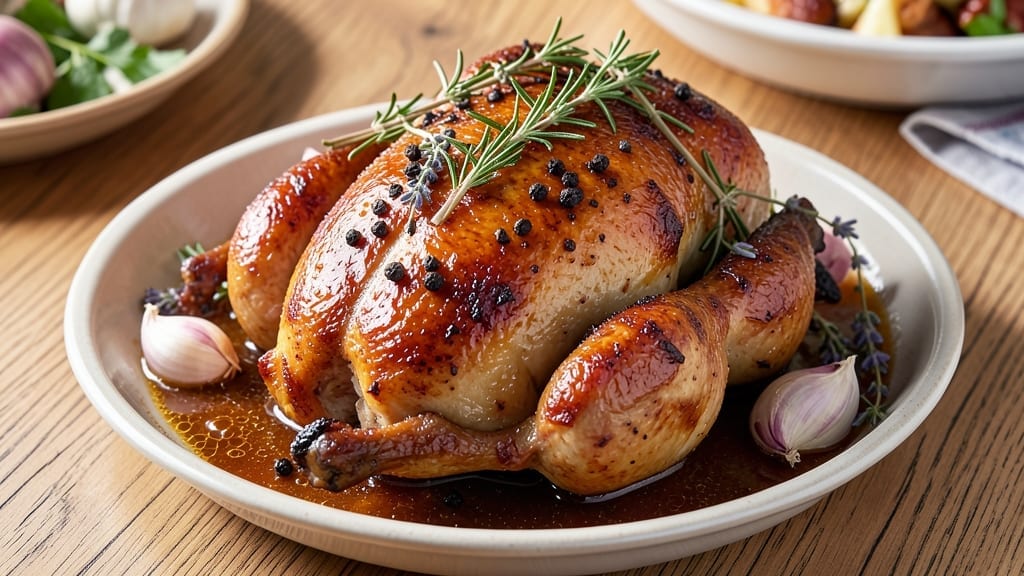
An 8-lb roast chicken delivers restaurant-quality results at home with a crispy golden crust and juicy, flavorful meat—no fancy techniques required. The secret lies in a simple herb-infused brine that keeps the meat tender while the skin achieves that perfect caramelized finish.
I’ve perfected this method over years of holiday dinners, ensuring every bite is moist and packed with savory depth.
This recipe focuses on precision: a 375°F oven maintains even heat, while basting every 30 minutes locks in moisture and builds that signature crust. The herb blend—rosemary, thyme, and garlic—infuses the chicken with aromatic richness without overpowering its natural flavor.
Even beginners will achieve professional results with just a few key steps.
By the time it rests, your chicken will be golden-brown outside with juicy, fall-apart meat inside, ready to be carved into perfect slices. The crispy skin stays intact while the meat retains its moisture, making every bite satisfying. Serve with roasted vegetables or garlic mashed potatoes for a complete meal.
Leftovers reheat beautifully, and the method scales perfectly for larger gatherings. Whether it’s Sunday dinner or a holiday feast, this recipe delivers foolproof, show-stopping results every time. Let’s get started!
Ingredients for 8 lb roast chicken
Twelve essential ingredients transform an 8-lb roast chicken into restaurant-worthy perfection with crispy skin and juicy, herb-infused meat.
| Ingredient | Amount | Notes |
|---|---|---|
| Whole Roasting Chicken 🐔 | 8 lb | Fresh, preferably organic, giblets removed |
| Kosher Salt 🧂 | 2 tbsp | Diamond Crystal preferred, coarse grain |
| Fresh Rosemary 🌿 | ½ cup | Finely chopped, stems removed |
| Fresh Thyme 🌿 | ¼ cup | Leaves only, stems discarded |
| Garlic Cloves 🧄 | 8 cloves | Smashed but not minced |
| Black Peppercorns 🌶️ | 1 tbsp | Freshly cracked, coarse grind |
| Extra-Virgin Olive Oil 🫒 | ¼ cup | High-quality, fruity variety |
| Unsalted Butter 🧈 | ½ cup | Cold, cubed for basting |
| Fresh Lemon 🍋 | 1 whole | Juiced, zest reserved |
| Ice Water 💧 | 4 cups | For brine solution |
| Granulated Sugar 🍚 | 1 tbsp | For balanced brine |
| Fresh Parsley 🌿 | ⅛ cup | Chopped, for garnish |
The chicken itself is non-negotiable—8 lbs ensures generous servings for a crowd, and organic or free-range delivers superior flavor and texture. Most grocery stores carry whole chickens, but for the best quality, visit a specialty butcher or Whole Foods where they often have higher-grade birds. Look for vibrant color and good marbling under the skin. The herbs—rosemary, thyme, and parsley—should be fresh, with no wilting or yellowing. If using dried herbs, reduce to one-third the amount, but fresh is ideal for that aromatic depth. The garlic cloves should be plump and firm, not sprouting or soft. For the olive oil, invest in a high-quality extra-virgin variety like California Avocado Ranch or Colavita—the fruity notes elevate the dish.
No fresh herbs? Dried will work at one-third the quantity, but fresh is ideal. Out of rosemary? Substitute with marjoram or thyme at equal amounts, though rosemary’s piney note is signature here. For the butter, vegetable shortening can be used in a pinch, but butter’s richness is key for that golden crust. The sugar in the brine balances saltiness—omit entirely if avoiding added sugar. If you’re short on time, skip the overnight brine and pat the chicken dry before seasoning, though the brine ensures unparalleled moisture. The lemon juice can be substituted with white vinegar or apple cider vinegar, but lemon adds brightness. For basting, keep the butter cold until the last moment to prevent premature melting.
Prep the chicken the night before if possible—the brine can sit for up to 24 hours in the refrigerator, enhancing tenderness. Pat the chicken dry with paper towels before roasting to promote crispiness. The roasted chicken keeps well for 3-4 days in the fridge, though it’s best enjoyed within 2 days for peak texture. For longer storage, portion and freeze for up to 3 months. Reheat gently in a 350°F oven with a splash of water or broth to retain moisture. The crispy skin is best enjoyed fresh, but the meat remains juicy when reheated properly. Garnish with fresh parsley just before serving to add a pop of color and freshness.
Why You’ll Love This Recipe
- Fewer Ingredients, Bigger Payoff: I swear by this recipe because it’s that simple—just salt, herbs, and garlic. No fancy marinades or last-minute prep. The chicken practically cooks itself while you sip wine and pretend you’re a gourmet chef.
- Crispy Skin, Juicy Magic: That golden crust? Pure satisfaction. The rosemary and thyme infuse the meat so deeply it’s like every bite tastes like a hug. And the garlic? Oh, it’s there—just enough to make it irresistible without overpowering.
- Leftovers That Don’t Suck: Between us, most roast chicken leftovers are sad. Not this one. Shred it for tacos, toss it in pasta, or serve it cold with crusty bread. It’s the kind of meal that keeps giving—no one will complain about seconds.
- Weeknight Hero, Holiday Star: Honestly, this is my go-to for both lazy Tuesdays and Thanksgiving prep. Roast it once, eat it three times. The 8 lb size means you feed a crowd without stress, and the flavor stays rich no matter how you slice it. (Yes, even on a Tuesday night.)
Step-by-step instructions for perfectly juicy 8-Lb roast chicken
Master this technique and you’ll achieve a restaurant-quality roast with crisp golden skin and impossibly juicy meat.
Prepare the Herb-Infused Brine Solution
In a large non-reactive container, combine the 4 cups ice water, 2 tbsp kosher salt, 1 tbsp granulated sugar, 0.5 cup fresh rosemary, 0.25 cup fresh thyme, 8 smashed garlic cloves, and 1 tbsp cracked black peppercorns. Stir until the salt and sugar fully dissolve—this creates the perfect balance of flavor and seasoning throughout the meat.
I use ice water to keep the brine cold while the chicken soaks, which helps the seasoning penetrate more evenly. The sugar isn’t just for sweetness—it helps develop a deeper golden crust during roasting. Let the brine cool completely before proceeding, about 20 minutes. This step ensures the chicken stays moist through the entire cooking process.
Brine and Dry the Chicken Thoroughly
Submerge the 8 lb whole roasting chicken completely in the brine solution, ensuring the cavity is fully immersed. Cover and refrigerate for 12-24 hours, turning the chicken halfway through for even seasoning. The longer it brines, the more flavorful and juicy the result, but even 12 hours makes a noticeable difference.
After brining, remove the chicken and pat it completely dry with paper towels—this is absolutely critical for crispy skin. I double-pat the cavity and under the wings where moisture tends to linger. Let the chicken air-dry uncovered on a wire rack in the refrigerator for 1 hour before roasting. This drying step creates that coveted golden crust while preventing steam from interfering with the browning process.
Season and Prepare for Roasting
Preheat your oven to 425°F with a rack positioned in the lower third of the oven. While it heats, rub the chicken all over with 0.25 cup extra-virgin olive oil, then press the remaining 0.5 cup unsalted butter under the skin on the breast side—this creates a flavorful barrier that keeps the meat moist. Stuff the cavity with the juiced fresh lemon and any remaining herbs from the brine.
Truss the chicken legs together with kitchen twine to maintain its shape during cooking. The high heat and dry start are key here—this method develops that perfect crispy exterior while maintaining juicy interior meat. Place the chicken breast-side up on a roasting rack set in a rimmed baking sheet to allow air circulation underneath.
Roast with Precision Timing
Roast the chicken for 45 minutes, then reduce the oven temperature to 375°F. Continue roasting for an additional 1 hour to 1 hour 15 minutes, or until the internal temperature reaches 165°F when measured in the thickest part of the thigh. The skin should be deep golden brown and crispy, with juices running clear when you pierce the meat.
Here’s where attention to detail matters: baste the chicken with its own juices every 20 minutes during the second phase of cooking. This ensures even moisture distribution and enhances that herb-infused flavor. The high initial temperature jump-starts the browning process, while the lower temperature finish ensures even cooking without drying out the meat.
Rest and Serve with Herb Garnish
Transfer the roasted chicken to a cutting board and tent loosely with foil. Let it rest for 20-30 minutes before carving—this crucial resting period allows the juices to redistribute throughout the meat, preventing them from pooling on the cutting board. The internal temperature will rise about 5°F during resting, so don’t worry if it’s not quite at 165°F when you remove it from the oven.
Before serving, garnish with the 0.125 cup chopped fresh parsley and any remaining herb sprigs from the brine. The chicken should yield perfectly juicy meat with crisp golden skin that flakes easily. Each slice should be moist and infused with the aromatic herbs from the brine, delivering that restaurant-quality experience at home.
Pro Tips For Making 8 Lb Roast Chicken
- DON’T SKIP THE BRINE: Toss the chicken in a shallow brine (¼ cup kosher salt per quart of water) for 30 minutes before roasting—even if you’re in a hurry. I learned this the hard way after dry, bland chicken ruined my holiday dinner. The salt penetrates deeper than dry-rubbing, and the extra moisture keeps the meat juicy without making it soggy.
- STUFF THE CAVITY RIGHT: Pack the chicken cavity with 4-5 garlic cloves, 2 sprigs of rosemary, and 1 sprig of thyme, then secure it with kitchen twine. Sounds basic, but I used to shove herbs in loosely and wonder why the flavor was weak. The twine keeps everything in place so the aromatics infuse the meat—not just the skin.
- USE A THERMOMETER, NOT GUESSWORK: Pull the chicken at 160°F internal temp (breast) and 170°F (thigh), even if it looks undercooked. I’ve overcooked birds to a crispy husk because I trusted the timer, and the meat turned dry. A cheap instant-read thermometer is your friend—no more sad, rubbery chicken.
- CRANK THE OVEN TO 425°F FIRST: Start the chicken at high heat for 20 minutes to render fat and brown the skin before dropping to 375°F. After burning my first batch, I realized this step isn’t optional—it’s what gives that golden crust and crispy skin. Skip it, and you’ll get pale, greasy chicken.
Common mistakes when making your 8 lb roast chicken
Overcooking the Chicken
One of the biggest mistakes is overcooking, which turns juicy meat into dry, stringy disappointment. I’ve seen this happen when people rely solely on visual cues like skin color instead of using a meat thermometer.
Always check the internal temperature in the thickest part of the thigh—it should reach 165°F, not a second longer. Remove the chicken immediately when it hits this mark, even if the skin isn’t perfectly golden.
The skin will continue browning during the 20-30 minute rest, so don’t stress if it’s not there yet. 🌡️
Skipping the Brine
Skipping the brine is a common shortcut that sacrifices flavor and moisture. While it’s tempting to season the chicken right before roasting, the 12-24 hour brine infuses the meat with herbs and salt, ensuring every bite is packed with flavor.
If you’re short on time, at least pat the chicken dry thoroughly and let it air-dry for 1 hour before roasting—this still helps create crispy skin. The sugar in the brine also aids in caramelization, so don’t skip it if you want that perfect golden crust.
Not Patting Dry
Wet skin equals steamed skin, not crispy skin. Many people overlook the critical step of patting the chicken completely dry after brining. I’ve seen this mistake lead to soggy, pale skin that lacks the crispy texture we all crave.
Use two layers of paper towels and really press down on the cavity, under the wings, and around the legs—these are the spots where moisture lingers. Let the chicken air-dry uncovered on a wire rack for 1 hour before roasting. This step is non-negotiable for that restaurant-worthy crust. 🧻
Ignoring the Resting Time
Rushing to carve the chicken right after it comes out of the oven is a recipe for dry, juiceless slices. The 20-30 minute rest is when the juices redistribute from the center of the meat to the edges, ensuring every bite is moist and flavorful.
Skipping this step causes the juices to pool on your cutting board instead of staying in the meat. Tent the chicken loosely with foil and let it rest—your patience will be rewarded with perfectly juicy slices that flake effortlessly.
Using the Wrong Oven Temperature
Starting at too low a temperature or failing to adjust it mid-cook can lead to uneven cooking or dry meat. The recipe calls for 425°F for 45 minutes to jumpstart the browning, followed by 375°F to finish cooking. This two-stage approach ensures the skin crisps while the meat cooks evenly.
If your oven runs hot, reduce the temperature by 25°F and monitor closely. Using an oven thermometer is a game-changer—many home ovens are off by 25°F or more, which can drastically affect your results. ⚡
Basting Too Frequently
Basting every 10 minutes might seem like a good idea, but it actually steams the chicken, preventing the skin from crisping properly. The key is to baste every 20 minutes during the second phase of cooking.
Each time you open the oven, heat escapes, and the skin loses its potential for crispiness. Use a spoon to baste the juices, focusing on the skin rather than the meat.
If you’re worried about drying out the chicken, reduce the basting frequency even further—every 30 minutes works just as well.
Nutrition facts
Frequently asked questions
How long should I brine an 8 lb roast chicken?
The ideal brining time is 12-24 hours in the refrigerator. This ensures maximum flavor penetration and juiciness. For best results, turn the chicken halfway through the brining period to ensure even seasoning. If you’re short on time, even 6 hours will improve texture and flavor compared to dry-brining.
Can I use a different herb blend in this recipe?
While the recipe uses rosemary, thyme, and garlic, you can substitute with other aromatic herbs like sage, oregano, or bay leaves. For a citrus twist, add 1 tbsp lemon zest to the brine. Just maintain the same quantity of herbs to keep the flavor balance. The key is using fresh herbs for maximum aroma.
What’s the best way to carve an 8 lb roast chicken?
Start by removing the legs at the joint, then pull the thigh away from the body. Next, cut between the leg and body to separate the thigh. For the breast, make a vertical cut down the center of the breastbone, then slice horizontally into ½-inch thick slices. Save the backbone for stocks or discard. Use sharp carving knives for clean cuts and better presentation.
How do I adjust the cooking time if my oven runs hot or cold?
Most home ovens are inaccurate by 25°F or more. Use an oven thermometer to verify your oven’s temperature. If your oven runs hot, reduce the temperature by 25°F and increase cooking time by 10-15 minutes. For cold ovens, increase the temperature by 25°F and decrease time by 10 minutes. Always use a meat thermometer to check doneness at 165°F.
Can I make this recipe in a convection oven?
Yes, but reduce the temperature by 25°F and decrease cooking time by about 15-20%. Convection ovens circulate hot air more efficiently, so they cook faster. For this recipe, start at 400°F for 40 minutes, then reduce to 350°F for the remaining time. Monitor closely as convection ovens can dry out meat more quickly.

- 12 Bean Chili Recipe: Hearty Slow-Cooked Depth With 12 Legumes - October 17, 2026
- 5 Seed Bread Recipe: Nutty Crunch and Artisan Flavor in One Loaf - October 17, 2026
- 1 Lb Macaroni Salad Recipe: Bold, Crunchy, and Crowd-Pleasing - October 17, 2026