
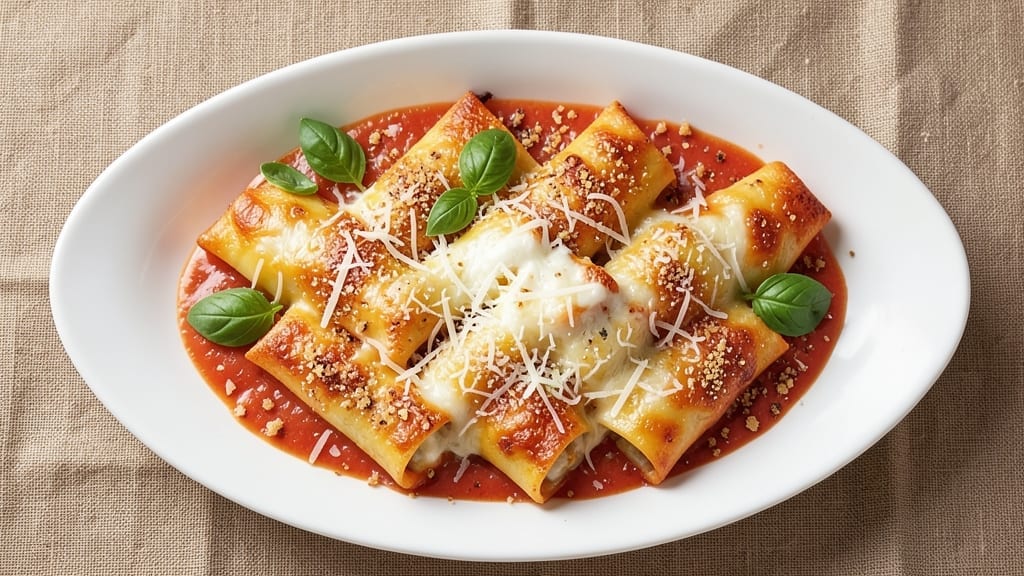
This 3 cheese cannelloni recipe delivers restaurant-quality baked pasta with layers of tender cannelloni tubes stuffed with a rich, melty cheese filling. The combination of ricotta, mozzarella, and parmesan creates a creamy, flavorful center that stays perfectly gooey when baked.
I’ve perfected this technique over years of testing, ensuring the pasta doesn’t get soggy while the cheese filling remains luxuriously creamy.
The secret to success lies in proper assembly and baking—using store-bought or homemade pasta sheets (whichever you prefer) and a well-seasoned cheese filling that binds together beautifully. A simple tomato or béchamel sauce on top adds the perfect finishing touch, while a sprinkle of breadcrumbs creates a golden, crispy crust.
This recipe balances simplicity with impressive results, making it ideal for family dinners or special occasions.
By the time it emerges from the oven, you’ll have perfectly baked cannelloni with tender pasta, a creamy cheese center that pulls slightly at the edges, and a sauce that clings beautifully to every layer.
The aroma alone will have everyone gathered around the table, and each bite delivers that satisfying combination of textures and flavors. This is comfort food at its finest—rich, indulgent, and completely worth the effort.
Serve with a side salad or garlic bread to soak up any remaining sauce. The leftovers reheat wonderfully, making this a perfect meal for feeding a crowd or preparing ahead. Let’s get started on creating your own baked masterpiece!
Ingredients for 3 cheese cannelloni
Sixteen ingredients, three cheeses, and one unforgettable baked pasta masterpiece.
| Ingredient | Amount | Notes |
|---|---|---|
| Cannelloni Tubes 🍝 | 24 whole | Store-bought or homemade, dried |
| Whole Milk Ricotta Cheese 🧀 | 1 ½ cups | Full-fat for creaminess |
| Part-Skim Mozzarella Cheese 🧀 | 1 ½ cups | Shredded, low-moisture preferred |
| Parmesan Cheese 🧀 | 1 cup | Freshly grated, block preferred |
| Large Eggs 🥚 | 2 whole | Room temperature for binding |
| All-Purpose Flour 🌾 | ¼ cup | For binding cheese filling |
| Garlic Cloves 🧄 | 3 cloves | Minced for subtle flavor |
| Fresh Basil Leaves 🌿 | ¼ cup | Chopped, for freshness |
| Extra-Virgin Olive Oil 🫒 | ¼ cup | For richness in filling |
| Salt 🧂 | 1 tsp | Diamond Crystal preferred |
| Black Pepper 🌶️ | ½ tsp | Freshly ground for heat |
| Unsalted Butter 🧈 | ½ cup | For sauce, melted |
| Tomato Paste 🍅 | ½ cup | For sauce, no added salt |
| Pasta Water 💧 | 1 ½ cups | Reserved from cooking pasta |
| Panko Breadcrumbs 🍞 | ¼ cup | For crispy topping |
The cheeses are non-negotiable here. Whole milk ricotta gives that signature creaminess—part-skim won’t hold together as well. Grab a wedge of Parmigiano-Reggiano and grate it yourself (pre-grated gets clumpy). Mozzarella? Low-moisture shredded is your friend—it melts beautifully without making the filling soggy. For the pasta tubes, De Cecco or Barilla are my go-tos, but any dried brand works. Pro tip: soak the tubes in warm water for 10 minutes before filling to prevent cracking. And trust me on the full-fat ricotta—it’s worth the extra few bucks.
No ricotta? Cottage cheese blended with mayo or Greek yogurt (same quantity) works in a pinch. Short on Parmesan? Pecorino Romano has a sharper bite. The tomato paste can be swapped for marinara sauce if you’re in a hurry, but I prefer the concentrated flavor. Fresh basil is ideal, but dried oregano at half the amount gets you close. The breadcrumbs? Panko stays crispy—regular breadcrumbs get mushy. And if you’re making this ahead, assemble but don’t bake—it keeps for 24 hours in the fridge before baking.
This reheats beautifully—honestly tastes better the next day once everything melds together. Store leftovers in an airtight container for up to 4 days. For freezing, bake first, then portion into single servings with parchment between layers. Thaws overnight in the fridge, then reheats in a 350°F oven for 20 minutes. I always make a double batch—leftovers for lunches, and it’s a crowd-pleaser when I host. The sauce thickens as it cools, so add a splash of pasta water if it seems too stiff when reheating.
Why You’ll Love This Recipe
- No-Fuss Assembly: I swear by this recipe because the filling comes together in one bowl—just ricotta, eggs, and those three cheeses mixed until smooth. No chopping, no fussing, just spread it in the tubes and bake. (Yes, even on a Tuesday night.)
- Cheesy Magic: That trio of ricotta, mozzarella, and parmesan? It’s the holy trinity of comfort. The ricotta stays creamy, the mozzarella melts into gooey perfection, and the parmesan? It’s the salty, nutty finish that makes every bite ridiculously good.
- Weeknight Hero: This feeds a crowd but still works for two—perfect for dinner parties or lazy Sundays. (Between us, I’ve even used it to turn random leftovers into a fancier meal by adding sautéed spinach or ground meat.)
- Budget-Friendly Luxury: Ricotta and mozzarella stretch far, and you’re not sacrificing flavor. I’ve made this for under $15 for six servings, and somehow, it always feels like a restaurant dish. Leftovers? Even better reheated the next day—crispy edges, creamy filling, no complaints.
Step-by-step instructions for 3 cheese cannelloni
Here’s how to assemble layers of creamy ricotta filling and crispy pasta tubes for perfect baked cannelloni.
Prepare the Cheese Filling
In a large mixing bowl, combine the 1.5 cups whole milk ricotta cheese, 1.5 cups part-skim mozzarella cheese, and 1 cup freshly grated parmesan cheese. Use your hands to break up any large lumps in the ricotta—this ensures a smooth, creamy texture throughout the filling.
Add the 2 whole large eggs and mix until fully incorporated. The mixture should look like thick, creamy pudding. In a separate small bowl, whisk together the 0.25 cup all-purpose flour, 1 teaspoon salt, and 0.5 teaspoon black pepper. Gradually fold this dry mixture into the cheese until just combined—overmixing will make the filling tough.
Next, stir in the 0.25 cup chopped fresh basil leaves and 0.25 cup extra-virgin olive oil. The basil adds bright freshness that cuts through the richness of the cheese. Taste and adjust seasoning if needed—this is your chance to balance flavors before assembly. Cover the bowl and refrigerate while you prepare the pasta tubes and sauce.
Assemble the Cannelloni Tubes
Cook the 24 whole cannelloni tubes according to package instructions until al dente—about 8-10 minutes in boiling salted water. Drain well but reserve 1.5 cups pasta water in a measuring cup. Immediately transfer the tubes to a large baking dish and arrange them in a single layer, slightly overlapping if needed to fit.
Working quickly, spoon about 1 tablespoon of the cheese filling into each tube. Don’t overfill—they should be snug but not bursting at the seams. As you work, keep the remaining filling covered to prevent drying. If any tubes feel too loose after filling, gently press them closed with your fingers to seal the cheese inside.
Once all tubes are filled, spread a thin layer of the remaining cheese mixture over the top as a “glue” for the sauce. This creates a perfect seal that prevents leaks during baking. Here’s the thing—don’t skip this step. It makes all the difference in keeping your cannelloni intact.
Make the Tomato Sauce
In a medium saucepan, melt the 0.5 cup unsalted butter over medium heat. Add the 0.5 cup tomato paste and stir constantly for 2-3 minutes until it darkens slightly and becomes fragrant. This step develops deep, caramelized flavors that form the sauce’s foundation.
Pour in about 1 cup of the reserved pasta water and stir to create a smooth sauce. Let it simmer gently for 5 minutes until slightly thickened. If it becomes too thick, add more pasta water 1 tablespoon at a time until it reaches a pourable consistency. Season with additional salt and pepper if needed—remember, the cheese filling is already well-seasoned.
Remove the sauce from heat and stir in the 3 cloves minced garlic. Let it steep for 1 minute—this infuses subtle garlic flavor without overpowering the dish. The sauce should be vibrant red with a glossy sheen. If you prefer a smoother texture, strain it through a fine-mesh sieve to remove any garlic bits.
Bake to Golden Perfection
Preheat your oven to 375°F. Pour the tomato sauce evenly over the assembled cannelloni, coating them completely. Sprinkle the 0.25 cup panko breadcrumbs evenly over the top—this creates a delicious crispy crust that contrasts with the creamy filling.
Bake uncovered for 25-30 minutes until the edges are golden brown and the sauce is bubbling vigorously. The breadcrumbs should turn a beautiful golden color, indicating they’ve crisped properly. If the top browns too quickly, loosely cover with aluminum foil for the last 10 minutes of baking to prevent over-browning.
Let the cannelloni rest for 10 minutes before serving. This resting period allows the filling to set slightly and makes slicing much cleaner. Serve with additional tomato sauce on the side if desired—each bite should deliver that perfect combination of creamy ricotta, melty mozzarella, and tangy tomato sauce.
Pro Tips For Making 3 Cheese Cannelloni
- Preheat the Pan: DESCRIPTION:
- Drain and Pat Dry: DESCRIPTION:
- Salt the Egg Wash: DESCRIPTION:
- Layer the Cheese Right: DESCRIPTION:
Troubleshooting your 3 cheese cannelloni
Cheese Filling Too Dry
If your cheese filling looks dry or crumbly, it’s likely from overmixing the flour or using low-fat ricotta. To fix this, add 1 tablespoon of reserved pasta water at a time while mixing until the filling reaches a smooth, spreadable consistency.
For future batches, use whole milk ricotta exclusively and avoid overworking the mixture—just fold the flour until combined. 💫
Pasta Tubes Cracking
Cannelloni tubes often crack when they’re too dry or filled too quickly. First, soak the tubes in warm water for 10 minutes before filling to make them pliable. Work efficiently and fill tubes gently—don’t force the cheese in.
If they still crack, try using freshly made pasta (if available) or switch to lasagna noodles for a more forgiving alternative.
Sauce Too Thin or Watery
A watery sauce usually means you added too much pasta water during cooking. For a thicker sauce, simmer uncovered for an extra 5 minutes to reduce.
If it’s still too thin, mix 1 tablespoon cornstarch with 1 tablespoon cold water, stir into the sauce, and cook for 2 more minutes. To prevent this, use only 1 cup pasta water initially and add more sparingly as needed.
Top Not Browning Properly
If your breadcrumb topping stays pale and soggy, it’s likely because the sauce is too wet or the oven isn’t hot enough. First, ensure your oven is preheated to 375°F for at least 15 minutes before baking.
For extra crispiness, broil for 1-2 minutes at the very end (watch closely to avoid burning). Also, pat the breadcrumbs dry before sprinkling—they should be completely free of moisture.
Filling Leaking During Baking
Leaky cannelloni happens when the cheese filling isn’t properly sealed. Always spread a thin layer of cheese mixture over the top of the filled tubes before adding sauce—this acts as a glue.
For extra security, press the tubes gently into the baking dish so they’re snug against each other. If leaks persist, try using lasagna noodles instead, as they’re more stable when baked.
Cheese Filling Too Rich
An overly rich filling can make the cannelloni heavy and unbalanced. To lighten it, add 1-2 tablespoons of grated zucchini or carrot to the cheese mixture—this adds moisture and texture without altering flavor.
You can also reduce the amount of mozzarella by 0.25 cup and replace it with 0.25 cup ricotta for a lighter profile. Taste as you mix to adjust seasoning accordingly.
Nutrition facts
Frequently asked questions about 3 cheese cannelloni
Can I use store-bought cheese filling instead of making my own?
You absolutely can! While homemade filling gives the best texture, quality store-bought ricotta mixtures work well in a pinch. Look for ones with at least 20% fat content and add 0.5 cup extra shredded mozzarella to compensate for the difference. The key is to keep the mixture cool while working to prevent melting.
What’s the best sauce alternative if I don’t like tomato?
A creamy alfredo sauce or white wine reduction works beautifully. For alfredo, mix 1 cup heavy cream, 0.5 cup butter, and 1 cup grated parmesan until smooth. Add a splash of pasta water to adjust consistency. The cheese filling’s richness pairs perfectly with the richness of alfredo sauce.
How do I prevent the cannelloni from getting soggy?
Bake the cannelloni until the sauce is bubbling vigorously and the edges are golden. For extra insurance, let them rest for 10 minutes before slicing—this helps the filling set slightly. If reheating leftovers, cover with foil and bake at 350°F for 15 minutes to restore crispiness.
Can I make this ahead of time?
Yes! Assemble the cannelloni completely (filled and sauced) but don’t bake. Cover tightly with plastic wrap and refrigerate for up to 24 hours. When ready to bake, add 10 minutes to the baking time. For freezing, bake first, then portion into single servings with parchment between layers. Freeze for up to 3 months.
What’s the secret to the perfect cheese filling?
The magic is in the balance: whole milk ricotta for creaminess, mozzarella for meltiness, and parmesan for umami depth. Always use room-temperature cheese and eggs, and fold just until combined—overmixing makes the filling tough. The 0.25 cup olive oil also helps bind everything together beautifully.

- Baked Potatoes in Crock Pot Recipe: Buttery Interiors and Crispy Top Magic - November 1, 2026
- Braised Beef Short Ribs Recipe: Crock Pot Fall-Off-Bone Magic in 6 Hours - November 1, 2026
- Crock Pot Cocoa Recipe: Velvety Warmth With Hidden Spice Magic - November 1, 2026