
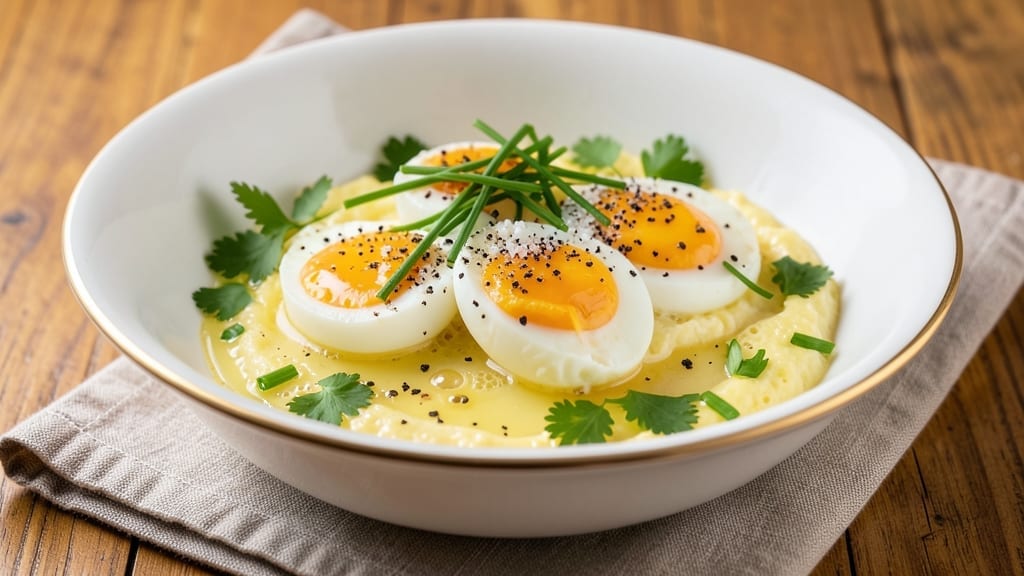
Mastering the perfect 3 eggs scrambled recipe transforms an everyday breakfast into a velvety, restaurant-quality dish with just butter, herbs, and patience. The secret lies in low-and-slow cooking—gentle heat creates silky custard rather than rubbery curds, while fresh herbs and rich butter elevate simple eggs into something extraordinary.
This technique delivers tender, creamy results every time, with no dry edges or overcooked textures.
What sets this method apart is the focus on heat control: medium-low flame ensures even cooking, while constant stirring prevents browning. A nonstick skillet with sloped sides makes flipping and plating effortless, though a cast iron pan adds extra crispness at the edges.
The addition of fresh chives or parsley brightens the dish, balancing the richness of butter without overpowering the eggs’ natural flavor.
By the time you finish, you’ll have perfectly set scrambled eggs with a velvety texture and golden undertones—ideal for breakfast, brunch, or even a light dinner. The dish stays warm and creamy for minutes after cooking, making it perfect for serving immediately or plating with toast and avocado.
This isn’t just scrambled eggs; it’s a technique that turns a basic meal into something memorable.
For those who prefer extra richness, a sprinkle of sharp cheddar or goat cheese melts into the eggs for added depth, while a pinch of salt and black pepper enhances every bite.
The recipe scales easily—just adjust cooking time for larger batches—while maintaining the same luxurious texture. Ready to elevate your morning routine?
Ingredients for 3 eggs scrambled
Nine essential components create velvety scrambled eggs with restaurant-quality texture and herbal brightness.
| Ingredient | Amount | Notes |
|---|---|---|
| Large Eggs 🥚 | 3 whole | Freshly cracked, room temperature preferred |
| Unsalted Butter 🧈 | 2 tbsp | European-style for higher fat content |
| Fresh Chives 🌿 | 2 tbsp | Finely chopped, for bright freshness |
| Fresh Parsley 🌿 | 1 tbsp | Finely chopped, for herbal depth |
| Diamond Crystal Kosher Salt 🧂 | ¼ tsp | Adjust to taste, fine grain preferred |
| Freshly Ground Black Pepper 🌶️ | ⅛ tsp | Freshly cracked peppercorns preferred |
| Extra-Virgin Olive Oil 🫒 | ½ tsp | For skillet preheating and finishing |
| Sharp White Cheddar Cheese 🧀 | ¼ cup | Shredded, optional for added richness |
| Nonstick Skillet 🍳 | 1 whole | 8-inch diameter, sloped sides preferred |
The eggs are the foundation, so choose large, fresh eggs—room temperature cracks for even cooking. European-style butter (like Plugrá) has higher fat content, creating a silkier custard than standard American butter. For herbs, farmers market chives and parsley have superior flavor to supermarket bunches—look for vibrant green leaves without brown edges. The skillet matters too: a well-seasoned cast iron or high-quality nonstick pan prevents sticking and ensures even heat distribution. Preheat the pan over medium-low heat before adding butter, creating the ideal base for gentle cooking.
No fresh herbs? Dried chives or parsley at one-third the amount work in a pinch, though texture differs. Substituting butter for olive oil? Use extra-virgin olive oil with a pinch of salt—it won’t be identical, but still delicious. For cheese lovers, sharp white cheddar or goat cheese melts beautifully, adding depth without overpowering. The eggs should be whisked lightly in a bowl before cooking—just enough to combine yolks and whites, preserving their natural structure. If you prefer extra creaminess, a splash of heavy cream (1 tbsp) transforms the texture without altering the technique.
Freshly cracked eggs keep 2 days in the fridge, while butter should be stored in the coolest part of your fridge to prevent spoilage. Pre-chopped herbs stay fresh 5-7 days wrapped in damp paper towels. For meal prep, cook eggs just until set (soft curds) and reheat gently in a dry skillet over low heat—never microwave, as it creates rubbery texture. The dish serves best immediately, though it holds for 30 minutes at room temperature if kept warm in a low oven.
Why You’ll Love This Recipe
- Five-Minute Miracle: I swear, this takes less time than waiting for toast. Three eggs, a pat of butter, and a handful of herbs—no fancy skills needed. The butter melts fast, the eggs fold together in seconds, and suddenly you’ve got breakfast without the chaos.
- Butter & Herb Magic: That first bite of creamy eggs with crispy edges, bright parsley, and a whisper of chives? It’s like a flavor upgrade without trying. Honestly, the salt and butter combo makes even a simple scramble feel special—no one would guess it’s just three eggs.
- Breakfast or Snack: Make it for yourself in the morning or pack it for a quick lunch. Between us, my kids ask for it after school, and I’ve even served it at brunch with toast—no one cares what you call it. It’s that adaptable.
- Cheap & Reusable: Three eggs feed one, but leftovers reheat like a dream. I’ve had them cold in salads, warmed in wraps, or straight from the pan—always tasty. Plus, butter and herbs stretch a budget without sacrificing flavor. My wallet and taste buds thank me.
Step-by-step instructions for perfectly scrambled eggs
Here’s the method for silky, velvety scrambled eggs with vibrant herbs and rich butter.
Preheat and Prepare the Skillet
Place the nonstick skillet over medium-low heat and add the 0.5 teaspoon extra-virgin olive oil. Let it warm for 30 seconds until shimmering but not smoking—this ensures even heat distribution without burning the eggs. I always use medium-low heat for scrambled eggs; high heat creates rubbery curds instead of creamy custard.
While the skillet heats, crack the 3 whole large eggs into a small bowl. Add the 0.25 teaspoon Diamond Crystal kosher salt, 0.125 teaspoon freshly ground black pepper, and the 0.25 cup shredded sharp white cheddar cheese (if using). Gently whisk with a fork just until the yolks and whites are combined—overmixing incorporates too much air, which can make the eggs dry out later.
Melt the Butter and Begin Cooking
Add the 2 tablespoons unsalted butter to the warm skillet and let it melt completely, swirling occasionally to coat the bottom evenly. The butter should foam slightly but not brown—this indicates it’s ready for the eggs. I always use European-style butter for its higher fat content; it creates a richer, creamier texture in the finished eggs.
Pour the egg mixture into the skillet, letting it settle naturally without stirring immediately. Allow the eggs to sit undisturbed for 10-15 seconds until the edges begin to set and the tops look slightly cloudy. This resting period is crucial—it helps the eggs cook evenly from the edges inward rather than forming large, dry curds.
Gently Fold for Silky Texture
Using a heatproof silicone spatula, gently push the set edges toward the center of the skillet, tilting the pan to let the uncooked egg flow to the edges. Continue this folding motion for 20-25 seconds, working quickly but carefully. The goal is to create soft, creamy curds rather than breaking them into smaller pieces—this is what gives restaurant-quality scrambled eggs their signature texture.
As the eggs cook, sprinkle the 2 tablespoons finely chopped fresh chives and 1 tablespoon finely chopped fresh parsley evenly over the surface. The herbs add bright freshness and vibrant color, but they also release their essential oils as they cook, infusing the eggs with subtle herbal notes. Don’t skip this step—it’s what elevates simple scrambled eggs into something special.
Finish and Serve Immediately
Continue folding the eggs gently for another 10-15 seconds until they reach your desired doneness. For perfectly creamy eggs, remove them from heat when they’re still slightly underdone—they’ll continue cooking from residual heat. The eggs should be soft and custard-like, with no visible liquid egg remaining.
Transfer the scrambled eggs to warmed plates immediately and serve while still hot. The high heat of the skillet ensures they’ll stay creamy rather than drying out. Pair with toasted sourdough or fresh fruit for a complete breakfast. Remember, the key to perfect scrambled eggs lies in patience and gentle handling—rushing leads to rubbery, dry results.
Pro Tips For Making 3 Eggs Scrambled
- Whisk Like You Mean It: Crack those eggs into a bowl first, then whisk vigorously for 10-15 seconds—you’re not just mixing, you’re aerating. I used to skip this, and my scrambled eggs came out dense and rubbery. That quick burst of air gives you light, fluffy curds every time.
- Butter First, Then Eggs: Melt 1 tablespoon of unsalted butter in your pan over medium-high heat until it foams and smells nutty—then add the eggs. This creates a flavorful crust that prevents sticking and adds richness. I learned this the hard way after scraping burnt egg off my pan for the third time.
- Salt the Eggs, Not Just the Pan: Add ¼ teaspoon of kosher salt to the whisked eggs before cooking—it distributes evenly and seasons the curds, not just the surface. I was over-salting the pan and ending up with bland eggs. Trust me, the eggs taste better when the salt’s already in there.
- Pull Heat When They’re 70% Done: Remove the pan from heat the second the eggs look mostly set but still slightly wet—about 2-3 minutes in. Let the residual heat finish cooking them; this keeps them creamy, not dry. I used to leave them on too long, and they’d turn into scrambled egg rubber. Timing is everything.
Flavor customization for these flavors
Herb Variations
Swap out chives and parsley for fresh dill (1 tbsp) and a pinch of lemon zest for a bright, tangy twist that pairs beautifully with lemon butter. Or try thyme and rosemary (1 tsp each) for an earthy, aromatic profile that works wonderfully with goat cheese instead of cheddar.
For a Mediterranean touch, add fresh oregano and a sprinkle of crumbled feta—just fold it in at the very end to prevent it from melting too quickly. 🌿
Cheese Additions
For extra richness, stir in ½ cup crumbled goat cheese or fresh ricotta dollops while folding the eggs—their creaminess enhances the custard texture. If you love sharp flavors, Parmesan (¼ cup, grated) adds a salty depth that balances the butter perfectly.
For a smoky kick, try smoked gouda (¼ cup, shredded) and fold it in during the last 10 seconds of cooking to preserve its texture. 🧀
Spicy Kick
Add ½ tsp smoked paprika or a pinch of cayenne to the butter for warmth, or fold in diced jalapeños (2 tbsp) during the final 15 seconds of cooking for a subtle heat.
For a creamy-spicy combo, mix ½ cup sour cream into the eggs before cooking and top with chopped scallions and hot honey after plating. Trust me, the contrast is pure magic. 🌶️
Sweet Twists
Sweeten the deal with 1 tbsp maple syrup or honey swirled into the butter before adding the eggs—it caramelizes slightly and creates a silky glaze. For a breakfast dessert, fold in ¼ cup mashed berries (strawberries or raspberries) during the last 10 seconds of cooking.
Top with a sprinkle of toasted nuts (pecans or walnuts) for crunch. This version is perfect for brunch! 🍓
Global Flavors
Transform your eggs into shakshuka-style by adding 1 tbsp tomato paste and ½ tsp cumin to the butter, then folding in diced bell peppers and crumbled feta.
For a Japanese-inspired take, mix 1 tsp soy sauce and ½ tsp mirin into the eggs, then top with sesame seeds and green onions. Both versions keep the creamy texture while adding bold flavors. 🌍
Nutrition facts
Frequently asked questions
Can I use this recipe for more or fewer eggs?
For 2 eggs, reduce butter to 1.5 tablespoons and cooking time to 15-20 seconds per fold. For 4 eggs, increase butter to 3 tablespoons and use a 10-inch skillet—just maintain the same medium-low heat and gentle folding technique. The key is keeping the ratio: 1 tablespoon butter per egg ensures creamy texture.
Why do my scrambled eggs turn out dry or rubbery?
Dry eggs usually mean too much heat or overmixing. Use medium-low heat and let the eggs sit undisturbed for 10-15 seconds before folding. Overmixing incorporates too much air, so whisk just until combined. European-style butter (higher fat content) prevents dryness better than regular butter. For extra moisture, fold in 1 tablespoon heavy cream during the last 10 seconds of cooking.
Can I make this recipe ahead of time?
Scrambled eggs are best served immediately, but you can prep components ahead: whisk eggs with seasonings and store in the fridge for 1 day. For make-ahead meals, cook eggs just until soft curds form (about 1 minute total cooking time), then reheat gently in a dry skillet over low heat for 2-3 minutes. Never microwave—it creates rubbery texture. For brunch, cook eggs underdone and finish under the broiler for 30 seconds before serving.
What’s the best pan for perfect scrambled eggs?
A well-seasoned cast iron skillet creates the crispiest edges, while a high-quality nonstick pan makes flipping easier. Avoid stainless steel—it conducts heat unevenly. For restaurant-quality results, use a sloped-sided pan (like All-Clad) to help fold and plate the eggs beautifully. If your pan isn’t nonstick, use less butter (1.5 tbsp) to prevent sticking. A 10-inch pan is ideal for 4 eggs, while 8-inch works perfectly for 3 eggs.

- Baked Potatoes in Crock Pot Recipe: Buttery Interiors and Crispy Top Magic - November 1, 2026
- Braised Beef Short Ribs Recipe: Crock Pot Fall-Off-Bone Magic in 6 Hours - November 1, 2026
- Crock Pot Cocoa Recipe: Velvety Warmth With Hidden Spice Magic - November 1, 2026