
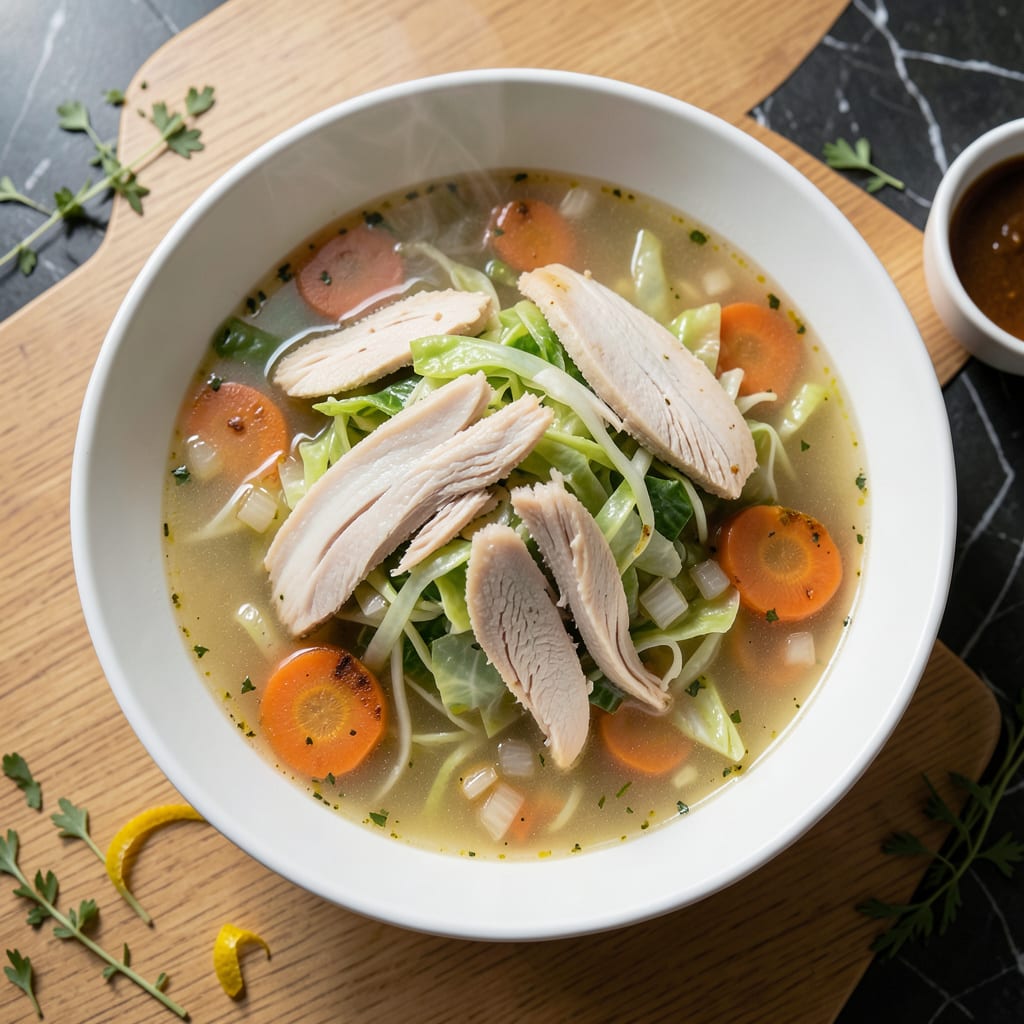
This simple soup delivers big flavor with minimal effort. Three ingredients combine to create a nutrient-dense meal that supports your wellness goals.
Ready in 20 minutes, it proves that healthy eating can be both quick and satisfying. The clean, straightforward preparation lets the natural flavors shine.
Ingredients for 3 Ingredient Fat Burning Soup
Three core ingredients plus a few pantry staples create this nutrient-packed soup.
| Ingredient | Amount | Notes |
|---|---|---|
| Chicken Breast 🍗 | 1 ½ lb | Boneless, skinless, shredded |
| Cabbage 🥬 | 1 whole | Green or savoy, shredded thin |
| Carrots 🥕 | 4 whole | Peeled and sliced into rounds |
| Onion 🧅 | 1 whole | Yellow or white, diced fine |
| Celery Stalks 🌿 | 3 pieces | Diced for aromatic base |
| Garlic Cloves 🧄 | 4 cloves | Minced for depth of flavor |
| Low-Sodium Chicken Broth 🥣 | 8 cups | For liquid base and moisture |
| Diced Tomatoes 🍅 | 2 cups | Canned or fresh, undrained |
| Apple Cider Vinegar 🍏 | 2 tbsp | Adds tangy brightness |
| Olive Oil 🫒 | 1 tbsp | For sautéing vegetables |
| Sea Salt 🧂 | 1 tsp | Adjust to taste preference |
| Black Pepper 🌶️ | ½ tsp | Freshly ground for best flavor |
| Dried Thyme 🍃 | 1 tsp | Earthy, aromatic seasoning |
| Bay Leaf 🍃 | 1 whole | Removed before serving |
The cabbage is the foundation here. Green or savoy varieties work best—avoid red as it can turn the broth murky. Most supermarkets carry pre-shredded cabbage (the good stuff, not the pre-shredded kind for coleslaw), but a whole head is cheaper and stays fresh longer. For the chicken, organic, free-range has better texture and flavor, though any boneless, skinless breast will do in a pinch.
No cabbage? Green beans or zucchini work in a similar ratio. Chicken can be swapped for turkey breast at a 1:1 ratio. Vegetarian? Firm tofu or white beans hold up well to the long simmer. The vinegar adds brightness—lemon juice at half the amount gets you close. Dried thyme can be replaced with fresh at triple the quantity.
This soup tastes even better the next day. Store in the fridge for up to 5 days or freeze for 3 months. The flavors meld and deepen over time, making it perfect for meal prep.
Why You’ll Love This Recipe
- One Pot Wonder: I toss in the chicken, cabbage, and carrots, let it simmer, and dinner’s ready—no fancy steps.
- Rich Broth Magic: The celery and onion deepen the flavor so much that I forget it’s this simple.
- Meal Prep Star: Honestly, it tastes even better the next day for lunch.
- Budget Friendly: A whole pot costs less than takeout and lasts us three nights.
Step-by-Step Instructions for Fat Burning Soup
This streamlined method ensures maximum flavor extraction while maintaining the dish’s simplicity.
Step 1: Sauté the Aromatic Base
Heat the 1 tbsp olive oil in a large stockpot over medium heat. Add the diced onion, sliced carrots, diced celery stalks, and minced garlic cloves, cooking for 5-7 minutes until the vegetables soften and the onion becomes translucent.
This process builds the flavor foundation. Stir occasionally to prevent browning—you want the vegetables to sweat, not caramelize. The garlic should become fragrant but not take on any color, which would introduce bitterness.
Step 2: Introduce the Liquids and Seasonings
Pour in the 8 cups low-sodium chicken broth, 2 cups diced tomatoes, 2 tbsp apple cider vinegar, 1 tsp dried thyme, and 1 whole bay leaf. Stir to combine, then bring to a gentle boil over medium-high heat.
Once boiling, reduce heat to medium-low to maintain a steady simmer. The vinegar’s tang will mellow as it cooks, balancing the natural sweetness of the vegetables. The broth should take on a slightly earthy aroma from the thyme and bay leaf.
Step 3: Add and Cook the Chicken
Add the 1.5 lb chicken breast to the pot, ensuring it’s fully submerged in the liquid. Simmer for 15-20 minutes until the chicken is cooked through and reaches an internal temperature of 165°F.
The chicken will turn from pink to opaque white when fully cooked. At this stage, the vegetables should be tender but still hold their shape. The broth will have developed a rich, savory depth from the chicken and aromatics.
Step 4: Incorporate the Cabbage and Finish
Add the shredded cabbage to the pot, pressing it down to submerge as much as possible. Simmer for an additional 10-12 minutes until the cabbage is tender but still retains some texture.
Stir in the 1 tsp sea salt and 0.5 tsp black pepper. Remove the pot from heat and discard the bay leaf. The cabbage will soften significantly but should still offer a slight bite for textural contrast.
Step 5: Shred and Serve
Remove the chicken breasts from the pot and shred using two forks. Return the shredded chicken to the soup and stir to distribute evenly. Taste and adjust seasoning if needed, though the low-sodium broth allows for controlled salt levels.
The soup should have a vibrant, slightly tangy flavor profile with tender vegetables and juicy chicken throughout. Serve immediately while hot, as the flavors will continue to develop as it sits.
Pro Tips For Making 3 Ingredient Fat Burning Soup
- Simmer, Don’t Boil: Keep the heat at a gentle simmer—boiling toughens the chicken and turns the cabbage mushy. I learned this the hard way after a few batches came out rubbery.
- Shred the Cabbage Fine: Thinly slice the cabbage so it softens quickly and blends into the broth better. Sounds tedious, but it actually changes the outcome and saves cooking time.
- Skip the Overcrowding: If making a big batch, use a pot large enough to fit everything comfortably. Steer clear of cramming in all the veggies at once—they’ll steam instead of simmer.
- Use Pre-Cooked Chicken: Rotisserie chicken or leftover shredded breast cuts prep time in half. After burning three batches trying to time raw chicken right, I finally figured out this shortcut works just as well.
Storing and Reheating 3 ingredient fat burning soup
Refrigerator Storage
Let this creation cool to room temperature within 2 hours, then transfer to airtight containers. I use glass mason jars for easy portion control. It stays fresh at 40°F or below for up to 5 days. The flavors actually improve overnight as the ingredients meld together. ❄️
Freezer Storage
For longer storage, freeze in quart-sized freezer bags with excess air removed. It keeps well for up to 3 months without significant texture changes. Leave 1 inch headspace for expansion. I recommend flat storage to save space.
Stovetop Reheating
This is my preferred method for best texture. Pour soup into a pot, add ¼ cup water or broth, and heat over medium-low heat for 10-15 minutes. Stir occasionally to prevent sticking at the bottom.
Microwave Reheating
For quick meals, microwave individual portions covered with a damp paper towel. Use 70% power for 2-3 minutes, stir, then continue in 1-minute intervals until reaching 165°F. Add a splash of water if it looks too thick.
Thawing Tips
Thaw overnight in the refrigerator for best results. For faster thawing, submerge the sealed bag in cold water, changing water every 30 minutes. Never thaw at room temperature. The cabbage may soften slightly after freezing but retains good flavor.
Nutrition Facts
Frequently Asked Questions
How long does it keep in the fridge?
Store in airtight containers and it stays fresh for up to 5 days at 40°F or below. The flavors actually improve overnight as the ingredients meld together
Can I use frozen chicken?
Yes, but thaw it completely first for even cooking. Frozen chicken may release excess moisture, requiring an extra 5 minutes of simmering to reach 165°F internally
What can I swap for cabbage?
Try green beans or zucchini in the same quantity. These maintain the soup’s texture while offering similar nutritional benefits. Avoid leafy greens as they wilt too much
Why add vinegar to the soup?
The apple cider vinegar adds brightness and helps balance flavors. Its acidity also aids in breaking down nutrients for better absorption by your body

- 8 Bean Soup Recipe Crock Pot: Hearty Vegetable Medley in One Pot - September 25, 2026
- 4C Bread Crumbs Meatballs Recipe: Crispy Crust and Juicy Centers - September 25, 2026
- 6 Oz Chocolate Chip Cookie Recipe: Perfectly Balanced Crispy Edges and Chewy Hearts - September 25, 2026