
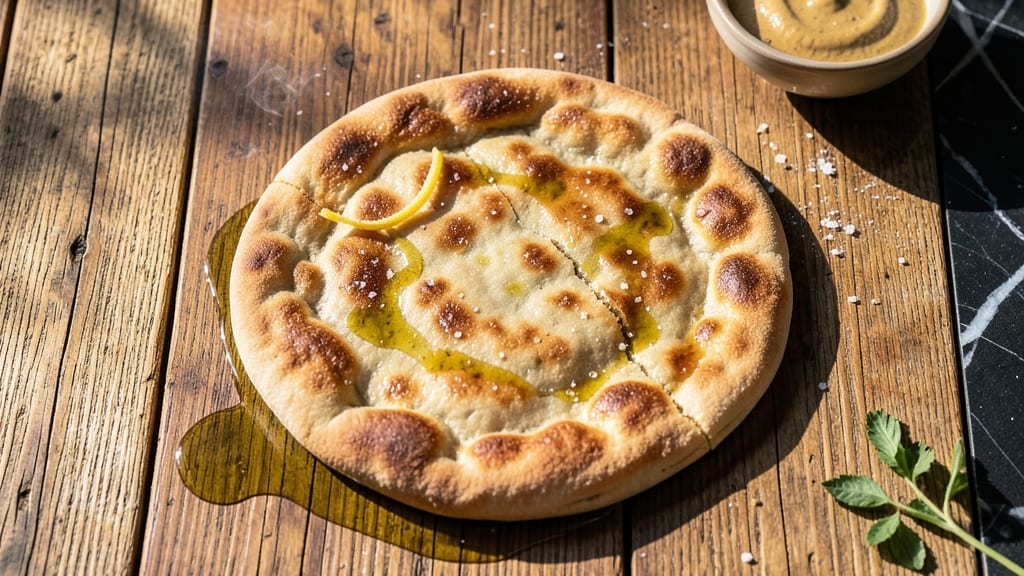
This 3-ingredient gluten-free flatbread recipe delivers crispy edges and a soft center in just 10 minutes. This recipe delivers restaurant-quality results using only three core ingredients—no complicated techniques required.
The secret lies in a simple mix of almond flour, chickpea flour, and a pinch of baking powder, which creates a dough that transforms into golden, flaky flatbread with minimal effort.
Perfect for wrapping tacos, dipping in hummus, or serving as a side, this recipe proves gluten-free doesn’t mean sacrificing texture or flavor.
What sets this recipe apart is its foolproof simplicity—no kneading, no resting, and no special equipment beyond a skillet or baking sheet. The combination of almond flour for richness and chickpea flour for structure ensures your flatbread holds its shape while staying tender inside.
A quick press and bake, and you’ll have perfectly crispy edges with a soft, pillowy center every time. It’s the kind of recipe that makes gluten-free cooking feel effortless.
The best part? This flatbread is versatile enough for any meal—use it as a wrap for grilled chicken, a base for flatbread pizza, or even as a crispy side to soak up sauces.
The dough comes together in under 5 minutes, and with just 10 minutes of baking time, you’ll have dinner on the table faster than takeout. No more sacrificing flavor or texture for dietary restrictions—just pure, satisfying results.
Whether you’re hosting a dinner party or craving a quick weeknight meal, this recipe is your go-to for gluten-free flatbread that tastes like it came from a bakery. Let’s get started—your taste buds (and gluten-free diet) will thank you.
Ingredients for 3 ingredient gluten free flatbread
Three core ingredients transform into golden, crispy flatbread with restaurant-quality texture.
| Ingredient | Amount | Notes |
|---|---|---|
| Almond Flour 🌰 | 1 ½ cups | Finely ground, unsweetened preferred |
| Chickpea Flour 🌾 | ½ cup | Also known as besan flour |
| Baking Powder 🍞 | 1 ½ tsp | Metal container for freshness |
| Olive Oil 🫒 | 2 tbsp | Extra-virgin for best flavor |
| Salt 🧂 | ½ tsp | Fine sea salt preferred |
| Water 💧 | ½ cup | Room temperature preferred |
| Sesame Seeds 🌻 | 1 tbsp | Optional for garnish |
Almond flour is the star here—Bob’s Red Mill or Anthony’s Goods brands deliver the finest grind for optimal texture. The chickpea flour adds structure without gluten, so Bob’s Red Mill again is my go-to for consistency. Both flours should be stored in airtight containers in a cool, dark place; almond flour keeps for 6-12 months while chickpea flour lasts even longer. For the baking powder, Aluminum-free brands like Rumford ensure reliable rise without metallic aftertaste. The olive oil should be extra-virgin—anything less compromises flavor development during the quick bake.
No almond flour? Sunflower seed flour works in a pinch, though texture will be slightly denser. Chickpea flour substitutes include tapioca starch or arrowroot powder, but increase to 0.75 cup for proper binding. The baking powder must be fresh—test by mixing with water; if it fizzes, it’s good. For oil, avocado oil works identically. Sesame seeds can be omitted or replaced with poppy seeds or everything bagel seasoning for variation. Room temperature water prevents lumps—never use cold water from the fridge, as it slows gluten-free dough development.
Pre-mixed dry ingredients keep for 1 week in the fridge or 3 months frozen. The sesame seeds stay fresh 6 months in a sealed container. For best results, press flatbreads immediately after shaping—don’t let dough sit or it loses crispness. Leftovers reheat beautifully in a 350°F oven for 3-5 minutes to restore crispy edges. Store unused dry flour mix in an airtight container with a paper towel barrier to absorb moisture.
Why You’ll Love This Recipe
- Pantry Magic: I swear by this combo—no fancy ingredients, just almond flour’s nutty warmth and chickpea flour’s subtle earthiness. The baking powder does all the work, puffing it up like a dream without a single yeasty wait.
- Crispy-Creamy Edge: That olive oil brush? Absolute game. You get a golden, shatterable crust on the outside and a tender, almost cakey center—like a gluten-free naan had a glow-up. (Yes, even on a Tuesday night.)
- Wrap It All: Breakfast burrito? Check. Sandwich for lunch? Done. Even as a quick side for dinner—just slather with garlic butter and call it a day. It’s my secret weapon for lazy days when I refuse to cook.
- Budget-Friendly Staple: Chickpea flour is dirt cheap, and almond flour lasts forever. Make a batch, freeze the extras, and thank me later when you’re reheating them straight from the fridge for a 5-minute meal. No waste, all win.
Step-by-step instructions for perfect gluten-free flatbread
Here’s how to transform simple ingredients into restaurant-worthy flatbread with irresistible texture contrast.
Combine Dry Ingredients Precisely
In a medium mixing bowl, whisk together the 1.5 cups almond flour and 0.5 cup chickpea flour until fully blended. The chickpea flour adds structure while the almond flour contributes richness. Sift in the 1.5 teaspoons baking powder and 0.5 teaspoon salt, whisking again until no lumps remain. This ensures even leavening and proper texture development throughout each flatbread.
I like to use a fine-mesh sieve for the dry ingredients—this prevents any potential clumps that could create uneven baking. The baking powder is crucial here; it’s what will create that perfect rise and airy interior we’re aiming for. Don’t skip the sifting step even if the flours appear finely ground.
Incorporate Wet Ingredients for Smooth Dough
Create a well in the center of your dry mixture and add the 2 tablespoons olive oil and 0.5 cup water. Using a fork, gently combine the ingredients until you form a shaggy dough. The mixture should hold together when pressed but remain slightly sticky—this is normal for gluten-free flatbread.
Here’s the thing—don’t overmix. You’re looking for a dough that comes together but still has slight texture. The almond flour has natural oils that will help bind everything as it bakes. If the dough feels too dry, add 1 teaspoon water at a time until it reaches the proper consistency. The dough should be pliable enough to shape but not sticky to the touch.
Shape and Rest for Optimal Texture
Turn the dough onto a lightly floured surface and divide it into 4 equal portions. Gently shape each portion into a 6-inch round, using your hands to press outward from the center while rotating the dough. The edges should be slightly thicker than the center—this creates that classic flatbread texture with crispy edges and soft centers.
Place the shaped flatbreads on a parchment-lined baking sheet, cover with a clean kitchen towel, and let them rest for 10 minutes. This brief resting period allows the gluten-free flours to hydrate properly and helps prevent cracking during baking. I find this step particularly important with almond flour, which can be more prone to drying out quickly.
Bake to Golden Perfection
Preheat your oven to 375°F and position a rack in the center position. Place the baking sheet with flatbreads on the rack. Bake for 8-10 minutes until the edges are deep golden brown and the centers remain slightly pale. The contrast between crispy edges and soft centers is what makes these flatbreads so special.
Watch carefully after 6 minutes—the almond flour can brown quickly. You’ll know they’re done when they release easily from the parchment and have developed that beautiful golden crust. The centers should still feel slightly springy to the touch, not firm or dense. Remove from the oven and let cool for 2 minutes before transferring to a wire rack.
Garnish and Serve Immediately
While still warm, sprinkle each flatbread with 1 tablespoon sesame seeds (divided evenly). The seeds add a subtle nutty flavor and beautiful visual contrast against the golden-brown crust. Serve immediately for maximum crispiness, or store in an airtight container for up to 3 days—though they’re best enjoyed fresh.
These flatbreads pair perfectly with soups, stews, or as a base for dips. The crispy edges provide satisfying texture while the soft centers melt beautifully. The combination of almond and chickpea flours creates a nutty depth that elevates simple dishes to something truly special. Don’t be tempted to make them ahead—they lose their crispness as they cool.
Pro Tips For Making 3 Ingredient Gluten Free Flatbread
- Whisk the Flours First: Mix the almond flour and chickpea flour dry in a bowl before adding wet ingredients—this prevents lumps and ensures even texture. I learned this the hard way after scraping dried chunks out of my flatbread for months.
- Press Thin, Cook Fast: Roll the dough to about ¼-inch thickness, then cook on high heat for 1-2 minutes per side—charred spots mean it’s done, not burned. After burning my first batch, I now watch for golden edges, not just color.
- Rest the Dough 10 Minutes: Let the dough sit after mixing—this lets the baking powder activate fully and makes rolling easier. I skip this when I’m impatient, but the flatbread turns out denser and less tender.
- Use Warm Olive Oil: Heat the oil slightly (just until it shimmers) before mixing—it blends smoother and gives a lighter texture. Cold oil makes the dough stiff and hard to work with, and I’ve wasted enough good flour to know better.
Regional styles of this dish
Middle Eastern Style
Inspired by the crispy, flaky flatbreads of the Levant, this variation swaps sesame seeds for 1 tablespoon toasted cumin seeds and 1 teaspoon ground coriander mixed into the dough. Brush the baked flatbreads with 2 tablespoons melted ghee before serving, then drizzle with za’atar seasoning.
Serve warm with hummus or labneh for an authentic experience. The cumin adds earthy warmth that pairs beautifully with spiced lamb or grilled vegetables. 🌶️
Indian Naan Twist
Transform your flatbread into something closer to naan by adding 2 tablespoons plain yogurt to the dough along with 1 teaspoon garam masala. Shape the dough slightly thicker (about ½-inch) and bake at 400°F for 6-8 minutes until puffed and golden.
Finish with a sprinkle of chopped cilantro and a brush of garlic-infused oil. This version works perfectly as a wrap for butter chicken or as a side for curries. 🌿
Mexican Street Corn
Give your flatbread a smoky, sweet profile by mixing 1 tablespoon cotija cheese (or feta) into the dough and topping with 2 tablespoons Mexican crema after baking.
Sprinkle with chili powder and lime zest, then drizzle with charred corn purée (blend ½ cup grilled corn with 1 tbsp sour cream). This fusion flatbread is perfect for tacos or as a snack with salsa verde. The lime zest brightens the nutty almond flavor beautifully. 🌽
Italian Focaccia Adaptation
For a Mediterranean twist, replace the sesame seeds with 1 tablespoon rosemary sprigs and ½ teaspoon fine sea salt on top. Brush the baked flatbreads with 1 tablespoon olive oil mixed with 1 crushed garlic clove while warm.
This version pairs wonderfully with balsamic glaze and prosciutto or as a base for bruschetta. The rosemary adds a fragrant aroma that elevates the simple dough. 🌿
Moroccan Harira-Inspired
Add 1 teaspoon ground cumin and ½ teaspoon cinnamon to the dry ingredients for a North African-inspired flatbread. After baking, drizzle with 1 tablespoon harissa paste and sprinkle with toasted pine nuts. Serve with spiced lentil soup or as a side for grilled meats.
The cinnamon adds warmth while the harissa brings heat, creating a complex flavor profile. This version is perfect for cozy winter meals. 🌟
Nutrition facts
Frequently asked questions
Can I make this gluten-free flatbread without almond flour?
Yes! You can substitute almond flour with 1.5 cups sunflower seed flour or 1.5 cups tapioca starch for a neutral flavor. For best texture, use 0.75 cup chickpea flour + 0.75 cup rice flour instead. These alternatives work well but may yield slightly denser flatbreads. Always check for cross-contamination if using shared flours.
Why does my flatbread turn out dense instead of crispy?
Dense flatbreads usually result from overmixing or insufficient baking time. Make sure to shape the dough gently without pressing too hard, and bake at 375°F for 8-10 minutes until golden brown. The edges should be crispy while the center remains soft. If your oven runs hot, reduce temperature to 350°F and check at 7 minutes.
How do I store leftover gluten-free flatbread?
Store flatbreads in an airtight container at room temperature for up to 3 days. To restore crispiness, reheat in a 350°F oven for 3-5 minutes or warm in a dry skillet over medium heat for 1-2 minutes per side. For longer storage, freeze for up to 1 month—thaw at room temperature before reheating.
Can I make these flatbreads without baking powder?
Baking powder is essential for proper rise, but you can substitute with 1.5 teaspoons baking soda + 1 teaspoon lemon juice or vinegar. Mix the dry ingredients first, then add the wet ingredients last. The flatbreads will be slightly denser but still delicious. For extra crispiness, brush with olive oil before baking.
What’s the best way to use these flatbreads?
These versatile flatbreads work perfectly as taco wraps, pizza crusts, or dipping bread for hummus/sauces. For wraps, lightly toast to maintain crispiness. As pizza crusts, top with sauce and cheese, then bake at 400°F for 5-7 minutes. The nutty flavor pairs especially well with spicy dishes or Mediterranean spreads.

- Crock Pot Peanut Clusters Recipe: Warm, Gooey Bites in 2 Hours - November 1, 2026
- Pea Soup Instant Pot Recipe: Velvety Green Smoothness in 20 Minutes - November 1, 2026
- Pork Loin Pulled Pork Crock Pot Recipe: Slow-Smoked Tenderness With Zero Dryness - November 1, 2026