
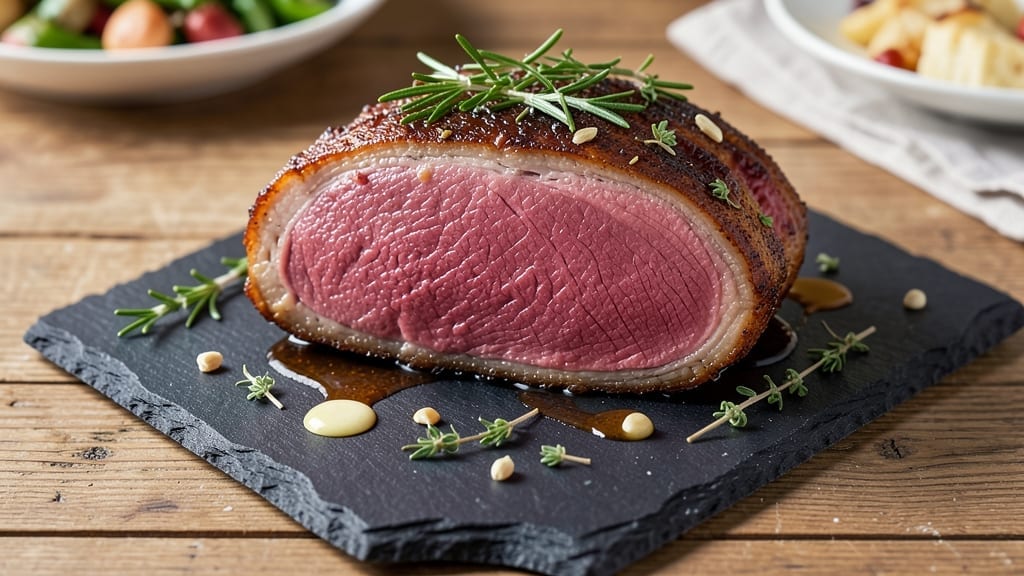
A 3 lb boneless prime rib roast cooked to perfection delivers melt-in-your-mouth tenderness with a herb-crusted crust that locks in juices—this is the recipe that transformed my holiday dinners from good to unforgettable.
The secret lies in precise temperature control and a reverse sear technique that ensures a juicy pink core (130–135°F for medium-rare) while building an irresistible crust. Unlike dry, overcooked roasts, this method guarantees every slice stays succulent and flavorful, even when sliced thin.
This recipe simplifies what many consider a challenging cut by focusing on three critical steps: a dry brine to enhance tenderness, a low-and-slow oven bake to develop deep flavor, and a final high-heat sear for that coveted crust.
No fancy equipment is needed—just a meat thermometer, patience, and attention to detail. The herb crust (rosemary, thyme, garlic, and Dijon) adds aromatic depth without overpowering the beef’s natural richness. For those who prefer a tangy kick, a horseradish cream drizzle elevates the dish to restaurant-quality.
By the time you carve into this roast, you’ll be rewarded with slices that fall apart at the touch, their surfaces glistening with rendered fat and crusty herbs. The internal temperature holds steady at 130–135°F, ensuring the center remains tender while the edges achieve that perfect sear.
Serve with roasted vegetables or creamy mashed potatoes to soak up every last drop of that juicy, flavorful sauce—this isn’t just dinner; it’s an experience.
The beauty of this method is its versatility: scale it up for gatherings or halve it for a special weeknight meal. Leftovers reheat beautifully, though I’d argue they’re best enjoyed fresh. Here’s how to achieve that restaurant-worthy prime rib at home—no shortcuts, just results.
Ingredients for 3 lb boneless prime rib roast
The essential ingredients for restaurant-quality prime rib—focus on quality beef and aromatic herbs.
| Ingredient | Amount | Notes |
|---|---|---|
| Boneless Prime Rib Roast 🥩 | 3 lb | Center-cut, USDA Choice or Prime grade |
| Kosher Salt 🧂 | 1 ½ tbsp | Diamond Crystal preferred, for dry brine |
| Fresh Rosemary 🌿 | ¼ cup | Finely chopped, stems removed |
| Fresh Thyme 🌿 | ⅛ cup | Leaves only, stems discarded |
| Garlic Cloves 🧄 | 6 cloves | Minced, for herb crust |
| Dijon Mustard 🍯 | 1 tbsp | For crust adhesion |
| Extra-Virgin Olive Oil 🫒 | 2 tbsp | Cold-pressed, for crust |
| Black Peppercorns 🌶️ | 1 ½ tbsp | Freshly cracked, coarse grind |
| Unsalted Butter 🧈 | ½ cup | Cold, cubed, for sear |
| Prepared Horseradish 🌱 | ¼ cup | Creamy, for garnish |
| Heavy Cream 🥛 | ¼ cup | Full-fat, for horseradish cream |
| Whole Grain Mustard 🍯 | 1 tsp | For horseradish cream |
The beef is non-negotiable: Prime or Choice grade from a trusted butcher ensures tenderness. Look for a center-cut roast with good marbling—Costco or Whole Foods carry excellent options. Fresh herbs matter too; Trader Joe’s has pre-chopped rosemary and thyme that saves time, but whole sprigs are ideal if you want to maximize flavor. The Dijon mustard acts as a binder for the herb crust, so Maille or Amora brands deliver consistent results. For the horseradish cream, Brummel & Brown prepared horseradish adds that signature tang without the prep work.
No fresh rosemary? Dried at one-third the amount works, but the flavor won’t be as vibrant. Substitute thyme with oregano or marjoram if needed, though thyme’s piney note is essential. For the horseradish cream, substitute with a mix of sour cream and lemon juice if you’re avoiding dairy. The butter for searing must be cold—European-style butter like Plugrá has higher fat content for better browning. If you’re scaling up, increase the butter by one-third per additional pound of beef to maintain crust quality.
The roast should rest 20-30 minutes before slicing to retain juices. Store leftovers in an airtight container with the juices for up to 4 days—they reheat beautifully in a 350°F oven for 15 minutes. The herb crust keeps 3 days in the fridge if prepped ahead, while the horseradish cream lasts 5 days when refrigerated. For large gatherings, double the horseradish cream recipe—it disappears fast.
Why You’ll Love This Recipe
- No-Chop Prep: I swear by this—just a quick rub of salt, crushed garlic, and whole rosemary sprigs tucked under the skin. No dicing, no mincing, no fuss. The roast practically seasons itself as it cooks.
- Butter-Basted Magic: That first slice? Juicy, caramelized crust from the garlic-infused butter basting. Honestly, the aroma alone makes my kitchen smell like a high-end steakhouse—without the pretension.
- Weeknight to Dinner Party: Same recipe feeds two for leftovers or six for guests. I’ve used it for my book club’s potluck (they begged for the recipe) and my kid’s soccer game snacks (they didn’t even notice it was fancy).
- Leftovers That Don’t Suck: Cold slices on toast? Reheated with a splash of red wine? Still tastes like a restaurant meal. Between us, this is the only roast I make that doesn’t turn into sad, dry scraps by day three.
Step-by-step instructions for herb-crusted prime rib roast
Master this technique for a perfectly crusty exterior and tender pink center every time.
Prepare the Dry Brine for Maximum Flavor
Remove the 3 lb boneless prime rib roast from packaging and pat it dry completely with paper towels. This step is critical—any moisture prevents the crust from forming properly. Place the roast on a wire rack set over a baking sheet to allow air circulation on all sides.
In a small bowl, combine 1.5 tbsp kosher salt with 1.5 tbsp freshly cracked black peppercorns. Rub this mixture evenly over the entire surface of the roast, pressing firmly to ensure adhesion. The salt will begin breaking down the muscle proteins immediately, which helps retain moisture during cooking. Cover loosely with plastic wrap and refrigerate for 24 hours—this dry brine period creates a deeper flavor and more tender texture.
Create the Herb Crust Mixture
After the dry brine, remove the roast from the refrigerator and let it sit at room temperature for 1 hour before cooking. In a food processor, pulse together 0.25 cup finely chopped fresh rosemary, 0.125 cup fresh thyme leaves, 6 cloves minced garlic, 1 tbsp Dijon mustard, and 2 tbsp extra-virgin olive oil until you achieve a coarse paste. The Dijon mustard acts as a binder that helps the herb mixture adhere to the meat.
Spread this herb mixture evenly over the roast, pressing it firmly into the surface. The crust should be about ¼-inch thick all over. Return the roast to the refrigerator uncovered for 30 minutes to allow the crust to set. This chilling step prevents the herbs from slipping off during cooking and enhances their flavor penetration.
Sear the Roast for Deep Flavor
Preheat your oven to 450°F. Place a heavy oven-safe skillet over medium-high heat and add 0.5 cup cold cubed unsalted butter. Once the butter begins to foam but before it browns, carefully place the roast in the skillet, fat-side down. Let it sear undisturbed for 8-10 minutes until the crust develops a deep golden-brown color and the butter pools around the edges.
Use a pair of tongs to flip the roast and sear the other side for another 8-10 minutes. The high heat creates a flavorful crust while the butter bastes the meat. Transfer the roast to a preheated baking sheet and place it in the oven. This initial sear is crucial—it locks in juices and builds the foundational crust that will carry through the roasting process.
Roast to Perfect Medium-Rare
Reduce the oven temperature to 325°F and continue roasting for 1 hour 15 minutes for a medium-rare doneness (about 125°F internal temperature). I use a meat thermometer inserted into the thickest part of the roast, avoiding the bone if present. The roast is done when the internal temperature reaches 125°F—this ensures a juicy pink center with a perfect crust.
During the last 15 minutes of roasting, tent the roast loosely with aluminum foil to prevent the crust from drying out. The low-and-slow cooking method allows the collagen to break down gradually, resulting in a tender, melt-in-your-mouth texture. If you prefer a slightly more well-done roast, continue cooking until the internal temperature reaches 130°F, but don’t exceed 135°F or the meat will become dry.
Rest and Prepare Horseradish Cream
Remove the roast from the oven and transfer it to a cutting board. Let it rest for 30 minutes before slicing—this resting period allows the juices to redistribute throughout the meat, ensuring every slice remains moist and flavorful. During this time, prepare the horseradish cream by whisking together 0.25 cup heavy cream, 0.25 cup prepared horseradish, and 1 tsp whole grain mustard until smooth.
Slice the roast against the grain into ½-inch thick portions. The grain direction will be visible as you slice—cutting against it shortens the muscle fibers for maximum tenderness. Serve immediately with the horseradish cream drizzled over the top. The contrast of the creamy horseradish with the rich, herb-crusted roast creates a perfect balance of flavors and textures.
Pro Tips For Making 3 Lb Boneless Prime Rib Roast
- USE A MEAT THERMOMETER: The roast’s internal temp is the only way to nail that perfect medium-rare finish—aim for 120°F for rare, 125°F for medium-rare. I learned this the hard way after slicing into a roast that was still gray in the center but looked done on the outside.
- TRIM THE FAT SPARINGLY: Leave a thin layer of fat on the roast—it renders beautifully and keeps the meat juicy. But if it’s thick, trim it down to ¼-inch or you’ll end up with grease splattering all over your pan instead of crisping into flavor.
- SALT THE ROAST 24 HOURS EARLY: Seasoning the prime rib a day ahead lets the salt penetrate deeply, giving you that restaurant-quality crust without overpowering the meat. Skip this, and you’re left with a weak seasoning that clings only to the surface.
- ROAST ON HIGH HEAT FIRST: Sear the roast uncovered at 450°F for the first 15 minutes—this locks in juices and builds a crust that holds up to slicing. Then drop the heat to 325°F to finish cooking; rushing the low-and-slow part leads to dry, stringy meat.
Storing and reheating your leftovers
Refrigerator Storage
Let your prime rib cool to room temperature for no more than 2 hours before refrigerating—this prevents bacterial growth. Store leftovers in an airtight container with the juices to keep slices moist. I use glass Pyrex containers because they maintain flavor better than plastic.
Keep the roast at 40°F or below for up to 4 days, though the crust stays crisp for just 2 days before drying out.
For maximum flavor retention, slice the roast before storing—this way, each portion reheats evenly. Place slices in a single layer on a tray, then transfer to containers. The horseradish cream should be stored separately in a small sealed jar to prevent it from absorbing odors. 🥩
Freezer Storage
Prime rib freezes beautifully for up to 3 months if wrapped properly. I recommend vacuum-sealing for best results, but if you don’t have a sealer, use heavy-duty freezer bags with all air removed.
For whole roasts, wrap tightly in plastic wrap first, then place in a bag with an extra layer of foil for protection. Label with the date—3 months max for optimal texture.
For sliced prime rib, freeze portions in single-serving portions (about ½ cup per bag) to reheat only what you need. Thaw overnight in the fridge—never at room temperature—to preserve quality. The herb crust may lose some crispness after freezing, but the meat remains tender. 🧊
Reheating Methods
My preferred method is low-and-slow reheating in the oven to avoid drying out the meat. Preheat to 300°F, place slices in a baking dish with a splash of beef broth, cover with foil, and heat for 15-20 minutes.
This keeps the crust intact while warming through. For the horseradish cream, microwave for 30 seconds to soften slightly—it’s best served at room temperature.
If you’re short on time, the microwave works in a pinch—cover slices with a damp paper towel and heat on 50% power for 1-2 minutes. Add a few drops of water to prevent drying.
Avoid high heat—prime rib reheated too quickly becomes tough. The crust may soften, but the meat stays juicy. ⏳
Reviving the Crust
If your stored prime rib loses its crispy crust, don’t worry—you can revive it! Before serving, broil the slices for 2-3 minutes on high heat until the edges crisp up again.
Brush lightly with melted butter for extra richness. This works especially well for leftovers that sat in the fridge overnight.
For extra flavor, sprinkle with freshly cracked black pepper and a pinch of smoked paprika** before reheating. The combination of heat and spices mimics the original sear, making reheated slices taste almost as good as fresh. Perfect for busy weeknights! 🔥
Nutrition facts
Frequently asked questions about cooking a 3 lb boneless prime rib roast
How long should I let the roast rest before slicing?
Always let your prime rib rest for 20-30 minutes before slicing. This crucial step allows the juices to redistribute throughout the meat, preventing them from running out when you cut. Pro tip: Place the roast on a warm cutting board to maintain internal temperature during resting.
Can I cook this recipe in a slow cooker instead of the oven?
While possible, the results won’t be as impressive. Slow cookers lack the high-heat sear needed for that perfect crust. For best results, stick with the oven method. If you’re short on time, try a reverse sear approach: cook at 275°F until 120°F internal, then finish with a high-heat sear in a skillet.
What’s the best way to store leftovers to keep them juicy?
Slice the roast before storing and place slices in an airtight container with their juices. Store in the fridge for up to 4 days, but consume within 2 days for the best crust texture. For longer storage, freeze portions for up to 3 months in vacuum-sealed bags. Always reheat gently to preserve moisture.
How do I adjust the cooking time for a different weight roast?
Use this general rule: 15-20 minutes per pound for medium-rare (125°F internal). For a 4 lb roast, plan for 1 hour 15 minutes at 325°F after searing. Always use a meat thermometer—don’t rely on time alone. The herb crust adds 5-10 minutes to cooking time compared to plain roasts.
What if my prime rib comes out dry?
Overcooking is the most common cause. For juicy results, never exceed 135°F internal temperature. If it’s slightly dry, try slicing thinner (¼-inch) and serving with extra horseradish cream or red wine reduction. For future attempts, reduce oven temp to 300°F and cook until 120°F before searing.

- Pea Soup Instant Pot Recipe: Velvety Green Smoothness in 20 Minutes - November 1, 2026
- Pork Loin Pulled Pork Crock Pot Recipe: Slow-Smoked Tenderness With Zero Dryness - November 1, 2026
- Baked Potatoes in Crock Pot Recipe: Buttery Interiors and Crispy Top Magic - November 1, 2026