
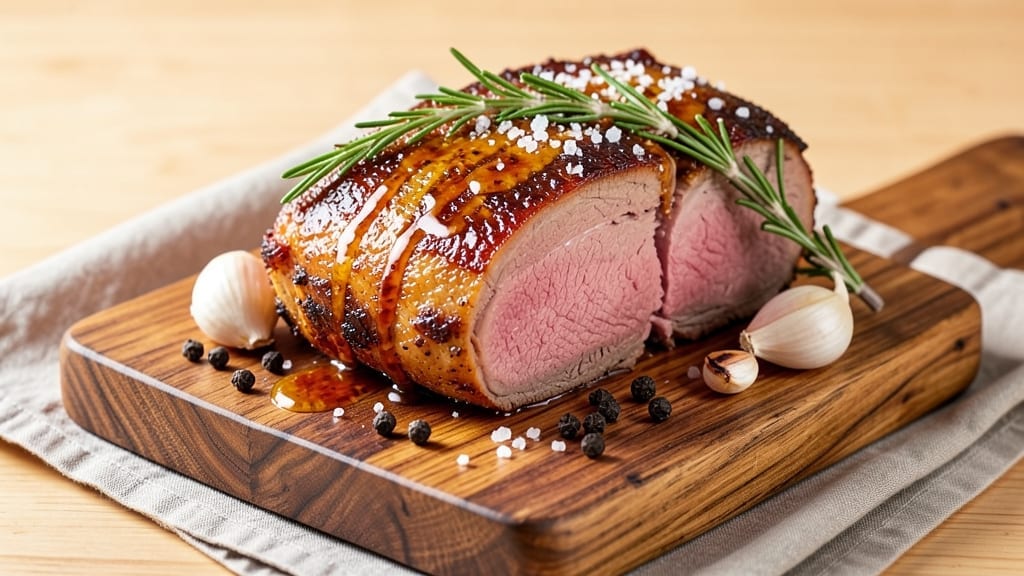
A 3-lb ribeye roast cooked to perfection transforms a simple weeknight into a memorable feast. The secret lies in a herb-crusted exterior that locks in juices while creating a caramelized bark, paired with a tender, melt-in-your-mouth interior that falls apart with every cut.
This isn’t just dinner—it’s an experience that rivals steakhouse quality, achieved with precision timing and a few professional techniques you can master at home.
What sets this recipe apart is the bone-in approach, which concentrates flavor and keeps the meat incredibly moist. We’ll start with a dry brine to enhance tenderness, then build a herb crust using Dijon mustard, garlic, and fresh rosemary—elements that add depth without overpowering the beef’s natural richness.
The key is reverse searing: a low-and-slow oven phase followed by a high-heat sear to create that coveted crust, ensuring every bite delivers both texture and flavor.
The result is a juicy, flavorful roast with a golden-brown crust that’s impossible to resist. Serve it sliced against a bed of creamy mashed potatoes or alongside roasted garlic green beans to let the beef shine.
The technique is foolproof—no guesswork, no overcooking, just a restaurant-worthy centerpiece that will have everyone asking for seconds.
For those who love leftovers, this roast reheats beautifully, making it perfect for meal prep. The herb crust stays intact, and the meat remains tender when sliced thin.
Whether you’re hosting a dinner party or treating yourself to a luxurious Sunday meal, this recipe delivers confident, professional results with minimal effort.
Ingredients for 3 lb ribeye roast
The backbone of this restaurant-quality roast starts with premium beef and bold flavors.
| Ingredient | Amount | Notes |
|---|---|---|
| Bone-In Ribeye Roast 🥩 | 3 lb | Center-cut, 1-1.5 inches thick |
| Kosher Salt 🧂 | 2 tbsp | Diamond Crystal preferred, coarse grain |
| Fresh Black Peppercorns 🌶️ | 1 ½ tbsp | Coarsely cracked, not ground |
| Dijon Mustard 🍯 | 1 ½ tbsp | High-quality, no additives |
| Garlic Cloves 🧄 | 6 cloves | Smashed, not minced |
| Fresh Rosemary 🌿 | ½ cup | Needles finely chopped, stems removed |
| Extra-Virgin Olive Oil 🫒 | 2 tbsp | Fruity, not refined |
| Unsalted Butter 🧈 | 4 tbsp | Cold, cut into small cubes |
| Yellow Onion 🧅 | 1 whole | Large, sliced into rings |
| Fresh Thyme Leaves 🌿 | ¼ cup | Stems removed, loosely packed |
| Fresh Parsley 🌿 | ¼ cup | Flat-leaf, chopped for garnish |
| Red Wine 🍷 | ½ cup | Bold, dry (Cabernet Sauvignon) |
| Beef Bone Broth 💧 | 1 cup | Homemade or high-quality store-bought |
The ribeye roast is non-negotiable here—bone-in, center-cut delivers the richest flavor and moisture. Look for a piece with good marbling and a 1-1.5 inch thickness for even cooking. Whole Foods or your local butcher shop are your best bets; ask for the ribeye roast cut from the primal rib section. The Dijon mustard should be the good stuff—Maille or Bouillon brands elevate the crust. Fresh herbs make all the difference, so grab rosemary with vibrant green needles and thyme with a strong aroma. If you’re using dried herbs, reduce to one-third the amount—they lack the punch of fresh.
No fresh rosemary? Dried rosemary at half the amount works in a pinch, but the flavor won’t be as bright. Swap the red wine for an extra 0.5 cup of beef broth if you’re avoiding alcohol. For the garlic, garlic powder at one-third the amount is a decent substitute, though fresh is ideal. The butter matters too—European-style unsalted butter like Plugrá has higher fat content, which is perfect for the crust. If you’re short on time, pre-sliced onions from the grocery store work fine, but slicing your own adds that homemade touch. The bone broth can be homemade (simmer beef bones with veggies for 12+ hours) or store-bought—just avoid the kind with added salt.
The roast reheats beautifully—350°F for 20-25 minutes wrapped in foil keeps it juicy. Portion leftovers into airtight containers and store for up to 5 days. For longer storage, freeze slices wrapped in parchment and foil for 3 months. The herb crust stays intact when reheated gently, so don’t skip the foil. Garnish with fresh parsley right before serving—it adds that restaurant-fresh finish. If you’re prepping ahead, make the herb crust mixture up to 2 days in advance and store it in the fridge; just bring it to room temp before using.
Why You’ll Love This Recipe
- Minimal Prep, Maximum Impact: I swear by this—just salt, pepper, and a quick rub of Dijon and garlic before it hits the oven. No chopping, no fuss, and honestly? The hardest part is waiting for it to cook.
- Crispy Edge, Juicy Core: That bone-in ribeye? It’s where the magic happens—the crust locks in flavor while the inside stays so tender, it nearly falls apart. (Yes, even on a Tuesday night.)
- Leftovers That Don’t Suck: Slice it thin for sandwiches, cube it for hash, or just reheat a portion straight from the fridge. Between us, the second day is often the best—when the flavors meld into something even richer.
- Weeknight Crowd-Pleaser: Feed six without stressing—this roast handles company, game days, or lazy Sundays like a champ. (And the bones? Perfect for broth if you’re feeling extra.)
Step-by-step instructions for herb-crusted ribeye roast
Here’s how to transform a simple roast into a showstopping centerpiece with rich flavors and perfect texture.
Prepare the Roast for Maximum Flavor
Remove the 3 lb bone-in ribeye roast from the refrigerator and pat it completely dry with paper towels. You want every inch of that surface dry—this is non-negotiable for crispy skin. I like to use two layers of paper towels to really get it dry, especially around the bone where moisture tends to linger.
In a small bowl, combine the 2 tbsp kosher salt, 1.5 tbsp fresh black peppercorns (coarsely cracked), 1.5 tbsp Dijon mustard, and 0.5 cup finely chopped fresh rosemary. Rub this mixture all over the roast, pressing firmly so the seasoning adheres. Pay special attention to the bone side and any crevices—these areas need extra attention to develop flavor. Let the seasoned roast sit at room temperature for 30 minutes while you prepare your pan.
Create the Herb Butter Crust
In a small bowl, mix together the 4 tbsp cold unsalted butter (cut into small cubes), 0.25 cup fresh thyme leaves, and 0.25 cup chopped fresh parsley. This herb butter will form a flavorful crust on your roast. Place the roast fat-side up in a roasting pan and spread the herb butter mixture evenly over the surface, pressing it gently into the meat.
Arrange the 1 whole yellow onion (sliced into rings) around the roast in the pan. The onions will caramelize beautifully during cooking, adding another layer of flavor to your pan drippings. Preheat your oven to 400°F while you prepare the wine reduction that will elevate your roast to the next level.
Sear and Deglaze for Deep Flavor
Heat a large oven-safe skillet over medium-high heat. Add the 2 tbsp extra-virgin olive oil and let it get hot but not smoking. Place the roast fat-side down in the skillet and sear for 4-5 minutes until the fat is rendered and the meat develops a deep golden crust. Flip the roast and sear the other side for another 3-4 minutes. Transfer the roasted roast to the prepared roasting pan with the onions.
In the same skillet, pour in the 0.5 cup red wine and scrape up all the browned bits from the bottom with a wooden spoon. Let the wine reduce by half (about 2-3 minutes), then pour this flavorful reduction over the roast in the roasting pan. This step captures all those precious meaty flavors that would otherwise be lost.
Roast to Perfect Medium-Rare
Transfer the roasting pan to the preheated 400°F oven. Roast for 20 minutes, then reduce the heat to 325°F. Continue roasting for an additional 20-25 minutes, or until the internal temperature reaches 120-125°F for medium-rare. This will take about 40-50 minutes total cooking time, depending on your oven.
Here’s the thing about roasting beef—it’s better to slightly undercook than overcook. The meat will continue to rise in temperature as it rests, so pull it out when it’s just shy of your target doneness. The 1 cup beef bone broth in the roasting pan will help keep the meat moist and create a rich sauce for serving.
Rest and Serve with Pan Sauce
Remove the roast from the oven and transfer it to a cutting board. Tent loosely with foil and let it rest for 15-20 minutes. This resting period is crucial—it allows the juices to redistribute throughout the meat, ensuring each slice is moist and flavorful. During this time, place the roasting pan on the stovetop over medium heat and add a splash of water to the pan drippings.
Scrape up all the browned bits from the pan with a wooden spoon, then simmer for 3-4 minutes until the sauce thickens slightly. Slice the roast against the grain into ½-inch thick slices and serve immediately with the pan sauce spooned over the top. The result should be a perfectly pink center with a flavorful herb crust and rich, tender meat in every bite.
Pro Tips For Making 3 Lb Ribeye Roast
- SEAR FIRST, THEN SALT: Get that pan screaming hot—cast iron or heavy skillet—before laying down the roast. I used to salt early and end up with a soggy crust; now I sear until deep brown (3-4 minutes per side), then salt after while it’s still in the pan. The crust locks in flavor and moisture while the salt melts into the hot surface.
- CRUSH THOSE PEPPERCORNS: Fresh black peppercorns aren’t just for garnish—crack them open with the flat side of a knife or a mortar. The oils inside are what make the difference, and they’ll cling to the mustard-garlic rub better than whole berries. (Yes, even if you’re impatient like me.)
- DON’T SKIP THE MUSTARD LAYER: That Dijon isn’t just for flavor—it’s the glue. Mix it with minced garlic into a paste and slather it thick over the seared roast before roasting. It keeps the crust intact and adds a tangy depth that dry seasoning alone can’t match. I learned this the hard way when I rushed and ended up with a dry exterior.
- REST UNDER FOIL: Pull the roast at 125°F (it’ll climb to 130°F while resting), then tent it loosely with foil for 15 minutes. The bone stays hot, the meat reabsorbs juices, and you avoid the sad, stringy slices that come from cutting too soon. Sounds weird, but it works—every time.
Regional styles of this recipe
Texas-Style Smoked Roast
In Texas, ribeye roasts are often transformed into a showstopping centerpiece by slow-smoking them over oak or pecan wood for 6-8 hours at 225-250°F. The key difference? A dry rub of coarse salt, black pepper, garlic powder, and smoked paprika replaces the herb crust.
I like to add 1 tbsp of brown sugar to the rub for a subtle caramelization. Serve with white BBQ sauce for dipping and creamy coleslaw to balance the richness. 🔥
French Au Jus Style
French chefs elevate ribeye roasts with a rich au jus sauce made from the pan drippings, red wine, and beef bone broth. After roasting, deglaze the pan with ½ cup red wine and 1 cup beef broth, then simmer until reduced by half.
Strain and whisk in 1 tbsp cold butter for a velvety finish. Serve the roast sliced thickly with buttery mashed potatoes and roasted baby carrots. This method turns a simple roast into a restaurant-worthy dish. 🍷
Italian Herb-Crusted Version
For an Italian twist, swap the rosemary for fresh sage and thyme, and add grated Parmesan cheese to the herb butter crust. Use dry white wine instead of red for deglazing, and finish with a sprinkle of fresh parsley.
Pair with creamy polenta and roasted zucchini for a hearty, flavorful meal. The Parmesan adds a nutty depth that complements the beef beautifully. 🌿
German Beer-Braised Roast
German-style roasts are often braised in beer for extra tenderness. After searing, transfer the roast to a Dutch oven, add 2 cups dark beer (like Dunkel or Bock), 1 chopped onion, and 2 crushed garlic cloves.
Cover and braise at 325°F for 2 hours until fork-tender. The beer adds a malty sweetness that pairs perfectly with red cabbage and buttered egg noodles. This method is ideal for larger gatherings. 🍺
Southern-Style Gravy Roast
In the South, ribeye roasts are often served with a thick, savory gravy made from the pan drippings. After roasting, deglaze the pan with 1 cup beef broth and 2 tbsp flour to thicken. Stir in 1 tbsp Worcestershire sauce for depth.
Serve the roast with buttery cornbread and collard greens for a comfort-food classic. The gravy soaks up perfectly into the cornbread, making every bite delicious. 🥣
Nutrition facts
Frequently asked questions
How do I know when my 3 lb ribeye roast is done?
Use a meat thermometer for perfect results! For medium-rare, pull the roast when the internal temperature reaches 120-125°F. The meat will rise 5-10°F more as it rests, so don’t overcook. For medium (140°F) or well-done (160°F), adjust accordingly—but ribeye is best enjoyed rare to medium-rare for maximum tenderness.
Can I cook this roast without a thermometer?
Yes, but it requires practice. For medium-rare, roast at 325°F for 25-30 minutes per pound (about 50-60 minutes total for a 3 lb roast). The roast should feel slightly springy when pressed—like pressing your thumb into a soft mattress. Cut into the thickest part to check: juices should run clear, not red.
Why does my ribeye roast turn out dry?
Overcooking is the #1 cause! Ribeye is best cooked to medium-rare—any higher and it loses moisture. Also, skipping the rest time causes juices to escape. Always let the roast rest 15-20 minutes before slicing. For extra moisture, add 1 cup beef broth to the roasting pan to create a self-basting environment.
How far ahead can I prep the herb crust?
You can mix the herb butter crust up to 2 days ahead and store it in the fridge. Just bring it to room temperature before using. The dry brine (salt, pepper, mustard, rosemary) can be applied 12 hours ahead—just keep the roast uncovered in the fridge. This gives the meat time to develop flavor without drying out.
What’s the best way to reheat leftovers?
Slice the roast thinly and reheat in a skillet over medium-low heat for 2-3 minutes per side with a splash of beef broth. For oven reheating, wrap slices in foil and bake at 350°F for 15-20 minutes. Never microwave—it turns the meat tough. Leftovers keep well for 3-4 days in the fridge.

- 6 Oz Chocolate Chip Cookie Recipe: Perfectly Balanced Crispy Edges and Chewy Hearts - September 25, 2026
- 6-Inch Coffee Cake Recipe: Vanilla Bean Swirls and Buttery Streusel Topping - September 25, 2026
- 1 Hour Soup Recipe: Velvety Richness Without the Wait - September 25, 2026