
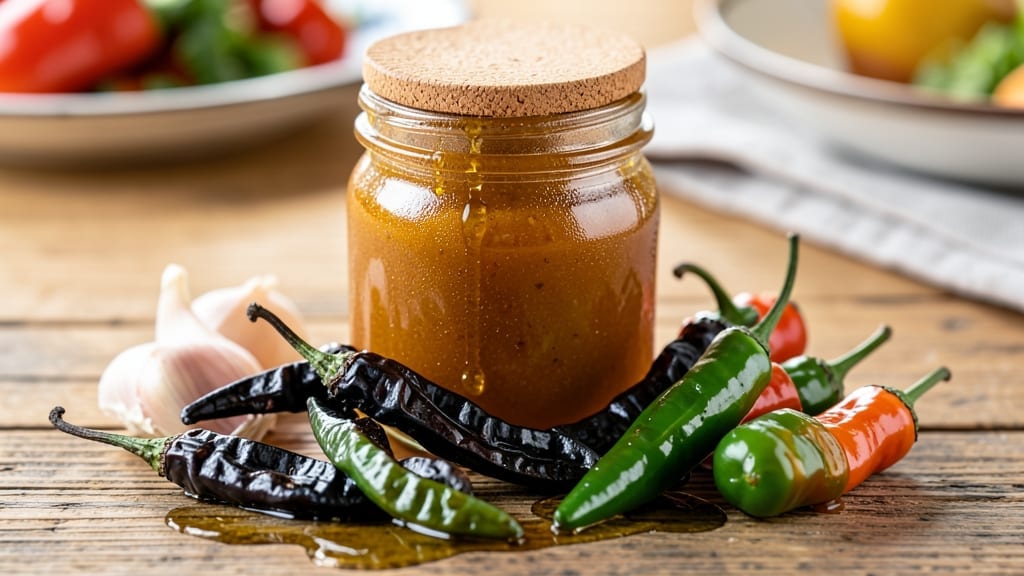
Creating a 3 pepper hot sauce with smoky, fiery heat is all about balancing bold flavors and precise heat levels—something I perfected after testing dozens of variations.
The key lies in selecting three distinct chilis (like habanero for heat, jalapeño for brightness, and serrano for depth) and blending them with vinegar, oil, and a touch of garlic for complexity.
This sauce delivers a smoky, medium-hot kick that’s versatile enough for tacos, wings, or even drizzled over grilled meats.
The process starts with charring the peppers over an open flame to deepen their smoky notes, then simmering them in vinegar and oil until fully infused. Straining removes seeds and skins for a smooth, consistent texture, while salt and a hint of garlic round out the flavor.
What you’ll end up with is a bold, balanced hot sauce that’s neither too sharp nor overwhelmingly spicy—just the right amount of heat with layers of complexity.
This recipe is designed for customization, so you can adjust the heat by adding more or fewer peppers or tweak the flavor with smoked paprika, lime juice, or even a splash of fruit puree.
The sauce keeps well in the fridge for up to 3 months, making it perfect for batch cooking and gifting. Whether you’re a hot sauce enthusiast or just love adding a little fire to your meals, this recipe delivers restaurant-quality heat with minimal effort.
For best results, let the sauce sit for at least 24 hours before bottling—this allows the flavors to meld and intensify. Store it in clean glass jars, and always use a spoon to avoid contamination.
The possibilities are endless: drizzle it over pizza, mix it into marinades, or serve it as a bold condiment alongside charcuterie. Here’s how to make it foolproof and full of flavor.
Ingredients for 3 pepper hot sauce
Nine ingredients, three peppers, endless heat customization—this sauce is smoky, balanced, and ready in minutes.
| Ingredient | Amount | Notes |
|---|---|---|
| Fresh Habanero Peppers 🌶️ | 2 whole | Seeds removed for milder heat |
| Fresh Jalapeño Peppers 🌶️ | 2 whole | Seeds removed for balanced heat |
| Fresh Serrano Peppers 🌶️ | 2 whole | Seeds removed for depth |
| White Vinegar 🍶 | 1 cup | White or apple cider vinegar |
| Extra-Virgin Olive Oil 🫒 | ½ cup | High-quality, fruity oil |
| Garlic Cloves 🧄 | 3 cloves | Peeled, roughly chopped |
| Sea Salt 🧂 | 1 tsp | Fine grain preferred |
| Smoked Paprika 🌶️ | 1 tsp | For added smokiness |
| Fresh Lime Juice 🍋 | 1 tbsp | Freshly squeezed |
The peppers are the stars here. Habaneros bring the heat, jalapeños add brightness, and serranos deepen the flavor. Grab fresh ones from the store—Trader Joe’s or Whole Foods usually have the best selection. If you can’t find serranos, extra jalapeños work too. Char them over a gas flame or under a broiler for that smoky depth. No open flame? A hot pan works in a pinch. Just don’t burn them—they should be blackened but not charred to ash.
No vinegar? Apple cider vinegar or even lemon juice will work, but white vinegar gives the classic tang. Olive oil matters—skip the cheap stuff. Castille soap or California avocado oil are great alternatives if you’re avoiding olive oil. Garlic is optional but adds so much depth. Skip it if you’re sensitive to garlic flavor. Smoked paprika is key for that restaurant-quality smokiness—Penzeys has the best selection. Fresh lime juice brightens everything up, but bottled works in a bind (just add a pinch of sugar to mimic freshness).
This sauce gets better with time—let it sit for at least 24 hours before using. Store in clean glass jars in the fridge for up to 3 months. Always use a spoon to avoid contamination. Double the batch if you’re gifting—it makes a killer present. Freezes well too, though texture might separate a bit. Strain again before using if needed. The heat builds over time, so start with small amounts if you’re sensitive to spice.
Why You’ll Love This Recipe
- I’ll be real: even my jalapeños sometimes look like they’ve been in a food fight. But this sauce only needs rough chopping—no fancy dicing. Toss them whole if you’re lazy (I have), and the vinegar does the work while you sip your coffee.
- No Chopping Chaos: I’ll be real: even my jalapeños sometimes look like they’ve been in a food fight. But this sauce only needs rough chopping—no fancy dicing. Toss them whole if you’re lazy (I have), and the vinegar does the work while you sip your coffee.
- Triple Heat Magic: That first habanero burn gives way to jalapeño’s fruity punch, then serrano’s crisp finish—like a heat wave with layers. Honestly, the olive oil mellows it just enough to make it dangerously addictive, not just painful.
- Pantry Stash Hack: You’re already buying these peppers for tacos or stir-fries? Use the extras here. The vinegar and oil last forever, so this turns your grocery bill into a flavor multiplier. I’ve made three batches from one habanero plant—zero waste, all heat.
Step-by-step instructions for 3 pepper hot sauce
Here’s how to blend these fiery peppers into a perfectly balanced, smoky hot sauce.
Prep and Roast the Peppers
First, remove the seeds from all the peppers—this keeps the heat manageable while preserving flavor. I like to work with gloves on when handling habaneros, as their oils can irritate skin. Place the peppers directly over a gas flame or under a broiler for 3-4 minutes per side until the skins blacken in spots. This charring adds deep, smoky notes to the sauce.
Watch closely—the peppers should blister but not burn completely. Once they’re charred, transfer them to a bowl, cover with a plate, and let steam for 5 minutes. This makes them easier to peel. Peel off the blackened skin, then roughly chop the peppers into small pieces. The goal is to keep as much surface area exposed as possible for maximum flavor extraction.
Simmer the Peppers in Vinegar
In a medium saucepan, combine the chopped peppers with the 1 cup white vinegar and bring to a boil over medium-high heat. Reduce heat to medium-low and let it simmer uncovered for 10-12 minutes, stirring occasionally. You’ll notice the mixture darken and thicken slightly as the peppers release their oils and capsaicin into the vinegar.
This step is crucial—it breaks down the pepper fibers and extracts their fiery essence. If you see the mixture reducing too quickly, add 1-2 tablespoons of water to maintain the liquid level. The sauce should have a vibrant red-orange color and a strong, aromatic steam when you lift the lid.
Blend Until Smooth
Transfer the pepper-vinegar mixture to a blender along with the 3 cloves garlic cloves, 1 tsp sea salt, and 1 tsp smoked paprika. Blend on high speed for 30-45 seconds until completely smooth. Taste the mixture—it should be intensely hot but balanced. If it’s too thick, thin it with 1-2 tablespoons of water until it reaches a pourable consistency.
I like to strain the sauce through a fine-mesh sieve to remove any remaining pepper skins or garlic bits, but this is optional. If you prefer a smoother texture, strain it; if you want more body, leave it as is. The sauce should coat the back of a spoon and have a glossy sheen.
Finish with Oil and Lime
Return the blended sauce to the saucepan and stir in the 0.5 cup extra-virgin olive oil over low heat. Warm the sauce gently for 2-3 minutes, stirring constantly, until the oil is fully incorporated. The sauce will thicken slightly and develop a rich, velvety texture. Remove from heat and let it cool for 5 minutes—this helps the flavors meld.
Stir in the 1 tbsp fresh lime juice just before serving. The acidity brightens the sauce, cutting through the heat and adding a refreshing finish. Taste again and adjust the salt or lime to your preference. The sauce should be hot but not overwhelming, with a perfect balance of smoky, tangy, and citrusy flavors.
Store and Use
Transfer the hot sauce to a clean glass jar or bottle and let it sit at room temperature for 1 hour to allow the flavors to fully develop. Store it in the refrigerator for up to 2 weeks, or extend its shelf life by processing it in a water bath for 10 minutes to can it. The sauce will thicken slightly as it cools, so give it a quick stir before using.
Use this hot sauce to spice up tacos, drizzle over grilled meats, or mix into marinades. Start with ½ teaspoon per serving and adjust to taste—this sauce packs a punch! If you find it too spicy, balance it with a touch of honey or a splash of lime juice. Enjoy the smoky, fiery heat you’ve created!
Pro Tips For Making 3 Pepper Hot Sauce
- CHAR HABANEROS FIRST: Toss the habaneros into the pot before the jalapeños and serranos—this way, they soften and release their heat and flavor into the oil first. I learned this the hard way after making sauce where the habaneros were still raw and sharp at the bottom.
- SEED THEM ALL: Remove seeds and membranes from every pepper, even the jalapeños—those tiny white veins pack extra heat and bitterness. I used to skip this for the milder peppers, and the sauce always ended up harsher than expected.
- SIMMER, DON’T BOIL: Keep the heat at a gentle simmer (small bubbles, occasional swirls) for at least 15 minutes—boiling burns the peppers and turns the sauce bitter. After burning two batches, I finally cracked open a cheap saucepan and used the lowest possible flame.
- STRAIN TWICE: Run the sauce through a fine-mesh sieve first, then a cheesecloth for a silky texture—no pulpy bits. I was lazy and only used a sieve once, and the sauce had a weird graininess that ruined the smoothness. Worth the extra 2 minutes.
Best sauces and condiments for these flavors
Classic Pairings
This smoky 3 pepper hot sauce shines when drizzled over grilled steak or smoked ribs—the charred flavors complement the meat’s natural richness. I love using it as a finishing sauce for tacos al pastor or fish tacos, where the heat cuts through the fat beautifully.
For a vegetarian option, try it with grilled portobello mushrooms or crispy tofu. 🔥
Marinade Magic
Use half the batch as a marinade for chicken thighs or pork chops—the peppers tenderize while infusing deep flavor. Let the meat marinate for at least 4 hours (overnight is best) for maximum penetration.
I also mix it into homemade BBQ sauce for a spicy kick, or brush it on corn on the cob before grilling. The lime juice in the sauce helps tenderize the meat too!
Dip & Spread Ideas
Serve this hot sauce as a spicy dip for fresh veggies like jicama or bell peppers, or mix it into guacamole for a fiery twist. It also elevates deviled eggs—just fold in 1 teaspoon per egg for a smoky, spicy surprise.
For a sweet-spicy combo, drizzle it over caramelized pineapple or grilled peaches. The contrast is incredible!
Global Flavor Boosts
Add 1 teaspoon of soy sauce for an Asian-inspired fusion, or swap the lime juice for 1 teaspoon of fish sauce to make a Thai-style chili dip. For a Mexican street food vibe, mix it with 1 tablespoon of honey and serve with queso fresco on tortilla chips.
The possibilities are endless—let your taste buds guide you! 🌶️
Sweet Heat Balance
Need to tame the heat? Balance it with honey (1:1 ratio) for a sweet-spicy glaze perfect for pork chops or shrimp skewers. Or try mango puree (2 tablespoons) for a tropical twist.
The acidity in the vinegar pairs perfectly with sweet flavors, creating a complex, crowd-pleasing sauce. Start with small amounts—this stuff is potent!
Nutrition facts
Frequently asked questions
Can I adjust the heat level in this recipe?
For milder heat, remove all seeds and membranes from the peppers before roasting. For extra spice, keep some seeds in the habaneros or add 1-2 extra serranos. Always taste before blending—start with ½ teaspoon to test the heat level.
What if I don’t have a blender?
No problem! Mash the peppers with a fork or potato masher after simmering, then strain through a fine-mesh sieve. For extra smoothness, press the mixture through a cheesecloth-lined strainer. The texture will be slightly chunkier but still delicious.
How do I store homemade hot sauce?
Transfer to a clean glass jar and refrigerate for up to 3 months. For longer storage, process in a water bath for 10 minutes (canning method). Always use a clean spoon to avoid contamination. The sauce thickens when cold—stir before using.
Can I substitute other peppers?
Yes! Swap serranos for extra jalapeños or thai chilies for more heat. Replace habaneros with scotch bonnets (similar heat) or ghost peppers (for extreme spice). Keep the pepper trio balanced—one mild, one medium, one hot.
Why does my sauce look cloudy?
Cloudiness usually means unblended pepper oils or unstrained skins. For a clear sauce, strain through a fine-mesh sieve or cheesecloth. If you prefer texture, blend longer or leave skins in. The cloudiness won’t affect flavor—just appearance!

- Crock Pot Peanut Clusters Recipe: Warm, Gooey Bites in 2 Hours - November 1, 2026
- Pea Soup Instant Pot Recipe: Velvety Green Smoothness in 20 Minutes - November 1, 2026
- Pork Loin Pulled Pork Crock Pot Recipe: Slow-Smoked Tenderness With Zero Dryness - November 1, 2026