
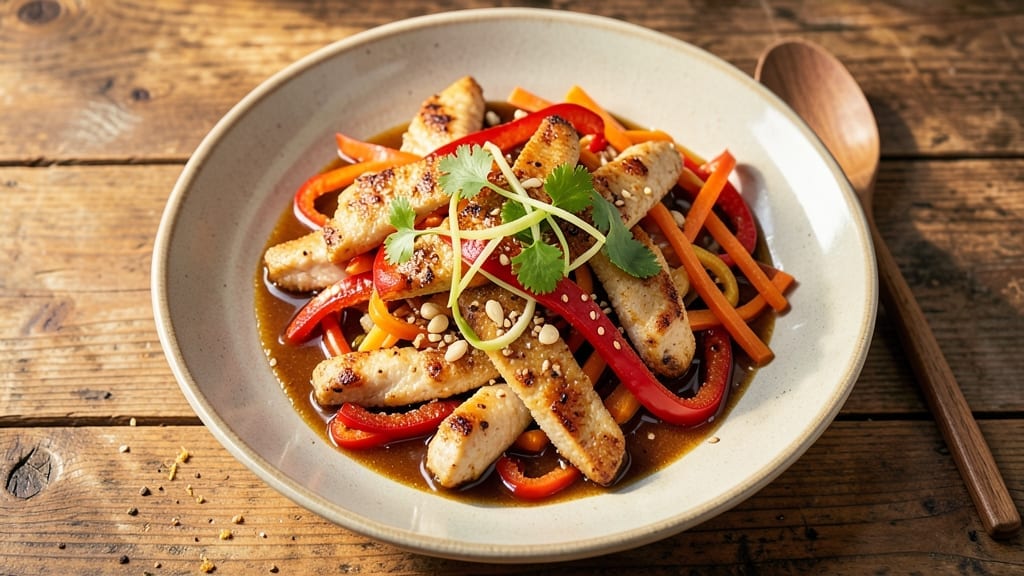
Mastering a 30-minute chicken stir fry isn’t just about speed—it’s about technique. After years of perfecting quick weeknight meals in my Atlanta kitchen, I’ve developed a method that delivers restaurant-quality results in half the time. The secret lies in high-heat searing and a silky sauce that coats every bite without overpowering the natural flavors of the chicken and vegetables.
This recipe transforms simple ingredients into a balanced meal with minimal prep. We’re talking tender chicken strips, crisp-tender vegetables, and a sauce so smooth it clings perfectly to each component.
The key is working efficiently: prepping ingredients while the wok heats, using high heat to develop deep flavors quickly, and timing everything to finish together. No complicated steps—just smart sequencing that keeps the 30-minute promise.
What you’ll end up with is a vibrant stir fry that’s ready in 25 minutes of active cooking, with juicy chicken, perfectly cooked vegetables, and a sauce that’s both rich and bright.
The aroma alone will have everyone gathering around your table, and each bite delivers that perfect balance of protein, fresh vegetables, and umami-packed sauce. This is the kind of meal that transforms a busy weeknight into a satisfying dining experience.
Whether you’re cooking for two or feeding a crowd, this recipe scales beautifully while maintaining its quick preparation time. The technique works equally well with pre-cut vegetables or fresh produce, making it adaptable to whatever you have on hand.
Let’s get started on creating this wok-heated masterpiece that’s as quick as it is impressive.
Ingredients for 30 minute chicken stir fry
High-heat technique meets simple ingredients for a restaurant-worthy stir fry in under 30 minutes.
| Ingredient | Amount | Notes |
|---|---|---|
| Boneless, Skinless Chicken Breast 🍗 | 1 ½ lb | Cut into 1-inch strips for even cooking |
| Medium Carrots 🥕 | 2 whole | Julienned into matchsticks for quick cooking |
| Bell Peppers 🌶️ | 2 whole | Red, yellow, or green, sliced into strips |
| Fresh Ginger 🌿 | 1 tbsp | Finely minced for aromatic base |
| Garlic Cloves 🧄 | 4 cloves | Minced for deep flavor foundation |
| Low-Sodium Soy Sauce 🍶 | ½ cup | High-quality for umami depth |
| Rice Vinegar 🍶 | 2 tbsp | For bright acidity balance |
| Sesame Oil 🫒 | 1 tbsp | Toasted for nutty aroma (not cooking oil) |
| Honey 🍯 | 1 tbsp | For subtle sweetness |
| Cornstarch 🌾 | 1 tbsp | For sauce thickening |
| Vegetable Oil 🫒 | 3 tbsp | High smoke point for wok searing |
| Sesame Seeds 🥜 | 1 tbsp | Toasted for garnish |
| Diamond Crystal Kosher Salt 🧂 | ½ tsp | For seasoning chicken |
| Ground Black Pepper 🌶️ | ¼ tsp | Freshly cracked for heat |
The chicken quality makes all the difference here. Look for boneless, skinless breasts with good marbling—they stay juicier during high-heat cooking. Trader Joe’s and Whole Foods carry excellent pre-cut chicken strips, but if buying whole breasts, slice them against the grain into 1-inch strips for tender results. Fresh ginger and garlic should be vibrant—no woody stems or dull cloves. For the sauce, Kikkoman soy sauce delivers consistent quality, while Annie Chun’s rice vinegar adds bright acidity without overpowering. The sesame oil is for aroma only—use a separate oil for cooking to avoid burning.
No fresh ginger? Ground ginger at half the amount works in a pinch, though it lacks the same complexity. Substitute bell peppers with broccoli florets or snap peas for a different texture profile. For a gluten-free option, swap soy sauce with tamari or coconut aminos. The honey can be replaced with maple syrup or agave for vegan adaptation. If you’re short on time, pre-cut stir-fry vegetable mixes from the grocery store save chopping effort—just make sure they’re fresh. The cornstarch is crucial for that signature silky sauce texture—don’t skip it or the sauce will be too thin.
Prep ingredients in parallel to maintain the 30-minute timeline. Store raw chicken in the coldest part of your fridge and use within 2 days for best texture. Fresh ginger keeps for 2 weeks in the fridge, wrapped tightly. The sauce components stay fresh for 1 month in airtight containers. For meal prep, assemble the stir fry fresh but store components separately—reheat chicken and veggies separately, then toss with warm sauce to maintain crisp-tenderness. This recipe reheats beautifully, making it perfect for lunches—just add a sprinkle of sesame seeds for freshness.
Why You’ll Love This Recipe
- One-Pan Magic: I swear by this recipe—no chopping boards, no extra pots, just one pan and a spatula. The chicken cooks while the veggies soften, and the ginger-garlic aromas fill the kitchen in minutes. Honestly, it’s the kind of meal that makes me feel like I’ve earned my dinner.
- Ginger-Garlic Bomb: That first bite? Chef’s kiss. The fresh ginger and garlic cloves caramelize just enough to give the stir-fry a bright, punchy kick without overpowering the tender chicken. Between us, it’s the kind of flavor that sticks with you—even the next day.
- Lunchbox Hero: I make double batches on Sundays because this stir-fry holds up perfectly for lunches. Toss it with rice, pack it in containers, and it’s still delicious three days later. My kids (and my wallet) thank me every time.
- Budget-Friendly Powerhouse: Chicken breast, carrots, and bell peppers won’t break the bank, and you’ll have leftovers that taste just as good reheated. I’ll be real: it’s my go-to when I’m trying to feed the family without emptying my wallet—or my patience.
Step-by-step instructions for wok-heated chicken stir fry
Master this technique for restaurant-quality stir fry in under 30 minutes.
Prepare the Chicken and Vegetables
Slice the 1.5 lb boneless, skinless chicken breast into 1-inch strips for even cooking. Pat them dry with paper towels—this ensures a good sear. In a large bowl, toss the chicken with 0.5 tsp Diamond Crystal kosher salt and 0.25 tsp freshly cracked ground black pepper. Let it sit while you prep the vegetables.
Julienne the 2 whole medium carrots into matchsticks and slice the 2 whole bell peppers into strips. Finely mince the 1 tbsp fresh ginger and 4 cloves garlic. Keep all prepped ingredients within reach—this stir fry moves fast. The julienned carrots and sliced peppers should cook quickly to maintain their crunch.
Create the Sauce Mixture
In a small bowl, whisk together the 0.5 cup low-sodium soy sauce, 2 tbsp rice vinegar, 1 tbsp honey, and 1 tbsp sesame oil. Set aside. In another small bowl, mix the 1 tbsp cornstarch with 2 tablespoons water to create a slurry. This will thicken the sauce at the perfect moment.
The sauce should be balanced—salty from the soy, bright from the vinegar, and subtly sweet from the honey. The cornstarch slurry is key; without it, the sauce would be too thin. Keep both mixtures nearby so you can add them in sequence during cooking.
Sear the Chicken
Heat a wok or large skillet over high heat until it’s smoking hot. Add 3 tbsp vegetable oil and swirl to coat. Working in batches if needed, add the chicken strips and sear for 2-3 minutes until they turn golden brown and cook through. Remove the chicken and set it aside on a plate.
Don’t overcrowd the pan—this prevents proper browning. The chicken should release easily from the wok when it’s ready to flip. If it sticks, your pan isn’t hot enough. Keep the rendered oil in the wok; it’s packed with flavor for the vegetables.
Stir-Fry the Vegetables
Return the wok to high heat and add the julienned carrots and sliced bell peppers. Stir-fry for 3-4 minutes until the vegetables begin to soften but still retain their vibrant color. Add the minced ginger and garlic, cooking for 30 seconds until fragrant.
The vegetables should stay crisp-tender, not mushy. If they soften too quickly, reduce the heat slightly. The ginger and garlic should sizzle and release their aromas—this is when the stir fry develops its signature depth of flavor.
Combine and Finish
Return the seared chicken to the wok and pour in the sauce mixture. Stir everything together and bring to a simmer. Cook for 1-2 minutes until the sauce begins to thicken. Add the cornstarch slurry and stir vigorously for 30 seconds until the sauce reaches a glossy, silky consistency.
Taste and adjust seasoning if needed—add a splash of water if the sauce is too thick. Garnish with 1 tbsp toasted sesame seeds and serve immediately over steamed rice. The stir fry should be hot, vibrant, and perfectly balanced in every bite.
Pro Tips For Making 30 Minute Chicken Stir Fry
- CUT CHICKEN SMALLER THAN YOU THINK: I used to slice my chicken into ½-inch strips, but it always ended up dry by the time the veggies were done. Now I go for ¼-inch pieces—almost like thin shards—and they cook faster while staying juicy. The stir-fry still holds together, but the texture is way more consistent.
- JULIENNE VEGETABLES UNIFORMLY: Carrots and bell peppers are stubborn—they resist even cutting. Use a mandoline for the carrots (peel first, then slice into ⅛-inch matchsticks) and a sharp knife for the peppers (cut into ¼-inch strips, not random chunks). Uneven sizes mean some veggies get mushy while others stay crunchy.
- STOP THE GINGER-GARLIC BURN: I learned this the hard way—adding minced ginger and garlic to a screaming-hot wok just makes them bitter. Sauté them in the same oil as the chicken for 30 seconds after the chicken’s initial sear, but when the pan’s just medium-hot. This keeps their flavor bright, not burnt.
- SAUTE CHICKEN TWICE: Chicken breast is the worst for sticking. First, sear it in a dry pan for 2 minutes to get a crust, then push it to one side, add oil, and stir-fry the veggies. When the veggies are 80% done, pull the chicken back in—it finishes cooking while absorbing all those flavors. No dry, rubbery bites.
Storing and reheating this dish
Refrigerator Storage
Store your chicken stir fry in an airtight container for up to 3 days in the refrigerator. I recommend using glass Pyrex containers with snap-on lids—they keep flavors sealed in and prevent that dreaded fridge smell.
Let the stir fry cool completely before storing to avoid condensation, which can make the vegetables soggy. Divide into single-serving portions if you plan to reheat individual meals. 🥫
Freezer Storage
For longer storage, freeze the stir fry for up to 2 months. Use quart-sized freezer bags with the air squeezed out to prevent freezer burn. Lay the bags flat in the freezer to save space—this is a game-changer when you’re tight on freezer real estate.
Thaw overnight in the fridge before reheating. Never microwave from frozen; partial thawing ensures even heating and prevents dry chicken. ❄️
Reheating Methods
My preferred method is stovetop reheating—it preserves texture best. Heat your stir fry over medium-low heat with 1 tablespoon water or rice vinegar to restore moisture. Stir frequently for 5-7 minutes until everything is piping hot.
If using the microwave, cover with a damp paper towel and heat in 1-minute intervals on 70% power, stirring between each interval. The sauce may thicken slightly after reheating; add a splash of water or vinegar if needed. 🔥
Reviving Crisp-Tenderness
If your stir fry loses its crisp-tenderness after reheating, don’t worry—it’s fixable. Toss the reheated stir fry with ½ teaspoon sesame oil and 1 teaspoon toasted sesame seeds right before serving. The oil adds a fresh aroma while the seeds provide crunch.
For extra brightness, add a squeeze of fresh lime juice—it cuts through any reheating dullness and brings back that restaurant-quality vibrancy. ✨
Meal Prep Tips
Prep your stir fry components separately for easy assembly later. Store the chicken and vegetables in one container, and the sauce in another. When ready to eat, simply reheat the chicken and veggies together with the sauce—this keeps everything crisp-tender.
I like to portion the sauce separately so I can adjust seasoning at the table. For a quick lunch, assemble the stir fry fresh but store components separately in the fridge for up to 3 days. 📅
Garnish Refresh
Always finish with fresh garnishes to elevate reheated stir fry. Sprinkle with toasted sesame seeds, thinly sliced green onions, or cilantro leaves right before serving. These toppings add color, freshness, and a pop of texture that makes reheated stir fry feel like a fresh meal.
Keep a small jar of sesame seeds on your counter for quick access—I toast mine in a dry skillet for 30 seconds until golden and fragrant. 🌿
Nutrition facts
Frequently asked questions
Can I use chicken thighs instead of breast for this stir fry?
Yes! Chicken thighs add rich, juicy flavor and work beautifully in stir fry. Use 1.5 lbs boneless, skinless thighs cut into 1-inch pieces and reduce cooking time to 2 minutes per side—they cook faster than breast. The natural fat keeps them moist even with high-heat searing.
What if I don’t have a wok? Can I use a regular skillet?
A 12-inch nonstick or stainless steel skillet works perfectly. Just make sure it’s heavy enough to retain heat. For best results, use medium-high heat and stir constantly to prevent sticking. A cast iron skillet is ideal for developing that signature wok flavor.
How do I keep my vegetables crisp-tender?
Timing is everything! Cook vegetables in one batch for 3-4 minutes max—they should stay bright and slightly firm. Start with harder veggies (carrots) first, then add softer ones (bell peppers) later. Overcrowding lowers heat and steams instead of stir-frying.
Can I make this recipe gluten-free?
Yes, simply replace the soy sauce with tamari or coconut aminos (use same amount). These alternatives maintain the umami depth while being gluten-free. For extra flavor, add 1 tsp gluten-free fish sauce to the sauce mixture.
What’s the best way to reheat leftovers without drying out the chicken?
Use the stovetop method: heat in a skillet with 1 tbsp water or rice vinegar over medium-low heat for 5-7 minutes, stirring often. For microwave reheating, cover with a damp paper towel and heat in 30-second bursts on 50% power.

- 12 Bean Chili Recipe: Hearty Slow-Cooked Depth With 12 Legumes - October 17, 2026
- 5 Seed Bread Recipe: Nutty Crunch and Artisan Flavor in One Loaf - October 17, 2026
- 1 Lb Macaroni Salad Recipe: Bold, Crunchy, and Crowd-Pleasing - October 17, 2026