
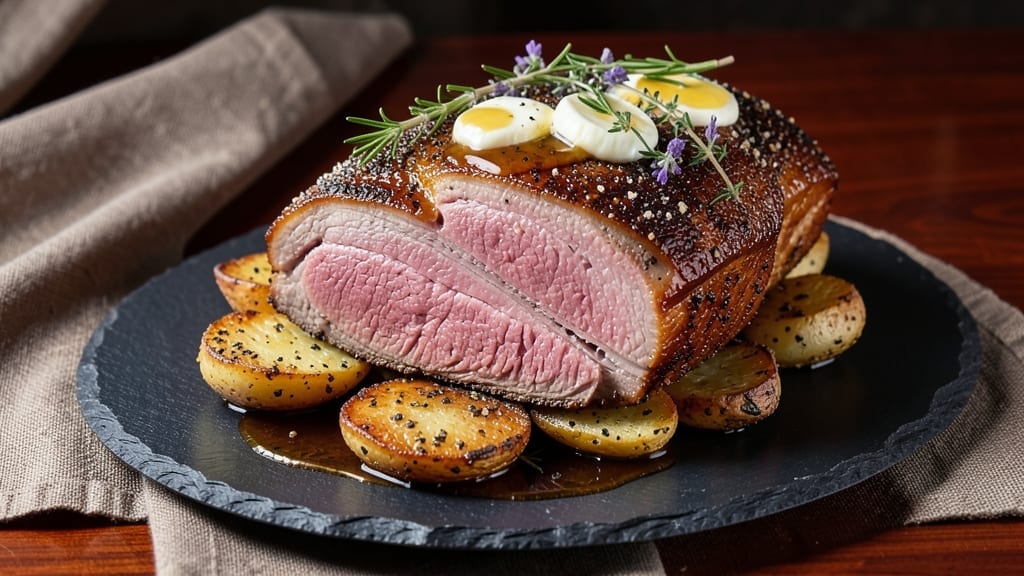
A 3.5 lb prime rib roast cooked to medium-rare perfection with a deep, flavorful crust is the centerpiece of any special occasion. This recipe delivers a tender, juicy roast with a rich, caramelized bark that seals in every ounce of flavor—no guesswork required.
The secret lies in precise temperature control, proper seasoning, and a foolproof resting technique that guarantees a perfect result every time.
Professional butchers recommend bringing the roast to room temperature before cooking, which ensures even doneness. A simple yet effective seasoning blend of coarse kosher salt and freshly cracked black pepper creates the ideal balance—enhancing the natural beef flavor without overpowering it.
The roast cooks at a steady 450°F for the first hour to build that coveted crust, then finishes at 325°F until the internal temperature reaches 120°F for medium-rare.
Once sliced against the grain, the prime rib reveals a juicy, melt-in-your-mouth texture with a deep red center and a crisp, flavorful crust. Pair it with classic accompaniments like horseradish cream, roasted garlic mashed potatoes, or a crisp green salad to complete the meal.
The presentation alone will impress even the most discerning guests.
This recipe is designed for confidence—whether you’re hosting a holiday feast or treating yourself to a restaurant-quality dinner at home. With clear instructions and professional techniques, you’ll achieve restaurant-worthy results without the fuss. Let’s get started on creating a prime rib roast that becomes your new signature dish.
Ingredients for 3.5 lb prime rib roast
Prime rib perfection starts with these quality ingredients and precise techniques.
| Ingredient | Amount | Notes |
|---|---|---|
| Prime Rib Roast 🥩 | 3 ½ lb | Bone-in, center-cut preferred |
| Coarse Kosher Salt 🧂 | 2 tbsp | Diamond Crystal preferred |
| Freshly Ground Black Pepper 🌶️ | 1 ½ tbsp | Cracked, not pre-ground |
| Unsalted Butter 🧈 | ½ cup | Cold, cubed for basting |
| Fresh Rosemary 🌿 | 1 whole | Sprig, woody stems removed |
| Fresh Thyme 🌿 | 4 sprigs | Leaves only, stems discarded |
| Garlic Cloves 🧄 | 6 cloves | Smashed, not minced |
| Extra-Virgin Olive Oil 🫒 | 2 tbsp | For basting brush |
| Beef Au Jus 🥩 | 1 cup | Store-bought or homemade |
| Horseradish Cream 🧈 | ½ cup | For serving, optional |
| Roasted Garlic Mashed Potatoes 🥔 | 4 cups | For serving, optional |
The roast is everything here—bone-in, center-cut prime rib delivers the best flavor and texture. Look for good marbling at your butcher or grocery store meat counter. Whole Foods or Costco often carry excellent cuts, but don’t overlook your local butcher shop—they’ll know exactly what you need. The roast should be at room temperature when it goes in the oven, so plan ahead: take it out of the fridge 1 hour before cooking. Fresh herbs matter too—rosemary and thyme should smell vibrant, not dry. If they’re wilted, skip them and use dried at one-third the amount.
No beef au jus? Red wine reduction or homemade gravy works just as well. The butter needs to be cold for basting—take it out of the fridge 20 minutes before cooking. For extra crust development, mix 1 tbsp cornstarch with 1 tbsp cold water and brush it on the roast during the last 15 minutes. The garlic cloves should be smashed with the flat side of your knife—not minced—to infuse flavor without turning to mush. If you’re short on time, pre-minced garlic in a jar will work in a pinch, but fresh is always better. The horseradish cream can be store-bought or homemade—just make sure it’s creamy, not chunky.
This roast reheats beautifully—375°F for 15-20 minutes covered with foil. For leftovers, slice against the grain and store in an airtight container for up to 4 days. The crust gets soggy if wrapped directly, so parchment paper between layers is key. Freeze portions for up to 3 months—thaw overnight in the fridge before reheating. The roasted garlic mashed potatoes can be made ahead and reheated with a splash of milk. Presentation matters: slice against the grain for maximum tenderness, and arrange slices fan-style on a platter for that restaurant-quality look.
Why You’ll Love This Recipe
- Foolproof Seasoning: Honestly, the salt and pepper alone do most of the heavy lifting—just a few minutes of dry-brining before roasting locks in that juicy perfection. No fancy marinades, no guessing; just coarse kosher salt and freshly cracked pepper working their magic while you sip your coffee.
- Rosemary Butter Magic: That butter basted with rosemary? It’s the secret weapon—crispy crust outside, tender melt inside, and every bite carries this herbal richness that tastes like a fancy dinner. (Yes, even on a Tuesday night.)
- Leftovers for Days: A 3.5 lb roast means you’ll have slices for sandwiches, hash, or even breakfast the next morning—no sad, dry scraps here. The flavor only gets better as it rests, and I’m always grateful for the easy lunches that follow.
- Weekend-Worthy Effort: Between us, this takes less time than debating what to order at a steakhouse. Sear, roast, rest—done. It’s the kind of dish that makes you feel like a hero without requiring a 10-step process.
Step-by-step instructions for medium-rare prime rib roast
Here’s how to cook a showstopping prime rib with perfect medium-rare doneness and a crackling crust every time.
Prep and Season the Prime Rib
Remove the prime rib from the refrigerator and let it sit at room temperature for 1 hour before cooking. This ensures even cooking throughout. Pat the roast dry with paper towels—moisture is the enemy of crispy bark, so get it bone dry all over.
In a small bowl, combine the 2 tablespoons coarse kosher salt and 1.5 tablespoons freshly ground black pepper. Rub this generously over the entire surface of the prime rib, pressing the seasoning into the meat. The salt will help form that coveted crust, while the pepper adds depth of flavor. Don’t skip this step—proper seasoning is what makes a great prime rib exceptional.
Next, create a simple herb butter by combining the ½ cup cold unsalted butter, 6 smashed garlic cloves, 4 sprigs fresh thyme leaves, and 1 whole fresh rosemary sprig (woody stems removed). Mince the herbs finely and mix them into the butter until well combined. This herb butter will baste the roast and infuse it with aromatic flavors as it cooks.
Sear the Prime Rib for Maximum Flavor
Preheat your oven to 450°F. Place the prime rib fat-side up on a rack in a roasting pan. The rack elevates the roast, allowing hot air to circulate underneath and create that crispy exterior. Pour the 2 tablespoons extra-virgin olive oil evenly over the top of the roast, then rub it in gently with your hands.
Place the roasting pan on the middle rack of your oven and roast for 15 minutes. This high-heat sear will render the fat and create a beautiful crust. After 15 minutes, remove the roast from the oven and use a spoon to baste it with the herb butter, coating all sides evenly. Return it to the oven and continue roasting.
Here’s the thing—this initial sear is crucial. It locks in juices and develops that rich, caramelized bark. If you’re worried about overcooking, don’t be. The prime rib will carryover cook even after you remove it from the oven, so we’re actually aiming to pull it out a bit early.
Cook to Perfect Medium-Rare
After the initial 15 minutes, reduce the oven temperature to 325°F. Continue roasting the prime rib, basting it with the herb butter every 30 minutes. This lower temperature ensures the interior cooks evenly without overcooking the exterior.
Use a meat thermometer to monitor the internal temperature. For medium-rare, you want to pull the prime rib out when it reaches 115°F to 120°F on the thickest part of the roast (about 2 to 2.5 hours total cooking time, depending on your oven). The roast will continue to rise in temperature as it rests, so don’t wait until it hits 130°F—that’s the danger zone for medium-rare.
Every time you baste, spoon the accumulated juices from the roasting pan over the top of the roast. These juices are packed with flavor, and basting ensures they’re absorbed back into the meat. If the pan starts to smoke, reduce the heat slightly to prevent burning.
Rest and Slice for Juicy Perfection
Once the prime rib reaches the target temperature, remove it from the oven and transfer it to a cutting board. Tent it loosely with aluminum foil and let it rest for 15 to 20 minutes. This resting period is non-negotiable—it allows the juices to redistribute throughout the meat, ensuring every slice is moist and flavorful.
While the prime rib rests, pour the 1 cup beef au jus into the roasting pan and place it on the stovetop over medium heat. Scrape up any browned bits from the bottom of the pan with a wooden spoon—these bits are packed with flavor and will create a rich, glossy sauce. Simmer the au jus for 3 to 5 minutes until it thickens slightly, then strain it through a fine-mesh sieve to remove any impurities.
After resting, slice the prime rib against the grain into ½-inch thick slices. Serve immediately with the 4 cups roasted garlic mashed potatoes and a dollop of ½ cup horseradish cream on the side. The prime rib should be medium-rare throughout, with a deep pink center and a crusty, golden-brown exterior. Each slice should be tender enough to cut with ease but still hold its shape.
Pro Tips For Making 3.5 Lb Prime Rib Roast
- CRANK THE HEAT FIRST: I learned this the hard way—starting at 450°F for the first 15 minutes sears the crust deeply into the prime rib, locking in juices better than low-and-slow alone. After that, drop to 325°F and let it cook low and slow; the crust stays crisp while the inside stays tender.
- SALT THE ROAST 24 HOURS EARLY: This isn’t just seasoning—it’s flavor infusion. Pat the roast dry, then coat it generously with kosher salt (about 1.5 teaspoons per pound) and refrigerate uncovered. The salt breaks down the surface proteins, making the crust golden and the meat juicier when it hits the pan.
- SKIP THE ROSMARY SPRINKLE: Fresh rosemary on top burns like kindling. Instead, crush 3-4 sprigs between your palms to release oils, then rub them into the butter you’re basting with. The flavor stays subtle but deep—no bitter char to ruin the first bite.
- REST IT UNDER FOIL: Cutting into prime rib too soon is a crime against juices. Transfer the roast to a warm plate, tent loosely with foil, and let it sit for 15 minutes. The internal temp will drop 10-15°F, but the meat will stay moist—no sad, dry slices for your effort.
Best sauces and condiments for this recipe
Classic Horseradish Cream
This tangy, creamy sauce is a must-have with prime rib—its sharp horseradish cuts through the richness beautifully. Mix ½ cup sour cream with 2 tablespoons prepared horseradish, 1 tablespoon Dijon mustard, and 1 teaspoon lemon juice.
For extra richness, fold in 1 tablespoon crème fraîche. Adjust the horseradish to taste—start with 1 tbsp if you prefer milder heat. Chill for 30 minutes before serving to let flavors meld. 🧈
Red Wine Reduction
Swap beef au jus for a bold red wine reduction that adds depth to your prime rib. Deglaze the roasting pan with ½ cup dry red wine (like Cabernet Sauvignon) after removing the meat, then reduce with 1 cup beef stock and 1 tbsp butter until syrupy.
Strain and drizzle over slices—this sauce elevates the dish to restaurant-level elegance. For extra richness, add 1 tsp balsamic vinegar at the end. 🍷
Garlic-Herb Butter
The herb butter used for basting doubles as a delicious spread. After roasting, let the herb butter cool slightly, then spoon it onto warm bread slices or crackers. For extra flavor, add 1 minced garlic clove and ½ tsp smoked paprika to the cooled butter.
This versatile condiment works perfectly with the prime rib and as a standalone appetizer. 🧄
Au Poivre Sauce
For a sophisticated twist, make au poivre sauce by simmering 1 cup beef stock with 10 coarsely cracked black peppercorns and 1 tbsp brandy until reduced by half. Strain and whisk in 2 tbsp crème fraîche for a silky finish.
The peppercorns add a subtle kick that pairs wonderfully with the rich beef. Serve immediately over sliced prime rib. ⚡
Whiskey-Glazed Onions
Caramelized onions take this dish to the next level. Sauté 2 large yellow onions in 2 tbsp butter until golden, then deglaze with 2 tbsp bourbon and reduce by half.
Add 1 tbsp brown sugar and cook until sticky. These sweet, smoky onions balance the prime rib’s richness and add a gourmet touch. 🥔
Spicy Chipotle Cream
For heat lovers, blend ½ cup sour cream with 1 tbsp adobo sauce (from canned chipotles), 1 tsp lime zest, and ½ tsp smoked salt. The smoky, spicy kick complements the beef’s natural flavors while adding excitement. Serve chilled alongside the prime rib for a bold contrast. 🌶️
Nutrition facts
Frequently asked questions
How long should I let the prime rib sit at room temperature before cooking?
Always let the 3.5 lb prime rib sit uncovered on the counter for 1 hour before roasting. This ensures even cooking and prevents cold spots in the center. The meat should reach about 50°F—use a meat thermometer to check if unsure. Never skip this step, as it’s crucial for perfect doneness.
What’s the best way to check doneness without overcooking?
Use a meat thermometer inserted into the thickest part of the roast (avoiding bone). For medium-rare, pull it out at 115°F-120°F—it will rise to 130°F-135°F while resting. The 15-20 minute rest is non-negotiable—this is when the juices redistribute, guaranteeing tender slices every time.
Can I cook this recipe in a convection oven?
Yes, but reduce the temperature by 25°F (use 425°F for sear, then 300°F for cooking). Convection ovens cook faster, so check the internal temp 10 minutes earlier than called for. The crust may be slightly less crispy, but the meat will still be perfectly tender. Always use a thermometer to avoid overcooking.
What if my prime rib doesn’t have a bone?
Boneless prime rib will cook slightly faster—expect 10-15 minutes less total time. Place it fat-side up on a rack in a roasting pan to allow airflow. The seasoning and basting techniques remain the same, but reduce the initial sear to 12 minutes at 450°F instead of 15. Monitor closely with a thermometer.
How do I store leftovers to keep the crust crispy?
Slice the prime rib against the grain and store in an airtight container with parchment paper between layers. Reheat slices at 375°F for 10-12 minutes covered with foil, then broil for 1-2 minutes to revive the crust. Leftovers keep for 4 days in the fridge or 3 months frozen—thaw overnight in the fridge before reheating.

- Pea Soup Instant Pot Recipe: Velvety Green Smoothness in 20 Minutes - November 1, 2026
- Pork Loin Pulled Pork Crock Pot Recipe: Slow-Smoked Tenderness With Zero Dryness - November 1, 2026
- Baked Potatoes in Crock Pot Recipe: Buttery Interiors and Crispy Top Magic - November 1, 2026