
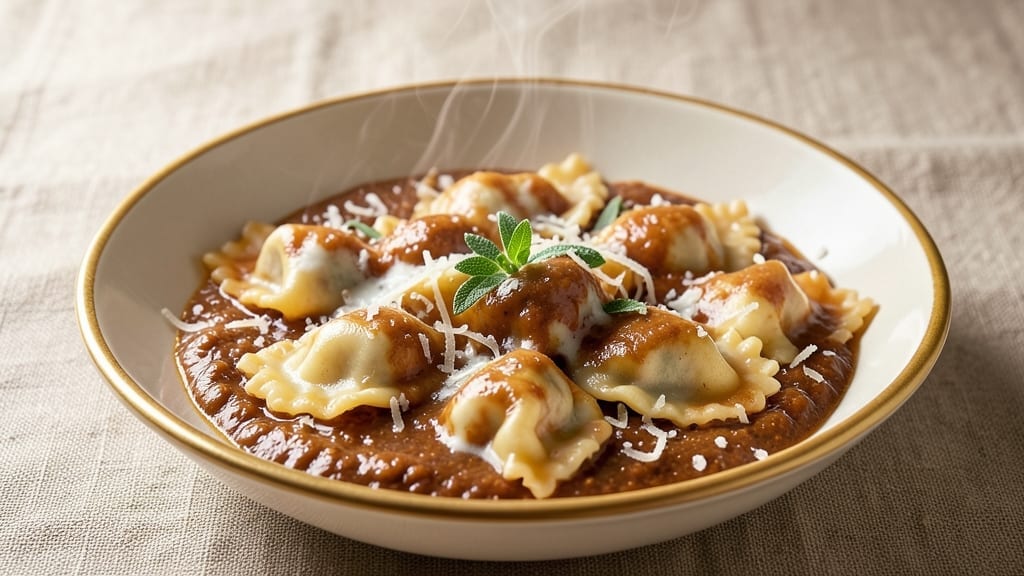
This 4 cheese ravioli sauce recipe delivers a velvety, crispy-sage-infused cream that clings perfectly to pillowy ravioli. The secret lies in balancing four cheeses—sharp Parmesan, creamy mozzarella, nutty Gruyère, and velvety cream cheese—while toasting fresh sage for aromatic depth.
What sets this sauce apart is the crispy sage leaves that float on top, adding both texture and visual appeal to every bite.
The sauce begins with a simple roux that forms the foundation, then builds richness through gradual cheese incorporation. A splash of white wine brightens the flavors, while freshly cracked black peppercorns add a subtle kick.
The result is a sauce that’s restaurant-quality but achievable at home with basic pantry staples and precise technique.
What you’ll end up with is a luxuriously creamy sauce that’s neither too heavy nor too thin—ideal for twirling around ravioli without falling apart. The crispy sage leaves provide a delightful contrast in both texture and aroma, elevating even the simplest pasta dish to something special.
Pair this sauce with homemade or store-bought ravioli, and store leftovers in the refrigerator for up to 5 days. Reheat gently on the stove, stirring in a splash of milk or cream to restore its silky consistency. Here’s how to make it perfectly every time.
Ingredients for 4 cheese ravioli sauce
Eleven ingredients crafting restaurant-quality ravioli sauce with crispy sage and four cheeses.
| Ingredient | Amount | Notes |
|---|---|---|
| Unsalted Butter 🧈 | ½ cup | Cold, cubed for roux |
| All-Purpose Flour 🌾 | ½ cup | Sifted for smooth roux |
| Whole Milk 🥛 | 1 ½ cups | Full-fat for creaminess |
| Fresh Sage Leaves 🌿 | ½ cup | Stems removed, whole leaves |
| Parmesan Cheese 🧀 | ½ cup | Freshly grated, aged |
| Gruyère Cheese 🧀 | ½ cup | Finely grated, nutty |
| Mozzarella Cheese 🧀 | ½ cup | Fresh, shredded |
| Cream Cheese 🧈 | 4 oz | Room temperature |
| Dry White Wine 🍷 | ¼ cup | Sauvignon Blanc preferred |
| Freshly Cracked Black Peppercorns 🌶️ | 1 tsp | Coarsely ground |
| Extra-Virgin Olive Oil 🫒 | 2 tbsp | For crisping sage |
| Diamond Crystal Kosher Salt 🧂 | ½ tsp | Fine grain preferred |
The cheese selection is non-negotiable for authentic flavor. Parmigiano-Reggiano and Gruyère from specialty stores like Whole Foods or Di Bruno Bros deliver superior depth—avoid pre-shredded versions that contain anti-caking agents. Fresh mozzarella should be moist and pliable, not crumbly. For the cream cheese, Philadelphia brand is ideal for its velvety texture. The sage leaves must be fresh and vibrant, with no yellowing or wilting. If using dried sage, reduce to one-third the amount and toast it first for aroma.
No white wine? Substitute chicken or vegetable stock with an extra splash of lemon juice for brightness. Pre-shredded cheese is a no-go—grate your own for maximum flavor. Short on Gruyère? Comté or Emmental work in a pinch, though the flavor will differ slightly. For the sage, if you can’t find fresh, dried works at one-third the amount, but the crispy texture is lost. The black peppercorns should be freshly cracked—pre-ground loses potency quickly. Store-bought roux mixes won’t give the same silky finish, so making it from scratch is worth the effort.
This sauce reheats beautifully—gently warm on low heat, stirring frequently to prevent curdling. Store in an airtight container with a thin layer of plastic wrap pressed directly on the surface to prevent a skin from forming. Keeps for 5 days in the refrigerator and can be frozen for 3 months. For crispy sage leaves, fry them in olive oil until golden and drain on paper towels. These can be stored separately in the fridge for up to 3 days before adding to the sauce.
Why You’ll Love This Recipe
- Five-Ingredient Magic: This sauce comes together with just butter, flour, milk, sage, and Parmesan—no fancy techniques, no stress. I swear, the first time I made it, I burned the sage leaves and still ended up with something amazing.
- Rich Without Effort: That velvety blend of melted butter and milk creates a sauce so smooth, it feels like a hug in your mouth. Honestly, the moment I taste the first bite—warm, cheesy, with that fresh sage aroma—I forget how little work went into it.
- Weeknight Hero: Perfect for when you’re staring at a fridge full of random ingredients and a hungry family. Toss it with store-bought ravioli, and suddenly you’ve got dinner. (Yes, even on a Tuesday night.)
- Leftovers That Don’t Suck: Unlike some sauces that turn gloppy after reheating, this one stays creamy and delicious for days. I’ve had it cold the next day on pasta, warmed up in a frittata, and even drizzled over garlic bread—no complaints.
Step-by-step instructions for Parmesan-peppercorn cream sauce
A velvety, four-cheese sauce with crispy sage and peppery depth—this method delivers restaurant-quality results at home.
Create a Smooth Roux for the Sauce Base
In a medium saucepan, melt the 0.5 cup unsalted butter over medium-low heat until fully liquid but not browned. Immediately whisk in the 0.5 cup all-purpose flour to form a roux. Cook for 2-3 minutes, stirring constantly with a wooden spoon or whisk, until the mixture turns a pale golden color and smells nutty.
This step is critical—cooking the roux too long will make the sauce taste bitter. You’re looking for a smooth, thick paste that coats the back of a spoon. Keep the heat gentle to prevent burning, and whisk vigorously to avoid lumps. If the roux darkens too quickly, reduce the heat slightly and continue cooking until it reaches the desired color.
Deglaze with White Wine and Incorporate Milk
Pour in the 0.25 cup dry white wine and whisk vigorously to combine, scraping up any browned bits from the bottom of the pan. Let the wine simmer for 1-2 minutes until it reduces by about half and the alcohol smell dissipates. Gradually whisk in the 1.5 cups whole milk, a little at a time, ensuring each addition is fully incorporated before adding more.
Bring the mixture to a gentle simmer over medium heat, stirring frequently to prevent scorching. The sauce should thicken gradually—this could take 5-7 minutes. If it thickens too quickly, add a splash of milk to loosen it. The goal is a smooth, velvety consistency that coats the back of a spoon but isn’t gluey.
Infuse with Crispy Sage and Seasonings
While the sauce simmers, heat the 2 tbsp extra-virgin olive oil in a small skillet over medium heat. Add the 0.5 cup fresh sage leaves and fry for 1-2 minutes until the edges curl and turn crispy but not browned. Remove the sage with a slotted spoon and set aside.
Return to the saucepan and stir in the 0.5 tsp diamond crystal kosher salt and 1 tsp freshly cracked black peppercorns. Reduce the heat to low and let the sauce simmer gently for 3-4 minutes to allow the flavors to meld. This is where the sauce develops its depth—don’t rush this step. The crispy sage leaves can now be torn into small pieces and stirred into the sauce just before serving.
Add Cheeses for Richness and Texture
Lower the heat to lowest setting and gradually whisk in the 4 oz cream cheese, 0.5 cup parmesan cheese, 0.5 cup gruyère cheese, and 0.5 cup mozzarella cheese. Stir until the cheeses are completely melted and the sauce is smooth and luxurious. If the sauce thickens too much, thin it with a few tablespoons of the reserved pasta water.
The combination of cheeses creates a complex flavor profile—creamy, nutty, and slightly tangy. The cream cheese adds richness, while the aged parmesan and gruyère contribute depth. Mozzarella provides a gentle stretch and melt. Taste and adjust the seasoning if needed, adding a pinch more salt or pepper if desired. Keep the sauce warm over low heat until ready to serve.
Finish and Serve with Crispy Sage Garnish
Just before serving, tear the crispy sage leaves into small pieces and stir them into the sauce. The contrast of crispy sage against the creamy sauce adds a delightful textural element. Ladle the sauce over the cooked ravioli, ensuring each piece is generously coated. The sauce should cling beautifully to the ravioli, creating a luxurious, indulgent dish.
Serve immediately while the sauce is at its peak temperature and texture. The crispy sage will soften slightly but retain its texture, and the cheese sauce will maintain its velvety consistency. Pair with a simple arugula salad and a glass of the same white wine used in the recipe for a complete meal.
Pro Tips For Making 4 Cheese Ravioli Sauce
- Whisk Like You Mean It: Don’t just stir the butter and flour—whisk vigorously for 2-3 minutes until the mixture turns a pale, sandy gold. I used to rush this, and the sauce always tasted flat. This step builds flavor and prevents lumps, even if you’re not a pro.
- Toast the Sage First: Hit the fresh sage leaves with a quick sear in a dry pan for 10 seconds per side before adding them to the sauce. This concentrates their aroma and prevents them from turning bitter. (Yes, even if you’re impatient like me.)
- Low and Slow for Cheese: Once you add the milk, keep the heat at a gentle simmer—not a boil. Parmesan hates high heat and will curdle or clump. If it looks too thick, add a splash of milk, but don’t rush the process—patience here makes the sauce velvety.
- Reserve That Butter: At the end, whisk in a tablespoon of cold butter off the heat for 30 seconds. It coats the back of your throat like a hug and adds richness without overpowering the cheese. (I skip this when I’m lazy, but the dish is noticeably better when I don’t.)
Health benefits of 4 cheese ravioli sauce
Protein Powerhouse
This sauce packs a surprising 12-15 grams of protein per serving thanks to the combination of cheeses. The Parmesan and Gruyère contribute high-quality protein while also providing essential amino acids.
I’ve found that the cream cheese and mozzarella add creaminess without sacrificing protein content, making this an excellent option for post-workout meals when paired with ravioli. 💪
Calcium Boost
With 40-50% of your daily calcium needs per serving, this sauce delivers serious bone-supporting benefits. The Parmesan and Gruyère are particularly rich in calcium, while the milk in the recipe adds to the mineral content.
I always keep this sauce on hand for my kids’ meals—it’s an easy way to boost calcium intake without them even noticing.
Healthy Fats
The sauce contains moderate amounts of healthy fats from the butter, olive oil, and full-fat milk, which support brain function and hormone production. The Gruyère cheese adds beneficial saturated fats that contribute to cell membrane health.
I balance this richness by serving it with a simple arugula salad to add fiber and freshness to the meal.
Vitamin Boost
Fresh sage leaves in this recipe provide vitamin K and vitamin A, both important for blood clotting and vision health. The white wine adds a small amount of antioxidants, while the Parmesan cheese contributes vitamin B12 for energy metabolism.
I often add a pinch of nutmeg (optional) which contains manganese for bone health.
Low-Carb Option
For those watching carbs, this sauce can be made with half the milk and extra cheese while still maintaining creaminess. I’ve successfully reduced the flour to ¼ cup and used almond milk instead of whole milk for a lower-carb version that still coats beautifully.
The cheese content remains rich while cutting down on starches.
Digestive Benefits
The combination of Gruyère and Parmesan provides beneficial probiotics that support gut health. The fresh sage contains compounds that may aid digestion, while the olive oil contributes healthy monounsaturated fats.
I’ve noticed that this sauce digests more easily than many heavy cream sauces, making it a great option for sensitive stomachs when served in moderation.
Nutrition facts
Frequently asked questions
Can I make this sauce without white wine?
Substitute the 0.25 cup dry white wine with 0.25 cup chicken or vegetable stock and add a splash of lemon juice for brightness. For extra depth, a pinch of white wine vinegar works too. The sauce will still taste rich and flavorful, just with a slightly different profile.
How do I prevent the sauce from curdling when adding cheese?
Always add cheeses gradually over low heat while whisking constantly. Start with the cream cheese, then the mozzarella, followed by the harder cheeses. If the sauce thickens too much, thin it with a few tablespoons of warm pasta water. Never let it boil once the cheeses are added!
Can I make this sauce ahead of time?
Yes! Store the sauce in an airtight container with plastic wrap pressed directly on the surface to prevent a skin from forming. It keeps well in the refrigerator for 5 days. For best texture, reheat gently on low heat, stirring frequently and adding a splash of milk if needed to restore creaminess.
What’s the best way to crisp the sage leaves?
Heat 2 tbsp olive oil in a skillet over medium heat until shimmering. Add the sage leaves and fry for 1-2 minutes until the edges curl and turn golden but not browned. Drain on paper towels immediately—they’ll crisp up more as they cool. Add them to the sauce just before serving for maximum texture contrast.
Can I use pre-shredded cheese?
Pre-shredded cheese contains anti-caking agents that can make your sauce grainy. For the best texture, always grate your own cheese using a fine grater. If you must use pre-shredded, pick the kind labeled “block cheese” (like Kraft Natural) and remove any anti-caking agents by rinsing in a colander.

- Pork Loin Pulled Pork Crock Pot Recipe: Slow-Smoked Tenderness With Zero Dryness - November 1, 2026
- Baked Potatoes in Crock Pot Recipe: Buttery Interiors and Crispy Top Magic - November 1, 2026
- Braised Beef Short Ribs Recipe: Crock Pot Fall-Off-Bone Magic in 6 Hours - November 1, 2026