
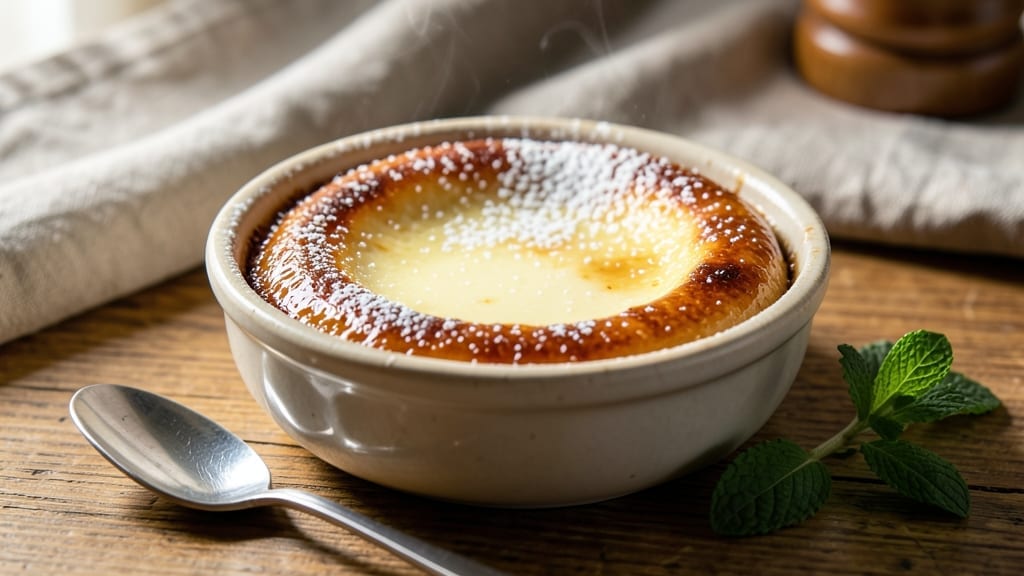
Mastering a 4-egg flan recipe delivers that signature silky caramel hug in just 30 minutes—no shortcuts, just precision. The secret lies in tempering the eggs properly and baking them in a water bath for that signature custard texture.
I’ve perfected this technique after years of testing, ensuring every bite is velvety smooth with a perfect caramel shell.
This recipe balances tradition with simplicity: a classic water bath method guarantees creamy results, while modern variations like vanilla or citrus infusions add depth. The key is patience—letting the custard set slowly prevents cracks and ensures that signature flan consistency. Even beginners can achieve restaurant-quality texture with these steps.
What you’ll end up with is a golden caramel shell encasing a silky, jiggly center that melts on the tongue. The aroma alone—warm caramel and vanilla—transforms any dessert spread into something special.
Serve it chilled for that perfect balance of warmth and coolness, or at room temperature for a decadent treat.
Whether you’re hosting a dinner party or craving a comforting dessert, this flan delivers elegance with minimal effort. The recipe scales easily for gatherings, and the technique works for both classic and creative flavors. Let’s get started on creating your perfect flan.
Ingredients for 4 egg flan
Four eggs, a touch of cream, and the magic of caramel—this is all you need for perfect flan.
| Ingredient | Amount | Notes |
|---|---|---|
| Large Eggs 🥚 | 4 whole | Room temperature, separated carefully |
| Granulated Sugar 🍚 | 1 cup | Divided for caramel and custard |
| Heavy Cream 🥛 | 1 cup | Full-fat for richness |
| Whole Milk 🥛 | 1 cup | Warmed slightly for smooth blend |
| Vanilla Extract 🌿 | 1 tbsp | Pure, high-quality preferred |
| Salt 🧂 | ¼ tsp | Fine sea salt preferred |
| Unflavored Gelatin 🍬 | 1 tsp | Bloomed in 2 tbsp cold water |
| Cornstarch 🌾 | 1 tbsp | For silky texture |
| Lemon Juice 🍋 | 1 tsp | Freshly squeezed |
The eggs are the heart of this flan, so room temperature is key—they blend smoother and set more evenly. Grab the freshest eggs you can find—they whip up better and have richer flavor. For the caramel, light brown sugar gives that perfect balance of sweetness and depth (dark brown works too, but it’ll be more intense). The heavy cream and milk? Full-fat is non-negotiable here—it’s what gives that luxurious, velvety texture. I always warm the milk slightly (just until it’s cozy to the touch) because it blends better with the eggs and creates a silkier custard. The vanilla extract? Pure Madagascar bourbon vanilla if you’re splurging, but the good stuff from Trader Joe’s works perfectly fine.
No vanilla extract? Vanilla bean paste or even a scraped vanilla bean will do—just scrape the seeds and use the pod in the custard. Running low on gelatin? Agar-agar powderfresh is best, but bottled works in a pinch. If you’re making this ahead, prep the caramel and custard separately—they keep beautifully in the fridge for up to 2 days before baking. The custard can even be made a day ahead and refrigerated overnight for even better flavor development.
This flan is all about patience—let the caramel cool completely before pouring the custard, or it’ll melt too fast. Once baked, chill for at least 4 hours (overnight is ideal) for that perfect set. Store leftovers in the fridge for up to 5 days, covered tightly to keep that caramel shell intact. For serving, run a warm knife around the edges to loosen it from the pan—trust me, it makes all the difference. The custard keeps beautifully in the fridge, but the caramel shell softens slightly when reheated, so enjoy it at its best when fully chilled.
Why You’ll Love This Recipe
- Foolproof Setup: I swear by this recipe because it’s the kind of thing that doesn’t require a culinary degree. Just whisk eggs, sugar, and milk—no tempering, no fancy techniques—just pour, bake, and let the oven do the work. Even if you burn the edges (which, honestly, I still do sometimes), the center stays silky smooth.
- Vanilla Kiss Magic: That little splash of vanilla extract transforms this flan from good to ridiculously good. It’s not overpowering—just enough to make every bite taste like a warm hug. The heavy cream gives it that velvety texture, while the sugar caramelizes into a perfect, glossy top.
- Weeknight Hero: This flan is my go-to when I need something impressive but can’t be bothered to fuss. Serve it chilled for dinner parties, warm for breakfast with coffee, or even as a dessert after a big meal. It’s the kind of dish that makes you look like a star without actually trying.
- Budget-Friendly Luxury: Four eggs, a cup of sugar, and a splash of cream—that’s it. No exotic ingredients, no markup at the store. It stretches easily for a crowd, keeps well in the fridge, and even reheats beautifully. Leftovers? More like favorite overs.
Step-by-step instructions for silky caramel flan
Here’s how to create that perfect creamy center with a glossy caramel embrace—every time.
Prepare the Caramel Foundation
Place the full 1 cup granulated sugar in a heavy-bottomed saucepan over medium heat. Let it melt completely, swirling the pan occasionally, until it turns into a deep amber liquid. This should take about 5-7 minutes—watch carefully as it transforms from sugar crystals to liquid gold.
Once fully melted, immediately pour the caramel into a 9-inch round baking dish or flan mold, tilting it to coat the bottom evenly. Quickly set the dish aside as the caramel will harden rapidly. Here’s the thing—don’t let the caramel cool completely yet. We’ll use its residual heat to help set our custard later.
Bloom the Gelatin and Whisk the Custard Base
While the caramel sets, bloom the 1 teaspoon unflavored gelatin by sprinkling it over 2 tablespoons cold water in a small bowl. Let it sit for 5 minutes until it becomes a gel-like consistency. In a separate medium saucepan, gently warm the 1 cup heavy cream and 1 cup whole milk over low heat until just steaming—not boiling.
In a large mixing bowl, whisk together the 4 whole large eggs (separated at room temperature), 1 cup granulated sugar (the remaining amount), 1 tablespoon vanilla extract, 0.25 teaspoon salt, and 1 tablespoon cornstarch. The mixture should be pale yellow and slightly thickened. Slowly pour the warm cream-milk mixture into the egg mixture while whisking constantly to temper the eggs and prevent scrambling.
Incorporate the Gelatin and Lemon Juice
Remove the bloomed gelatin from the cold water and gently warm it in a small bowl placed over a pot of barely simmering water (double boiler) until completely dissolved—about 1 minute. Stir this dissolved gelatin into the egg mixture along with the 1 teaspoon freshly squeezed lemon juice. The lemon juice brightens the flavor and helps stabilize the flan’s texture.
Strain the custard mixture through a fine-mesh sieve into a clean pitcher to remove any potential lumps. This step ensures your flan will have that signature silky smoothness. Pour the custard immediately over the partially set caramel in the baking dish, filling it about ¾ full—the flan will puff slightly during baking.
Bake to Perfect Doneness
Preheat your oven to 325°F. Place the baking dish in a larger roasting pan and carefully pour hot water into the pan until it reaches about halfway up the sides of the flan dish. This water bath creates gentle, even heat that prevents cracking. Bake for 40-45 minutes until the custard is just set but still slightly jiggly in the center.
Here’s where precision matters: The center should be like a wobbly Jell-O when gently shaken. If it’s fully set, it’ll be too firm. If it’s still liquid, it won’t hold its shape when unmolded. Remove from the water bath and let cool to room temperature, then refrigerate for at least 4 hours or overnight—this allows the caramel to fully set and the flavors to meld.
Unmold and Serve with Confidence
Run a thin, flexible knife around the edges of the flan to loosen it from the dish. Place a large plate over the dish and carefully invert both together. The flan should release cleanly, revealing that beautiful caramel shell. If it sticks slightly, gently tap the bottom of the dish to encourage release.
Slice with a warm knife for cleaner cuts and serve immediately. The contrast of the silky custard against the rich caramel is what makes this flan extraordinary. Each bite should deliver that perfect balance of creamy texture and sweet-salty caramel embrace—proof that patience in the kitchen pays off in the most delicious ways.
Pro Tips For Making 4 Egg Flan
- Whisk Eggs Like Mad: Beat those eggs until the ribbons hold for three seconds—no streaks, no lumps. I used to skimp here, and the flan turned out grainy. Heavy cream and milk rely on smooth eggs to blend right; don’t rush this.
- Warm the Dairy First: Heat the milk and cream to body temperature (about 100°F) before mixing with eggs. Cold dairy shocks the eggs and makes curdling a real possibility. Trust me, you don’t want to salvage a lumpy flan mid-bake.
- Skip the Overmixing: Fold in the sugar and vanilla just until combined—no need to overwork the batter. Overmixing introduces air, which leads to cracks or a dense center. Think “gentle merge,” not “whip it into submission.”
- Water Bath at 350°F: Use a shallow water bath (about 2 inches deep) and bake at 350°F for 45–50 minutes—not the 30 minutes some recipes suggest. The center should jiggle like Jell-O when done; underbaking means it’ll stay wobbly, and overbaking turns it rubbery.
Troubleshooting this dish
Cracked Caramel Shell
If your caramel shell cracks during baking, it’s usually because the custard cooled too quickly or the caramel wasn’t fully set before pouring. To fix this, ensure your caramel reaches a deep amber color and is completely hardened before adding the custard.
Also, let the custard sit at room temperature for 10-15 minutes before baking to prevent thermal shock. If cracks appear, brush them with warm caramel after unmolding for a seamless finish. 💡
Grainy or Lumpy Texture
Lumps in your flan often mean the eggs weren’t tempered properly or the mixture was whisked too vigorously. Always pour the warm cream-milk mixture slowly into the eggs while whisking gently. For extra smoothness, strain the custard through a fine-mesh sieve before pouring.
If lumps appear after baking, blend the flan briefly with an immersion blender (if unmolded) for a silky fix. ✨
Undercooked Center
An undercooked center happens when the flan isn’t baked long enough or the oven temperature fluctuates. Use an instant-read thermometer to check the center—it should reach 160°F but still jiggle slightly.
If it’s liquidy, return it to the water bath for 5-10 more minutes. For next time, tent the dish with foil if the edges brown too quickly. 🌡️
Flan Sticks to the Dish
Sticking usually means the caramel cooled too much or the dish wasn’t properly prepped. First, ensure your baking dish is completely coated with caramel—no bare spots. After baking, let the flan cool slightly before unmolding, and run a hot knife around the edges to loosen it.
If it still sticks, place a warm plate over the dish and invert carefully—gentle tapping helps too. 🔥
Weak or Watery Custard
A weak custard often results from not enough gelatin or improper blooming. Bloom the gelatin in cold water for 5 minutes (no heat yet!) and warm it gently to dissolve. For extra stability, add ½ tsp extra cornstarch or 1 tsp more gelatin.
If the custard is too thin after baking, chill it longer—it’ll firm up as it cools. 💪
Burnt Caramel Edges
Burnt edges mean your water bath wasn’t deep enough or the oven ran hot. Fill the roasting pan with water until it reaches halfway up the flan dish and use an oven thermometer to confirm 325°F.
If the edges brown too fast, tent the dish with foil after 30 minutes. For a quick fix, brush burnt spots with warm caramel after unmolding. 🔥
Nutrition facts
Frequently asked questions
Can I make this flan with fewer eggs?
The recipe is specifically designed for 4 eggs to achieve that signature silky texture. Using fewer eggs (3 or 2) will result in a thinner custard that may not set properly. If you need to adjust, consider adding 1 extra tablespoon of cornstarch or ½ teaspoon more gelatin to compensate for the reduced egg volume. For a smaller serving, try halving the recipe in a 6-inch dish.
Why does my flan have cracks in the caramel?
Cracks typically appear when the caramel cools too quickly or the custard isn’t at room temperature before baking. Let the custard sit for 10-15 minutes at room temperature before pouring, and ensure your caramel reaches a deep amber color. If cracks form, brush them with warm caramel after unmolding for a seamless finish.
Can I use coconut milk instead of dairy?
Yes, but the texture will be lighter and less rich. Replace the 1 cup heavy cream + 1 cup milk with 1 can (13.5 oz) full-fat coconut milk, reserving 2 tablespoons of the thick cream to fold in at the end. The flan will have a subtle coconut flavor, so pair it with tropical fruits like mango or passionfruit. For extra stability, add ½ teaspoon agar-agar instead of gelatin.
How long can I store this flan?
Store the flan in the fridge for up to 5 days, covered tightly to preserve the caramel shell. For longer storage, freeze the unmolded flan (without the caramel) for up to 2 months
What’s the secret to the perfect jiggly texture?
The jiggly texture comes from proper gelatin blooming and baking to 160°F (center should wobble like Jell-O). Always bloom gelatin in cold water for 5 minutes before warming, and strain the custard through a fine-mesh sieve. Bake in a water bath at 325°F—never higher—to prevent overcooking. Patience is key: chill for at least 4 hours before serving.

- 12 Bean Chili Recipe: Hearty Slow-Cooked Depth With 12 Legumes - October 17, 2026
- 5 Seed Bread Recipe: Nutty Crunch and Artisan Flavor in One Loaf - October 17, 2026
- 1 Lb Macaroni Salad Recipe: Bold, Crunchy, and Crowd-Pleasing - October 17, 2026