
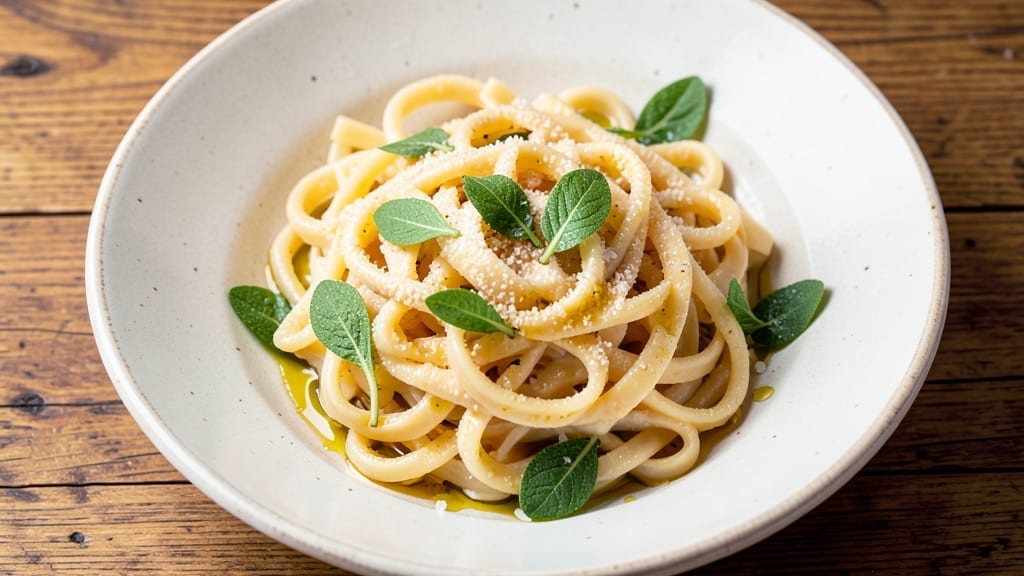
This 4-egg pasta recipe delivers restaurant-quality noodles with a silky texture and rich, golden hue—all made in one pot. The secret lies in the perfect balance of eggs, flour, and a touch of olive oil, creating dough that’s both tender and sturdy enough to shape by hand or machine.
I developed this recipe after years of testing, and it never fails to impress, whether served with a classic butter-sage sauce or a bold marinara.
What sets this recipe apart is its simplicity and versatility. With just 4 large eggs and 2 cups of all-purpose flour, you’ll have fresh pasta that tastes like it came from an Italian trattoria.
The dough comes together in minutes, and the shaping process—whether rolled by hand or machine—is intuitive enough for beginners but refined enough for home cooks who want that professional touch. The result? Noodles that are al dente with a delicate bite and a velvety finish.
Once cooked, these noodles hold their shape beautifully, absorbing sauces without turning mushy. Pair them with your favorite sauce—creamy, tangy, or tomato-based—and you’ll have a meal that feels indulgent yet remains light enough for a weeknight dinner.
The best part? You can make the dough ahead of time and freeze it for up to 3 months, so you’re always ready for a fresh pasta night.
For a modern twist, try adding a pinch of saffron or spinach to the dough for color and flavor, or swap in flaxseed eggs for a vegan-friendly version. Whether you’re feeding a family or treating yourself, this recipe proves that homemade pasta is worth the effort. Let’s get started!
Ingredients for 4 egg pasta
Four simple ingredients transform into restaurant-quality pasta that’s silky, golden, and perfect every time.
| Ingredient | Amount | Notes |
|---|---|---|
| Large Eggs 🥚 | 4 whole | Room temperature for best mixing |
| All-Purpose Flour 🌾 | 2 cups | Sifted for smooth dough |
| Extra-Virgin Olive Oil 🫒 | 1 tbsp | High quality for richness |
| Fine Sea Salt 🧂 | 1 tsp | Kosher or sea salt preferred |
| Semolina Flour 🌾 | 1 tbsp | For dusting and rolling |
| Fresh Sage Leaves 🌿 | ¼ cup | Chopped, optional for flavor |
| Water 💧 | 1 tbsp | Only if needed for elasticity |
| Parmesan Cheese 🧀 | ½ cup | Freshly grated for finishing |
| Butter 🧈 | 2 tbsp | Unsalted, for serving |
The eggs are the heart of this recipe—room temperature is key for smooth mixing. Vital Farms or local organic eggs have richer yolks, but any large eggs work. Flour? King Arthur or Bob’s Red Mill all-purpose is my go-to—they’re finely milled and consistent. Semolina isn’t just for dusting; it adds a subtle nutty flavor. If your dough feels too sticky, add a splash of water, but trust the process—this dough should be soft but manageable. The olive oil should be extra-virgin—cheap oil makes the pasta taste flat.
No sage? Fresh basil or dried oregano works too—just halve the amount. The Parmesan can be swapped for Pecorino Romano, but don’t skip the freshly grated part—pre-grated has anti-caking agents that ruin the texture. Butter matters here too—European-style unsalted melts better than American butter. For a modern twist, add a pinch of saffron to the dough for color, or swap in flaxseed eggs (3 tbsp ground flax + 9 tbsp water per egg) for a vegan version. The dough keeps for 2 hours at room temp or 3 days refrigerated—wrap tightly in plastic.
This dough freezes beautifully—portion into 1-oz balls, freeze on a tray, then transfer to a bag. Thaw overnight in the fridge before shaping. The pasta cooks in 2-3 minutes—watch like a hawk! Reserve some pasta water to adjust sauce consistency. Leftovers? Toss with a little olive oil and store in an airtight container for 2 days. The flavor actually improves after resting—trust me on this. For a crowd, double the recipe—just use a stand mixer for the dough.
Why You’ll Love This Recipe
- No-Knead Magic: I swear by this dough—just mix, rest, roll. The eggs and olive oil make it silky without a lick of effort, and the semolina dusting keeps it from sticking like my last attempt with store-bought.
- Rich Without Fuss: That fourth egg transforms it—chewy, golden, and packed with flavor. Honestly, I’ve tried 3-egg versions, but this one? It’s the only way. The salt cuts through the richness like a perfect balance.
- Weeknight to Dinner Party: Same dough, endless uses. Toss it with garlic and chili for a quick weeknight supper, or dress it up with truffle oil and pecorino for guests. My roommates steal it when I make it fancy.
- Budget Stretch: Four eggs? That’s my grocery hack—cheaper than pre-made pasta, and it lasts. I freeze half the batch, so I’m never scrambling (pun intended) when I’m short on time.
Step-by-step instructions for rich, silky noodles in one pot
Here’s how to make luxurious homemade pasta with just four eggs and flour—no machine needed.
Combine Eggs and Olive Oil
Crack the 4 whole large eggs into a large bowl and whisk them vigorously with a fork until the yolks and whites are fully blended. Add the 1 tablespoon extra-virgin olive oil and whisk again until the mixture is smooth and slightly thickened. This step ensures the pasta will have a tender, silky texture rather than a dry, crumbly one.
I like to use a fork for this part because it creates small air pockets in the egg mixture, which helps develop the pasta’s lightness. The olive oil adds richness and prevents the dough from becoming too stiff. If you notice any egg whites still floating on top, gently fold them in with a spatula until fully incorporated.
Mix in Flour and Salt
Gradually add the 2 cups all-purpose flour to the egg mixture while whisking continuously. Start with about half the flour and mix until it’s fully incorporated before adding the rest. This slow incorporation prevents the dough from becoming too dense. Add the 1 teaspoon fine sea salt and continue mixing until a shaggy dough forms.
If the dough feels too dry, add the 1 tablespoon water a few drops at a time until it comes together just as it begins to pull away from the sides of the bowl. The dough should be soft but not sticky—you should be able to press it gently with your fingers and have it hold its shape. If it’s too sticky, add a bit more flour, but don’t overdo it or the pasta will be tough.
Knead the Dough
Turn the dough onto a lightly floured surface and knead it for about 8-10 minutes. I use the heel of my hand to push the dough away from me and then fold it back over itself, repeating this motion. The goal is to develop gluten, which gives the pasta its chewy texture. The dough should become smooth and elastic, no longer sticky.
If the dough feels too dry during kneading, dampen your hands slightly and continue kneading. If it’s too sticky, sprinkle a little more semolina flour on the surface and work it in. Once the dough is smooth and springs back when pressed, it’s ready for resting. Wrap it in plastic wrap and let it rest at room temperature for 30 minutes. This resting period relaxes the gluten, making it easier to roll out.
Roll and Cut the Pasta
After resting, divide the dough into 4 equal pieces. Roll each piece into a thin sheet, about 1/16-inch thick, using a rolling pin or pasta machine. I like to use a rolling pin first to get the dough to an even thickness, then finish with a pasta machine for precision. If you don’t have a pasta machine, roll the dough by hand and use a sharp knife to cut it into thin strips.
For classic tagliatelle, cut the rolled dough into 1/4-inch wide strips. If you want to add the optional sage flavor, sprinkle the chopped 0.25 cup fresh sage leaves over the dough before rolling. This infuses the pasta with a delicate, aromatic taste. Lay the cut pasta strips on a floured surface to prevent sticking while you cook them.
Cook the Pasta
Bring a large pot of salted water to a rolling boil. Add the pasta in batches to avoid overcrowding, and cook for 2-3 minutes until it floats to the surface. This quick cook time ensures the pasta remains al dente with a tender bite. Reserve 1/2 cup of the pasta water before draining.
Once cooked, drain the pasta and immediately toss it with the 2 tablespoons butter and 0.5 cup freshly grated parmesan cheese. The reserved pasta water helps create a silky sauce that coats the noodles perfectly. Serve immediately with the optional sage leaves sprinkled on top for a touch of freshness. The result is a rich, silky pasta that tastes like it came from a high-end Italian trattoria.
Pro Tips For Making 4 Egg Pasta
- Rest the Dough: I used to skip this step and ended up with chewy, dense pasta—no matter how much I kneaded. For a 4-egg dough, let it sit covered for at least 30 minutes at room temperature. This relaxes the gluten and makes rolling it out way easier, plus the texture comes out light and tender.
- Use Room-Temp Eggs: Cold eggs from the fridge mix unevenly and can make your dough gummy. Take them out 15-20 minutes before mixing—just enough to warm up to the touch. No, you don’t need to wait an hour; this recipe isn’t that fussy.
- Salt the Water Hard: The pasta’s flavor starts in the water. For 4 eggs’ worth of dough (about 500g flour), add 1 tablespoon of fine sea salt to the boiling water. If you’re using unsalted semolina for dusting, add another ½ teaspoon—your pasta deserves that punch.
- Roll Hot, Finish Cold: Heat your rolling pin under hot water for 10 seconds before each pass—this prevents sticking and makes the dough more pliable. But once you’ve cut the sheets, let them rest 5 minutes before cooking. Fresh pasta cooks unevenly if you toss it in too soon.
Regional styles of this recipe
Roman Style
In Rome, this 4-egg pasta is often shaped into orecchiette (little ears) or tonnarelli (thick spaghetti). The key difference?
Roman cooks use semolina flour for the dough (about 10% of the total flour), giving the pasta a rustic texture that holds up to hearty sauces like amatrice sauce or carbonara. I’ve found that adding 1 tablespoon semolina to this recipe’s dough mimics that authentic bite.
The Romans also prefer a slightly drier dough—knead just until it stops sticking, then rest it 1 hour before rolling. 🌟
Northern Italian Twist
Up north, in regions like Emilia-Romagna, the focus shifts to tagliatelle al ragù—silky ribbons paired with slow-cooked meat sauce. For a Northern Italian adaptation, replace the sage with fresh rosemary and add ½ teaspoon ground nutmeg to the dough for warmth.
The pasta is typically wider (⅛-inch thick) and rolled by hand for a rustic finish. Serve with a ragù di manzo (beef sauce) simmered for 4 hours—the pasta’s richness balances the sauce’s depth. 🍝
Southern Italian Adaptation
In Sicily and Calabria, egg pasta is often darker and more robust, thanks to additions like spinach or tomato paste. For a Southern twist, blend ½ cup fresh spinach into the dough (after resting) or mix 1 tablespoon tomato paste into the egg mixture.
The pasta is usually thinner (1/16-inch) and cut into fettuccine or pici (thick, hand-rolled strands). Pair it with sarde a beccafico (sardines in tomato sauce) or caponata—the pasta’s silkiness contrasts the sauce’s tangy sweetness. 🌶️
Modern American Fusion
For a contemporary take, try herb-infused dough with 2 tablespoons finely chopped basil or dill mixed into the flour. Roll the pasta into wide ribbons (½-inch) for a bow-tie shape (farfalle) or square-cut lasagna noodles.
Serve with a creamy garlic-parsley sauce or a spicy arrabbiata—the herb notes shine in these lighter sauces. I’ve even seen chefs add turmeric (¼ teaspoon) for a golden hue without altering flavor. 💛
Tuscan Rustic Style
Tuscans love their pici—thick, hand-rolled pasta often served with wild boar ragù or cacio e pepe. For this style, shape the dough into ½-inch-wide ropes by rolling between your palms. The dough should be slightly drier (add 1 extra tablespoon semolina if needed).
Toss with Pecorino Romano, freshly cracked black pepper, and a splash of pasta water for a rustic, saucy finish. The pasta’s chewiness stands up to the bold flavors of Tuscany. 🌿
Nutrition facts
Frequently asked questions
Why does this recipe use 4 eggs instead of 2 or 3?
The 4-egg ratio creates the perfect balance between richness and texture for homemade pasta. With 4 eggs, you get a silky, golden hue and a tender yet sturdy dough that holds its shape beautifully when cooked. Fewer eggs would make the pasta too dry, while more would overpower the flour and make it too sticky to work with.
Can I make this pasta without a pasta machine?
This recipe is designed for hand-rolling perfection. After resting the dough for 30 minutes, use a rolling pin to flatten each piece into a 1/16-inch thick sheet. For even thickness, roll from the center outward, rotating the dough as you go. A sharp knife or pasta cutter works great for cutting the strips.
What’s the best way to store leftover pasta?
Store cooked pasta in an airtight container with a thin layer of olive oil to prevent sticking. It keeps well in the fridge for 2 days or can be frozen for up to 1 month. For uncooked dough, wrap it tightly in plastic and refrigerate for 3 days or freeze in 1-oz balls for 3 months. Thaw frozen dough overnight in the fridge before shaping.
How do I fix dough that’s too sticky or too dry?
If your dough feels too sticky, dust your surface with semolina flour and knead in a little more flour until it’s just manageable. For dry dough, add 1 teaspoon water at a time while kneading until smooth. The key is to find the balance—dough should be soft but not sticky, and should spring back slightly when pressed.
Can I add color or flavor to the dough?
Yes! For a vibrant hue, mix in ¼ teaspoon turmeric or blend ½ cup spinach into the dough. For flavor, try 2 tablespoons chopped herbs (basil, sage, or dill) or a pinch of saffron. Just remember to adjust the flour slightly if adding liquids like spinach to maintain the right consistency.

- 12 Bean Chili Recipe: Hearty Slow-Cooked Depth With 12 Legumes - October 17, 2026
- 5 Seed Bread Recipe: Nutty Crunch and Artisan Flavor in One Loaf - October 17, 2026
- 1 Lb Macaroni Salad Recipe: Bold, Crunchy, and Crowd-Pleasing - October 17, 2026