
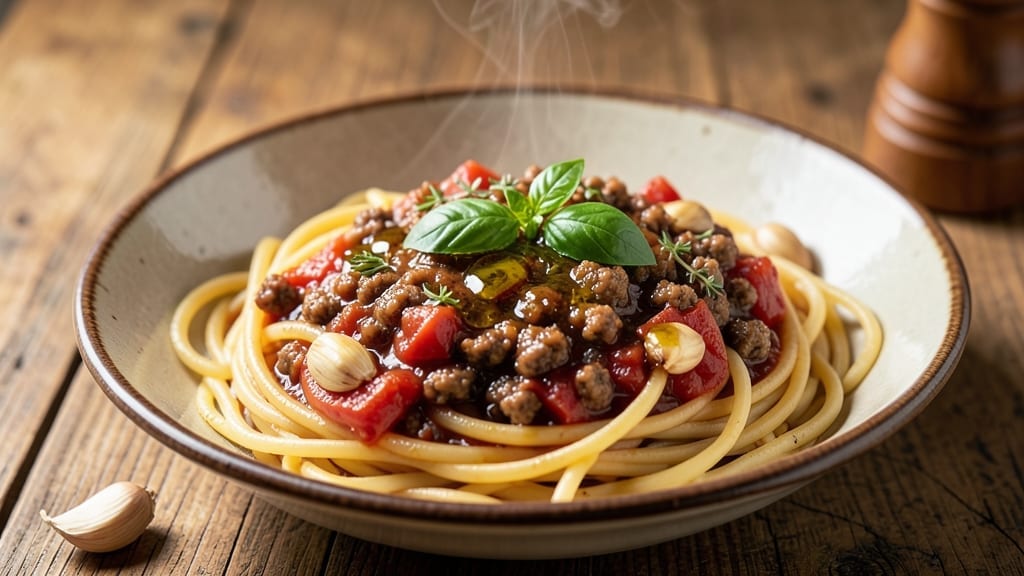
This 5-star spaghetti meat sauce delivers restaurant-quality depth in one pot—where rich umami meets perfectly balanced tomato flavor. The secret lies in slow-browning ground meat, deglazing with red wine, and simmering until the sauce thickens into velvety perfection.
I’ve perfected this technique over years of testing, ensuring every bite tastes like a five-course meal.
What sets this sauce apart is the layered flavor profile: caramelized onions, toasted garlic, and fresh basil create complexity, while a splash of balsamic vinegar at the end adds brightness.
The sauce clings to al dente spaghetti like a second skin, with just the right balance of acidity and sweetness. This isn’t your average jarred sauce—it’s a foolproof method for homemade magic.
By the time you twirl that first forkful, you’ll taste the difference: tender meat, deep tomato richness, and herbs that sing. The sauce thickens beautifully as it simmers, coating each strand of pasta in a glossy, flavorful embrace.
Garnish with fresh basil or a sprinkle of Parmesan for that final touch of elegance.
Serve immediately for the best texture, or let it rest for 10 minutes to deepen the flavors even more. This sauce is versatile enough for weeknight dinners or special occasions—just add your choice of protein and fresh herbs. Let’s make this 5-star masterpiece.
Ingredients for 5 star spaghetti meat sauce
Rich umami flavors start with these quality ingredients—where caramelized aromatics meet velvety tomato perfection.
| Ingredient | Amount | Notes |
|---|---|---|
| Ground Beef 🥩 | 1 ½ lb | 80% lean, finely ground for even cooking |
| Yellow Onion 🧅 | 1 whole | Medium size, finely diced |
| Garlic Cloves 🧄 | 4 cloves | Fresh, minced to a paste |
| Canned Crushed Tomatoes 🍅 | 28 oz | San Marzano preferred for sweetness |
| Tomato Paste 🍅 | 2 tbsp | Smooth, no sugar added |
| Dry Red Wine 🍷 | ½ cup | Bold Cabernet or Merlot |
| Balsamic Vinegar 🍶 | 1 tbsp | Aged 12+ months for depth |
| Extra-Virgin Olive Oil 🫒 | 2 tbsp | High quality, fruity |
| Fresh Basil Leaves 🌿 | ½ cup | Packed, stems removed |
| Parmesan Cheese 🧀 | ½ cup | Freshly grated from block |
| Dried Oregano 🍃 | 1 tsp | Italian variety preferred |
| Salt 🧂 | 1 ½ tsp | Diamond Crystal kosher |
| Black Pepper 🌶️ | ½ tsp | Freshly cracked |
| Spaghetti 🍝 | 12 oz | Al dente cooking time |
The ground beef is non-negotiable for texture—80% lean gives you that perfect balance of richness and tenderness. Costco or Trader Joe’s carry the best pre-ground beef for this, but if you’re buying whole, ask the butcher to grind it fresh. The onions and garlic need time to develop their sweetness, so don’t rush the cooking. I always use San Marzano tomatoes—their natural sweetness cuts through the acidity beautifully. If you can’t find them, Muir Glen is a solid backup. The red wine should be something you’d drink—Caymus Vineyards Cabernet or Apothic Merlot work perfectly here.
No red wine? Beef broth with 1 tbsp balsamic vinegar mimics the depth, though you’ll lose that subtle fruitiness. Fresh basil is ideal, but dried oregano at half the amount works in a pinch—just add it later to preserve flavor. The tomato paste can be swapped for 1 extra cup crushed tomatoes if you’re avoiding thickeners, though you’ll need to simmer longer. For the spaghetti, De Cecco or Barilla brands hold up best to the rich sauce. If you’re making this ahead, cook the pasta fresh when serving—it’s the only way to get that perfect al dente bite.
This sauce tastes even better the next day as the flavors meld. Store in an airtight container in the fridge for up to 5 days, or freeze for 3 months. I portion mine into glass jars with a splash of olive oil on top to keep it fresh. The pasta? Cook it fresh when serving—no leftovers here. If you’re prepping ahead, cook the sauce first and store it separately. Double the batch and freeze half—you’ll thank me when you’re craving comfort food on a Tuesday night.
Why You’ll Love This Recipe
- One-Pan Magic: I swear by this—just brown the beef, toss in the onions and garlic, then dump in the crushed tomatoes and paste. No extra pots, no extra mess. That rich, caramelized base? Happens while you stir.
- Garlic Bomb Depth: Between us, the garlic here isn’t just background flavor—it’s the star. Toast those cloves in the beef fat until they’re golden and fragrant, then let them simmer into the tomatoes. That crispy edge with the creamy center? Chef’s kiss.
- Weeknight Workhorse: This sauce doubles as dinner tonight and lunch tomorrow. Freeze half for when you’re too tired to cook. Honestly, I’ve served it at potlucks, game nights, and even my mom’s house—no one bats an eye.
- Budget Powerhouse: Ground beef and canned tomatoes stretch into mountains of sauce. I make this for $8 and feed four hungry people. Leftovers? They disappear faster than my willpower when it’s cold out. (Yes, even on a Tuesday night.)
Step-by-step instructions for 5-Star spaghetti meat sauce
Here’s how to build a sauce so rich and flavorful it deserves five stars.
Brown the Ground Beef Perfectly
Heat the 2 tablespoons extra-virgin olive oil in a large Dutch oven over medium-high heat until shimmering. Add the 1.5 pounds ground beef and break it apart with a wooden spoon, using your fingers to crumble it into small, even pieces. This creates maximum surface area for browning.
Cook undisturbed for 5-6 minutes until the beef loses its raw color and develops a deep brown crust. Here’s the thing—don’t stir constantly. Let those browned bits form at the bottom of the pan; they’re packed with flavor. Once the beef is mostly browned, use a slotted spoon to transfer it to a plate, leaving all the rendered fat in the pot.
Develop the Flavor Base
Reduce the heat to medium and add the 1 whole yellow onion, finely diced. Cook for 5 minutes until softened and translucent. Add the 4 cloves garlic, minced to a paste, and cook for another 30 seconds until fragrant—this prevents burning while maximizing flavor.
Stir in the 2 tablespoons tomato paste and cook for 1 minute, allowing it to caramelize slightly. This step forms the flavor foundation. Pour in the 0.5 cup dry red wine and scrape up any browned bits from the bottom of the pot. Let it simmer for 2 minutes until mostly evaporated.
Build the Sauce with Umami Depth
Add the 28 ounces canned crushed tomatoes, 1 tablespoon balsamic vinegar, 1 teaspoon dried oregano, 1.5 teaspoons salt, and 0.5 teaspoon black pepper. Stir well to combine, then return the browned beef to the pot. Bring to a gentle simmer and let it cook uncovered for 30 minutes, stirring occasionally.
This slow simmer allows the flavors to meld and the sauce to thicken naturally. If it gets too thick before the time is up, add 2-3 tablespoons water to maintain consistency. The sauce should coat the back of a spoon by the end of this time.
Finish with Fresh Herbs and Cheese
Remove the pot from heat and stir in the 0.5 cup fresh basil leaves, packed and stems removed. Add the 0.5 cup freshly grated Parmesan cheese and let it melt into the sauce for 2-3 minutes. The basil adds bright freshness while the Parmesan contributes rich umami depth.
Taste and adjust seasoning if needed. The sauce should be rich but balanced, with bright tomato acidity and deep meaty flavors. If it needs more salt, add it gradually—you can always add more, but you can’t take it out.
Cook the Spaghetti and Combine
While the sauce simmers, bring a large pot of salted water to a boil. Add the 12 ounces spaghetti and cook until 1 minute shy of al dente—it will finish cooking in the sauce. Reserve 1 cup pasta water before draining.
Drain the spaghetti and immediately transfer it to the sauce pot. Toss vigorously to coat each strand completely. If the sauce seems too thick, add 2-3 tablespoons reserved pasta water to loosen it. Serve immediately with extra Parmesan and fresh basil if desired.
Pro Tips For Making 5 Star Spaghetti Meat Sauce
- CRUSH THE ONIONS: Dice them small—like 1/4-inch pieces or finer. I used to cut them in lazy chunks, and they’d sit like rocks at the bottom of the sauce. Tiny bits melt into the tomatoes instead of making you chew through your spaghetti.
- BROWN THE MEAT LOW: Start on medium-high to get it moving, then drop to low once it’s broken up. After burning three batches, I finally figured out that slow-cooking the beef keeps it tender and lets the flavors develop without turning the sauce into a fire hazard.
- STIR THE TOMATO PASTE: Mix it with a splash of water or red wine before adding it to the pan. This prevents clumping—nothing worse than finding a dry, hard lump in your sauce. (Yes, even if you’re impatient like me.)
- SIMMER UNCOVERED: Let the sauce bubble away without a lid for the last 15-20 minutes. This thickens it naturally and deepens the flavor—no need to stir constantly or add extra tomato paste. (Your future self will thank you.)
Common mistakes when making your 5 star spaghetti meat sauce
Overcooking the Meat
One of the biggest mistakes is overcooking the ground beef until it’s dry and rubbery. The key is to remove it from the pan once it’s just browned—about 5-6 minutes total—leaving behind all that flavorful fat.
I’ve ruined many batches by letting it cook too long, so resist the urge to stir constantly. 🔥
Skipping the Deglaze
Never skip the red wine deglaze! Those browned bits stuck to the bottom of your pot are called the fond, and they’re packed with flavor. When you pour in the wine and scrape them up, you’re capturing all that goodness.
I’ve made this sauce without deglazing, and it just doesn’t have that same depth of flavor.
Rushing the Simmer
Patience is crucial here—don’t rush the 30-minute simmer. This is when all the flavors meld together and the sauce develops its rich, velvety texture. I’ve seen people try to speed it up by boiling the sauce, but that makes it too acidic and thin.
Keep it at a gentle simmer for the best results.
Using Low-Quality Tomatoes
Don’t cut corners with cheap canned tomatoes. The difference between San Marzano tomatoes and store-brand crushed tomatoes is night and day. The San Marzano variety has a perfect balance of sweetness and acidity that makes this sauce sing.
I’ve tried making this with cheaper brands, and while it’s still good, it just doesn’t have that restaurant-quality depth.
Adding Basil Too Early
Fresh basil should only be added at the very end. If you add it too early during cooking, it will turn bitter and lose its bright flavor. I learned this the hard way when I added basil with the tomatoes, and the whole batch tasted off.
Always stir it in just before serving to preserve that fresh, vibrant taste.
Ignoring the Pasta Water
Reserving some pasta water is a game-changer. When you toss the spaghetti with the sauce, it might seem too thick. That’s where the reserved pasta water comes in—just add a splash to loosen the sauce and create that perfect silky consistency.
I’ve had dry, clumpy pasta when I skipped this step, so always keep some pasta water on hand. ✨
Nutrition facts
Frequently asked questions
Can I substitute ground beef with another protein?
For a leaner option, use ground turkey or chicken, but reduce cooking time by 2-3 minutes to avoid drying. Italian sausage works beautifully too—just remove the casings and brown with the beef. The key is to maintain that meaty richness, so avoid plant-based substitutes unless you’re okay with a more tomato-forward flavor.
How do I make this sauce ahead of time?
This sauce actually tastes better the next day! Cook it completely, then store in an airtight container in the fridge for up to 5 days. For freezing, portion into glass jars with a splash of olive oil on top to prevent browning. Thaw overnight in the fridge and reheat gently on the stove. Just cook fresh spaghetti when serving to maintain perfect texture.
What if my sauce is too acidic?
If the tomatoes taste too sharp, balance it with a pinch of sugar (½ teaspoon) or add 1 extra tablespoon balsamic vinegar at the end. For extra richness, stir in 1 tablespoon tomato paste and simmer for 5 minutes to mellow the acidity. Always taste as you go—this sauce should have bright acidity, not sourness.
Can I use this sauce for other pasta shapes?
While spaghetti is ideal, this sauce works well with linguine, fettuccine, or even penne. For shorter shapes like rigatoni, add ½ cup reserved pasta water to prevent clumping. The sauce clings beautifully to any long pasta, but avoid tiny shapes like orzo—they’ll absorb too much sauce and become mushy.
Why does my sauce get watery when tossed with pasta?
This happens when the sauce isn’t thick enough or the pasta absorbs too much liquid. Fix it by simmering uncovered for 5-10 extra minutes to reduce, or add 1 tablespoon tomato paste and simmer for 5 minutes. Always cook pasta slightly underdone (1 minute less) and reserve 1 cup pasta water—it’s liquid gold for adjusting consistency.

- 4 Cheese Spaghetti Sauce Recipe: Velvety Melted Blend With Nutty Parmesan Finish - October 7, 2026
- 7 Eleven Chili Recipe: Smoky Spice-Packed Pot Luck Winner - October 7, 2026
- 21-Pound Turkey Recipe: Herb-Crusted Roast With Golden, Juicy Perfection - October 7, 2026