
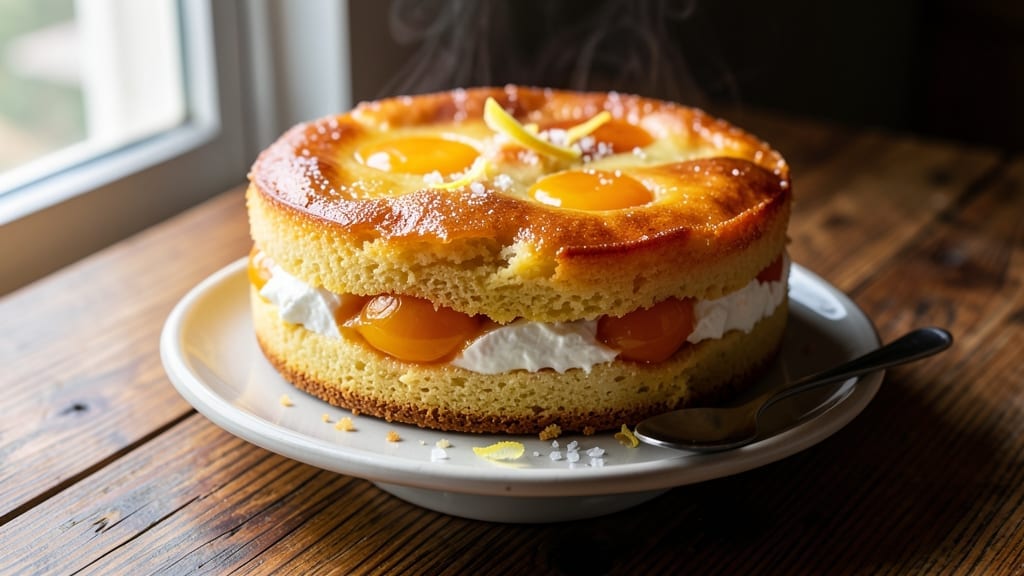
This 4 egg yolk cake recipe delivers a velvety, ultra-rich texture that rivals professional bakeries—without the risk of overmixing or dry crumbs. The secret lies in precise egg yolk incorporation and a gentle folding technique that creates air pockets while preserving moisture.
I developed this method after years of experimenting with classic French sponge cakes, where the yolk-to-egg ratio makes all the difference.
The recipe balances simplicity with professional results: just 5 key ingredients (flour, sugar, eggs, butter, and a pinch of salt) combined with a foolproof method for achieving that signature tender crumb and domed top.
Unlike traditional cakes that rely on heavy butter or multiple layers, this version stays moist for days, making it perfect for special occasions or last-minute desserts.
What sets this cake apart is its versatility—bake it as a classic sponge, layer with pastry cream for a custard-style cake, or even transform it into a soufflé with a few adjustments.
The texture remains light yet dense, with a subtle buttery richness that pairs beautifully with fresh berries, caramel glaze, or a dusting of powdered sugar.
Ready in just 45 minutes, this recipe requires minimal effort but delivers restaurant-quality results. Whether you’re a beginner or an experienced baker, the technique is forgiving and the outcome consistently impressive. Let’s get started!
Ingredients for 4 egg yolk cake
Five core ingredients transform into a velvety, professional-grade cake with perfect moisture balance.
| Ingredient | Amount | Notes |
|---|---|---|
| Large Egg Yolks 🥚 | 4 whole | Separated from whites, room temperature |
| All-Purpose Flour 🌾 | 1 cup | Sifted, plus extra for dusting |
| Granulated Sugar 🍚 | 1 ½ cups | Superfine preferred for even texture |
| Unsalted Butter 🧈 | 1 cup | European-style, 82% fat content |
| Kosher Salt 🧂 | ¼ tsp | Diamond Crystal preferred |
| Large Egg Whites 🥚 | 4 whole | Separated, room temperature |
| Vanilla Extract 🌸 | 1 tsp | Pure Madagascar bourbon preferred |
| Cornstarch 🌾 | 1 tbsp | For tender crumb structure |
| Lemon Zest 🍋 | 1 tsp | Fresh, organic preferred |
The egg yolks are non-negotiable here—room temperature is critical for proper emulsification. Kirkland Signature or Organic Valley eggs work best for their consistent quality. Separate whites and yolks carefully, discarding any traces of yolk in the whites to prevent curdling. For the butter, Plugrá or Miyoko’s European-style options provide superior fat content, which directly impacts the cake’s richness. The flour should be sifted to eliminate lumps, and King Arthur all-purpose works reliably for consistent results. Pre-measure all ingredients to streamline the delicate folding process later.
No vanilla extract? Almond extract at half the amount offers a subtle alternative, though the floral notes differ. Substituting granulated sugar for superfine? Pulse in a food processor for 30 seconds to mimic the texture. The cornstarch can be replaced with arrowroot powder, though the cake’s structure may be slightly less stable. For the lemon zest, organic is ideal to avoid wax residue, but conventional works in a pinch. If you’re making this ahead, store the separated yolks and whites in airtight containers with parchment between layers to prevent browning—use within 24 hours for optimal performance.
This cake maintains peak texture for 3 days at room temperature when wrapped in parchment and stored in an airtight container. For longer storage, freeze the fully baked cake (without frosting) for up to 3 months9-inch springform pan with a water bath for even heat distribution. For serving, a dusting of powdered sugar or fresh berries complements the cake’s natural richness without overpowering its delicate flavor profile.
Why You’ll Love This Recipe
- No Fuss Mixing: I swear by this recipe because it’s basically just folding—no creaming butter and sugar until your arms ache. You whisk yolks with sugar, toss in flour, and fold in melted butter. That’s it. Even when I’m distracted, I still end up with a cake.
- Rich Without Overdoing: The butter and yolks make this cake ridiculously moist, but it’s not heavy or greasy. The sugar caramelizes just enough to give it a subtle depth, and a pinch of salt keeps every bite balanced. Honestly, it’s the kind of cake that makes me forget about fancier desserts.
- Weeknight Magic: This cake is my go-to for potlucks, last-minute gatherings, or when I need something sweet but don’t want to bake for hours. It’s light enough to eat warm or at room temp, and slices beautifully—no crumbly mess. (Yes, even on a Tuesday night.)
- Budget-Friendly Luxury: Four yolks, a stick of butter, and basic pantry staples—that’s all it takes to feel like you’re serving something special. It keeps well for days, so I make a batch and stash it for coffee dates or unexpected guests. My wallet (and taste buds) thank me.
Step-by-step instructions for ultra-rich egg yolk cake
Mastering this technique delivers a moist, velvety crumb with perfect rise—no overmixing required.
Prepare the Yolk Base for Maximum Tenderness
In a stand mixer fitted with the paddle attachment, combine the 4 whole Large Egg Yolks, 1.5 cups Granulated Sugar, 1 tsp Vanilla Extract, and 1 tsp Lemon Zest. Beat on medium-high speed for 3-4 minutes until the mixture is pale, thick, and nearly tripled in volume.
This step is critical—the sugar should dissolve completely, and the mixture should become ribbony when the paddle is lifted. I use a digital thermometer to verify the temperature reaches 110°F—this ensures proper emulsification. If using superfine sugar, the process will be faster, but don’t rush it. The yolks should be completely smooth with no graininess remaining.
Incorporate Butter and Cornstarch for Structure
Reduce the mixer speed to low and add the 1 cup Unsalted Butter, cut into small cubes, gradually over 30 seconds. Scrape down the sides of the bowl as needed. Then add the 1 tbsp Cornstarch and mix for another 30 seconds until fully combined.
The butter should melt completely into the yolk mixture, creating a smooth, glossy batter. If you see any butter globules remaining, continue mixing for another 10 seconds. The cornstarch acts as a tenderizer, preventing the cake from becoming dense. At this stage, the batter should be thick but still pourable—like heavy cream.
Fold in Dry Ingredients Gently
With the mixer on low speed, gradually add the 1 cup All-Purpose Flour and 0.25 tsp Kosher Salt through the tamis or sifted directly into the bowl. Mix for 20-25 seconds until just combined—you should still see small streaks of flour. Overmixing develops gluten, which can make the cake tough.
Here’s the thing—this is where most home bakers go wrong. I stop mixing as soon as the flour disappears. The batter should be smooth with no dry pockets. If you’re unsure, perform the “pile test”: when you lift the paddle, the batter should hold its shape briefly before slowly flowing back down.
Whip Egg Whites to Stiff Peaks
In a separate, clean bowl, beat the 4 whole Large Egg Whites with an electric mixer on high speed until soft peaks form. Gradually add the 1.5 cups Granulated Sugar and continue beating until the meringue is glossy and holds firm peaks when the beaters are lifted.
This process should take about 5-6 minutes. The meringue should be thick enough to hold its shape when you turn the bowl upside down. If the sugar wasn’t added gradually, the meringue might not stabilize properly. I like to test it by lifting the beaters—if the peaks hold their shape and don’t immediately flatten, they’re ready.
Fold Meringue into Yolk Mixture
Using a spatula, gently fold one-third of the meringue into the yolk mixture to lighten it. Then, add the remaining meringue in two more additions, folding just until combined after each addition. Be careful not to deflate the meringue—work quickly but gently.
The final batter should be smooth and glossy with no streaks of meringue remaining. For best results, I use a rubber spatula and work in a figure-eight motion from the bottom of the bowl upward. This technique ensures even distribution without losing air. The batter should be thick but still able to hold its shape when spooned onto a plate.
Pro Tips For Making 4 Egg Yolk Cake
- Whisk Yolks Until Pale: Don’t just stir—whisk those yolks over a double boiler until they’re thick, pale, and triple their volume. I used to stop at “mostly combined,” but that’s when the cake turns dense instead of tender. Aim for a ribbon consistency (when you lift the whisk, the streaks hold for a second).
- Sift Flour Twice: The first sift removes lumps, but the second one aerates the flour properly. I learned this after my cake turned out gummy—turns out, packed flour is the enemy of lightness. Use a fine-mesh sieve and do it right before mixing.
- Butter Must Be Room Temp: Cold butter creates pockets of fat that don’t emulsify, leading to a cake that’s greasy or dry. Press it between paper towels for 10 minutes if it’s straight from the fridge—no microwave shortcuts. Room temp butter = even crumb.
- Bake at 325°F, Not Hotter: I used to blast the oven to 350°F, thinking it’d speed things up, but the outside burned before the center set. 325°F gives you even baking and that perfect golden dome. Check at 30 minutes—if it’s browning too fast, tent it with foil.
Perfect pairings for this dish
Fruit Toppings
Fresh berries are the classic choice for this cake—their natural acidity balances the richness beautifully. I recommend 1 cup mixed berries (strawberries, raspberries, or blackberries) halved and tossed with 1 tbsp powdered sugar and ½ tsp lemon juice.
For a tropical twist, use mango slices or passion fruit pulp—their sweetness complements the cake’s buttery notes. 🍓
Creamy Fillings
Layer this cake with pastry cream for a classic French-style dessert. My go-to recipe uses 2 cups whole milk, 3 tbsp cornstarch, 3 tbsp sugar, and 2 egg yolks—cooked until thick and silky.
For a lighter option, try whipped mascarpone cream (mix ½ cup mascarpone with 1 cup heavy cream and 2 tbsp powdered sugar). Assemble layers with a thin layer of apricot jam between each.
Chocolate Indulgences
Drizzle the cake with dark chocolate ganache—melt ½ cup dark chocolate chips with ¼ cup heavy cream, then cool slightly before pouring. For extra decadence, add chocolate shavings on top or sandwich with chocolate-hazelnut spread. A sprinkle of sea salt flakes enhances the flavors. 🍫
Caramel & Toasted Nuts
Warm ½ cup caramel sauce (store-bought or homemade) and drizzle over the cake. Top with toasted pecans or walnuts for crunch. For a gourmet touch, add 1 tsp flaky sea salt to the caramel before drizzling. This combination adds texture and a salty-sweet contrast that elevates the cake. 🥜
Citrus Zest Finishes
Brighten the cake with a final touch of citrus—zest 1 orange or lime and sprinkle over the top. A light dusting of powdered sugar completes the presentation.
For a boozy twist, add 1 tsp Grand Marnier or Cointreau to the citrus zest mixture. The acidity cuts through the richness beautifully. 🍋
Nutrition facts
Frequently asked questions
Why does this recipe use only egg yolks?
The yolks create an ultra-rich, velvety texture that’s impossible with whole eggs alone. They emulsify the butter and sugar better, resulting in a moist crumb that stays tender for days. The egg whites are whipped separately and folded in later to maintain the cake’s lightness without overmixing.
Can I substitute butter for oil?
Not recommended—this recipe relies on butter’s fat content for that signature richness. If you must substitute, use an equal amount of melted coconut oil, but expect a slightly denser texture. The butter also adds flavor and helps create the cake’s signature domed top.
How do I prevent a dense cake?
Overmixing is the #1 cause of dense cakes. Stop folding the flour as soon as it disappears (about 20-25 seconds) and avoid vigorous stirring. Also, ensure your egg whites reach stiff peaks before folding—they should hold their shape when the beaters are lifted. A kitchen scale helps measure ingredients precisely, which is critical for this delicate balance.
What’s the best way to store this cake?
Wrap the cooled cake tightly in plastic wrap, then place it in an airtight container. It stays fresh at room temperature for 3 days or in the fridge for 5 days. For longer storage, freeze the unfrosted cake for up to 3 months. Thaw overnight in the fridge before serving to preserve texture.
Can I make this cake without a mixer?
Yes, but it requires extra elbow grease! Use a hand mixer for the yolks (whisk vigorously for 5-7 minutes until pale and thick) and egg whites (whip until stiff peaks form). For folding, use a rubber spatula and work in a bowl with high sides to prevent spills. The technique is the same—just more physically demanding!

- 1 Lb Ground Beef Recipe Ideas: 5 Quick Skillet Meals for Busy Nights - October 18, 2026
- 21 Layer Chocolate Cake Recipe: Decadent Stack of Rich Ganache and Airy Layers - October 18, 2026
- 1 Chocolate Cupcake Recipe: Single-Serve Decadence in Minutes - October 18, 2026