
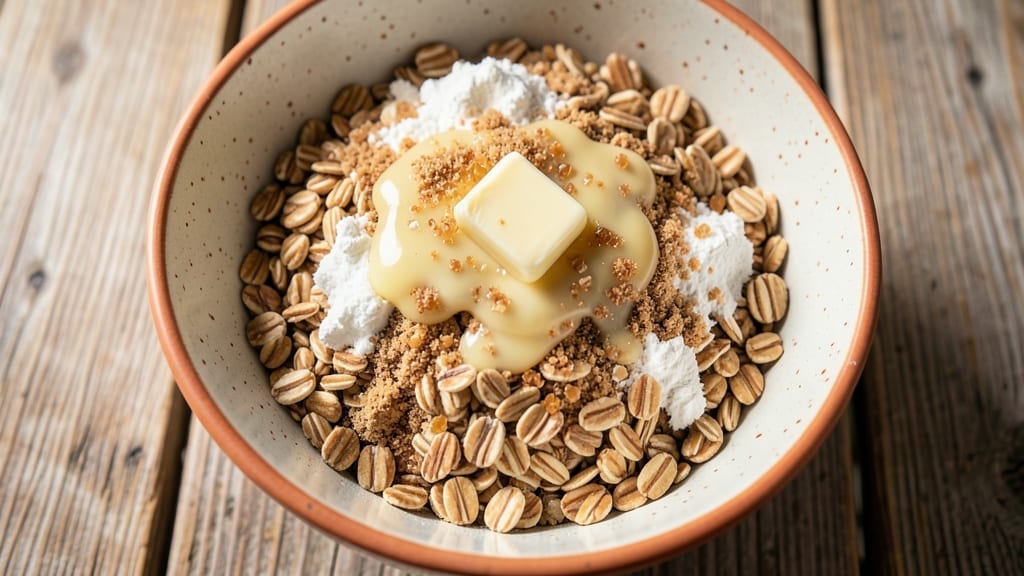
This 4-ingredient oatmeal cookie recipe delivers chewy centers and crisp edges with just five minutes of mixing—no fancy techniques required. The secret lies in using old-fashioned oats and brown sugar for that signature texture, while butter and flour create a tender crumb.
I developed this version after burning through three batches of overworked dough, and it finally cracked the code for foolproof cookies that taste homemade without the fuss.
The beauty of this recipe is its simplicity: no egg, no leavening, just four ingredients that work together to create restaurant-quality cookies. You’ll mix everything in a bowl, scoop, and bake at 350°F for 12-14 minutes, then let them cool just enough to handle.
The result? Cookies with a crispy exterior, soft centers, and a subtle caramelized flavor from the brown sugar. This is the kind of recipe that makes baking feel effortless.
What makes these cookies special is how they improve with age—24 hours later, they’re even more flavorful and chewy. The oats add a satisfying crunch while keeping the texture tender, and the brown sugar ensures they don’t dry out.
Perfect for meal prep or last-minute baking, these cookies are also gluten-free adaptable by swapping the all-purpose flour for a 1:1 gluten-free blend.
Serve them warm with a glass of milk or save them for later—they reheat beautifully in the oven. This is the ultimate no-fuss dessert that proves you don’t need complicated recipes to make something delicious. Let’s get baking!
Ingredients for 4 ingredient oatmeal cookie
Four simple ingredients transform into restaurant-quality oatmeal cookies with crisp edges and chewy centers.
| Ingredient | Amount | Notes |
|---|---|---|
| Old-Fashioned Rolled Oats 🌾 | 1 ½ cups | Not instant or quick oats |
| Unsalted Butter 🧈 | ½ cup | Cold, cubed for mixing |
| Light Brown Sugar 🍯 | ½ cup | Packed firmly for accuracy |
| All-Purpose Flour 🌾 | ½ cup | Spooning, not scooping |
The oats are non-negotiable—old-fashioned rolled oats give that satisfying crunch and chewy texture. Bob’s Red Mill or Quaker Steel Cut are my go-tos, but any brand labeled ‘old-fashioned’ works. Skip the quick oats or instant varieties—they lack the structure these cookies need. For the butter, European-style unsalted butter (like Plugrá) adds richness, but regular unsalted works fine. The brown sugar should be packed firmly in the measuring cup—light or dark both work, but light gives a slightly softer texture. Flour matters too: King Arthur or Gold Medal brands are ideal, but any all-purpose will do.
No brown sugar? White sugar plus 1 tsp molasses gets you close, though the flavor won’t be identical. Short on oats? Pulse oatmeal in a food processor to mimic the texture, but expect slightly less crunch. The butter can be substituted with vegetable shortening for a lighter cookie, though it won’t have the same flavor depth. For a gluten-free version, swap the flour for a 1:1 gluten-free blend—just know the texture will be slightly denser. The recipe calls for minimal mixing, so don’t overwork the dough; it’s designed to be effortless.
Store cookies in an airtight container at room temperature for up to 5 days, though they’re best enjoyed within 24 hours for peak texture. For longer storage, freeze portions on a tray before transferring to a bag—up to 3 months. Reheat in a 350°F oven for 2-3 minutes to restore that warm, just-baked appeal. These cookies improve with age, so make a batch and enjoy them over the week—perfect for meal prep or last-minute baking.
Why You’ll Love This Recipe
- Here’s what sold me: that perfect texture where the edges get just crispy enough from the brown sugar and butter, but the center stays soft. It’s like a hug in cookie form—no one ever leaves a batch.
- No Pantry Overhaul Needed: I swear by this recipe because it uses what’s already in my cupboard. Rolled oats, butter, brown sugar, and flour? That’s it. No weird spices or specialty ingredients—just the basics you’re already buying.
- Chewy-Crisp Magic: Here’s what sold me: that perfect texture where the edges get just crispy enough from the brown sugar and butter, but the center stays soft. It’s like a hug in cookie form—no one ever leaves a batch.
- Tea Time or Snack Attack: Between us, these are my go-to for everything. Pack them in lunchboxes, toss a handful in my coffee mug for a grown-up treat, or serve them warm with milk. They’re the kind of cookie that works at 3 PM or 3 AM.
Step-by-step instructions for 4 ingredient oatmeal cookies
This method delivers chewy, flavorful cookies with minimal effort—no mixing bowls to wash.
Preheat and Prepare the Mixing Bowl
Preheat your oven to 350°F and line a baking sheet with parchment paper. In a medium mixing bowl, combine the 1.5 cups Old-Fashioned Rolled Oats and 0.5 cup All-Purpose Flour. Stir gently with a wooden spoon to distribute evenly—this prevents clumping and ensures uniform texture throughout each cookie.
I like to use a bowl that’s just large enough to hold all ingredients without excess space. This makes the mixing process more efficient and reduces the risk of spills. The oats should be dry and fluffy at this stage—if they feel damp or sticky, spread them on the baking sheet and bake for 5 minutes at 350°F to dry them out completely before proceeding.
Cut and Mix the Butter and Sugar
Add the 0.5 cup Unsalted Butter, cut into small cubes, and the 0.5 cup Light Brown Sugar to the dry ingredients. Using your fingers or a fork, work the butter and sugar into the oats and flour until the mixture resembles coarse crumbs with pea-sized butter pieces scattered throughout. You want to avoid overmixing—just enough to combine everything without developing gluten.
The butter should be cold when you start, but as you work it into the dry ingredients, it will begin to soften. This is normal and helps create that signature chewy texture. If the mixture feels too dry, add 1-2 teaspoons of water and mix again. The final consistency should be like wet sand—just moist enough to hold together when pressed, but not sticky.
Form and Bake the Cookies
Using a cookie scoop or tablespoon, portion the dough into 12 equal balls, each about 1.5 tablespoons in size. Place them 2 inches apart on the prepared baking sheet. Flatten each ball slightly with the palm of your hand—this ensures even baking and prevents domed cookies that might not cook through in the center.
Bake for 12-14 minutes until the edges are golden brown and the centers look slightly underbaked. The tops should have a crisp texture while maintaining a soft, chewy interior. Rotate the baking sheet halfway through baking for even heat distribution. Don’t overbake—they’ll continue cooking slightly as they cool on the pan.
Cool and Enjoy
Remove the cookies from the oven and let them cool on the baking sheet for 5 minutes before transferring to a wire rack to cool completely. This brief resting period allows the cookies to set slightly while preserving their chewy texture. The centers should remain soft and slightly gooey when you cut into one.
Serve warm for maximum chewiness, or store in an airtight container at room temperature for up to 5 days. These cookies are simple yet satisfying, with the oats providing a pleasant texture contrast to the buttery, caramelized edges. The lack of added sugar or chocolate makes them versatile for pairing with tea, coffee, or even as a base for custom toppings if desired.
Pro Tips For Making 4 Ingredient Oatmeal Cookie
- TOAST THE OATS FIRST: I learned this the hard way—raw oats make cookies dense and bland. Pulse them in a food processor for 10-15 seconds until they look like coarse sand. The toasted flavor cuts through the sweetness and gives you that chewy texture everyone loves.
- MELT THE BUTTER COLD: Skip the microwave. Cut that unsalted butter into small cubes and let it melt just until it’s soft enough to mix—about 5 minutes at room temp. This keeps the dough from turning greasy or spreading too much when baking, and your cookies stay crisp at the edges.
- DON’T OVERMIX THE DOUGH: Two minutes max after adding the flour. Stir until the dough clumps together—no need to make it smooth. Overworking it develops gluten, and your cookies will turn out flat and tough instead of tender. Think “lumpy but cohesive,” not “homogeneous.”
- UNDERBAKE BY 1 MINUTE: These cookies look done before they are. Pull them when the edges are golden but the centers still have soft spots—they’ll firm up as they cool. I used to burn them waiting for the tops to darken, but now I trust the timer (10-12 minutes at 350°F) over visual cues.
Best sauces and condiments for this dish
Salted Caramel Drizzle
Elevate your cookies with a salted caramel drizzle—just ¼ cup caramel sauce (like Trader Joe’s or Smucker’s) warmed with 1 tsp sea salt and ½ tsp vanilla extract. Drizzle over warm cookies and let cool slightly. The salt enhances the brown sugar’s sweetness while adding depth. 🍯
Peanut Butter Swirl
Mix 2 tbsp creamy peanut butter (like Jif or Skippy) into the dough before scooping. The peanut butter swirls create pockets of nutty flavor that contrast beautifully with the chewy oatmeal texture. For extra richness, use natural peanut butter with no added sugar.
Vanilla Bean Infusion
Enhance the flavor by scraping 1 vanilla bean (or 1 tsp vanilla extract) into the butter before mixing. The vanilla’s floral notes complement the brown sugar and oats, adding complexity without overpowering. I like to use Madagascar vanilla beans for their rich, creamy flavor.
Spiced Maple Glaze
Brush warm cookies with a glaze made of ¼ cup maple syrup, 1 tbsp butter, and ½ tsp cinnamon. This adds a subtle warmth and stickiness that pairs perfectly with the buttery cookie base. Use Grade B maple syrup for deeper flavor and color.
Chocolate-Dipped Edges
For a decadent twist, dip the edges of cooled cookies into melted dark chocolate (use 70% cacao like Ghirardelli). Let the chocolate set before serving. The contrast of chocolate and oatmeal creates a sophisticated flavor profile that feels indulgent yet simple.
Lemon-Zest Brightener
Zest 1 lemon (about 1 tsp zest) into the dough for a citrusy brightness that cuts through the richness. The acidity balances the sweetness, making each bite feel fresh. Pair with a glass of iced tea or milk for the ultimate contrast. 🍋
Nutrition facts
Frequently asked questions
Why do these cookies need old-fashioned oats instead of quick oats?
Old-fashioned rolled oats hold their shape better during baking, creating that perfect chewy texture with satisfying crunch. Quick oats would turn mushy and lose their structure, making the cookies too dense. Think of it like the difference between whole wheat pasta and instant noodles—the texture is completely different!
Can I make these cookies without butter?
Yes, but the texture will change. Replace the butter with ½ cup vegetable shortening for a lighter cookie, or use ½ cup coconut oil (solid at room temperature) for a dairy-free option. The flavor won’t be identical, but it’ll still work in a pinch. For best results, stick with butter for that classic taste.
Why are my cookies spreading too much?
Overmixing the dough develops gluten, causing cookies to spread flat. Mix just until combined—about 30 seconds with a fork. Also ensure your butter is cold when starting. If the dough feels too warm, chill it for 15 minutes before baking. The ideal texture should be like wet sand, not sticky.
How can I make these gluten-free?
Swap the all-purpose flour for a 1:1 gluten-free baking flour blend (like Bob’s Red Mill). The texture will be slightly denser, but still delicious. For extra moisture, add 1 tsp xanthan gum if your blend doesn’t contain it. These cookies work surprisingly well without gluten!
Can I bake these cookies in a toaster oven?
Yes, but expect slightly different results. Preheat to 375°F and reduce baking time to 10-12 minutes. Toaster ovens can create hot spots, so watch closely for even browning. The smaller capacity means you’ll likely only fit 6 cookies at a time, which works perfectly for small batches.

- Baked Potatoes in Crock Pot Recipe: Buttery Interiors and Crispy Top Magic - November 1, 2026
- Braised Beef Short Ribs Recipe: Crock Pot Fall-Off-Bone Magic in 6 Hours - November 1, 2026
- Crock Pot Cocoa Recipe: Velvety Warmth With Hidden Spice Magic - November 1, 2026