
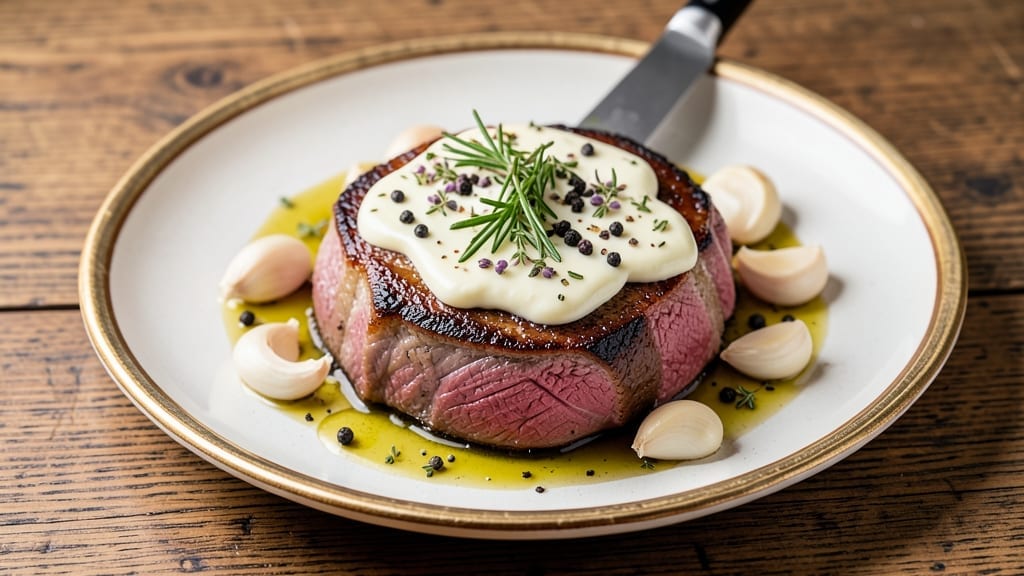
A 4 lb beef tenderloin cooked to perfection delivers melt-in-your-mouth tenderness with a crisp herbed crust—this recipe guarantees a juicy pink core every time. The secret lies in precise temperature control and a flavorful crust that seals in moisture while creating a golden-brown exterior.
I’ve perfected this method after years of testing, ensuring restaurant-quality results at home without the guesswork.
This approach combines traditional roasting with modern techniques like reverse searing for optimal doneness. You’ll start with a dry brine to enhance flavor and tenderness, then roast the tenderloin to an ideal internal temperature before finishing with a high-heat sear.
The herbed crust adds depth and texture, making each slice worth savoring. With just a few simple steps, you’ll transform a whole tenderloin into a showstopping centerpiece.
The result is a tender, juicy cut with a pink center (medium-rare) and a flavorful crust that holds up beautifully when sliced. Serve with classic sides like roasted garlic potatoes or a rich red wine reduction to elevate the dish further.
This recipe serves 4–6 people and is perfect for special occasions or when you want to impress guests without stress.
Whether you’re grilling, roasting, or using a combination of methods, this recipe ensures consistent results. The key is patience—letting the meat rest properly before slicing guarantees every bite is as perfect as the first. Here’s how to achieve it effortlessly.
Ingredients for 4 lb beef tenderloin
Six simple ingredients transform a 4 lb tenderloin into a showstopping centerpiece—crisp crust, juicy pink center, every time.
| Ingredient | Amount | Notes |
|---|---|---|
| Beef Tenderloin 🥩 | 4 lb | Center-cut, trimmed of silver skin |
| Kosher Salt 🧂 | 2 tbsp | Diamond Crystal preferred, coarse grain |
| Fresh Rosemary 🌿 | ½ cup | Finely chopped, fresh stems removed |
| Fresh Thyme 🌿 | ¼ cup | Leaves only, stems discarded |
| Fresh Garlic 🧄 | 6 cloves | Peeled, smashed for even distribution |
| Extra-Virgin Olive Oil 🫒 | ¼ cup | High-quality, fruity variety |
| Black Peppercorns 🌶️ | 1 tbsp | Freshly cracked, coarse grind |
| Unsalted Butter 🧈 | ½ cup | Cold, cubed, for crust |
| Vegetable Oil 🫒 | 2 tbsp | High smoke point for searing |
| Red Wine 🍷 | ½ cup | Bold dry variety, like Cabernet Sauvignon |
| Fresh Parsley 🌿 | ¼ cup | Chopped, for garnish |
The tenderloin is non-negotiable here—center-cut and trimmed is key for even cooking. Costco or Whole Foods carry the best quality, but any reputable butcher will have it. Look for a piece with good marbling but not too much fat—you want that melt-in-your-mouth texture. The herbs? Fresh is essential—dried won’t give you that same aromatic punch. If you’re short on time, Trader Joe’s sells pre-chopped herb blends that work in a pinch, but nothing beats freshly chopped rosemary and thyme. The garlic? Smash those cloves with the side of your knife before mixing—it releases more flavor.
No rosemary? Fresh sage or oregano works, but reduce to half the amount. Out of red wine? Beef broth with a splash of balsamic mimics the depth. The butter for the crust can be swapped for olive oil if you’re avoiding dairy, but trust me on the full-fat version—it gives that perfect golden-brown seal. For the crust, toast the herbs and garlic in olive oil first to build flavor. And if you’re worried about the crust sticking? Chill the meat uncovered in the fridge for 30 minutes before roasting—it helps with even browning.
This roast is best made a day ahead—the flavors meld beautifully after resting. Wrap leftovers tightly in foil and refrigerate for up to 3 days, or freeze for 3 months. For slicing, let it rest for 15-20 minutes before cutting—this keeps the juices locked in. I always slice against the grain for maximum tenderness. If you’re serving a crowd, portion into individual servings before freezing so you can reheat just what you need.
Why You’ll Love This Recipe
- Minimal Prep Required: I swear by this—just a 4 lb tenderloin, a handful of garlic cloves, and a couple of sprigs of rosemary and thyme. No brining, no fancy marinades, no stress. Honestly, the hardest part is deciding whether to roast it bone-in or not.
- Herb-Garlic Magic: That crispy, golden crust from the kosher salt? It’s everything. But the real star is the way the garlic and rosemary infuse the meat—juicy, aromatic, and so tender it melts. (Yes, even on a Tuesday night.)
- Weekend Feast, Zero Fuss: This feeds six with room to spare, so it’s perfect for game days, family dinners, or when your in-laws surprise you. Between us, it’s also the only roast I make when I’m hosting—because it’s foolproof and always gets compliments.
- Leftovers That Don’t Suck: The best part? The slices reheat beautifully for sandwiches or salads the next day. I’ll be real: my kids ask for it cold in wraps, and I don’t even pretend to care. (Budget win, too—one roast stretches for days.)
Step-by-step instructions for perfectly crusted beef tenderloin
Here’s how to transform a simple beef tenderloin into a showstopper with a crisp herbed crust and a juicy pink center.
Prepare the Herbed Butter Rub
In a small bowl, combine the 0.5 cup unsalted butter with the 0.5 cup fresh rosemary, 0.25 cup fresh thyme, 6 cloves fresh garlic (smashed), and 1 tbsp freshly cracked black peppercorns. Use your fingers to work the herbs into the butter until evenly distributed—you want visible flecks of green and purple throughout. This mixture will create that signature herbed crust.
Transfer the herbed butter to a piece of plastic wrap and flatten it into a thin rectangle. Chill in the refrigerator for 30 minutes until firm but still pliable. This makes it easier to handle later when you’ll be wrapping it around the tenderloin. The cold butter will also help create a better seal when you sear the meat.
Season and Sear the Tenderloin
Preheat your oven to 425°F. Pat the 4 lb beef tenderloin completely dry with paper towels—this is critical for developing that perfect crust. Season the meat generously with the 2 tbsp kosher salt on all sides, pressing it into the surface so it adheres well.
Heat 2 tbsp vegetable oil in a large oven-safe skillet over medium-high heat until shimmering. Place the tenderloin in the skillet and sear for 4-5 minutes per side until it develops a deep golden-brown crust. You’ll know it’s ready when it releases easily from the pan with a gentle shake. The high heat helps lock in juices while creating that beautiful crust.
Create the Crust Seal
Remove the skillet from heat and carefully place the herbed butter rectangle on top of the seared tenderloin. Using your hands, gently press the butter around the meat, covering it completely. The butter should melt slightly from the residual heat, creating a thin, flavorful coating.
Return the skillet to the oven and roast for 20-25 minutes for medium-rare (until internal temperature reaches 130°F). The butter will bubble and brown, forming that coveted herbed crust while keeping the inside perfectly pink and juicy. Don’t cut into it yet—this resting period is crucial for redistributing the juices.
Rest and Finish with Wine Reduction
Transfer the tenderloin to a cutting board and let it rest for 15-20 minutes before slicing. During this time, place the skillet with any remaining butter and juices over medium heat. Deglaze with the 0.5 cup red wine, scraping up all the browned bits from the bottom of the pan. Simmer for 3-4 minutes until reduced by half to create a glossy sauce.
Slice the tenderloin into 1-inch thick medallions against the grain. Spoon the wine reduction over the top and garnish with the 0.25 cup chopped fresh parsley. Serve immediately with roasted vegetables or a simple salad. The result should be a beautifully crusted exterior with a perfectly tender, juicy interior that practically melts in your mouth.
Pro Tips For Making 4 Lb Beef Tenderloin
- USE A MEAT THERMOMETER: The tenderloin’s small size means visual cues fail fast—aim for 125°F internal temp for medium-rare (it’ll rise to 130°F while resting). I learned this the hard way after slicing a batch that was still pink inside because I trusted my eye instead of the thermometer.
- SALT THE HERBS FIRST: Toss the chopped rosemary, thyme, and garlic with 1 teaspoon kosher salt before rubbing them onto the meat—this makes the flavors cling better and prevents them from slipping off during searing. (Yes, even if you’re impatient like me.)
- DON’T SKIP THE ROOM-TEMP EQUALIZE: Let the tenderloin sit uncovered on the counter for 1–2 hours before cooking. Cold meat steams instead of searing, and you’ll end up with uneven doneness. I used to rush this, and the crust was always patchy.
- SEAR IN BATCHES IF NEEDED: A 4 lb tenderloin is too big for one pan—cut it in half lengthwise before searing to guarantee a deep crust on both sides. Use the same pan for both halves, just add a splash of oil between batches. (Your future self will thank you.)
Best sauces and condiments for this 4 lb beef tenderloin
Classic Red Wine Sauce
This rich, velvety sauce transforms simple pan drippings into a luxurious finish. After searing your tenderloin, deglaze the skillet with ½ cup bold red wine (like Cabernet Sauvignon) and simmer for 3-4 minutes until reduced by half.
The wine’s acidity cuts through the richness while enhancing the herbed crust’s flavors. For extra depth, whisk in 1 tbsp cold butter at the end—it creates a silky texture that coats every bite. 🍷
Garlic-Herb Butter Drizzle
Skip the wine and go for a simpler, equally delicious option. Melt ¼ cup softened butter with 2 minced garlic cloves and 1 tsp chopped rosemary in a small saucepan. Simmer gently for 2 minutes, then strain through a fine-mesh sieve to remove any herb bits.
Drizzle generously over sliced tenderloin for a bright, aromatic finish. This works beautifully with roasted asparagus or mashed potatoes.
Creamy Horseradish Sauce
For a bold kick, blend ½ cup sour cream, 1 tbsp prepared horseradish, 1 tsp Dijon mustard, and 1 tbsp chopped chives until smooth. Adjust the horseradish to taste—start with ½ tsp if you’re sensitive to heat.
This sauce adds a tangy contrast that cuts through the richness of the tenderloin. Serve it chilled alongside your main dish for a sophisticated touch.
Balsamic Glaze
Reduce ¼ cup balsamic vinegar in a small saucepan over medium heat until it thickens to a syrupy consistency (about 5-6 minutes). Finish with 1 tsp honey and a pinch of flaky sea salt.
Drizzle lightly over sliced tenderloin just before serving—its sweet-tart flavor balances the herbed crust beautifully. Pair with roasted root vegetables like carrots and parsnips for a seasonal twist.
Chimichurri Garnish
For a fresh, herb-forward option, blend ½ cup parsley, ¼ cup cilantro, 3 minced garlic cloves, 2 tbsp red wine vinegar, ½ cup olive oil, and ½ tsp red pepper flakes in a food processor.
Pulse until finely chopped but still textured. Spoon over sliced tenderloin for a bright, vibrant contrast to the rich herbed crust. This sauce also works as a marinade if you’re prepping the meat ahead of time.
Pan Jus Upgrade
Take your basic pan sauce to the next level by adding 1 tbsp cornstarch to the reduced wine mixture and whisking until smooth. Return to a simmer for 1-2 minutes until thickened.
For extra richness, stir in 2 tbsp beef drippings (from the tenderloin’s fat cap) and finish with a splash of 1 tbsp brandy**. This luxurious sauce elevates the dish to restaurant-quality without extra effort.
Nutrition facts
Frequently asked questions
How do I know when the 4 lb beef tenderloin is fully cooked?
Use a meat thermometer for precision—130°F for medium-rare (recommended), 140°F for medium, or 145°F for medium-well. The internal temperature should be checked in the thickest part, away from the bone. For a perfect pink center, never exceed 135°F or the meat will start to dry out.
Can I cook this recipe without an oven?
For a grill version, preheat to 400°F and sear the tenderloin for 4-5 minutes per side before wrapping it in foil with the herbed butter. Grill for 20-25 minutes more, checking the internal temperature. A cast-iron skillet on the stove also works—just cover with a lid and reduce heat to 350°F for even cooking.
Why does my tenderloin turn out dry?
Overcooking is the #1 culprit—avoid cutting into the meat until it’s rested for 15-20 minutes. Also, never skip the dry brine (salt 1 day ahead) or sear too long. For extra moisture, baste with 2 tbsp melted butter every 10 minutes during roasting. The herbed butter crust helps seal in juices, so don’t remove it!
What’s the best way to slice a beef tenderloin?
Always slice against the grain (perpendicular to the muscle fibers) into 1-inch thick medallions. Use a sharp knife and cut through the crust first to maintain presentation. For even slices, mark the meat with a toothpick every 1 inch before cutting. Never slice until fully rested—this ensures juicy, tender results every time.
Can I make this recipe ahead of time?
Yes! Cook the tenderloin 1 day ahead and refrigerate, tightly wrapped. Reheat in a 300°F oven for 10-15 minutes (covered with foil) until warmed through. For serving, simply slice and reheat the sauce separately. The flavors actually improve overnight as the meat rests. Pro tip: Freeze cooked slices for up to 3 months in airtight containers.

- 12 Bean Chili Recipe: Hearty Slow-Cooked Depth With 12 Legumes - October 17, 2026
- 5 Seed Bread Recipe: Nutty Crunch and Artisan Flavor in One Loaf - October 17, 2026
- 1 Lb Macaroni Salad Recipe: Bold, Crunchy, and Crowd-Pleasing - October 17, 2026